Chef Lupita
Acúmara Tatemada al Comal
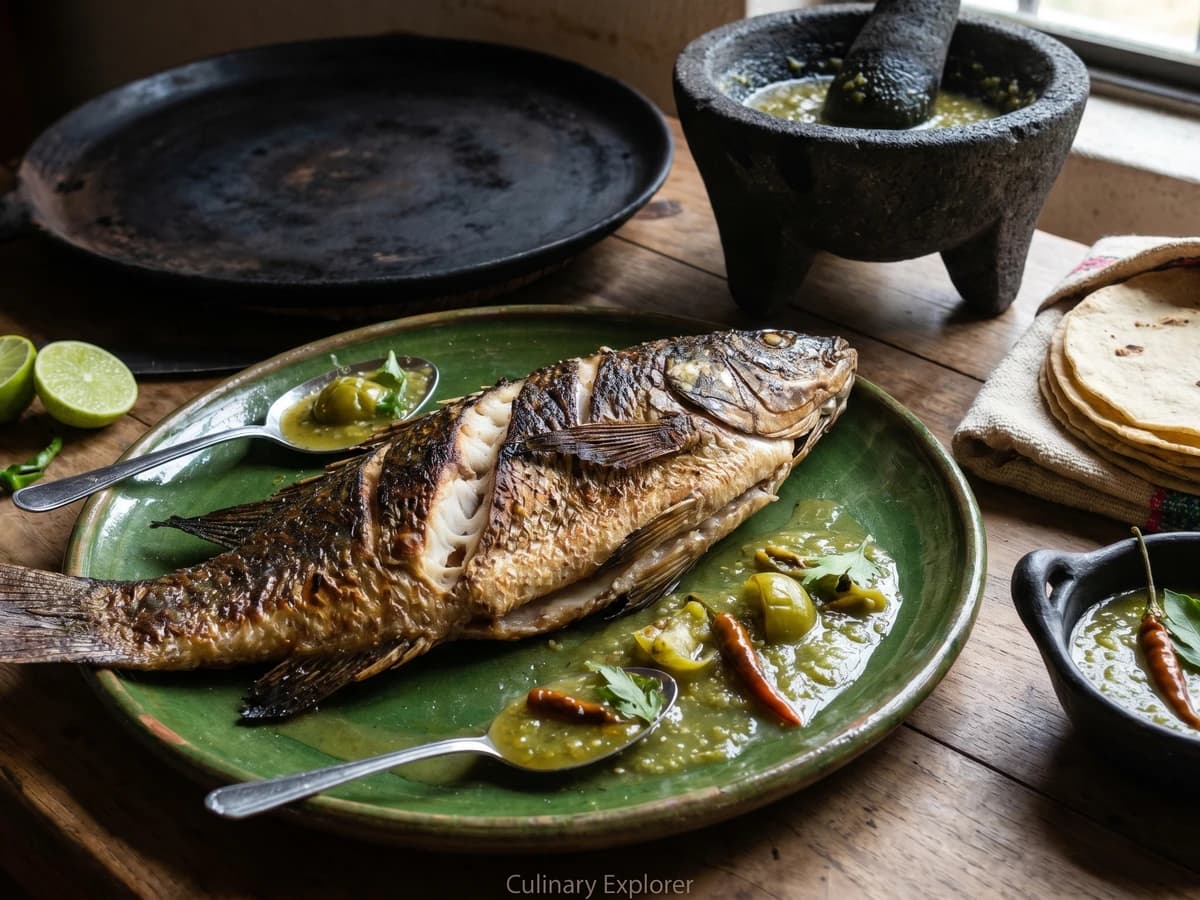
Michoacán's Lake Pátzcuaro acúmara, a whole kurucha from the lago tatemada on a comal de leña and served with chile perón atápakua, corn tortillas, and P'urhépecha discipline.
A cooking platform built around craft, culture, and the stories behind what we eat.
Created by
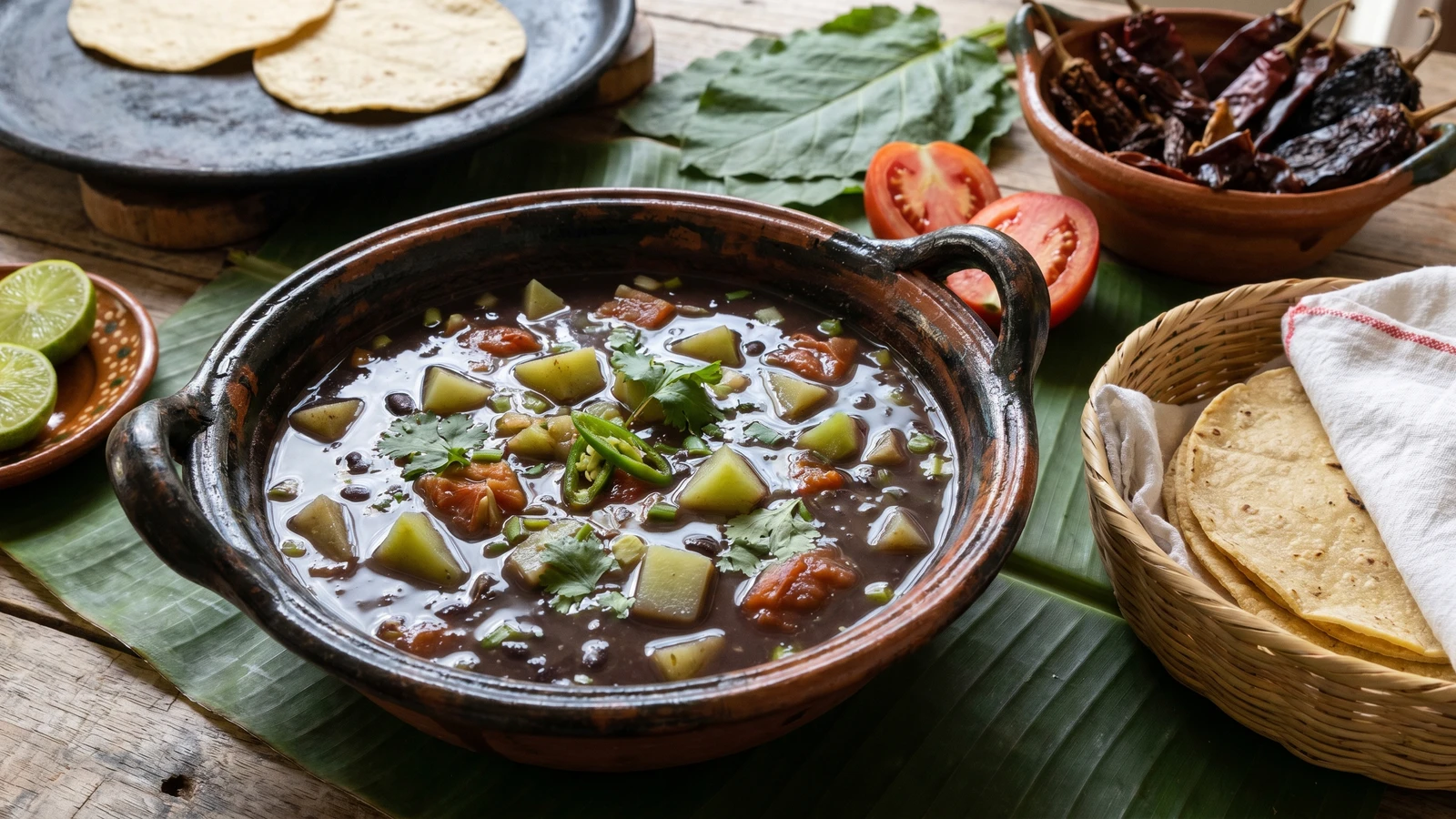
Veracruz's Totonacapan bean stew, built from black beans, chayote, milpa tomato, cebollina, chilchote, and cilantro, a Papantla kitchen dish that feeds a table without pretending to be poor.
Veracruz, the Totonacapan around Papantla, is where this dish lives. Not the port city with olives and capers. The northern Veracruz kitchen of vanilla, corn, black beans, chayote vines, and herbs cut from the patio before the pot goes on the fire.
Frijoles en akgchuchut are black beans cooked in a seasoned broth with chayote, milpa tomato, cebollina, chile chilchote, and cilantro. The word is Totonac, and the dish behaves like Totonac food: direct, useful, tied to the milpa, and not embarrassed by being vegetable-based. No meat is missing here. The bean broth is the body. The chayote gives sweetness. The chilchote gives a green bite without turning the pot into a dare.
I learned a version near Papantla from a woman who cooked it in a blackened clay olla and served it with fresh corn tortillas folded in a cloth. She did not call it vegetarian. She called it comida. That is the difference. Mexican cuisine has fed people with beans, squash, corn, and herbs for centuries. Saber cocinar es saber vivir.
The Totonacapan region of northern Veracruz and northern Puebla preserves one of Mexico's oldest bean-and-milpa cooking traditions, rooted in pre-Columbian agriculture long before Spanish livestock changed the country's kitchens. Papantla is better known internationally for vanilla, but local Totonac cooking also depends on black beans, chayote, small milpa tomatoes, patio herbs, and fresh chiles grown close to the house. Akgchuchut is part of that domestic repertoire: a broth-based bean preparation that shows how a plato fuerte can be built from the milpa without meat, flour tortillas, or northern habits that do not belong here.
Quantity
1 pound
picked over and rinsed
Quantity
8 cups, plus more as needed
Quantity
1/2 medium
Quantity
3
unpeeled
Quantity
2
Quantity
1 1/2 teaspoons, plus more to taste
Quantity
2 medium
peeled if tough, pitted, and cut into 3/4-inch pieces
Quantity
4
chopped
Quantity
4 cebollinas or 6 scallions
white and green parts chopped
Quantity
2
stemmed and sliced lengthwise
Quantity
1/2 cup
chopped
Quantity
1 tablespoon
optional, for softening the tomato
Quantity
for serving
warmed
Quantity
for serving
| Ingredient | Quantity |
|---|---|
| dried black beanspicked over and rinsed | 1 pound |
| water | 8 cups, plus more as needed |
| white onion | 1/2 medium |
| garlic clovesunpeeled | 3 |
| fresh epazote sprigs | 2 |
| kosher salt | 1 1/2 teaspoons, plus more to taste |
| chayotespeeled if tough, pitted, and cut into 3/4-inch pieces | 2 medium |
| small milpa tomatoes or ripe Roma tomatoeschopped | 4 |
| cebollinas or scallionswhite and green parts chopped | 4 cebollinas or 6 scallions |
| fresh chile chilchotestemmed and sliced lengthwise | 2 |
| fresh cilantro leaves and tender stemschopped | 1/2 cup |
| vegetable oil or freshly rendered corn oil (optional)optional, for softening the tomato | 1 tablespoon |
| hand-pressed corn tortillas (optional)warmed | for serving |
| lime halves (optional) | for serving |
Put the rinsed black beans in a clay olla or heavy pot with 8 cups water, the white onion, the unpeeled garlic, and the epazote. Bring to a steady simmer over medium heat, then lower the heat so the beans move gently. Do not salt yet. Let the beans begin softening in clean water first. That broth is the base of the dish, so keep it clear and generous.
Simmer the beans for 1 hour 15 minutes to 1 hour 45 minutes, depending on their age. Add hot water if the level drops below the beans. Taste one bean. It should be creamy at the center, not chalky. Old beans punish impatient cooks. Pregúntale a las señoras del mercado and they will tell you the same thing: buy beans from a vendor who sells through them quickly.
When the beans are nearly tender, stir in the salt. Fish out the onion, garlic skins, and tired epazote stems if they bother you. Mash 1/2 cup of beans against the side of the pot with a wooden spoon and stir them back into the broth. This thickens the akgchuchut without flour, cream, or any nonsense from outside this kitchen.
Add the chayote pieces and simmer for 12 to 15 minutes, until they turn tender but still hold their edges. Chayote should not collapse into mush. It belongs to the milpa table because it stretches the pot and gives the beans a clean green sweetness.
If you want a deeper broth, warm the tablespoon of oil in a small skillet and cook the chopped milpa tomatoes with the cebollina for 5 minutes, just until the tomato slumps and smells sweet. If you are cooking the leaner patio version, add the tomato and cebollina straight into the pot. Both methods are Totonacapan common sense. The point is not fat. The point is the bean broth.
Stir the tomato, cebollina, and sliced chile chilchote into the beans. Simmer 8 to 10 minutes more. The chilchote should perfume the broth and leave a clear green bite, not dominate the pot. Not all Mexican food is trying to burn your mouth. That idea is lazy.
Turn off the heat and stir in the chopped cilantro. Cover the pot for 5 minutes so the herb settles into the broth. Taste for salt. The beans should taste rounded, green, and earthy, with the chayote tender and the tomato melted into the dark broth.
Bring the olla or cazuela to the table with warm hand-pressed corn tortillas and lime halves. Serve the beans loose and brothy, not dry. This is a plato fuerte from Veracruz's Totonacapan, not a side dish hiding beside meat. Cada estado, su propia cocina.
1 serving (about 480g)
Culinary guides, cultural storytelling, and the editorial depth that makes cooking meaningful.
Discover Culinary ExplorerChef Lupita
Michoacán's Lake Pátzcuaro acúmara, a whole kurucha from the lago tatemada on a comal de leña and served with chile perón atápakua, corn tortillas, and P'urhépecha discipline.

Chef Lupita
Puebla's weekday adobo of pork shoulder braised in a thick guajillo and ancho sauce sharpened with vinegar, cumin, and clove. The deep red of a market spice stall, the dish a poblana cooks without thinking.

Chef Lupita
Loreto's pit-roasted clams, planted hinge-up in beach sand and tatemadas under a fast fire of dried romerillo brush, the resinous Baja desert shrub that gives this dish its smoke.

Chef Lupita
Oaxaca's eighth mole, the silky, almond-and-cinnamon almendrado, served over poached chicken. Mild, sweet, restrained, and a quiet rebuttal to anyone who thinks Mexican food has to be hot to be Mexican.