
Chef Lupita
Birria Tacos with Consome
Jalisco's goat birria, born around Cocula and carried into Guadalajara's markets, slow-braised in ancho, guajillo, cascabel, and chile de arbol, then tucked into corn tortillas crisped in its own red fat.
A cooking platform built around craft, culture, and the stories behind what we eat.
Created by
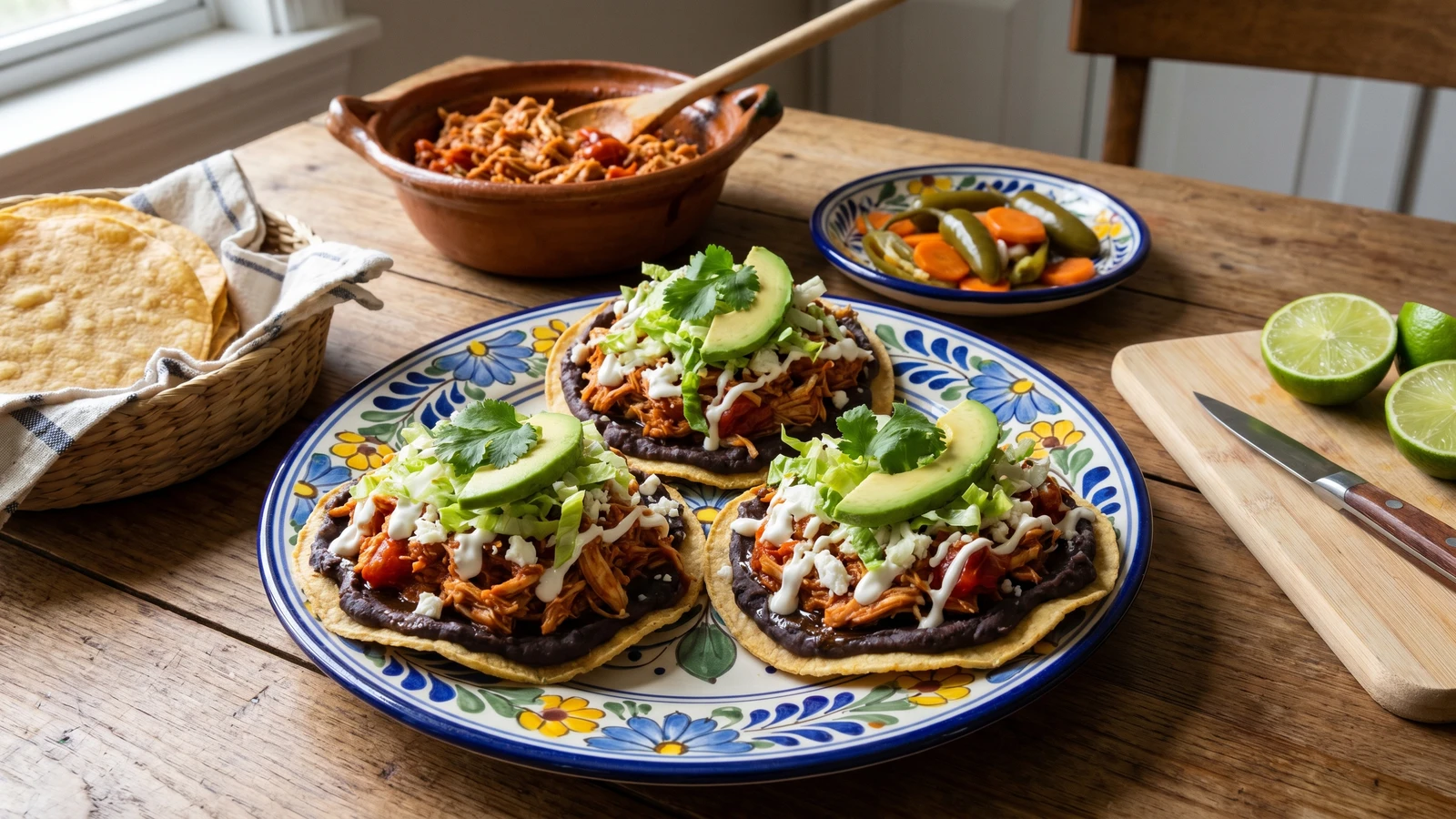
Puebla's smoky shredded chicken in chipotle and roasted tomato, piled on a crisp tostada over warm refried beans, dressed with crema, queso fresco, lettuce, and avocado.
Tinga is from Puebla. Not from the generic Mexican cookbook, not from a Tex-Mex menu, not from anywhere else. Puebla. The same city that gave you mole poblano and chiles en nogada also gave you this weeknight dish, and the city's home cooks have been making it for generations while the rest of the world was still learning how to spell chipotle.
The chipotle is the dish. A tinga without chipotle is not a tinga, it is shredded chicken in tomato sauce. The chipotle, which is a chile jalapeño smoked and dried, brings the deep, smoky heat that defines the sauce. Most modern Mexican cooks use chipotles en adobo from a can, and that is perfectly correct. The adobo, vinegar, tomato, and spices, is part of the flavor. Do not rinse the chiles. Do not drain the adobo. That brick-red liquid in the can is the seasoning.
This is a dish built for a weeknight in Puebla and for a weekend potluck anywhere else. Shred the chicken by hand, not with a fork. Roast the tomatoes on a comal, not in a pot of water. Sweat the onions in lard until they are soft and golden. Fry the sauce until the fat separates. Each of these steps is a small decision and together they are the difference between tinga that tastes like Puebla and tinga that tastes like nothing in particular.
My mother kept a tinga recipe in her notebook on the page after the pozole. She wrote in the margin: 'más cebolla' (more onion). She was right. The onion is half the dish. Cada estado, su propia cocina, and this one belongs to Puebla.
Tinga is generally traced to the city of Puebla and emerged in the 18th or early 19th century as a household adaptation of older Spanish-influenced shredded meat preparations, with the smoked chile chipotle and roasted tomato grounding it firmly in the Mesoamerican larder. The word 'tinga' is sometimes linked to the Nahuatl term 'tzinga,' meaning disorder or jumble, a fitting description for a dish built on shredded, irregular meat in a deeply seasoned sauce, though that etymology is debated among Mexican food historians. Traditional Poblano tinga was often made with pork or with both pork and chorizo, and the all-chicken version that dominates today's tables became standard in the 20th century as chicken grew more affordable and weeknight cooking demanded faster proteins.
Quantity
1 1/2 pounds (about 4 pieces)
Quantity
1/2
left whole
Quantity
1 large
sliced into thin half-moons
Quantity
2
left whole
Quantity
2
thinly sliced
Quantity
2
Quantity
1 small bunch
reserve leaves for serving
Quantity
1 tablespoon, plus more to taste
Quantity
1 1/2 pounds
Quantity
3 to 4, plus 2 tablespoons of the adobo sauce
Quantity
2 tablespoons
Quantity
1 teaspoon
Quantity
1/2 teaspoon
Quantity
2
Quantity
12
or store-bought tostadas from a Mexican brand
Quantity
2 cups
warm
Quantity
1 cup
Quantity
1 cup
crumbled
Quantity
2 cups
Quantity
2
sliced
Quantity
for serving
Quantity
for serving
| Ingredient | Quantity |
|---|---|
| bone-in, skin-on chicken thighs and breasts | 1 1/2 pounds (about 4 pieces) |
| white onion (for the broth)left whole | 1/2 |
| white onion (for the tinga)sliced into thin half-moons | 1 large |
| garlic cloves (for the broth)left whole | 2 |
| garlic cloves (for the tinga)thinly sliced | 2 |
| bay leaves | 2 |
| fresh cilantro stemsreserve leaves for serving | 1 small bunch |
| kosher salt | 1 tablespoon, plus more to taste |
| ripe Roma tomatoes | 1 1/2 pounds |
| chiles chipotles en adobo | 3 to 4, plus 2 tablespoons of the adobo sauce |
| manteca de cerdo (pork lard) | 2 tablespoons |
| dried Mexican oregano | 1 teaspoon |
| ground cumin | 1/2 teaspoon |
| fresh thyme or marjoram sprigs (optional) | 2 |
| corn tortillas, fried into tostadasor store-bought tostadas from a Mexican brand | 12 |
| refried black beanswarm | 2 cups |
| crema mexicana | 1 cup |
| queso frescocrumbled | 1 cup |
| finely shredded romaine lettuce | 2 cups |
| ripe Hass avocadossliced | 2 |
| lime wedges (optional) | for serving |
| pickled jalapeños with carrots (optional) | for serving |
Place the chicken pieces in a heavy pot and cover with cold water by two inches. Add the halved onion, the two whole garlic cloves, the bay leaves, the cilantro stems, and the tablespoon of salt. Bring to a gentle simmer over medium heat. Skim the gray foam that rises in the first ten minutes. Cook at a lazy bubble for 25 minutes, until the chicken is just cooked through. Cold water draws the flavor out into the broth. A rolling boil tightens the meat and makes it dry. The broth you build here is part of the tinga.
Lift the chicken out of the pot and let it rest until cool enough to handle. Strain the broth through a fine-mesh sieve and reserve one and a half cups. Pull the skin off, separate the meat from the bones, and shred it by hand into pieces the width of your finger. Hand-shredded, not chopped. The irregular edges hold the sauce. The chicken from a single grocery rotisserie will not do this work the same way. Do not skip the poach.
Heat a dry comal or heavy skillet over medium-high. Lay the whole Roma tomatoes on the comal and roast them, turning every few minutes, until the skins blacken in patches and the flesh collapses, about 10 to 12 minutes. The blistered char is what gives tinga its deep, smoky-sweet base. Boiling the tomatoes is a shortcut and you will taste the absence. No me vengas con atajos.
Transfer the roasted tomatoes, skins and all, to a blender. Add the chiles chipotles en adobo, the adobo sauce, the oregano, and the cumin. Blend until smooth. Taste it. It should be smoky, slightly sweet from the roasted tomato, and assertive with the chipotle. If you want more heat, add another chipotle. If you want less, hold back. The chipotle is what makes a tinga a tinga. Without it, you have shredded chicken in tomato sauce, which is not the same dish.
Melt the lard in a wide, heavy skillet or a clay cazuela over medium heat. Add the sliced onion and a pinch of salt. Cook for 8 to 10 minutes, stirring often, until the onions are soft and translucent with golden edges. Add the sliced garlic and cook one more minute, just until fragrant. The onion in tinga is not background. It is half the dish. La manteca es el sabor and the onions need the fat to soften the right way.
Pour the blended tomato-chipotle puree into the skillet with the onions. It will sputter. Stir to combine and let it cook at a brisk simmer for 8 to 10 minutes. The color will darken from bright red to a deep brick, and the fat will start to separate at the edges. This step is non-negotiable. Frying the sauce in fat is what concentrates the flavor. A raw blended sauce poured over chicken is not tinga. Así se hace y punto.
Add the shredded chicken and the fresh thyme or marjoram if using. Pour in one cup of the reserved chicken broth. Stir to coat every shred. Lower the heat and simmer for 12 to 15 minutes, stirring occasionally, until the sauce has thickened and clings to the meat. If it gets too dry, add a splash more broth. The tinga should be saucy enough to spoon, never soupy. Taste for salt. Pull out the herb sprigs before serving.
Spread a generous layer of warm refried black beans across each tostada, all the way to the edges. The beans are the glue that holds the tostada together and they belong here, not as an afterthought. Pile a heap of tinga over the beans. Top with shredded lettuce, sliced avocado, a spoonful of crema, and a shower of crumbled queso fresco. Finish with cilantro leaves. Serve with lime and pickled jalapeños at the table. Eat with two hands and accept that the tostada will crack on the second bite. That crack is the dish. Saber cocinar es saber vivir.
1 serving (about 510g)
Culinary guides, cultural storytelling, and the editorial depth that makes cooking meaningful.
Discover Culinary ExplorerChef Lupita
Jalisco's goat birria, born around Cocula and carried into Guadalajara's markets, slow-braised in ancho, guajillo, cascabel, and chile de arbol, then tucked into corn tortillas crisped in its own red fat.

Chef Lupita
Sonora's working morning burrito: chicharrón de cáscara stewed in chile colorado with diced potato, rolled tight in a paper-thin tortilla sobaquera and eaten standing up at the carreta.

Chef Lupita
Mocorito's pork chilorio, shredded and confited in lard with chile ancho and pasilla, rolled into a thin handmade flour tortilla. The burrito Sinaloa sends out into the world.

Chef Lupita
Sonora's morning burrito of mashed pinto frijoles puercos and melted queso asadero, wrapped in a paper-thin sobaquera and seared on the comal until the cheese pulls in long strings.