
Chef Isabel
Bicicleta Murciana (Ensaladilla sobre Rosquilla)
The Murcian bicicleta is the anchovy-free cousin of the marinera: ensaladilla rusa mounded on a crisp rosquilla de pan. Keep the salad cold and the bread dry until the last minute.
A cooking platform built around craft, culture, and the stories behind what we eat.
Created by
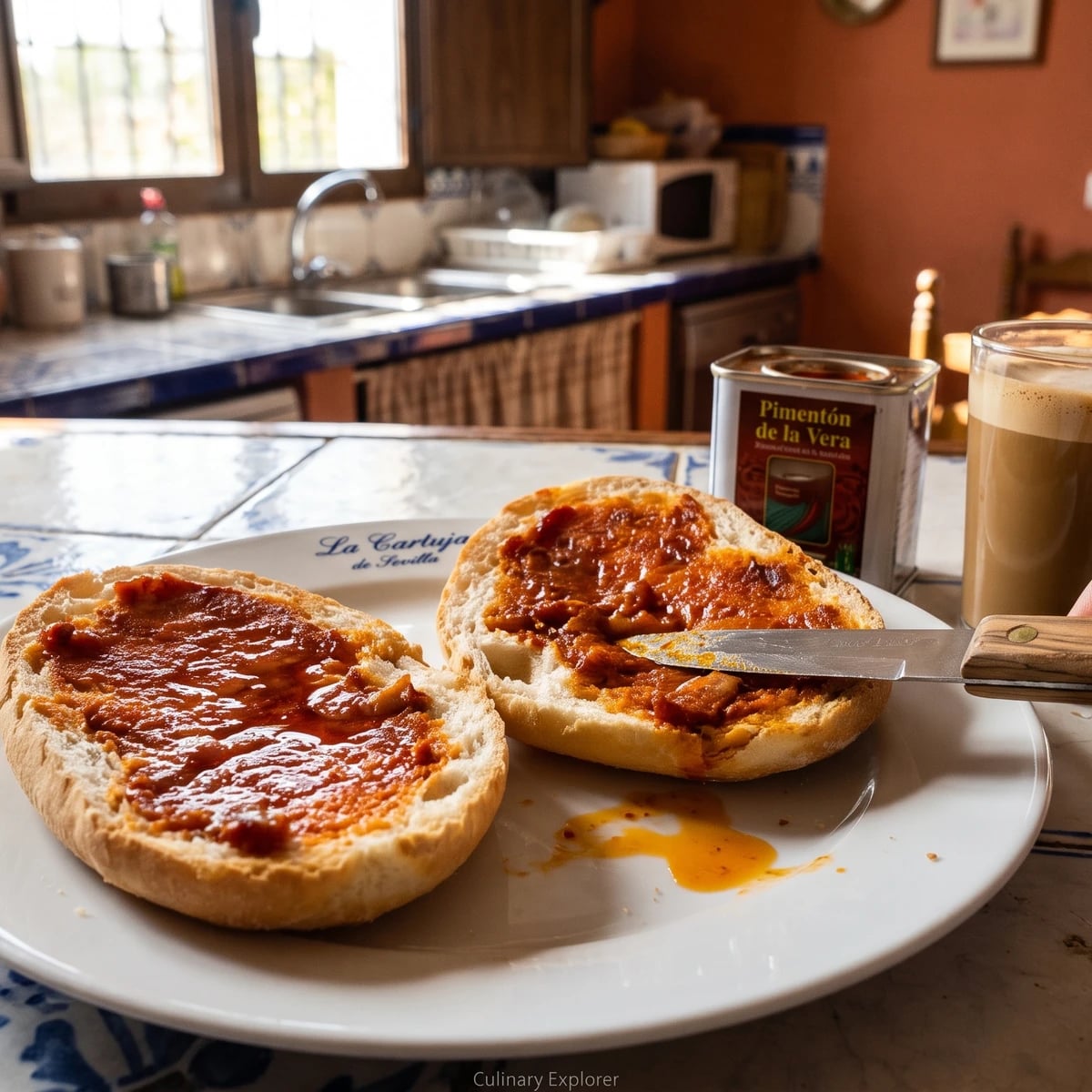
Manteca colorá is Andalusia's red lard spread for hot breakfast toast: pork fat cooked gently with garlic, oregano, pimentón, and zurrapa, the soft pork bits that make it more than bread and fat.
Tostada de manteca colorá is Andalusian, the breakfast of Cádiz, Sevilla, Málaga, and many inland villages: hot bread spread with pork lard cooked red with pimentón, garlic, oregano, and little pork bits called zurrapa. It is not Mallorcan sobrassada, though both are red and porky. This one is cooked fat, set until spreadable, then woken up again by hot toast. Cheap bread and a spoon of seasoned lard can carry a working morning. Andalucía knew that before any café menu wrote it down.
The method that decides it is the heat on the pimentón. First cook the pork gently in the lard until its water is gone and the bits are tender. Then take the pan off the fire before the pimentón goes in. Warm fat wakes it and turns the manteca brick-red. Direct heat burns it bitter, and then no bread in Andalucía can save it.
If you're far from Andalucía, no hace falta haber pisado España, you don't need to have set foot in Spain. Ask a butcher for clean rendered pork lard, or render leaf lard yourself; don't use vegetable shortening, because it only looks the part. No mollete? Use a soft white roll split open, or thick country bread. The roll gives the softer Andalusian breakfast bite; the country bread is chewier, but honest.
Make the manteca ahead, let it set, then stir once so the zurrapa doesn't settle at the bottom. Spread it while the bread is still hot, enough that the red fat glosses the crumb. Siempre sale, si lo sigues. In my Margin beside this one I wrote only this: pimentón off the fire.
Manteca colorá belongs to Andalucía, especially Cádiz, Sevilla, and Málaga, where breakfast bars and ventas spread it on hot molletes and country bread before the day has properly started. It comes from the matanza, the household pig slaughter, when pork fat was rendered, seasoned with garlic, oregano, bay, vinegar, and pimentón, then kept as a rich spread for bread; zurrapa is the version with little cooked pork shreds left in. The name keeps the Andalusian shortening of colorada, red-colored, because the pimentón stains the white manteca the color of brick.
Quantity
350g
clean and fresh, not vegetable shortening
Quantity
180g
cut into 8mm dice
Quantity
7g
Quantity
4
peeled and lightly crushed
Quantity
1
Quantity
2 teaspoons
Quantity
60ml
Quantity
30ml
Quantity
12g
preferably Spanish
Quantity
1g
Quantity
4 molletes, split, or 8 thick slices
| Ingredient | Quantity |
|---|---|
| rendered pork lard (manteca de cerdo)clean and fresh, not vegetable shortening | 350g |
| pork shoulder or pork loincut into 8mm dice | 180g |
| fine sea salt | 7g |
| garlic clovespeeled and lightly crushed | 4 |
| bay leaf | 1 |
| dried oregano | 2 teaspoons |
| water | 60ml |
| vinagre de Jerez (sherry vinegar) | 30ml |
| sweet pimentónpreferably Spanish | 12g |
| hot pimentón (optional) | 1g |
| molletes, pan cateto, or country bread | 4 molletes, split, or 8 thick slices |
Put the pork in a small heavy saucepan with the salt, lard, garlic, bay leaf, oregano, water, and sherry vinegar. Set it over low heat and let the lard melt slowly around the pork. The water is there for a reason: it gives the meat time to soften before the fat takes over.
Cook uncovered over low heat for 30 to 35 minutes, stirring now and then, until the pork bits are tender and lightly golden and the wet bubbling has quieted into clear fat. Do not brown the meat hard. Browned pork is another pleasure, not this one.
Take the pan off the heat and wait 2 minutes. Lift out the bay leaf and the garlic cloves. Stir in the sweet pimentón and the hot pimentón, if using, until the fat turns deep brick-red. Warm fat wakes the pimentón; direct heat scorches it bitter. This is the step that decides the dish.
Break up the pork bits with a fork if you want a finer zurrapa, then pour everything into a clean heatproof jar or ceramic bowl. Let it cool for 20 minutes, then refrigerate until the edges turn opaque, about 40 minutes. Stir once from the bottom so the pork bits stay through the spread instead of sinking. Chill until spoonable.
Toast the split molletes or bread until the cut side is crisp and the inside is still tender. Spread 35 to 40g manteca colorá on each hot half, enough that the red fat glosses the crumb and the zurrapa sits on top. Eat it at once, while the bread is doing its work.
1 serving (about 115g)
Culinary guides, cultural storytelling, and the editorial depth that makes cooking meaningful.
Discover Culinary Explorer
Chef Isabel
The Murcian bicicleta is the anchovy-free cousin of the marinera: ensaladilla rusa mounded on a crisp rosquilla de pan. Keep the salad cold and the bread dry until the last minute.

Chef Isabel
Marinera Murciana is Murcia on a bread ring: cold ensaladilla rusa piled onto a crisp rosquilla and crowned with one salted anchovy. Build it just before eating.

Chef Isabel
Marinero Murciano is the bar counter's sharper cousin to the marinera: cold ensaladilla on a crisp rosquilla, finished with boquerón en vinagre instead of salted anchoa, and eaten before the bread softens.

Chef Isabel
Logroño's matrimonio pincho puts a salt-cured anchoa and a vinegar-cured boquerón on roasted pepper and bread, one preserved fish answering the other. Drain them well and the bite stays clean.