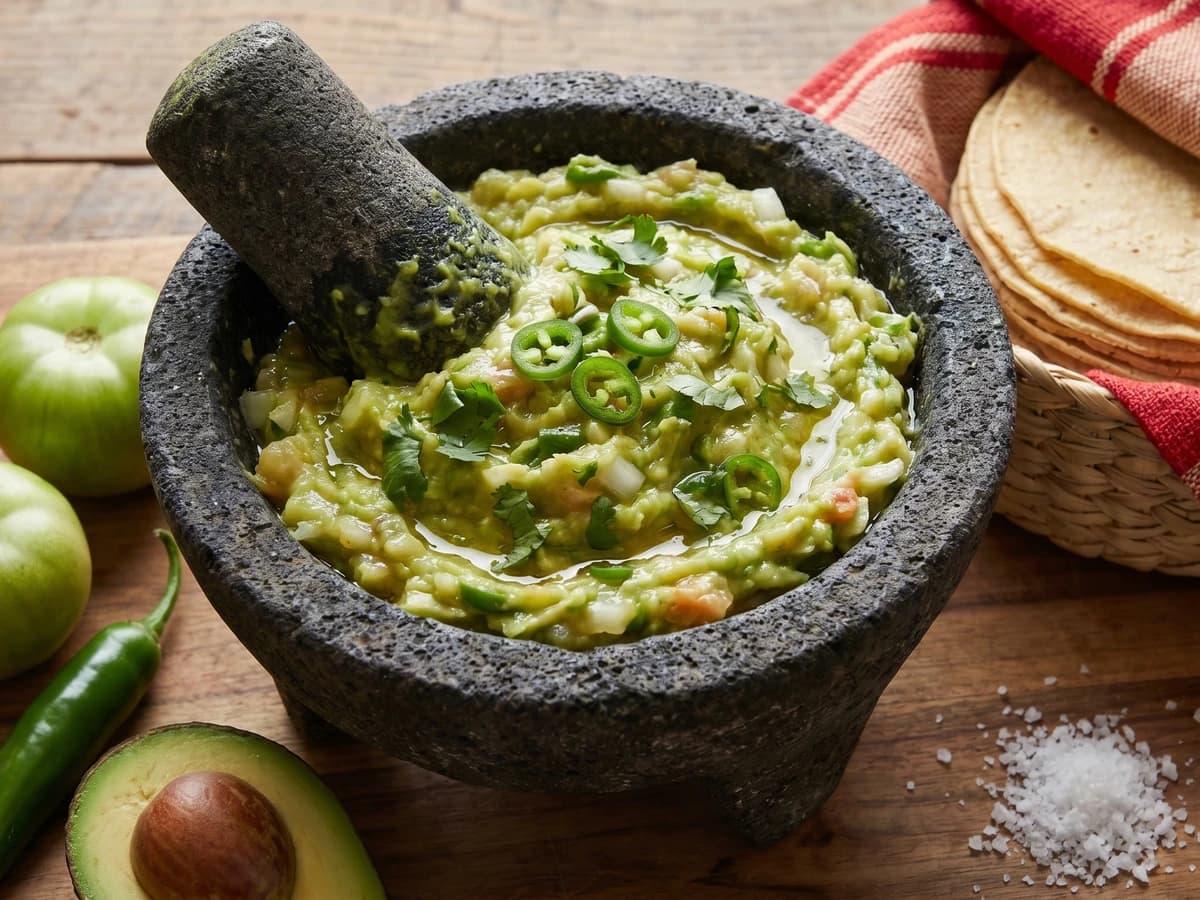
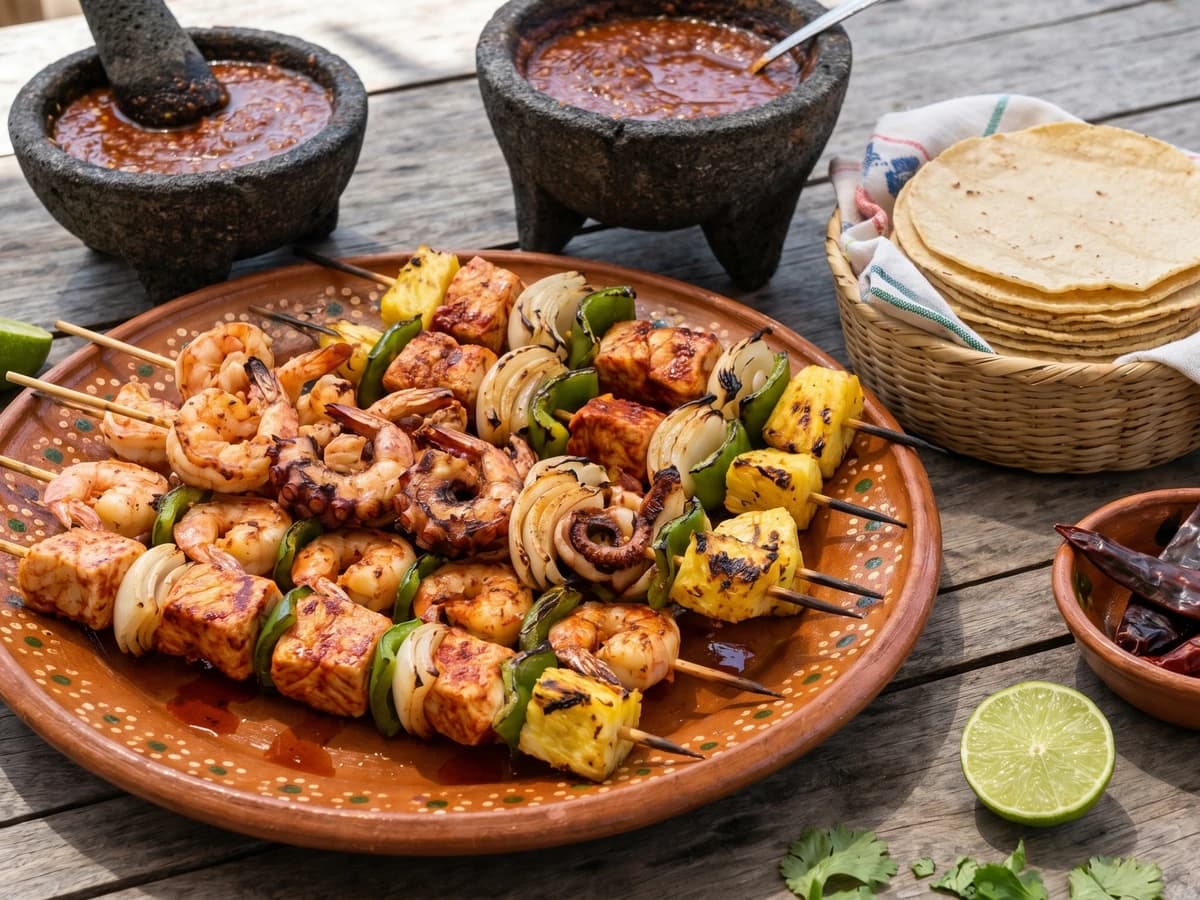
San Luis Potosí's market tostada, a wide corn tortilla fried crisp, dragged through salsa borracha made with chile ancho, chile cascabel, and pulque, then covered with frijoles bayos and nopales.
Appetizers & Snacks
Mexican
Weeknight
Comfort Food
35 min
Active Time
40 min cook•1 hr 15 min total
Yield6 large tostadas
San Luis Potosí, especially the dry Centro and Altiplano around the capital, is where this tostada borracha belongs. Not the Huasteca with zacahuil. Not the northern flour tortilla table. This is corn, maguey, nopal, frijol, and dried chile country. Cada estado, su propia cocina.
The salsa borracha is the soul. Chile ancho gives body and dark fruit. Chile cascabel gives that nutty rattle from the potosino and Bajío markets. Pulque brings the sour maguey edge that makes the salsa borracha instead of just another red salsa. If you cannot find pulque, I will tell you what to do, but understand first what you are missing. A substitution is a compromise, not an upgrade.
I learned this style of tostada from women who worked fast over blackened comales near the markets, frying the large tortillas until crisp, then letting them drink just enough salsa to stain and soften the surface without collapsing. The beans are not decoration. The nopales are not salad garnish. They are the food of the plateau: practical, filling, local, and exact.
Serve it on a barro rojo plate if you have one, with the salsa in a small cazuelita at the table. This is not a delicate tostada you nibble politely. You eat it before the tortilla gives up. Saber cocinar es saber vivir.
Salsa borracha belongs to the pulque belt of central Mexico, including Hidalgo, Tlaxcala, Estado de México, Puebla, and San Luis Potosí, where fermented maguey was used in kitchens as well as cantinas. In the Centro and Altiplano potosino, market cooks adapted pulque-based chile sauces to fried corn antojitos, pairing them with frijoles and nopales from the dry plateau. The dish sits beside enchiladas potosinas, attributed to Cristina Jalomo in Soledad de Graciano Sánchez in the early 20th century, as part of a local antojito tradition built on corn, dried chile, and practical market feeding.
The technique, the tradition, and the story behind every dish.
large day-old corn tortillas7 to 8 inches wide if possible
6
pork lard (manteca de cerdo)for frying, refrying, and frying the salsa
2 cups, plus 3 tablespoons
dried chile anchostemmed and seeded
4
dried chile cascabelstemmed and seeded
4
dried chile de arbol (optional)stemmed
1
Roma tomatoes
3
white onioncut into thick slices
1/2 medium
garlic clovesunpeeled
2
fresh pulque blanco
1 cup
dried Mexican oregano
1/2 teaspoon
kosher salt
1 teaspoon, plus more to taste
cooked frijoles bayoswith 1 cup of their broth
3 cups
fresh epazote
1 small sprig
tender nopales paddlescleaned and cut into thin strips
5
white onion for nopales
1/4 medium
garlic clove for nopales
1 small
finely diced white onionfor serving
1/2 cup
queso fresco or queso rancherocrumbled
1/2 cup
cilantrochopped
1/4 cup
lime wedges (optional)
for serving
Equipment Needed
•Cast iron comal or heavy skillet for toasting chiles
•Blender
•Small clay cazuela or heavy saucepan for the salsa
•Wide skillet for frying tostadas
•Wire rack for draining fried tortillas
Instructions
1
Cook the nopales
Put the nopal strips in a saucepan with the quarter onion, small garlic clove, 1/2 teaspoon salt, and enough water to cover by one inch. Simmer uncovered for 12 to 15 minutes, until the nopales turn olive green and lose most of their thick liquid. Drain well and discard the onion and garlic. Do not drown them after cooking. Let them sit in the colander so they dry a little. Wet nopales make a tired tostada.
2
Toast the chiles
Heat a dry comal over medium. Toast the chile ancho for about 20 seconds per side, just until the skin softens and smells sweet. Toast the chile cascabel until it darkens slightly and smells nutty. If using chile de arbol, give it only a few seconds. Burned chile turns bitter. Throw it out if it blackens. No me vengas con atajos.
3
Soak the chiles
Place the toasted chiles in a bowl and cover with hot water, not boiling water. Let them soften for 15 minutes. Hot water wakes the flesh. Boiling water punishes the skin and can make the salsa harsh. Drain them, saving 1/2 cup of the soaking liquid in case the blender needs help.
4
Roast the vegetables
On the same comal, roast the tomatoes, onion slices, and unpeeled garlic until the tomatoes blister, the onion browns at the edges, and the garlic softens inside its skin. Peel the garlic. The salsa needs this cooked sweetness because pulque has its own sour edge.
5
Blend the salsa
Blend the softened chiles, roasted tomatoes, roasted onion, peeled garlic, pulque, Mexican oregano, and 1 teaspoon salt until completely smooth. If the blender struggles, add a spoonful or two of the chile soaking liquid. Do not make soup. You want a pourable salsa with body, brick red and glossy.
6
Fry the salsa
Melt 1 tablespoon of lard in a small clay cazuela or heavy saucepan over medium heat. Pour in the blended salsa. It will sputter. Cook 8 to 10 minutes, stirring often, until the color deepens and the salsa coats the spoon. Taste for salt. This frying step marries the chile and pulque. Skip it and the salsa tastes raw. Así se hace y punto.
Keep the heat moderate. Pulque can turn sharp if you scorch the salsa. You want a steady simmer, not a violent boil.
7
Refry the beans
Melt 2 tablespoons of lard in a skillet over medium heat. Add the cooked frijoles bayos, their broth, and the epazote sprig. Mash with the back of a spoon or potato masher until thick and spreadable. Cook 8 to 10 minutes, stirring so they do not stick. Remove the epazote. The beans should hold on the tostada without running over the edge.
8
Fry the tortillas
Heat the 2 cups of lard in a wide skillet to 350F. Fry the tortillas one at a time, pressing gently with tongs so they stay mostly flat. Turn once or twice until crisp and pale gold, 45 to 60 seconds total. Drain on a rack or paper towels. Day-old tortillas fry better because they have lost moisture. Fresh tortillas puff and fight you.
9
Bathe the tostadas
Keep the salsa warm and loose. Dip each fried tortilla into the salsa for 3 to 5 seconds per side, or spoon salsa over both sides if the tortilla is fragile. The surface should turn red and soften slightly while the tostada still holds its shape. That balance is the whole trick.
10
Assemble and serve
Spread each salsa-soaked tostada with a thick layer of refried frijoles bayos. Add the drained nopales, diced white onion, crumbled queso fresco, and cilantro. Serve immediately with lime wedges and extra salsa borracha in a small cazuelita. Eat while the center still has bite. A tostada borracha waits for nobody.
Chef Tips
•Use pulque blanco if you can get it from a pulquería or a serious Mexican market. If pulque is impossible, use a light Mexican beer with 1 teaspoon apple cider vinegar. Say the truth: it will work, but it will not have the same lactic maguey flavor.
•The chile ancho should be flexible like leather, not brittle like old paper. The chile cascabel should rattle when you shake it and smell fruity, not dusty. Si no conoces el mercado, no conoces la cocina.
•Do not use flour tortillas. Flour tortillas have their place in the north. This is San Luis Potosí's corn table.
•The tostada must be large and sturdy. If all you have are thin supermarket tostadas, brush them with warm salsa instead of dipping or they will collapse before you sit down.
•La manteca es el sabor. You can fry in neutral oil if you must, but the beans and salsa still need a little manteca de cerdo to taste like they came from a potosino kitchen.
Advance Preparation
•The salsa borracha can be made 2 days ahead and refrigerated. Reheat gently with a splash of pulque or water to loosen before dipping the tostadas.
•The frijoles bayos can be cooked 3 days ahead. Refry them on serving day so the texture is thick and fresh.
•The nopales can be cooked 1 day ahead, drained well, and refrigerated. Bring them to room temperature before assembling.
•Do not assemble the tostadas ahead. Once the salsa touches the tortilla, the clock starts.
Frequently Asked Questions
Nutrition Information
1 serving (about 300g)
Calories
460 calories
Total Fat
20 g
Saturated Fat
8 g
Trans Fat
0 g
Unsaturated Fat
11 g
Cholesterol
20 mg
Sodium
600 mg
Total Carbohydrates
57 g
Dietary Fiber
15 g
Sugars
5 g
Protein
15 g
Where cooking meets culture.
Culinary guides, cultural storytelling, and the editorial depth that makes cooking meaningful.