Culinary Explorer
A cooking platform built around craft, culture, and the stories behind what we eat.
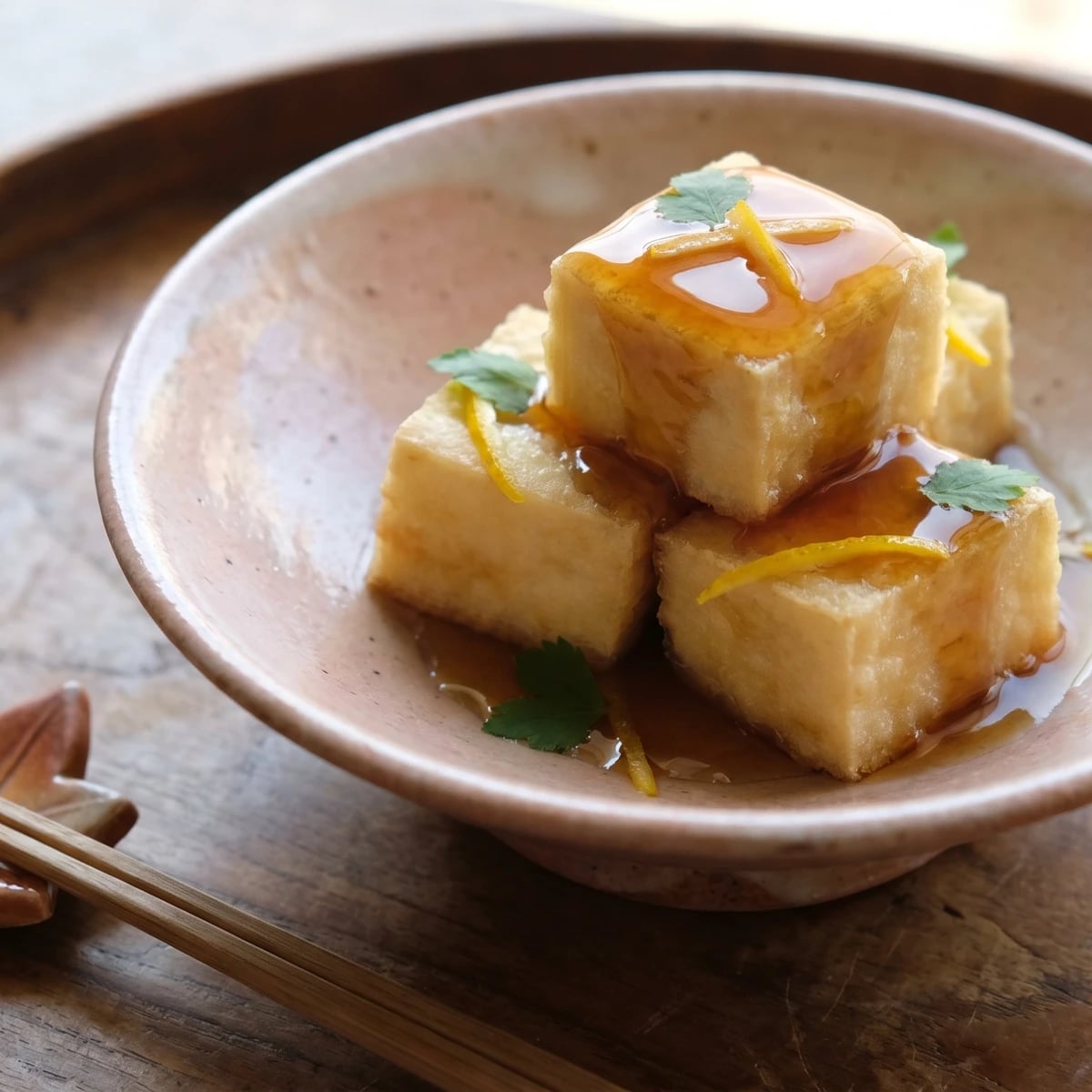
Tortoise-Shell Glaze (鼈甲あん, Bekkō-an)
Created by Chef Takumi
Bekkō-an is dashi given an amber coat: soy-dark, glossy, and light enough to flatter fried tofu or fish without covering the thing beneath.
This sauce is named for what it looks like. Bekkō means tortoise shell, that warm brown amber with light passing through it, and an is a thickened sauce. It sounds grand. It is mostly a small pot of good dashi, soy sauce, and kuzu stirred with patience until the surface turns glossy.
The one detail that decides it is clarity. Use a clean dashi, darken it with koikuchi shōyu, then thicken it with kuzu that has been fully dissolved in cold water. Kuzu thickens clear and supple, not pasty, which is why we use it here. Boil the sauce after it thickens just long enough to lose the raw starch cloud, then stop. Too little heat and it tastes chalky. Too much stirring over a hard boil and the shine goes dull, like a joke explained twice.
Bekkō-an belongs where a dish wants a little gloss and authority: over fried tofu, grilled or simmered white fish, steamed eggplant, or winter root vegetables. It is not there to hide anything. The sauce should cling lightly, enough to catch the light and season each bite, while the tofu, fish, or vegetable still speaks first. That is the proper order.
Ingredients
konbu (dried kelp)
Quantity
1 piece (about 5g)
katsuobushi (bonito flakes)
Quantity
10g
cold water
Quantity
2 cups
| Ingredient | Quantity |
|---|---|
| konbu (dried kelp) | 1 piece (about 5g) |
| katsuobushi (bonito flakes) | 10g |
| cold water | 2 cups |
Where cooking meets culture.
Culinary guides, cultural storytelling, and the editorial depth that makes cooking meaningful.
Discover Culinary Explorer