Culinary Explorer

A cooking platform built around craft, culture, and the stories behind what we eat.
Discover Culinary Explorer
Tortillita Dulce Tabasqueña

Tortillita Dulce Tabasqueña

Created by

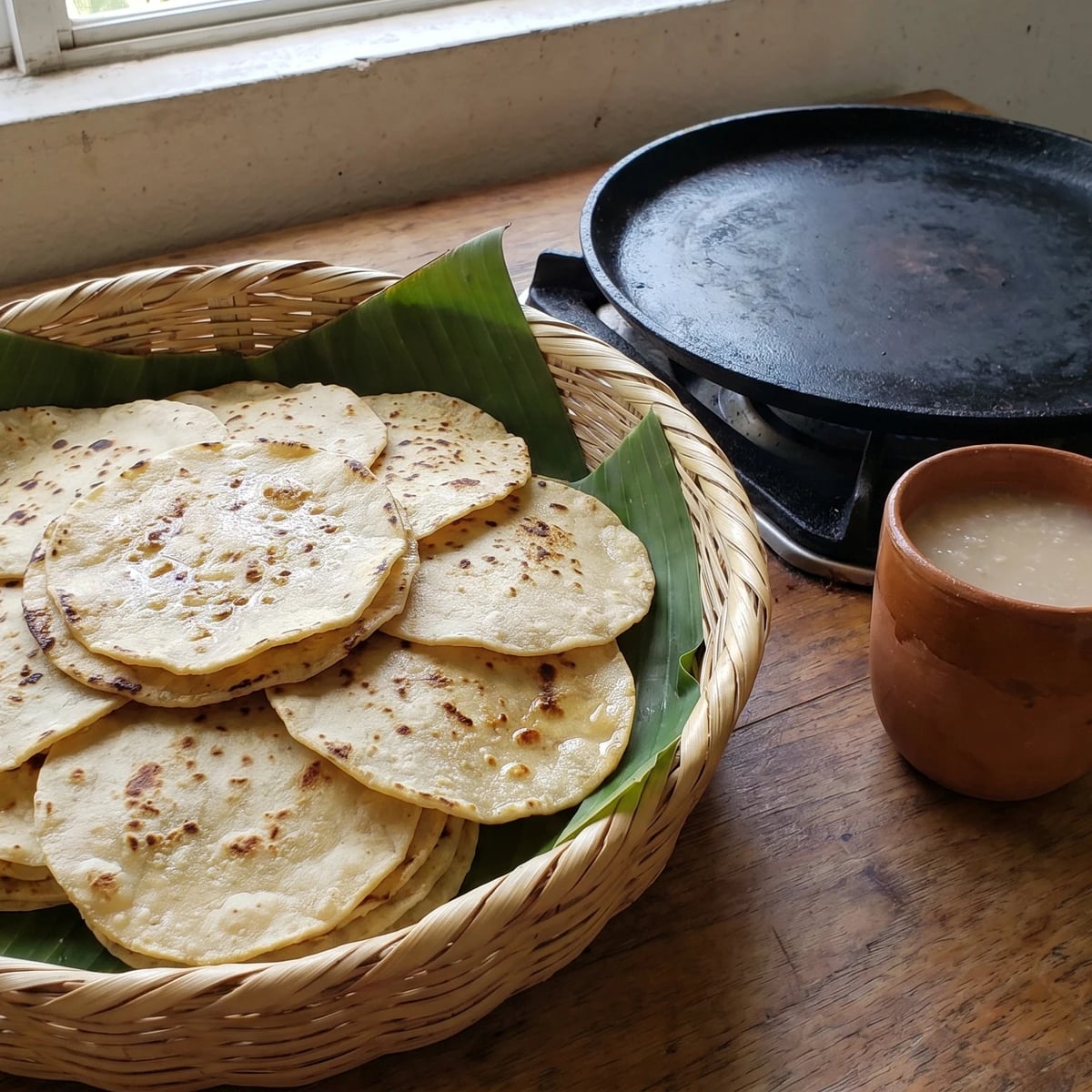
Tabasco's market tortillita dulce is fresh nixtamal corn masa sweetened with piloncillo and canela, pressed small, then toasted on a comal until the edges brown and the sugar perfumes the kitchen.

Breads
Mexican
Picnic
Comfort Food
Make Ahead
25 min
Active Time
30 min cook•55 min total
Yield18 small tortillitas

Tabasco, especially Villahermosa and the humid lowlands around the Grijalva, has a merienda bread that does not need wheat to prove anything. Tortillita dulce is corn masa made small, sweet, and toasted until the surface freckles on the comal. You buy them by the dozen near the mercado, wrapped in paper or tucked into a woven palm tortillera, still warm enough that the piloncillo smells like caramel.

This is not a northern flour tortilla with sugar thrown at it. Flour tortillas belong to the north. Here the base is maiz nixtamalizado, the same corn that feeds the state in pejelagarto empanadas, tamalitos, pozol, and everyday tortillas. The sweetness comes from piloncillo or coarse cane sugar, the perfume from canela de Ceilan, and the tenderness from manteca de cerdo. La manteca es el sabor. Use oil and the tortillita turns dry and flat.

I learned this style from a woman near the Villahermosa market who cooked them on a blackened comal while her granddaughter folded banana leaves beside her. She did not measure with cups. She pinched the masa and said, 'It should feel like a tortilla that wants to be a cookie, but still remembers it is corn.' That is the lesson. Sweet, yes. Still corn. Cada estado, su propia cocina.

Tabasco's sweet corn breads come from the same Mesoamerican corn base that shaped the cooking of the Chontal Maya lowlands, where nixtamalized masa was used for tortillas, tamales, pozol, and small griddled cakes long before wheat became common. Cane sugar and piloncillo entered regional kitchens after the Spanish established sugar production in New Spain, and Tabasco's hot, wet geography made sweetened masa snacks practical for market vendors because they could be cooked quickly on a comal and sold the same day. The tortillita dulce belongs to merienda culture, not dessert culture: a small afternoon bread eaten with pozol, atole, coffee, or chocolate, depending on the household.

The technique, the tradition, and the story behind every dish.

Discover Culinary Explorer

Ingredients

fresh masa de maiz nixtamalizado

Quantity

2 cups

preferably white corn masa from a tortilleria

piloncillo or coarse cane sugar

Quantity

1/2 cup

finely grated if using piloncillo

manteca de cerdo

Quantity

3 tablespoons

softened

canela de Ceilan

Quantity

1/2 teaspoon

freshly ground

fine sea salt

Quantity

1/4 teaspoon

warm water

Quantity

2 to 4 tablespoons

as needed

hoja de platano (optional)

Quantity

1

wiped clean and cut into squares, for holding the cooked tortillitas

Equipment Needed

  • •Cast iron comal or heavy griddle
  • •Tortilla press lined with plastic cut from a food-safe bag
  • •Wide mixing bowl
  • •Cloth-lined basket or woven palm tortillera

Instructions

  1. 1

    Sweeten the masa

    Put the fresh masa in a wide bowl. Sprinkle in the grated piloncillo, canela de Ceilan, and salt. Work everything together with your fingers until the sugar is evenly scattered through the masa. Do not dump in water yet. First let the masa tell you what it needs.

    Fresh tortilleria masa varies by day. If it feels soft and pliable, use less water. If it cracks at the edges when pressed, add water one tablespoon at a time.
  2. 2

    Work in the lard

    Add the softened manteca de cerdo and knead for 3 to 4 minutes. The masa should become smooth, lightly glossy, and fragrant with corn and canela. This is not decoration, it is structure. The lard keeps the tortillita tender while the sugar browns on the comal.

  3. 3

    Adjust the dough

    Pinch off a walnut-sized piece and flatten it between your palms. If the edges split badly, knead in warm water one tablespoon at a time. If it sticks wetly to your hands, knead in a spoonful of fresh masa. The finished dough should feel like soft tortilla masa, a little richer and heavier from the piloncillo.

  4. 4

    Shape small rounds

    Divide the masa into 18 balls, about 1 1/2 tablespoons each. Press each one between plastic in a tortilla press or flatten by hand into rounds about 3 inches wide and 1/8 inch thick. Do not make them paper-thin. A tortillita dulce needs enough body to toast outside and stay tender inside.

  5. 5

    Heat the comal

    Heat a dry cast iron comal over medium-low heat for 5 minutes. Medium-low matters because piloncillo burns faster than plain corn masa. If you are cooking over wood embers, push the strongest coals to one side and use the gentler edge of the comal. The surface should toast, not scorch.

  6. 6

    Toast the tortillitas

    Lay 3 or 4 tortillitas on the comal without crowding. Cook for 2 to 3 minutes on the first side, until the bottom has small brown freckles and the edges look set. Flip and cook 2 to 3 minutes more. Flip once more for 30 to 45 seconds if the center still feels soft. You want toasted corn, caramelized sugar, and a slight firmness at the rim.

  7. 7

    Hold and serve

    Transfer the tortillitas to a clean cloth-lined basket or onto squares of hoja de platano. Let them rest 5 minutes before eating so the sugar settles and the texture firms. Serve by the stack with pozol, atole, cafe de olla, or Tabasco chocolate. Recetas probadas y garantizadas.

Chef Tips

  • •Buy fresh masa from a tortilleria if you can. Masa harina works in an emergency, but it lacks the damp corn perfume of masa ground the same day. That is a compromise, not an upgrade.
  • •Use canela de Ceilan, the loose, brittle Mexican cinnamon sold in thin rolled sticks. Cassia cinnamon is harsher and can bully the corn. Preguntale a las senoras del mercado.
  • •Piloncillo gives deeper flavor than white sugar. If your piloncillo is too hard to grate, shave it with a knife or dissolve it in 2 tablespoons warm water, then knead that syrup into the masa.
  • •There is no chile in this bread. Not all Mexican food is built around heat. This one belongs to the afternoon table, sweet corn, canela, and a black comal.
  • •If the tortillitas brown too quickly, your comal is too hot. Lower the heat and wipe away any burned sugar before the next batch. Burned piloncillo tastes bitter, and no amount of atole fixes it.

Advance Preparation

  • •The masa can be mixed up to 8 hours ahead, covered tightly, and refrigerated. Bring it back to room temperature before pressing or the edges will crack.
  • •Cooked tortillitas keep for 2 days wrapped in a clean kitchen towel inside an airtight container. Rewarm on a dry comal for 30 to 45 seconds per side.
  • •For a picnic, stack the cooled tortillitas between pieces of hoja de platano or parchment and wrap them in a cloth. They travel better than soft fresh tortillas because the sugar helps them hold their shape.

Frequently Asked Questions

Nutrition Information

1 serving (about 33g)

Calories
90 calories
Total Fat
3 g
Saturated Fat
1 g
Trans Fat
0 g
Unsaturated Fat
2 g
Cholesterol
2 mg
Sodium
35 mg
Total Carbohydrates
16 g
Dietary Fiber
1 g
Sugars
6 g
Protein
1 g

Note: Chef personas and recipes are created with AI assistance. Cook with care: follow safe food-handling practices and adapt for allergies and your kitchen.

Chef Lupita is a fictional culinary guide to Regional Mexican Cuisine, written with the assistance of AI.

Where cooking meets culture.

Culinary guides, cultural storytelling, and the editorial depth that makes cooking meaningful.

Discover Culinary Explorer

More from Chiapas & Tabasco Breads

Browse the full collection