
Chef Lupita
Acambaritas de Acámbaro
Guanajuato's daily bread from Acámbaro, a small glazed roll built on pata, enriched with manteca de cerdo, and baked until the top shines lightly for merienda.
A cooking platform built around craft, culture, and the stories behind what we eat.
Created by
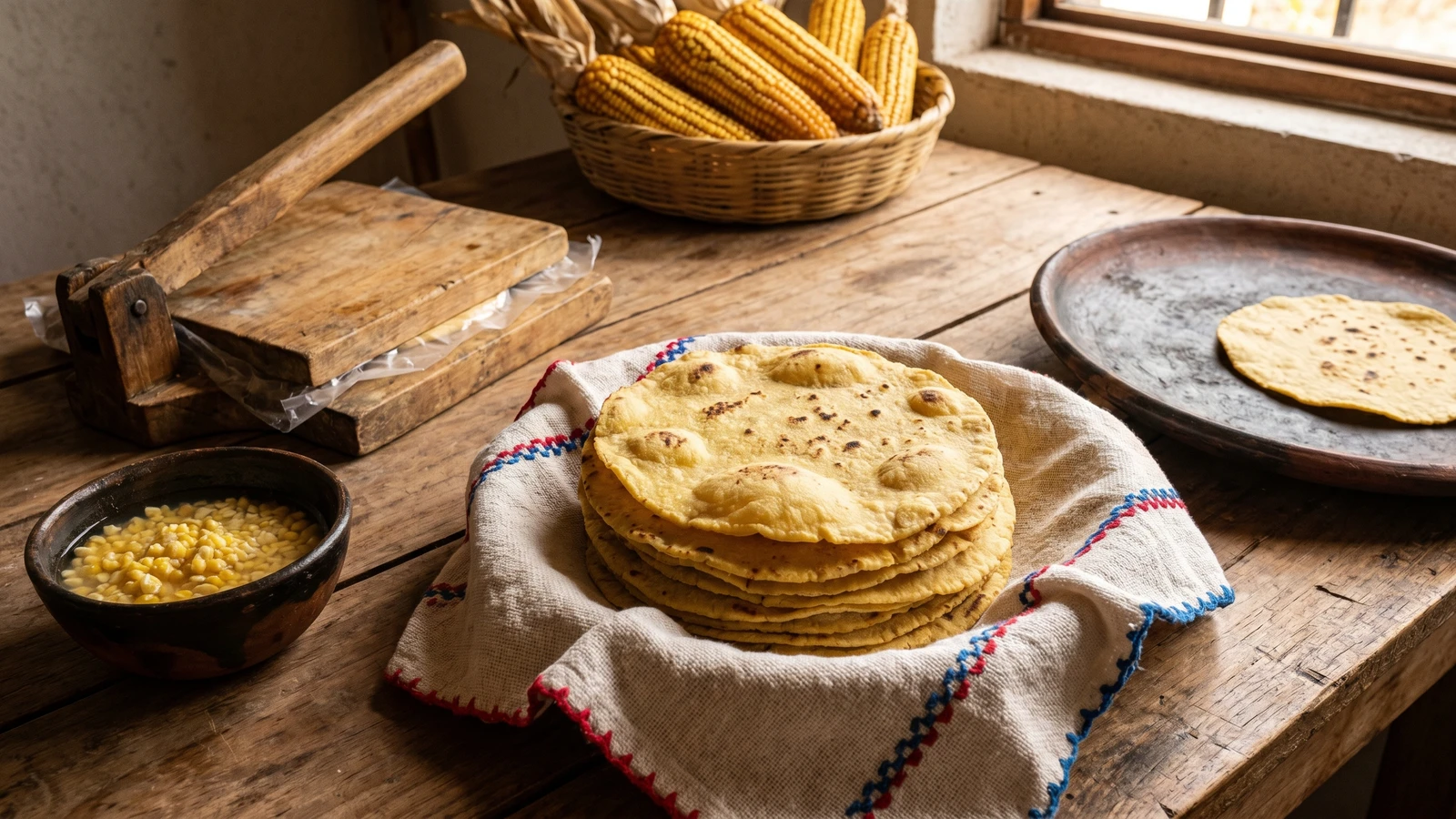
Northern Veracruz tortillas made from nixtamalized maíz Tuxpeño, yellow and sturdy enough for beans, fish, eggs, and the daily work of feeding a house.
Veracruz, the northern Huasteca, the country around Tuxpan: that is where this tortilla lives. Maíz Tuxpeño is not a decorative name. It is the corn of the region, a tall tropical landrace with yellow kernels that make a tortilla with body, color, and a clean corn smell that supermarket masa harina cannot copy.
I learned this style from women who cooked before sunrise, when the comal was already dark from years of work and the servilleta was waiting on the table. They did not talk about heritage while they cooked. They washed the corn, cooked it with cal, rested it overnight, ground it, pressed it, and fed everyone. La cocina no es decoración, es trabajo.
The technique is nixtamal. Not corn flour stirred with water when you have real corn available. The cal loosens the hull, strengthens the masa, and gives the tortilla that proper bend when it comes off the comal. If you skip that, you are making a different flatbread. Fine, but do not call it this one.
Cada estado, su propia cocina. Veracruz has wheat breads from the port, canilla, hojaldra, pambazo, pan de Xico, but this tortilla belongs to older ground. Corn, cal, water, comal. Así se hace y punto.
Maíz Tuxpeño is a tropical Mexican corn landrace named for the Tuxpan region of northern Veracruz, and it became one of the most studied maize types in 20th-century breeding because of its vigor and adaptation to humid lowlands. Nixtamalization, cooking maize with an alkaline mineral such as cal, was practiced in Mesoamerica long before the Spanish arrived and made corn nutritionally stronger, easier to grind, and better suited for tortillas. In Veracruz, the port brought wheat breads after 1519, but corn tortillas remained the daily bread of Indigenous and mestizo households across the Gulf lowlands.
Quantity
2 pounds
picked over and rinsed, preferably yellow corn from northern Veracruz
Quantity
3 quarts, plus more
for cooking, rinsing, and grinding
Quantity
2 tablespoons
Quantity
1 teaspoon
| Ingredient | Quantity |
|---|---|
| dried maíz Tuxpeñopicked over and rinsed, preferably yellow corn from northern Veracruz | 2 pounds |
| waterfor cooking, rinsing, and grinding | 3 quarts, plus more |
| food-grade cal (calcium hydroxide) | 2 tablespoons |
| fine sea salt (optional) | 1 teaspoon |
Pick through the maíz Tuxpeño and remove stones, cracked bits, and any kernels that look dead or dusty. Rinse under cool water until the water runs mostly clear. Start with the corn, not the press. Si no conoces el mercado, no conoces la cocina.
In a nonreactive pot, stir the cal into 3 quarts of water until it looks cloudy and milky. Add the corn and bring to a steady simmer. Cook 35 to 45 minutes, stirring now and then, until the skin on the kernels loosens and you can rub one between your fingers so the hull slips. The kernel should be tender outside but still firm in the center. Do not boil it to mush.
Turn off the heat, cover the pot, and let the corn rest in its cal water for 8 to 12 hours at room temperature. This rest is the nixtamal doing its work. The cal softens the hull, changes the smell of the corn, and gives the masa the strength to hold together on the comal. No me vengas con atajos.
Drain the nixtamal and rinse it in several changes of water, rubbing the kernels between your hands to remove most of the loosened skin. Do not scrub it until it is naked and flavorless. Leave a little of that yellow corn skin clinging. That is Veracruz in the masa.
Grind the nixtamal through a molino, hand mill, or strong food processor in batches, adding only enough water to make the corn move. The masa should come out soft, warm from friction, and smelling like cooked corn and cal, not like wet flour. If using a food processor, grind longer than you think and scrape often. A sandy masa makes cracked tortillas.
Knead the masa with the salt if using. Add water by the tablespoon until it feels like soft clay from a good potter: moist, smooth, and not sticky. Roll a small ball and press it between plastic. If the edges crack deeply, add water. If it sticks and smears, knead in a little more dry masa from the grinder if you have it, or let it rest uncovered for 5 minutes.
Divide the masa into 24 balls, about 45 grams each. Keep them covered with a damp cloth. Line a tortilla press with two pieces of thin plastic, place one ball in the center, and press firmly. The tortilla should be about 5 1/2 inches across, with uneven edges that tell you a hand made it. Perfect circles are for machines.
Heat a clay or cast iron comal over medium-high until a drop of water skips across the surface. Lay one tortilla down and cook 30 to 40 seconds, until the edges begin to dry. Flip and cook 45 seconds. Flip again and press gently with a folded cloth or your fingertips. It should puff in spots, sometimes all the way. That puff means the masa was hydrated, ground, and cooked correctly.
Move the tortilla into a hand-woven cotton servilleta and keep stacking as you cook. The cloth finishes the texture, trapping warmth so the tortillas soften without turning wet. Serve them with frijoles de olla, pescado a la veracruzana, or whatever the mercado gave you that day. Saber cocinar es saber vivir.
1 serving (about 60g)
Culinary guides, cultural storytelling, and the editorial depth that makes cooking meaningful.
Discover Culinary ExplorerChef Lupita
Guanajuato's daily bread from Acámbaro, a small glazed roll built on pata, enriched with manteca de cerdo, and baked until the top shines lightly for merienda.

Chef Lupita
Michoacan's Tinguindin aguacatas are flat, leaf-scored sweet breads made with harina de trigo, piloncillo, anise, and manteca de cerdo, shaped by hand for the wood oven.

Chef Lupita
From Ajijic on Lake Chapala, Pan Tachihual is a lightly sweet wedding loaf built with harina de trigo, harina de maiz, piloncillo, manteca, anise, and the old Guadalajara pata.

Chef Lupita
Comitán's pan de yema shaped into little pigs, birds, and rabbits, a Chiapas bakery bread rich with egg yolks, manteca de cerdo, and anís, baked golden on hoja de plátano.