Chef Graziella
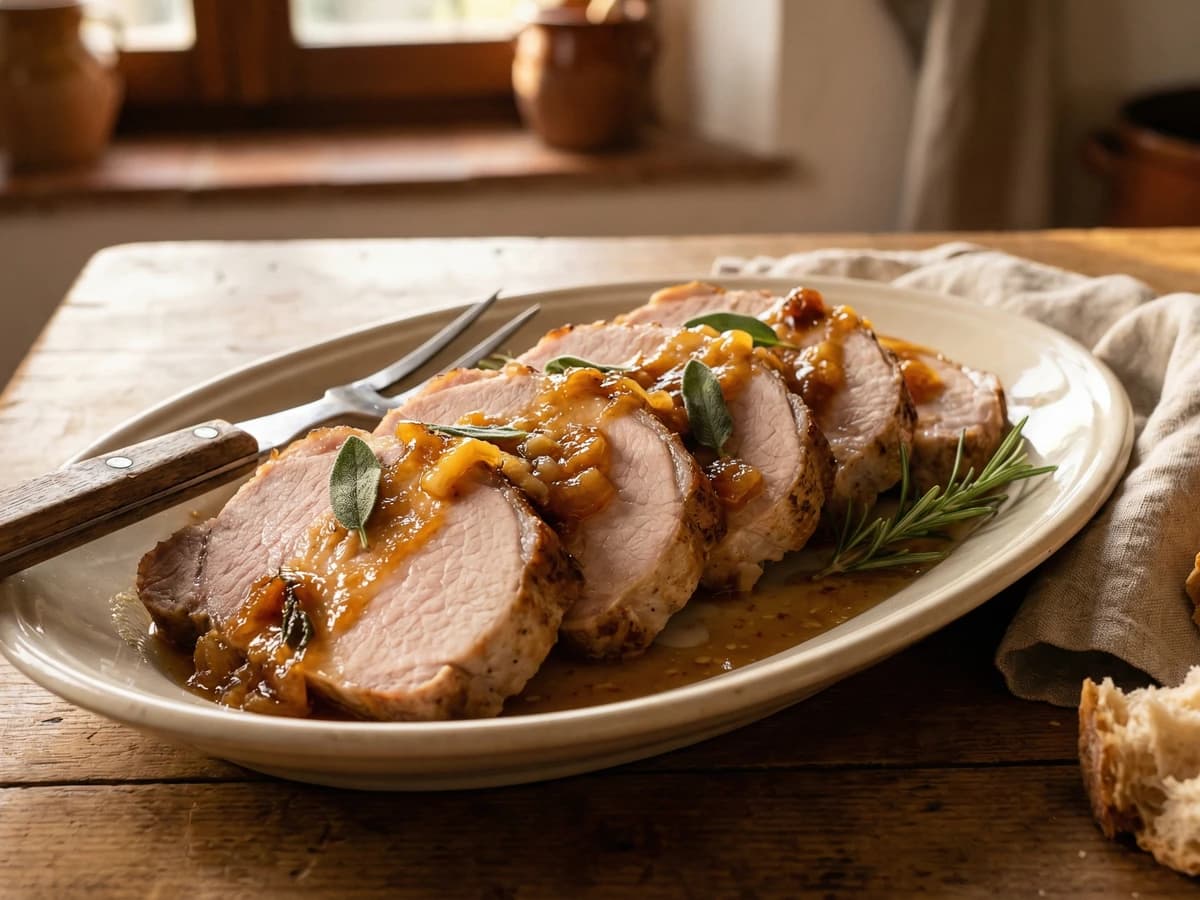
Arrosto di Maiale al Latte
Pork loin braised in milk until the liquid transforms into nutty, golden curds that cling to impossibly tender meat. The technique looks like failure and tastes like triumph.
A cooking platform built around craft, culture, and the stories behind what we eat.
Created by
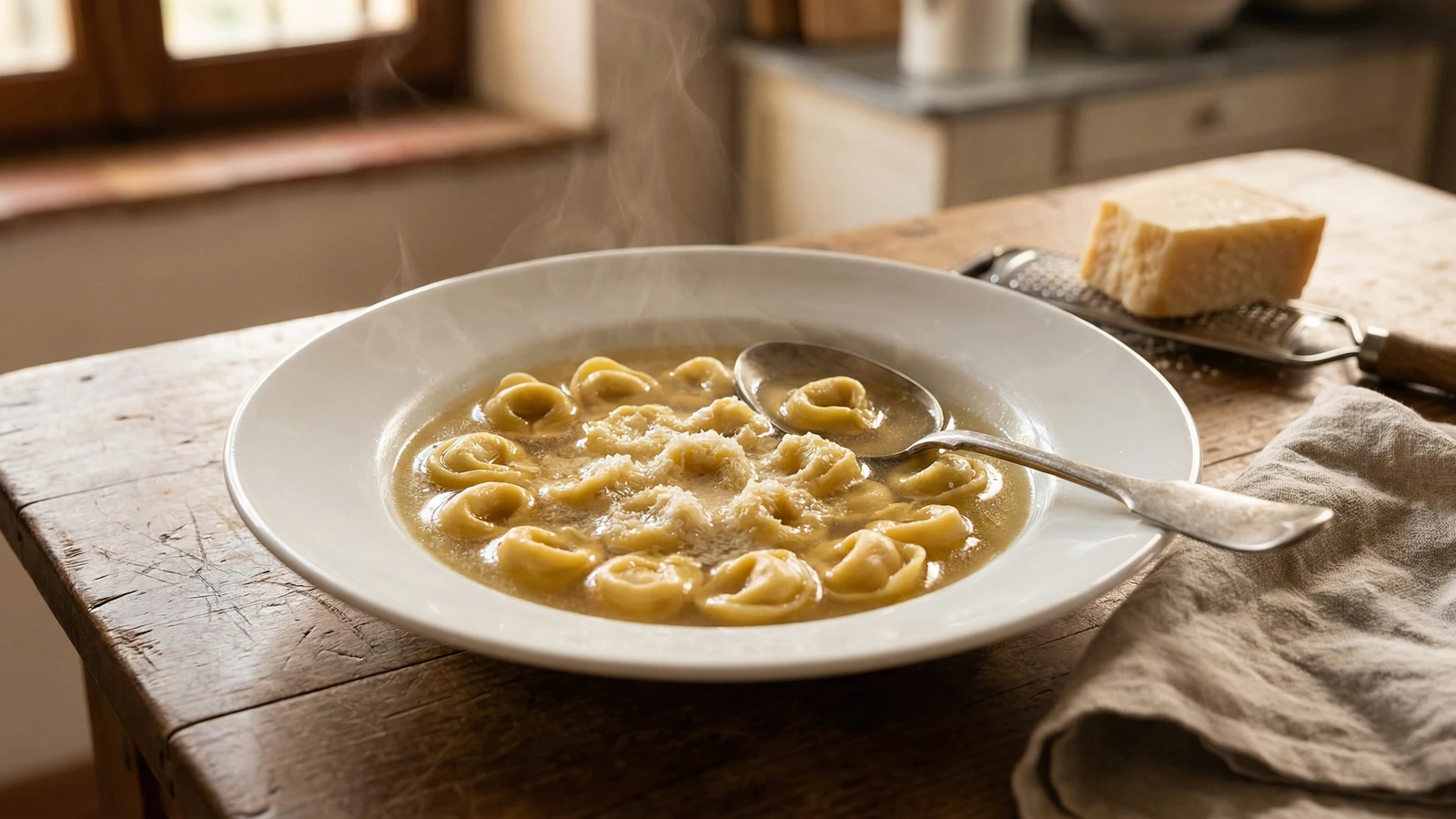
The Christmas dish of Bologna, where tiny parcels of pork, mortadella, and prosciutto float in clear golden broth. The brodo is the sauce. What you keep out is as significant as what you put in.
In Bologna, Christmas means tortellini in brodo. Not with tomato sauce. Not with cream. In brodo, floating in clear golden broth made from capon, the way it has been done for generations. The broth is the sauce. Nothing more is needed, and nothing more should be added.
The filling contains the holy trinity of Bolognese cured meats: mortadella, prosciutto, and pork loin cooked gently in butter. These are bound with Parmigiano-Reggiano and egg, then wrapped in pasta rolled so thin you can read a newspaper through it. The tortellini must be small. A Bolognese grandmother would be ashamed to serve large, clumsy parcels. Size matters here, and smaller is always correct.
This is not a recipe for a weeknight. It requires time, patience, and the understanding that some dishes cannot be rushed. The brodo simmers for hours. The filling must rest. The pasta demands your full attention. But when you ladle those small golden parcels into warm bowls and watch your family eat in silence because the flavor has stopped all conversation, you will understand why Bologna guards this tradition so fiercely.
Simple does not mean easy. It means honest.
Legend claims a Bolognese innkeeper, glimpsing Venus through a keyhole, was so struck by her navel that he rushed to his kitchen and created tortellini in its image. The truth is less romantic but more interesting: tortellini evolved from the filled pastas of medieval Emilia-Romagna, where wealthy families competed to create the most refined versions. By the 17th century, the dish had assumed its modern form. Bologna and Modena have argued for centuries over which city invented them. Both are wrong, and both are right. The Dotta Confraternita del Tortellino, Bologna's learned brotherhood dedicated to the pasta, registered an official recipe in 1974 that remains a subject of heated debate among grandmothers who know better.
Quantity
1 (about 7 pounds)
Quantity
2 pounds
Quantity
1 pound
Quantity
1 large
halved
Quantity
2
cut into large pieces
Quantity
2
cut into large pieces
Quantity
1
halved
Quantity
small handful
Quantity
1 tablespoon
Quantity
to taste
Quantity
4 ounces
Quantity
2 tablespoons
Quantity
4 ounces
in one piece
Quantity
3 ounces
sliced thick
Quantity
1 cup (about 3 ounces)
freshly grated
Quantity
1
Quantity
1/4 teaspoon
freshly grated
Quantity
400 grams (about 3 cups)
Quantity
4
Quantity
for passing at the table
freshly grated
| Ingredient | Quantity |
|---|---|
| capon or stewing hen | 1 (about 7 pounds) |
| chicken backs and wings (optional) | 2 pounds |
| beef shin or brisket | 1 pound |
| yellow onionhalved | 1 large |
| carrotscut into large pieces | 2 |
| celery stalks with leavescut into large pieces | 2 |
| ripe tomatohalved | 1 |
| parsley stems | small handful |
| whole black peppercorns | 1 tablespoon |
| kosher salt | to taste |
| pork loin | 4 ounces |
| unsalted butter | 2 tablespoons |
| mortadellain one piece | 4 ounces |
| prosciutto di Parmasliced thick | 3 ounces |
| Parmigiano-Reggianofreshly grated | 1 cup (about 3 ounces) |
| large egg | 1 |
| nutmegfreshly grated | 1/4 teaspoon |
| tipo 00 flour | 400 grams (about 3 cups) |
| large eggs | 4 |
| Parmigiano-Reggiano for servingfreshly grated | for passing at the table |
Place the capon, beef, onion, carrots, celery, tomato, parsley stems, and peppercorns in a large stockpot. Cover with cold water by three inches, about six quarts. Bring slowly to a simmer over medium heat. This should take at least 30 minutes. Never let it boil. A rolling boil creates cloudy broth, and a cloudy broth ruins the dish.
As the broth approaches a simmer, grayish foam will rise to the surface. Skim it away with a ladle or large spoon, repeatedly, until no more foam appears. This takes patience. Reduce heat to maintain the gentlest simmer, with bubbles barely breaking the surface. Simmer uncovered for three to four hours. The broth should reduce by about one-third and turn deeply golden.
Strain the broth through a fine-mesh sieve lined with cheesecloth into a clean pot. Discard the solids, or reserve the meat for another purpose. Season the broth with salt. It should taste clean and full, with a light body that coats the spoon. Let it cool, then refrigerate. The fat will solidify on top. Remove it before reheating.
Cut the pork loin into small cubes. Melt the butter in a small skillet over medium heat. When the foam subsides, add the pork and cook gently, turning occasionally, until cooked through and lightly golden, about 10 minutes. The pork should not brown deeply. Let it cool completely.
Cut the mortadella and prosciutto into rough chunks. Place them in a food processor with the cooled pork and any butter from the pan. Pulse until finely ground but not a paste. Transfer to a bowl. Add the Parmigiano, egg, and nutmeg. Mix thoroughly with a fork until the filling holds together. Taste and adjust salt. The mortadella is salty, so add salt sparingly. Cover and refrigerate for at least one hour to firm.
Mound the flour on a wooden board or clean work surface. Make a well in the center. Crack the eggs into the well. Beat the eggs with a fork, gradually incorporating flour from the inner walls of the well. When the dough becomes too stiff to mix with the fork, begin kneading with your hands. Knead for ten minutes until smooth, elastic, and no longer sticky. The dough should feel like your earlobe when pressed. Wrap in plastic and rest at room temperature for 30 minutes.
Divide the dough into four pieces. Work with one piece at a time, keeping the rest covered. Roll the dough through a pasta machine, starting at the widest setting, progressively narrowing until you reach the second-thinnest setting. The sheet should be thin enough to see your hand through it. A thick wrapper makes heavy, doughy tortellini.
Using a round cutter or glass about two inches in diameter, cut circles from the pasta sheet. Work quickly. Fresh pasta dries fast. Place a scant half-teaspoon of filling in the center of each circle. Fold the circle in half to form a half-moon, pressing the edges firmly to seal and pushing out any air. Wrap the half-moon around your index finger, points meeting, and press them together. Slide the tortellino off your finger. The result should resemble a small ring with a pointed crown.
Arrange the formed tortellini in a single layer on a flour-dusted tray or clean kitchen towels. Let them dry at room temperature for 30 minutes to one hour before cooking. This firms the seal and prevents them from opening in the broth. Turn them once during this time.
Bring the strained brodo to a gentle simmer in a large pot. It must not boil vigorously or the tortellini will break. Add the tortellini and cook until they float and the pasta is tender, four to five minutes. Ladle into warm shallow bowls, ensuring each portion has plenty of both broth and tortellini. Pass Parmigiano-Reggiano at the table. Nothing else belongs in the bowl.
1 serving (about 350g)
Culinary guides, cultural storytelling, and the editorial depth that makes cooking meaningful.
Discover Culinary ExplorerChef Graziella
Pork loin braised in milk until the liquid transforms into nutty, golden curds that cling to impossibly tender meat. The technique looks like failure and tastes like triumph.

Chef Graziella
Thick pork chops rubbed with salamoia bolognese and grilled over live fire. This is how we eat in summer in Emilia-Romagna: simply, outdoors, with family.
Chef Graziella
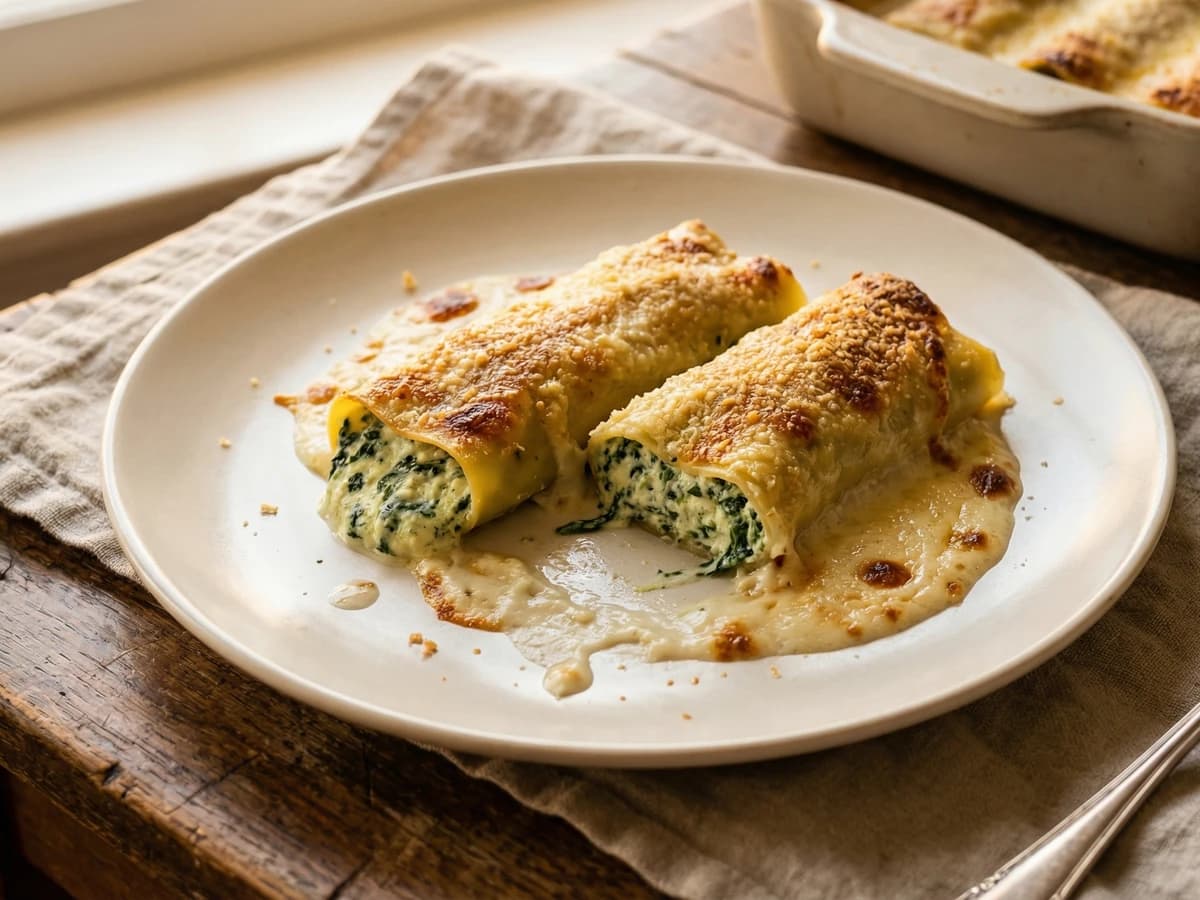
Hand-rolled pasta sheets wrapped around a filling of ricotta and spinach, covered in besciamella and baked until golden. This is the Sunday cooking of Emilia-Romagna, made without shortcuts.
Chef Graziella
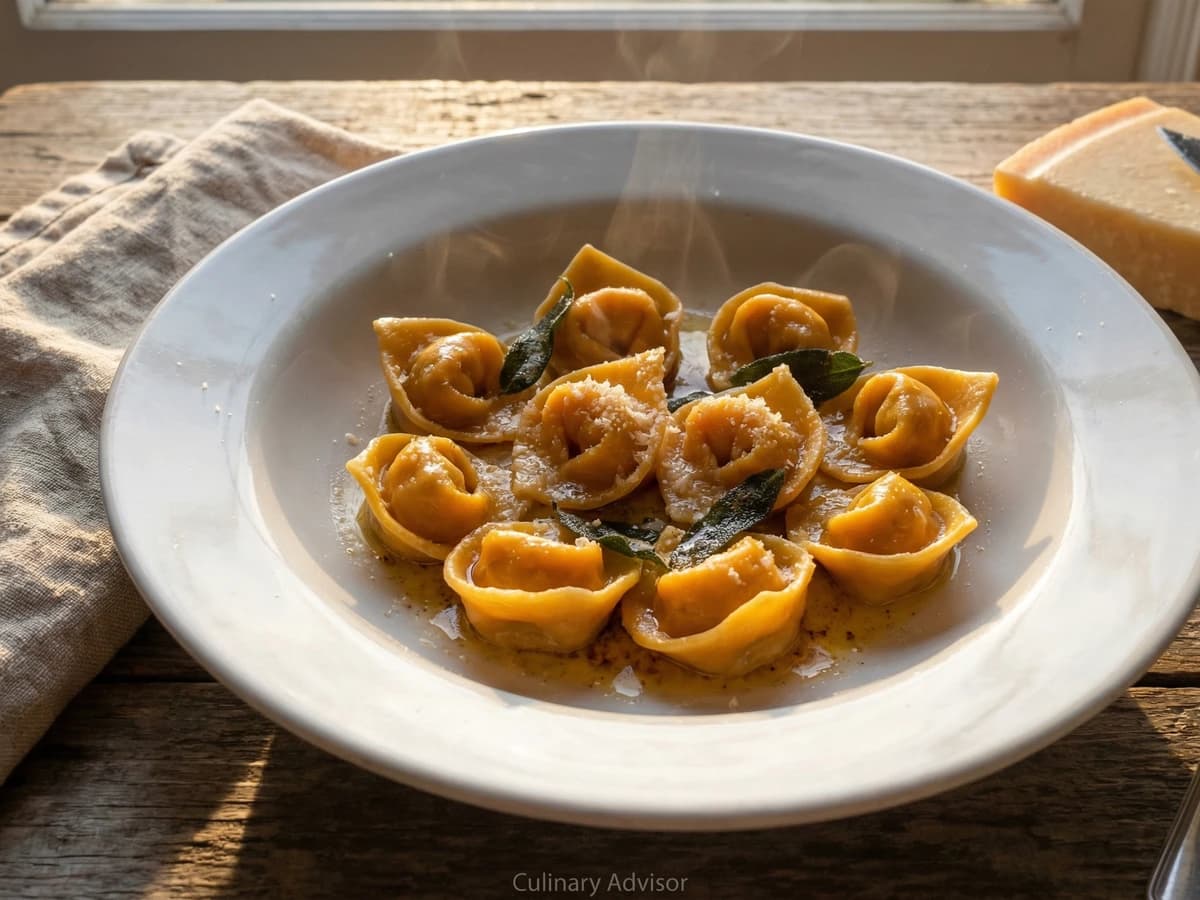
The pasta of the Este dukes, where sweet roasted pumpkin meets fresh egg pasta in shapes like little peasant hats. Dressed only with butter and sage, as Ferrara has done since the Renaissance.