
Chef Lupita
Birria Tacos with Consome
Jalisco's goat birria, born around Cocula and carried into Guadalajara's markets, slow-braised in ancho, guajillo, cascabel, and chile de arbol, then tucked into corn tortillas crisped in its own red fat.
A cooking platform built around craft, culture, and the stories behind what we eat.
Created by
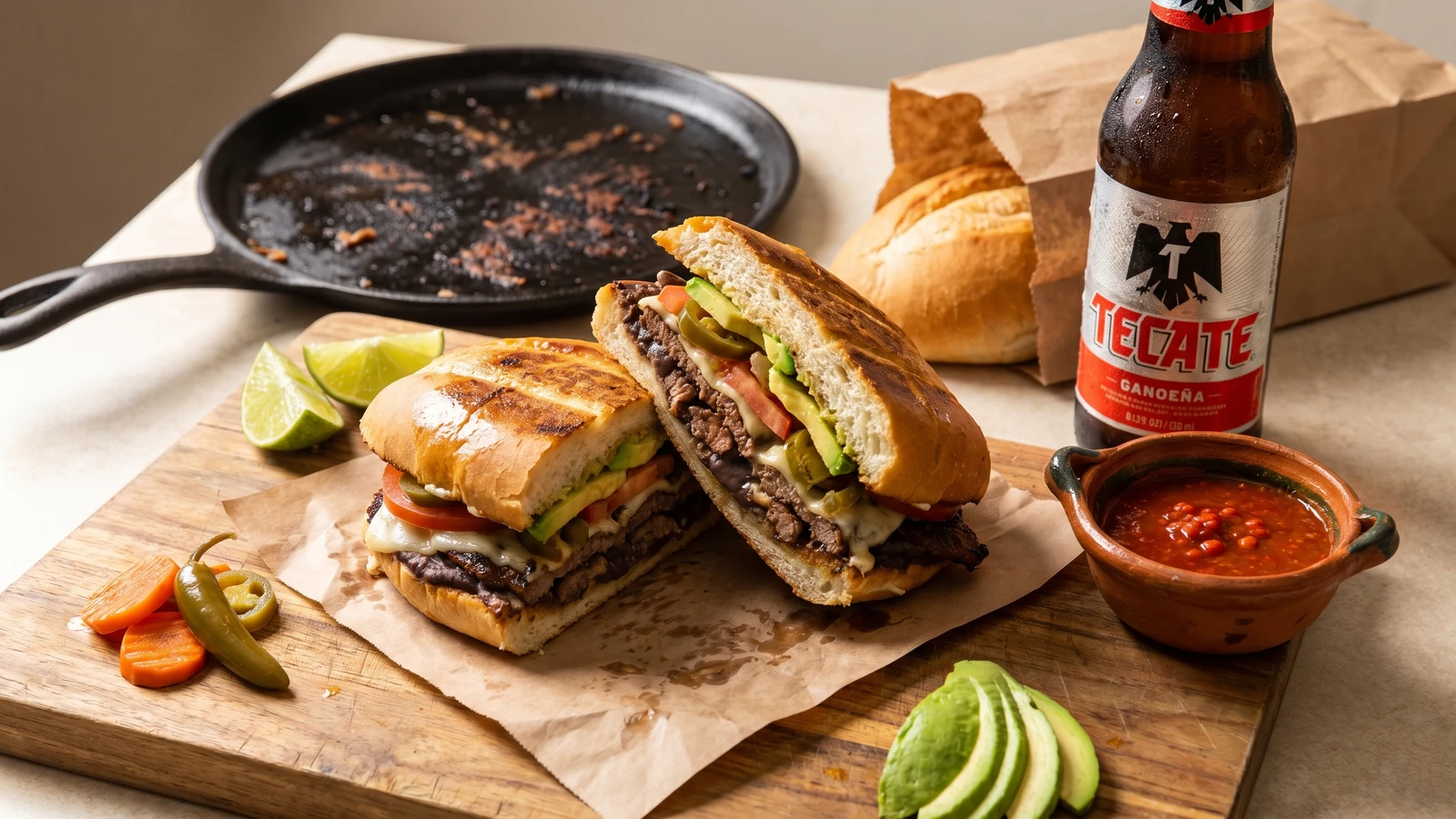
Sonora's working torta, built on a toasted bolillo with chorizo-rich frijoles puercos, mesquite-grilled carne asada, avocado, and pickled jalapeños. The lunchbox of the desert north.
This torta is from Sonora. Not from Mexico City, where the torta is its own enormous tradition with cubana and milanesa and pierna, but from the north, where the bread is toasted on the comal in lard, the beef is grilled over mesquite, and the beans carry chorizo because lean food does not survive a desert workday.
Sonora is cattle country. The state runs on beef the way Veracruz runs on seafood and Oaxaca runs on corn. The carne asada in this torta is not a steakhouse cut grilled medium-rare. It is thin arrachera or skirt steak, marinated in lime and garlic and oregano, seared hard and fast over high heat until the edges char and the middle stays pink. Mesquite if you have it. The smoke from mesquite is the flavor signature of the Sonoran kitchen, and it is why a carne asada in Hermosillo tastes different from a carne asada anywhere else.
The frijoles puercos are not optional and they are not refried beans from a can. They are pinto beans cooked with chorizo and onion and mashed in lard until they are thick enough to hold their shape on the bread. They are the foundation. Skip them and you have a meat sandwich, not a torta norteña.
My mother did not make these. She was from Jalisco and Jalisco has its own torta tradition. But I learned this one from a senora in Hermosillo named Doña Carmen who runs a torta cart outside the bus station and who told me, the first time I asked, that the secret is in three things: the beans must carry chorizo, the bread must be toasted in lard, and the meat must come off the fire pink. She was right about all three. Recetas probadas y garantizadas.
The torta as a Mexican format emerged in the late 19th century, when French-style bolillo and telera rolls, introduced during the Second Mexican Empire under Maximilian, were adopted by working-class cooks who built sandwiches around the new bread shapes. The Sonoran torta developed independently from the Mexico City tradition, drawing on the state's cattle ranching economy and its proximity to the wheat-growing valleys around Hermosillo and Ciudad Obregón that made wheat bread, not corn, the regional staple. The frijoles puercos preparation, beans mashed with chorizo and lard, traces to the ranchero kitchens of the Sierra Madre Occidental, where dense, fat-rich foods sustained vaqueros through long days in the saddle.
Quantity
1 1/2 pounds
butterflied to 1/4-inch thickness
Quantity
1/4 cup (about 3 limes)
Quantity
4
finely minced
Quantity
2 teaspoons, divided
Quantity
1 teaspoon
Quantity
1 teaspoon
crumbled between your palms
Quantity
2 tablespoons
Quantity
4
fresh and crusty
Quantity
3 tablespoons, divided
Quantity
2 cups
with a little of their cooking liquid
Quantity
4 ounces
casing removed
Quantity
1/4 medium
finely diced
Quantity
2
sliced
Quantity
1 cup
Quantity
2 medium
sliced thin
Quantity
1/2 cup
with a few of the carrots
Quantity
4 ounces
sliced thin
Quantity
for spreading
Quantity
to serve on the side
| Ingredient | Quantity |
|---|---|
| beef skirt steak (arrachera) or thinly sliced ribeyebutterflied to 1/4-inch thickness | 1 1/2 pounds |
| fresh lime juice | 1/4 cup (about 3 limes) |
| garlic clovesfinely minced | 4 |
| kosher salt | 2 teaspoons, divided |
| coarsely ground black pepper | 1 teaspoon |
| dried Mexican oreganocrumbled between your palms | 1 teaspoon |
| Sonoran beer (Tecate or Pacifico) or water | 2 tablespoons |
| bolillosfresh and crusty | 4 |
| manteca de cerdo (pork lard) | 3 tablespoons, divided |
| cooked pinto beanswith a little of their cooking liquid | 2 cups |
| Mexican chorizocasing removed | 4 ounces |
| white onionfinely diced | 1/4 medium |
| ripe Hass avocadossliced | 2 |
| shredded iceberg or romaine lettuce | 1 cup |
| Roma tomatoessliced thin | 2 medium |
| pickled jalapeños en escabechewith a few of the carrots | 1/2 cup |
| queso asadero or queso Chihuahua (optional)sliced thin | 4 ounces |
| mayonnaise | for spreading |
| salsa de chiltepín (optional) | to serve on the side |
Lay the butterflied beef in a shallow dish. Combine the lime juice, minced garlic, 1 1/2 teaspoons of the salt, the black pepper, the crumbled oregano, and the beer. Pour it over the meat and turn each piece so both sides are coated. Cover and let it sit at room temperature for 30 minutes, or refrigerate for up to two hours. Sonora does not drown its carne asada in marinade. Lime, garlic, salt, pepper. The beef is doing the work, not the seasoning.
Heat 1 tablespoon of the manteca in a heavy skillet over medium heat. Add the chorizo and break it up with a wooden spoon. Cook for four to five minutes, until the fat renders deep red and the meat is cooked through. Add the diced onion and cook for two more minutes until soft. Add the cooked pinto beans with about 1/4 cup of their cooking liquid. Mash with a potato masher or the back of a wooden spoon until you have a thick, spreadable paste. The texture should hold its shape on a spoon. Season with the remaining 1/2 teaspoon of salt, taste, and pull off the heat. La manteca es el sabor. These are not refried beans from a can. These are frijoles puercos and they belong on this torta.
If you have access to a charcoal grill and mesquite wood, use it. Mesquite is the cooking fuel of the Sonoran Desert and it is the reason carne asada from Hermosillo tastes the way it does. If you are working indoors, get a heavy cast iron comal or skillet very hot, almost smoking. The pan needs to scream when the meat hits it. Lukewarm metal steams the beef and you will not get the char that defines this dish.
Lift the meat from the marinade and shake off the excess. Lay the pieces on the hot grill or comal in a single layer, working in batches if you must. Sear for 60 to 90 seconds per side. The edges will char dark, the surface will glisten with the rendered fat, and the meat will still be pink in the middle when you pull it. Thin meat cooks fast. Walk away from it and you will eat shoe leather. Transfer to a cutting board and let it rest for five minutes.
Look at the meat. You will see the muscle fibers running in one direction. Slice across them, never with them, into bite-sized strips and chunks. Cutting with the grain gives you stringy, chewy meat. Cutting against it gives you the tender carne asada that goes into a torta. Pile the meat on the board and squeeze a little more lime over it if it needs brightness.
Split each bolillo lengthwise without cutting all the way through. Pull out a little of the soft interior crumb from the top half so the bread becomes a vehicle and not a bite of bread. Melt the remaining 2 tablespoons of manteca on the comal or in a clean skillet over medium heat. Press the cut sides of the bolillos into the lard and toast until deep golden and crisp at the edges. The crust should crackle when you press it. A torta on an untoasted bolillo collapses under the weight of the fillings. Asi se hace y punto.
Spread a thin layer of mayonnaise on the top half of each toasted bolillo. On the bottom half, spread a generous layer of the warm frijoles puercos, all the way to the edges. Lay slices of asadero on top of the beans if you are using cheese, the residual heat will start to soften it. Pile on the carne asada, then sliced avocado, then tomato, then shredded lettuce. Top with pickled jalapeños and a few of the pickled carrots.
Set the top half of the bolillo over the fillings and press down gently with the heel of your hand. The torta should compress so you can get your mouth around it. Cut on the diagonal if you want, or eat it whole. Serve with salsa de chiltepín on the side for those who want heat, and a cold Tecate to wash it down. This is lunch in Hermosillo. This is a torta from the north. No me vengas con atajos.
1 serving (about 560g)
Culinary guides, cultural storytelling, and the editorial depth that makes cooking meaningful.
Discover Culinary ExplorerChef Lupita
Jalisco's goat birria, born around Cocula and carried into Guadalajara's markets, slow-braised in ancho, guajillo, cascabel, and chile de arbol, then tucked into corn tortillas crisped in its own red fat.

Chef Lupita
Sonora's working morning burrito: chicharrón de cáscara stewed in chile colorado with diced potato, rolled tight in a paper-thin tortilla sobaquera and eaten standing up at the carreta.

Chef Lupita
Mocorito's pork chilorio, shredded and confited in lard with chile ancho and pasilla, rolled into a thin handmade flour tortilla. The burrito Sinaloa sends out into the world.

Chef Lupita
Sonora's morning burrito of mashed pinto frijoles puercos and melted queso asadero, wrapped in a paper-thin sobaquera and seared on the comal until the cheese pulls in long strings.