Culinary Explorer

A cooking platform built around craft, culture, and the stories behind what we eat.
Discover Culinary Explorer
Torta de Pierna Adobada Oaxaqueña

Torta de Pierna Adobada Oaxaqueña

Created by

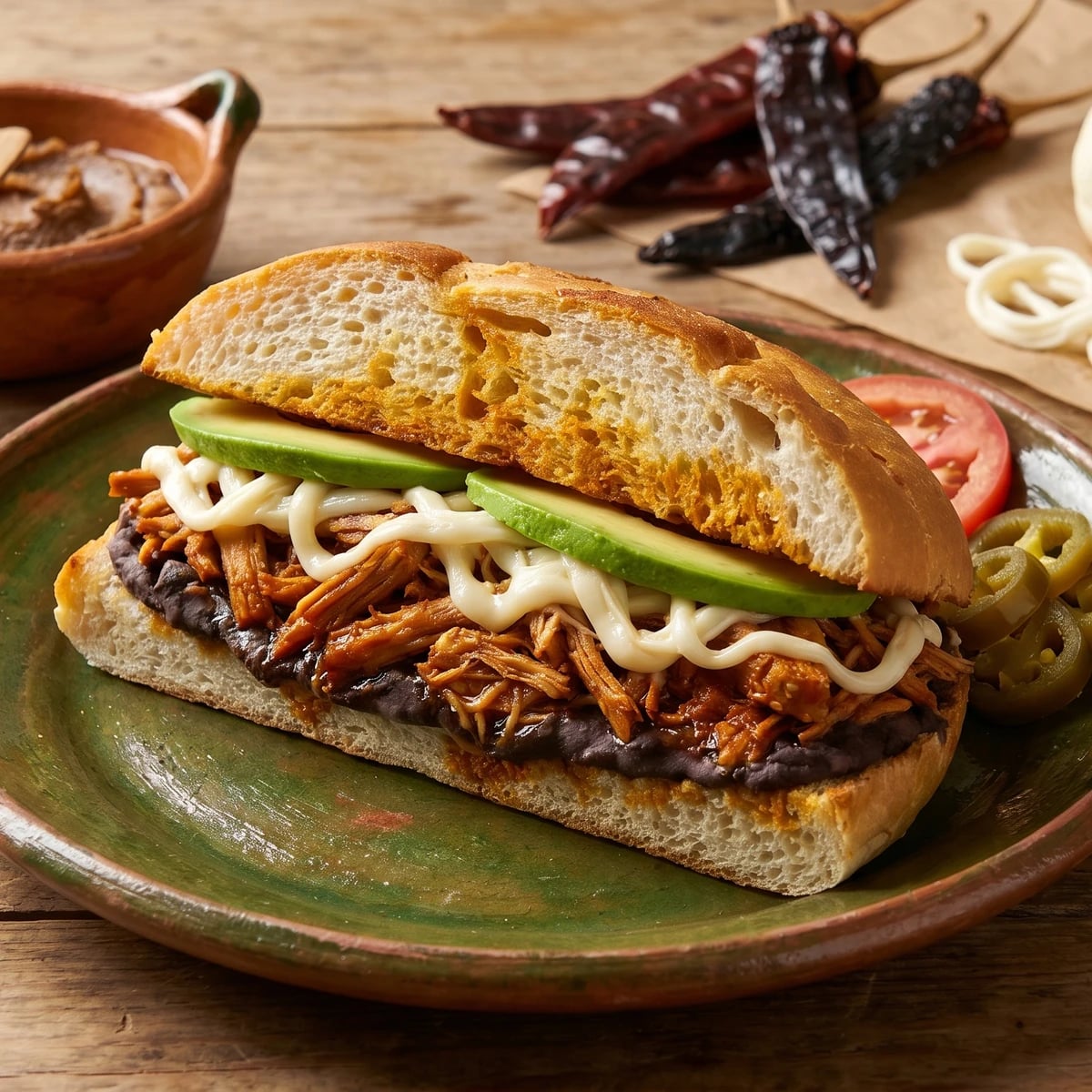
Oaxaca's tortería architecture: pork leg slow-braised in a three-chile adobo until it shreds under two forks, layered on a bolillo spread with asiento and black beans, draped with quesillo pulled into strings, and crowned with ripe avocado.

Sandwiches & Wraps
Mexican
Quick Meal
Weeknight
Make Ahead
40 min
Active Time
2 hr 45 min cook3 hr 25 min total
Yield8 tortas

This is an Oaxacan torta. Not a Mexico City torta, not a Guadalajara torta. Oaxaca has its own architecture for a sandwich, and the difference starts with what goes on the bread before the meat ever touches it: asiento.

Asiento is the dark, concentrated sediment left at the bottom of the pot after rendering pork lard. In the Central de Abastos market in Oaxaca city, the señoras sell it in small plastic bags next to the blocks of manteca. It tastes like pork reduced to its most honest form: smoky, deeply savory, a little bitter at the edges. You spread it on the bolillo the way other cooks spread butter, and it soaks into the crumb and stains it gold. Without asiento, you have a sandwich. With it, you have a torta oaxaqueña. La cocina no es decoracion, es trabajo, and asiento is the proof of that work: a byproduct that became a signature.

The pierna is pork leg braised in an adobo built on chile guajillo, chile ancho, and chile pasilla oaxaqueño, the smoked chile from the Mixe region that puts this version on the map of Oaxaca and nowhere else. Cumin, cloves, garlic, oregano, a splash of vinegar. The meat goes into a covered pot in the morning and comes out in the afternoon, tender enough to shred with two forks. The adobo stains the pork a deep burnt orange that bleeds into the bread when you build the torta. That color is guajillo. There is no substitute.

I learned this torta from a señora at a tortería near the Mercado 20 de Noviembre who had been building them since before I was born. She layered everything in a specific order: asiento on the bottom bread, then frijol negro refried with hoja de aguacate, then pierna pulled into shreds, then quesillo stretched into long strings, then avocado, then the top. I asked her why that order. She said: 'Porque así se hace.' I wrote it in my notebook exactly as she told me. Asi se hace y punto.

The torta as a Mexican sandwich format dates to the late 19th century, when French-style bolillos became widely available through bakeries established during the Porfiriato. Oaxaca's version distinguishes itself through asiento and quesillo, two ingredients produced almost exclusively in the state: asiento from the lard-rendering tradition tied to Oaxaca's pork economy, and quesillo, the hand-stretched string cheese developed in the town of Etla, credited to Leobarda Castellanos García, who reportedly discovered the stretching technique in the 1880s when she accidentally overheated her curds. The pierna adobada component draws on a broader Mexican tradition of chile-paste braised meats descending from both pre-Columbian molli preparations and Spanish vinegar-based adobos introduced in the 16th century, a convergence that produced the dried-chile adobo now standard across the republic but regionally inflected in every state.

The technique, the tradition, and the story behind every dish.

Discover Culinary Explorer

Ingredients

boneless pork leg roast

Quantity

3 pounds

dried chile guajillo

Quantity

6

stemmed and seeded

dried chile ancho

Quantity

3

stemmed and seeded

dried chile pasilla oaxaqueño

Quantity

2

stemmed and seeded

garlic cloves

Quantity

6

peeled

cumin seeds

Quantity

1 teaspoon

whole cloves

Quantity

4

black peppercorns

Quantity

6

dried Mexican oregano

Quantity

1 teaspoon

dried thyme

Quantity

1/2 teaspoon

apple cider vinegar

Quantity

2 tablespoons

kosher salt

Quantity

1 tablespoon plus 1 teaspoon, divided

pork lard (manteca de cerdo) for the adobo

Quantity

2 tablespoons

pork broth or water

Quantity

1 cup

cooked black beans with their broth

Quantity

2 cups

pork lard for the beans

Quantity

2 tablespoons

white onion

Quantity

1/4 medium

finely diced

dried avocado leaf (hoja de aguacate)

Quantity

1

asiento

Quantity

1/4 cup

bolillos

Quantity

8

split lengthwise

quesillo (Oaxacan string cheese)

Quantity

1 pound

pulled into long strips

ripe Hass avocados

Quantity

2

sliced

pickled jalapeños (optional)

Quantity

for serving

sliced tomato (optional)

Quantity

for serving

Equipment Needed

  • Heavy Dutch oven or deep clay cazuela with lid
  • Cast iron comal or heavy skillet for toasting chiles and spices
  • High-powered blender
  • Bean masher or sturdy wooden spoon
  • Two forks for shredding the braised pork

Instructions

  1. 1

    Toast the chiles

    Heat a dry comal or heavy skillet over medium. Toast the guajillo, ancho, and pasilla oaxaqueño chiles one type at a time, pressing them flat with a spatula, about 30 seconds per side. The guajillo puffs quickly and turns a shade darker. The ancho is thicker and takes a few seconds longer. The pasilla oaxaqueño is already smoky and dried hard, so it just needs to soften and release its oils. The kitchen should smell like the chile aisle at the Central de Abastos. That is the signal. Pull them the moment they are fragrant and pliable. Burned chile tastes bitter and there is no going back.

    The pasilla oaxaqueño is the smoked chile from the Mixe region. It is wrinkled, dark, and already intensely aromatic before it hits the comal. If you cannot find it, the dish will still be good, but it will not taste like Oaxaca. A chipotle morita is a distant compromise, not a replacement.
  2. 2

    Soak and blend the adobo

    Place all the toasted chiles in a heatproof bowl and cover with hot tap water. Hot, not boiling. Boiling water cooks the skin and turns the adobo bitter. Soak for 20 minutes until the chiles are soft and pliable. While they soak, toast the cumin seeds, cloves, and peppercorns in the same dry comal for about 30 seconds, shaking the pan, until they are fragrant. Drain the chiles, reserving half a cup of the soaking liquid. Transfer the chiles to a blender with the toasted spices, garlic, oregano, thyme, vinegar, one tablespoon of the salt, and the reserved soaking liquid. Blend on high until completely smooth. This should take a full minute. You want a thick, uniform paste with no chunks of skin. If the blender struggles, add soaking liquid one tablespoon at a time.

  3. 3

    Sear the pork and build the braise

    Preheat the oven to 325 degrees Fahrenheit. Pat the pork leg dry with paper towels and season all over with the remaining teaspoon of salt. In a heavy Dutch oven or deep cazuela, melt the two tablespoons of lard over medium-high heat. When the lard shimmers, sear the pork on all sides until deep golden brown, about three minutes per side. Do not rush the sear. The browning is flavor you cannot add later. Remove the pork and set it aside. Pour the blended adobo into the hot pot. It will sputter and darken immediately. Stir constantly for four to five minutes until the paste thickens, deepens in color, and the fat starts to separate at the edges. La manteca es el sabor. This frying step concentrates the chile and takes the raw edge off the garlic.

    If the adobo paste spatters badly, lower the heat slightly. You want it to fry, not explode. A splatter guard helps, but stir through it. The paste needs direct contact with the hot fat.
  4. 4

    Braise the pork low and slow

    Return the seared pork to the pot and turn it to coat completely in the fried adobo. Pour the cup of broth or water around the sides. The liquid should come about a third of the way up the meat, not cover it. Cover the pot tightly with a lid or foil and slide it into the oven. Braise for two and a half hours, turning the pork once halfway through. The meat is done when it offers no resistance to a fork and shreds apart under gentle pressure. The adobo will have reduced into a thick, glossy sauce that clings to the pork. If it looks dry at any point during braising, add a splash of water. When the pork is done, pull it from the pot and shred it with two forks, then fold the shredded meat back into the adobo in the pot. The sauce should coat every fiber.

  5. 5

    Make the refried black beans

    While the pork braises, make the beans. Melt two tablespoons of lard in a skillet over medium heat. Add the diced onion and cook until soft and translucent, about four minutes. Toast the dried avocado leaf over the flame of a burner for a few seconds, or press it onto the dry comal until it is fragrant and brittle, then crumble it into the onion. The avocado leaf gives Oaxacan beans their signature anise note. Add the cooked black beans with about half a cup of their broth. Mash with a bean masher or the back of a wooden spoon until you have a thick, spreadable paste. It should hold its shape on a spoon, not run. Season with salt. Keep warm on the lowest heat.

    Hoja de aguacate is not the leaf from your Hass avocado tree. It is from the Mexican native avocado, Persea drymifolia, with a distinct anise scent. Find it dried at Mexican grocery stores. If you cannot find it, leave it out. Do not substitute bay leaf. It is not the same.
  6. 6

    Toast the bolillos

    Split each bolillo lengthwise without cutting all the way through. Open it like a book. Toast the cut sides on a dry comal or under a broiler for about one minute, until the crumb is light gold and slightly crisp. The bread needs structure to hold the layers. A soft, untoasted bolillo will collapse under the weight of the pierna and beans. You want crunch on the inside and give on the crust.

  7. 7

    Assemble the torta

    Spread a generous tablespoon of asiento on the bottom half of each toasted bolillo. It soaks into the warm crumb and turns it golden. On top of the asiento, spread two tablespoons of the refried black beans in an even layer. Pile a generous mound of the shredded adobo pork on the beans, letting the sauce soak down. Lay the pulled strips of quesillo over the hot meat so they begin to soften and go slightly slack from the warmth. Fan avocado slices over the quesillo. Add pickled jalapeños and a slice of tomato if you want them. Close the bolillo, press it down gently with your palm so the layers compact, and cut it in half on the diagonal. Recetas probadas y garantizadas.

Chef Tips

  • Asiento is sold at mercados across Oaxaca state and at some Mexican grocery stores in the United States. If you cannot find it, here is the compromise: render a half pound of pork fatback in a heavy pot over very low heat for about an hour, until the fat is liquid and the solids at the bottom have turned deep amber and smell intensely porky. Strain the clear lard off for other uses. The dark paste left at the bottom is your asiento. It is not the same as what the señoras sell at the Central de Abastos, but it will get you close enough to understand why it matters.
  • Quesillo is Oaxacan string cheese. Do not confuse it with the block sold as 'queso Oaxaca' at chain supermarkets. True quesillo comes in a ball or a braid and you pull it apart into long, thin strings by hand. The strings drape over the hot meat and soften without melting into a puddle. If you use mozzarella, the texture is wrong. Find quesillo at a Mexican market or order it online. Preguntale a las señoras del mercado.
  • The pork leg is the traditional cut. Do not substitute pork loin or tenderloin. The leg has the connective tissue and moderate fat that break down during the long braise and give you meat that shreds properly and absorbs the adobo. A lean cut will dry out and sit on top of the sauce instead of marrying with it.
  • This is a make-ahead recipe by design. In Oaxacan torterías, the pierna is braised in the morning and the tortas are built all day from the same pot. The pork actually improves after sitting in its adobo overnight. Braise it today, build the tortas tomorrow. Cada estado, su propia cocina, and this one rewards patience.

Advance Preparation

  • The braised pierna adobada can be made up to three days ahead and refrigerated in its sauce. Reheat gently on the stovetop, adding a splash of water if the adobo has thickened too much. The flavor deepens overnight as the chile and spices penetrate the shredded meat.
  • The refried black beans keep refrigerated for up to five days. Reheat in a skillet with a tablespoon of lard or asiento and a splash of water to loosen them back to a spreadable consistency.
  • The adobo paste itself, blended but not yet fried, can be made up to two days ahead and refrigerated. Fry it in lard just before braising the pork.
  • Do not assemble the tortas ahead of time. The bolillos need to be freshly toasted and the avocado sliced at serving time. Build each one to order the way a tortería does.

Frequently Asked Questions

Nutrition Information

1 serving (about 375g)

Calories
885 calories
Total Fat
42 g
Saturated Fat
16 g
Trans Fat
0 g
Unsaturated Fat
24 g
Cholesterol
165 mg
Sodium
1730 mg
Total Carbohydrates
62 g
Dietary Fiber
10 g
Sugars
4 g
Protein
60 g

Note: Chef personas and recipes are created with AI assistance. Cook with care: follow safe food-handling practices, check doneness with a thermometer when needed, and adapt for allergies and your kitchen.

Where cooking meets culture.

Culinary guides, cultural storytelling, and the editorial depth that makes cooking meaningful.

Discover Culinary Explorer

More from Oaxacan Tlayudas, Tacos & Handhelds

Browse the full collection