
Chef Lupita
Birria Tacos with Consome
Jalisco's goat birria, born around Cocula and carried into Guadalajara's markets, slow-braised in ancho, guajillo, cascabel, and chile de arbol, then tucked into corn tortillas crisped in its own red fat.
A cooking platform built around craft, culture, and the stories behind what we eat.
Created by
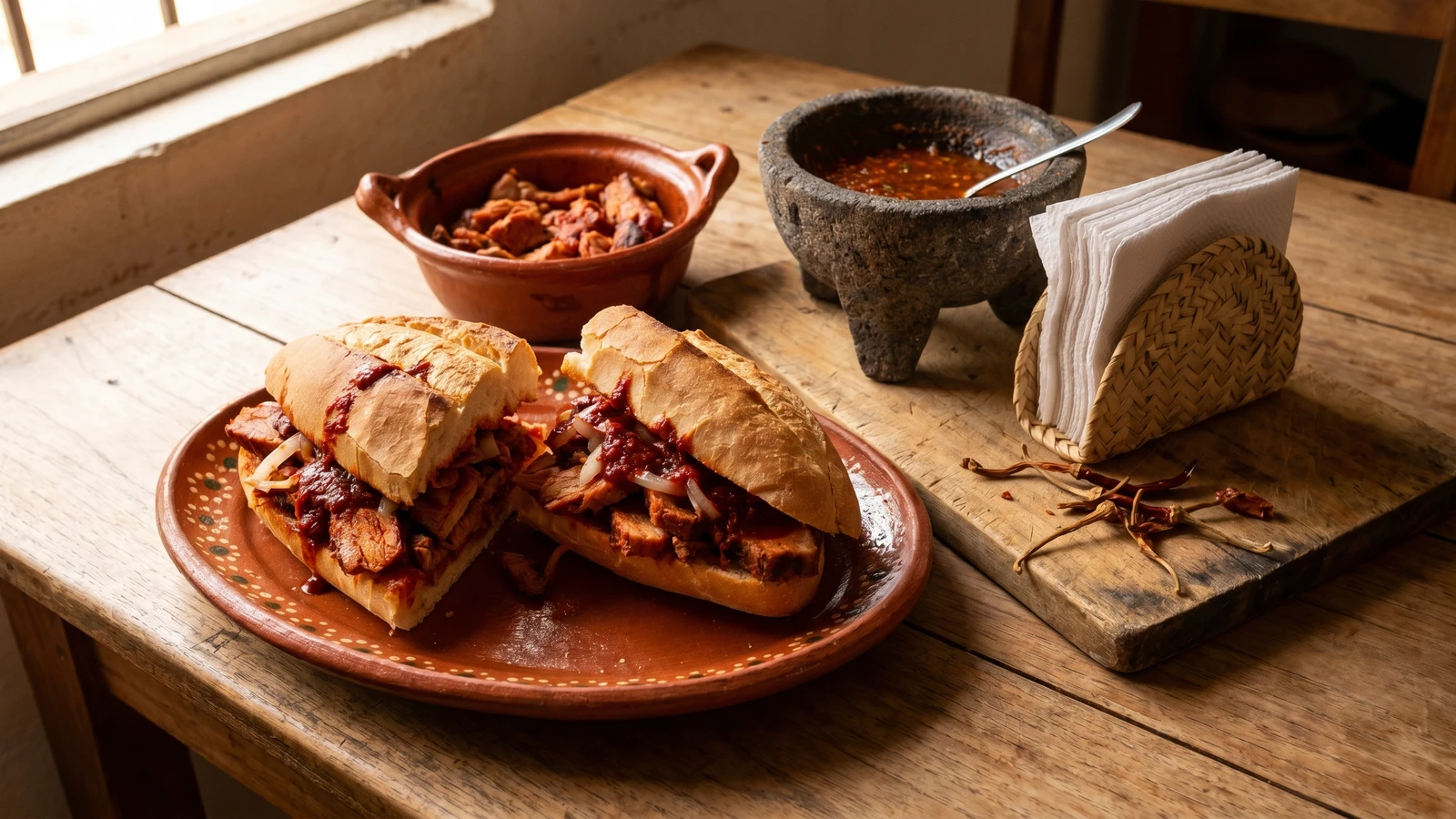
Tuxtla's torta de cochito is wood-oven pork in chile ancho and guajillo adobo, tucked into a small pan frances bolillo with cebolla curtida and salsa de árbol.
Chiapas, the Central Depression, Tuxtla Gutiérrez and Chiapa de Corzo: that is where this torta lives. The pork is cochito horneado, wood-oven roasted pork in a red adobo, not carnitas and not pulled pork with a bottle of sauce thrown on top. In the mercados of Tuxtla, the meat is chopped while the fat still shines, then tucked into a small crusty bolillo for a lunch you can eat standing up.
The adobo is the authority here. Chile ancho gives dark raisin depth, chile guajillo gives clean red color, and the vinegar, laurel, tomillo, orégano, clavo, canela, and pimienta gorda tell you this is Chiapas working with both old chile grinding and colonial spice cabinets. You toast the chiles on a comal, soak them in hot water, blend them smooth, and fry the paste in manteca de cerdo before it ever touches the pork. No me vengas con atajos.
My mother's notebook was full of Jalisco, not Chiapas. I had to learn cochito on the road, from women in Tuxtla and Chiapa de Corzo who measured by smell, by the way the adobo clung to the spoon, by whether the pork juices stained the clay cazuela brick-red. I wrote it down because recipes disappear when nobody writes them down, and because cada estado, su propia cocina means Chiapas gets its own page.
The bread matters. Use small pan frances bolillos like the ones you see in Comitán cenadurías and Chiapas bakeries, not a long northern sub roll. Serve the cebolla curtida and salsa de árbol in little red clay bowls from Amatenango del Valle if you have them. La cocina no es decoración, es trabajo.
Cochito horneado is tied to the Central Depression of Chiapas, especially Tuxtla Gutiérrez and Chiapa de Corzo, where pork roasted in wood ovens became both fiesta food and market food. The name cochito is the Spanish diminutive for young pig, and after pigs arrived with the Spanish in the 16th century, Chiapas cooks folded pork into Mesoamerican chile adobos and colonial seasonings including vinegar, clove, cinnamon, black pepper, thyme, and bay leaf. In Chiapa de Corzo, cochito appears during the January Fiesta Grande alongside other regional dishes, while Tuxtla made it practical enough to become a torta filling for everyday eating.
Quantity
3 1/2 pounds
cut into 4 large pieces
Quantity
1 tablespoon
for the pork
Quantity
5
stemmed and seeded
Quantity
6
stemmed and seeded
Quantity
1
Quantity
1/2 medium
thickly sliced
Quantity
6
unpeeled
Quantity
1/2 cup
Quantity
1/2 cup
Quantity
1 tablespoon
Quantity
1 teaspoon
Quantity
1/2 teaspoon
Quantity
2
Quantity
1/2 teaspoon
Quantity
4
Quantity
2
Quantity
1/2-inch piece
Quantity
1 teaspoon
Quantity
3 tablespoons
Quantity
1 teaspoon
for the adobo
Quantity
1/2 cup
for roasting
Quantity
1 large
thinly sliced into half-moons
Quantity
1/2 cup
for cebolla curtida
Quantity
1/2 cup
for cebolla curtida
Quantity
1 teaspoon
for cebolla curtida
Quantity
1/2 teaspoon
for cebolla curtida
Quantity
12
stemmed
Quantity
3
for salsa
Quantity
2
unpeeled, for salsa
Quantity
1/4 medium
for salsa
Quantity
1 tablespoon
for salsa
Quantity
1/2 teaspoon, plus more to taste
for salsa
Quantity
6
Quantity
2 tablespoons
for toasting the bread
| Ingredient | Quantity |
|---|---|
| pork shoulder or fresh pork leg with a fat capcut into 4 large pieces | 3 1/2 pounds |
| kosher saltfor the pork | 1 tablespoon |
| dried chile anchostemmed and seeded | 5 |
| dried chile guajillostemmed and seeded | 6 |
| Roma tomato | 1 |
| white onionthickly sliced | 1/2 medium |
| garlic clovesunpeeled | 6 |
| cane vinegar | 1/2 cup |
| hot chile soaking liquid or pork stock | 1/2 cup |
| achiote paste | 1 tablespoon |
| dried Mexican oregano | 1 teaspoon |
| dried thyme | 1/2 teaspoon |
| bay leaves | 2 |
| cumin seeds | 1/2 teaspoon |
| allspice berries | 4 |
| whole cloves | 2 |
| Mexican cinnamon | 1/2-inch piece |
| black peppercorns | 1 teaspoon |
| pork lard (manteca de cerdo) | 3 tablespoons |
| kosher saltfor the adobo | 1 teaspoon |
| water or pork stockfor roasting | 1/2 cup |
| red onionthinly sliced into half-moons | 1 large |
| cane vinegarfor cebolla curtida | 1/2 cup |
| hot waterfor cebolla curtida | 1/2 cup |
| kosher saltfor cebolla curtida | 1 teaspoon |
| dried Mexican oreganofor cebolla curtida | 1/2 teaspoon |
| dried chile de arbolstemmed | 12 |
| Roma tomatoesfor salsa | 3 |
| garlic clovesunpeeled, for salsa | 2 |
| white onionfor salsa | 1/4 medium |
| cane vinegarfor salsa | 1 tablespoon |
| kosher saltfor salsa | 1/2 teaspoon, plus more to taste |
| small crusty bolillos or Chiapaneco pan frances rolls | 6 |
| reserved cochito fat or pork lardfor toasting the bread | 2 tablespoons |
Pat the pork dry and rub it all over with 1 tablespoon kosher salt. Let it sit on a tray while you make the adobo. The salt starts working before the chile touches the meat, and pork shoulder needs that time. Do not use pork loin. It is too lean and it will punish you for buying it.
Heat a dry comal over medium. Toast the chile ancho and chile guajillo separately, 20 to 30 seconds per side, pressing them flat with tongs until the skins darken slightly and smell deep. They should puff and become flexible, not black. Put the toasted chiles in a bowl, cover with hot water, and soak for 20 minutes. Save 1/2 cup of the soaking liquid.
On the same comal, char the Roma tomato, sliced white onion, and 6 unpeeled garlic cloves until the skins blister and the onion has dark spots at the edges. Peel the garlic. In a small dry skillet, toast the cumin seeds, allspice berries, cloves, Mexican cinnamon, and black peppercorns for 30 to 45 seconds, just until fragrant. You are waking them up, not scorching them.
Drain the chiles and put them in a blender with the charred tomato, onion, peeled garlic, cane vinegar, 1/2 cup chile soaking liquid or pork stock, achiote paste, Mexican oregano, dried thyme, and toasted spices. Blend until completely smooth, at least 2 minutes. Strain through a fine-mesh sieve if your blender leaves chile skin behind. The adobo should coat a spoon like loose paint, brick-red and fragrant.
Melt the manteca de cerdo in a heavy saucepan or clay cazuela over medium heat. Add the blended adobo and 1 teaspoon kosher salt. It will sputter, so stir with respect. Fry for 8 to 10 minutes, scraping the bottom, until the paste darkens, thickens, and the lard shines around the edges. La manteca es el sabor. Set aside 1/2 cup of this fried adobo for finishing before any raw pork touches the rest.
Rub the remaining fried adobo all over the pork, pushing it into every fold of fat and meat. Put the pork in a nonreactive dish, cover, and refrigerate for 12 to 24 hours. Four hours will feed you. Overnight will teach you something. This is the difference between pork with sauce and cochito.
Heat the oven to 325F. Put the pork fat side up in a clay cazuela, Dutch oven, or heavy roasting pan. Scrape in all the marinade, tuck in the bay leaves, and pour 1/2 cup water or pork stock around the meat. Cover tightly and roast for 2 hours 15 minutes to 2 hours 45 minutes, until a fork slides in easily. Uncover, baste with the pan juices, and roast 25 to 30 minutes more, until the edges turn mahogany and the fat cap is glossy. For shredding, the pork should be around 195F in the thickest part.
While the pork roasts, put the sliced red onion in a bowl. Stir together the cane vinegar, hot water, kosher salt, and dried Mexican oregano, then pour it over the onion. Press the onion down so every slice touches the liquid. Let it sit at least 30 minutes. It should taste sharp, clean, and a little herbal, not sweet.
Toast the chile de arbol on the dry comal for 5 to 10 seconds, just until they darken a shade and smell nutty. They burn if you look away. Char the tomatoes, 2 unpeeled garlic cloves, and 1/4 white onion until blistered, then peel the garlic. Blend the chiles, tomatoes, garlic, onion, cane vinegar, kosher salt, and 2 to 3 tablespoons water until spoonable. Taste for salt. This salsa brings the heat to the torta, so the adobo does not have to shout.
Let the cochito rest for 20 minutes. Spoon off some of the red fat from the roasting juices and save it for the bread. Chop or shred the pork into rough pieces, keeping the browned edges and soft fat with the meat. Mix in enough pan juices and the reserved fried adobo to make the pork glossy and moist. Do not drown it. The meat should still taste roasted.
Split the small bolillos and brush the cut sides with reserved cochito fat or a little more manteca. Toast them cut side down on the comal until the crumb is crisp enough to hold the juices. Pile on the chopped cochito, add cebolla curtida, spoon salsa de arbol over the top, close the tortas, and press lightly. Eat while the bread still crackles under your teeth. Recetas probadas y garantizadas.
1 serving (about 390g)
Culinary guides, cultural storytelling, and the editorial depth that makes cooking meaningful.
Discover Culinary ExplorerChef Lupita
Jalisco's goat birria, born around Cocula and carried into Guadalajara's markets, slow-braised in ancho, guajillo, cascabel, and chile de arbol, then tucked into corn tortillas crisped in its own red fat.

Chef Lupita
Sonora's working morning burrito: chicharrón de cáscara stewed in chile colorado with diced potato, rolled tight in a paper-thin tortilla sobaquera and eaten standing up at the carreta.

Chef Lupita
Mocorito's pork chilorio, shredded and confited in lard with chile ancho and pasilla, rolled into a thin handmade flour tortilla. The burrito Sinaloa sends out into the world.

Chef Lupita
Sonora's morning burrito of mashed pinto frijoles puercos and melted queso asadero, wrapped in a paper-thin sobaquera and seared on the comal until the cheese pulls in long strings.