
Chef Lupita
Birria Tacos with Consome
Jalisco's goat birria, born around Cocula and carried into Guadalajara's markets, slow-braised in ancho, guajillo, cascabel, and chile de arbol, then tucked into corn tortillas crisped in its own red fat.
A cooking platform built around craft, culture, and the stories behind what we eat.
Created by
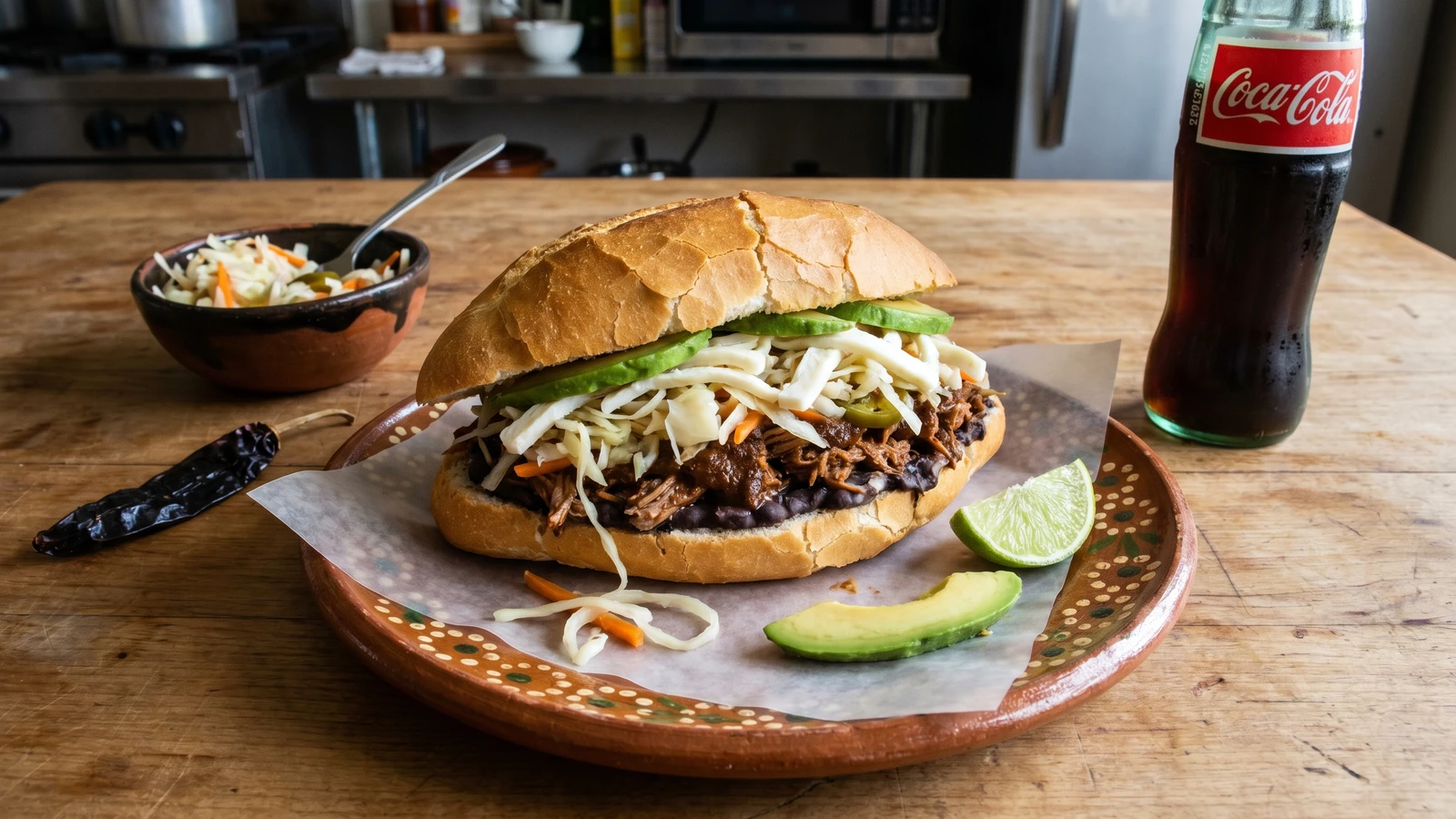
The composed torta from Juchitán's markets, layered with vinegar-pickled curtido, slow-simmered shredded beef, quesillo, and a chile pasilla oaxaqueño salsa that carries the acid and heat of the Isthmus in every bite.
This torta is from Oaxaca, but not the Oaxaca most people mean when they say the word. Not the Valles Centrales. Not the city with its mezcal bars and tlayudas on every corner. This is from the Istmo de Tehuantepec, the hot, flat, wind-battered stretch between the Sierra Madre del Sur and the Gulf, where the Zapotec women run the markets in Juchitán and Tehuantepec and the food tastes like the tropics it comes from: vinegar-sharp, chile-forward, built to survive the heat of a midday that would wilt anything delicate.
The torta compuesta is a market torta. Compuesta means composed, and that is exactly what it is: a long crusty bolillo split open and built in layers. Black bean paste on the bread. Shredded beef braised with tomato and garlic. A curtido of cabbage and carrot pickled in vinegar with oregano and chile. Quesillo pulled into strings. Avocado. And a salsa made from chile pasilla oaxaqueño and vinegar that ties the whole thing together with acid and a slow, smoky heat. Every layer does work. Nothing is decoration.
I first ate this torta at the Mercado 5 de Septiembre in Juchitán, bought from a Tehuana vendor who assembled it with the speed and confidence of someone who had built ten thousand of them. She didn't ask me what I wanted on it. She built it the way it's built. The curtido was sharp enough to cut through the richness of the beef. The salsa was dark and vinegary, not the fruity salsa of the valleys. The bread was longer and crustier than a Mexico City bolillo, with a chew that held up under the weight of everything inside. I wrote it all down in my notebook that afternoon, sitting on a plastic chair in 40-degree heat, and I've made it the same way since. Recetas probadas y garantizadas.
The Istmo cooks with acid the way the highlands cook with smoke. Vinegar, lime, sour orange: these are the backbone flavors of Istmeña cuisine. If you don't understand that, you'll build this torta wrong. The curtido is not a garnish. It is half the architecture.
The Isthmus of Tehuantepec has maintained a distinct culinary identity within Oaxaca, shaped by its Zapotec matrilineal market culture, its tropical lowland climate, and its historic position as a trade corridor between the Pacific and the Gulf of Mexico. The torta compuesta as a market format evolved in the 20th century alongside the growth of Juchitán's municipal markets, where Zapotec women vendors (known as Tehuanas) developed composed sandwiches as portable, complete meals for laborers and travelers. The vinegar-forward flavor profile of Istmeña cooking, visible in the curtido and the chile pasilla oaxaqueño salsa, reflects both the preservative needs of a hot climate where food spoils quickly and the historical availability of sugarcane vinegar produced in the lowland haciendas of the Isthmus region since the colonial period.
Quantity
2 pounds
in one piece
Quantity
4
Quantity
4
unpeeled
Quantity
1 medium
quartered
Quantity
2
Quantity
1 teaspoon
Quantity
1 teaspoon
Quantity
1 tablespoon, plus more to taste
Quantity
2 tablespoons
Quantity
1/2 small head
cored and thinly shredded
Quantity
2 medium
peeled and cut into thin matchsticks
Quantity
1 small
thinly sliced into half-moons
Quantity
1 cup
Quantity
1/2 cup
Quantity
1 tablespoon
Quantity
1 teaspoon
Quantity
1 teaspoon
Quantity
2
sliced into thin rounds
Quantity
4
stemmed and seeded
Quantity
2
peeled
Quantity
1/4 cup
Quantity
1/4 cup
Quantity
1/2 teaspoon
Quantity
1 cup
Quantity
2 tablespoons
Quantity
8 ounces
pulled into strips
Quantity
2
sliced
Quantity
6
the longest and crustiest you can find
| Ingredient | Quantity |
|---|---|
| beef chuck or brisketin one piece | 2 pounds |
| Roma tomatoes | 4 |
| garlic cloves (for the beef)unpeeled | 4 |
| white onion (for the beef)quartered | 1 medium |
| bay leaves | 2 |
| dried Mexican oregano (for the beef) | 1 teaspoon |
| black peppercorns | 1 teaspoon |
| kosher salt (for the beef) | 1 tablespoon, plus more to taste |
| pork lard (manteca de cerdo, for the beef) | 2 tablespoons |
| green cabbagecored and thinly shredded | 1/2 small head |
| carrotspeeled and cut into thin matchsticks | 2 medium |
| white onion (for curtido)thinly sliced into half-moons | 1 small |
| white vinegar or sugarcane vinegar (for curtido) | 1 cup |
| water (for curtido) | 1/2 cup |
| dried Mexican oregano (for curtido) | 1 tablespoon |
| kosher salt (for curtido) | 1 teaspoon |
| granulated sugar | 1 teaspoon |
| fresh chile jalapeñosliced into thin rounds | 2 |
| dried chile pasilla oaxaqueñostemmed and seeded | 4 |
| garlic cloves (for the salsa)peeled | 2 |
| white vinegar or sugarcane vinegar (for salsa) | 1/4 cup |
| reserved beef broth (for salsa) | 1/4 cup |
| kosher salt (for salsa) | 1/2 teaspoon |
| refried black beans (frijoles negros refritos) | 1 cup |
| pork lard (manteca de cerdo, for the beans) | 2 tablespoons |
| quesillo (Oaxacan string cheese)pulled into strips | 8 ounces |
| ripe Hass avocadossliced | 2 |
| bolillos or telerasthe longest and crustiest you can find | 6 |
Place the beef in a heavy pot and cover with cold water by two inches. Add the quartered onion, the four unpeeled garlic cloves, bay leaves, peppercorns, oregano, and salt. Bring to a gentle simmer over medium heat. Skim the gray foam that rises in the first ten minutes. Reduce the heat until you see lazy bubbles every few seconds. Cover partially and cook for one hour to one hour and fifteen minutes, until the beef shreds easily with two forks. Do not boil it. Boiling toughens the fibers. Pull the meat out and reserve at least one cup of the broth for later. The broth goes into your salsa and into your beans if you need it.
While the beef simmers, char the Roma tomatoes on a dry comal or under the broiler until the skins blister and blacken in spots and the flesh softens. Set them aside. When the beef is done and cool enough to handle, shred it into long, rough strips with two forks. Don't mince it. You want pieces with texture, not a paste.
Melt two tablespoons of lard in a wide skillet over medium-high heat. Crush the charred tomatoes by hand into the hot fat. They will sputter. Let them cook down for three to four minutes until the moisture evaporates and the tomato darkens. Add the shredded beef and toss it through the tomato and lard until every strand is coated. Season with salt to taste. The beef should be savory and slightly rich from the manteca, not dry. La manteca es el sabor. Set aside.
Combine the vinegar, water, oregano, salt, and sugar in a medium saucepan. Bring to a simmer and stir until the salt and sugar dissolve. Place the shredded cabbage, carrot matchsticks, sliced onion, and jalapeño rounds in a large glass or ceramic bowl. Pour the hot vinegar mixture over the vegetables. Toss with tongs. Press the vegetables down so the liquid covers as much as possible. Let the curtido sit at room temperature for at least 45 minutes, tossing once or twice. It will soften and turn sharp and slightly sweet. This is the backbone of the torta. Without it, you have a sandwich. With it, you have a torta compuesta.
Toast the dried chile pasilla oaxaqueño on a dry comal over medium heat, about 20 seconds per side. They are thin and smoky and they burn fast, so do not walk away. The moment the skin puffs and you smell smoke, pull them off. Soak in hot water for 15 minutes. Drain. Transfer to a blender with the two peeled garlic cloves, a quarter cup of vinegar, a quarter cup of the reserved beef broth, and half a teaspoon of salt. Blend until smooth. The salsa should be dark, smoky, and sharp with vinegar. Taste it. It should taste like the Isthmus: direct, acidic, unapologetic. Adjust salt if needed.
If your black beans are not already refried, melt two tablespoons of lard in a skillet over medium heat. Add the cooked black beans and a splash of the reserved broth. Mash with a bean masher or the back of a wooden spoon until you have a thick, spreadable paste. It should hold its shape on a spoon, not run off. Season with salt. Frijoles negros refritos in manteca: this is what goes on the bread first, and it is what keeps the bread from going soggy under the weight of everything else.
Split each bolillo lengthwise without cutting all the way through. Open it like a book. If you have a plancha or a comal, press the cut sides down for a minute until they are golden and slightly crisp. This is not optional. A soft bolillo will collapse under the curtido and the beef. You need that crust to hold the torta together. If your bolillos are small, use the longest teleras you can find. The Istmo version is generous. It is not a dainty sandwich.
Spread a thick layer of refried black beans on both cut sides of the bread. On the bottom half, lay the shredded beef in an even layer. Spoon the salsa de pasilla oaxaqueño over the beef, as much as you want. Pile a generous handful of curtido on top, letting the vinegar drip into the meat. Lay strips of quesillo over the curtido. Fan slices of avocado across the cheese. Close the torta and press it gently, just enough to compact the layers without crushing them. Cut in half on the diagonal if you want, or hand it over whole. Asi se hace y punto.
1 serving (about 400g)
Culinary guides, cultural storytelling, and the editorial depth that makes cooking meaningful.
Discover Culinary ExplorerChef Lupita
Jalisco's goat birria, born around Cocula and carried into Guadalajara's markets, slow-braised in ancho, guajillo, cascabel, and chile de arbol, then tucked into corn tortillas crisped in its own red fat.

Chef Lupita
Sonora's working morning burrito: chicharrón de cáscara stewed in chile colorado with diced potato, rolled tight in a paper-thin tortilla sobaquera and eaten standing up at the carreta.

Chef Lupita
Mocorito's pork chilorio, shredded and confited in lard with chile ancho and pasilla, rolled into a thin handmade flour tortilla. The burrito Sinaloa sends out into the world.

Chef Lupita
Sonora's morning burrito of mashed pinto frijoles puercos and melted queso asadero, wrapped in a paper-thin sobaquera and seared on the comal until the cheese pulls in long strings.