
Chef Lupita
Aceite de Chiltepin Bajacaliforniano
Baja California's wild chiltepin steeped in olive oil with garlic, orejon, and lime peel, until the oil turns ruby-amber and carries the slow, sneaky burn of the desert coast.
A cooking platform built around craft, culture, and the stories behind what we eat.
Created by
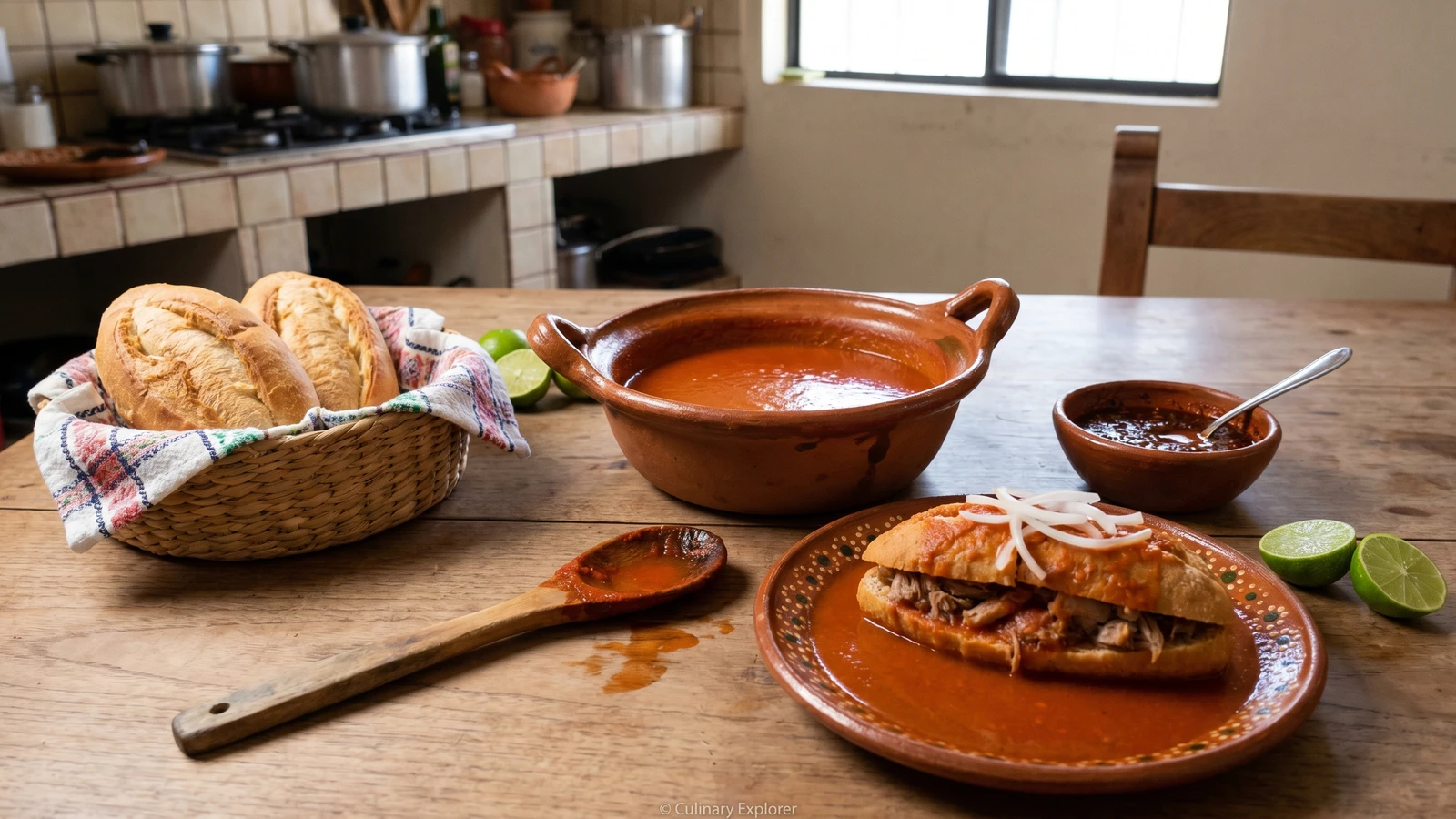
Guadalajara's caldillo de jitomate is the mild tomato bath that soaks a torta ahogada clean through, thin enough to flood the birote and seasoned with garlic, clove, and oregano.
Jalisco, Guadalajara specifically, owns the torta ahogada. Not the hamburger bun version, not a sandwich dipped in red sauce wherever someone feels creative. Guadalajara's torta ahogada depends on birote salado, carnitas, and this caldillo de jitomate, the mild tomato bath that lets the chile de arbol sauce do its own work on the side.
This caldillo is not supposed to be thick like salsa for chips. It is a bath. Jitomate guaje, white onion, garlic, clavo de olor, and oregano mexicano are boiled, blended, strained, and simmered until the sauce is thin, red-orange, and clean on the tongue. The clove is small but important. Too much and it tastes like medicine. Just enough and the tomato tastes like Guadalajara.
My mother was from Jalisco, and in her notebook she wrote this one with almost insulting brevity: "jitomate, ajo, clavo, oregano, agua, sal." That was her way. She assumed you understood the market, the pot, and the bread. I do not assume that. I tell you the sauce must be loose because the birote has to drink it. If the sauce sits on top, you made it wrong. Cada estado, su propia cocina.
Serve the caldillo warm in a deep clay bowl or pour it over the torta until the bread gives up and becomes part of the dish. The chile de arbol salsa is separate. Not all Mexican food is hot, and this sauce proves it. It is the tomato body of the torta, not the punishment.
The torta ahogada is tied to Guadalajara's 20th-century fondas and street stands, where birote salado, a crusty sourdough-style roll associated with the city, made it possible to drown a sandwich without the bread collapsing immediately. The tomato bath and the chile de arbol salsa developed as two separate sauces: one mild caldillo to soak the bread and one fiery table salsa for diners who wanted the full jalisciense bite. This division matters because it reflects Guadalajara's practical street-food engineering, the bread, meat, and sauces each doing a different job.
Quantity
3 pounds
rinsed
Quantity
1/2 medium
Quantity
4
peeled
Quantity
2
Quantity
1 teaspoon
Quantity
1 1/2 teaspoons, plus more to taste
Quantity
2 cups, plus more as needed
Quantity
1 tablespoon
| Ingredient | Quantity |
|---|---|
| ripe Roma tomatoes (jitomate guaje)rinsed | 3 pounds |
| white onion | 1/2 medium |
| garlic clovespeeled | 4 |
| whole cloves (clavo de olor) | 2 |
| dried Mexican oregano | 1 teaspoon |
| kosher salt | 1 1/2 teaspoons, plus more to taste |
| tomato cooking water | 2 cups, plus more as needed |
| white vinegar | 1 tablespoon |
Put the tomatoes, white onion, and garlic in a medium pot. Cover with water by one inch and bring to a steady boil over medium-high heat. Cook 12 to 15 minutes, until the tomato skins split and the flesh softens. Save the cooking water. That water tastes like tomato now, and you need it to make the bath thin enough for the birote.
Transfer the tomatoes, onion, and garlic to a blender. Add the clavo de olor, Mexican oregano, salt, white vinegar, and 2 cups of the tomato cooking water. Blend until completely smooth. Do not make this thick. A torta ahogada sauce has to move like broth with body, not like table salsa.
Pass the blended sauce through a fine-mesh strainer into a clean pot, pressing with a spoon to push through the tomato flesh. Discard the skins and seeds left behind. Guadalajara's caldillo should be smooth enough to soak the bread evenly. Seeds and skins get in the way.
Set the strained sauce over medium heat and simmer 10 to 12 minutes. Stir now and then. The color should deepen slightly, and the raw edge of the tomato should soften. Taste for salt. It should taste a little stronger than you think, because bread will mute it. If it thickens too much, add more tomato cooking water, half a cup at a time.
Keep the caldillo warm. Set it in a deep clay bowl beside the tortas, or ladle it over a stuffed birote salado until the bread is soaked. Serve the chile de arbol sauce separately. The caldillo is the tomato bath. The chile sauce is the bite. Confuse them and a señora in Guadalajara will correct you before I have to.
1 serving (about 240g)
Culinary guides, cultural storytelling, and the editorial depth that makes cooking meaningful.
Discover Culinary ExplorerChef Lupita
Baja California's wild chiltepin steeped in olive oil with garlic, orejon, and lime peel, until the oil turns ruby-amber and carries the slow, sneaky burn of the desert coast.

Chef Lupita
Puebla's Lenten convent adobo, a brick-red vinegar chile paste of ancho, guajillo, garlic, oregano, and comino made to dress fish for the meatless calendar.
Chef Lupita
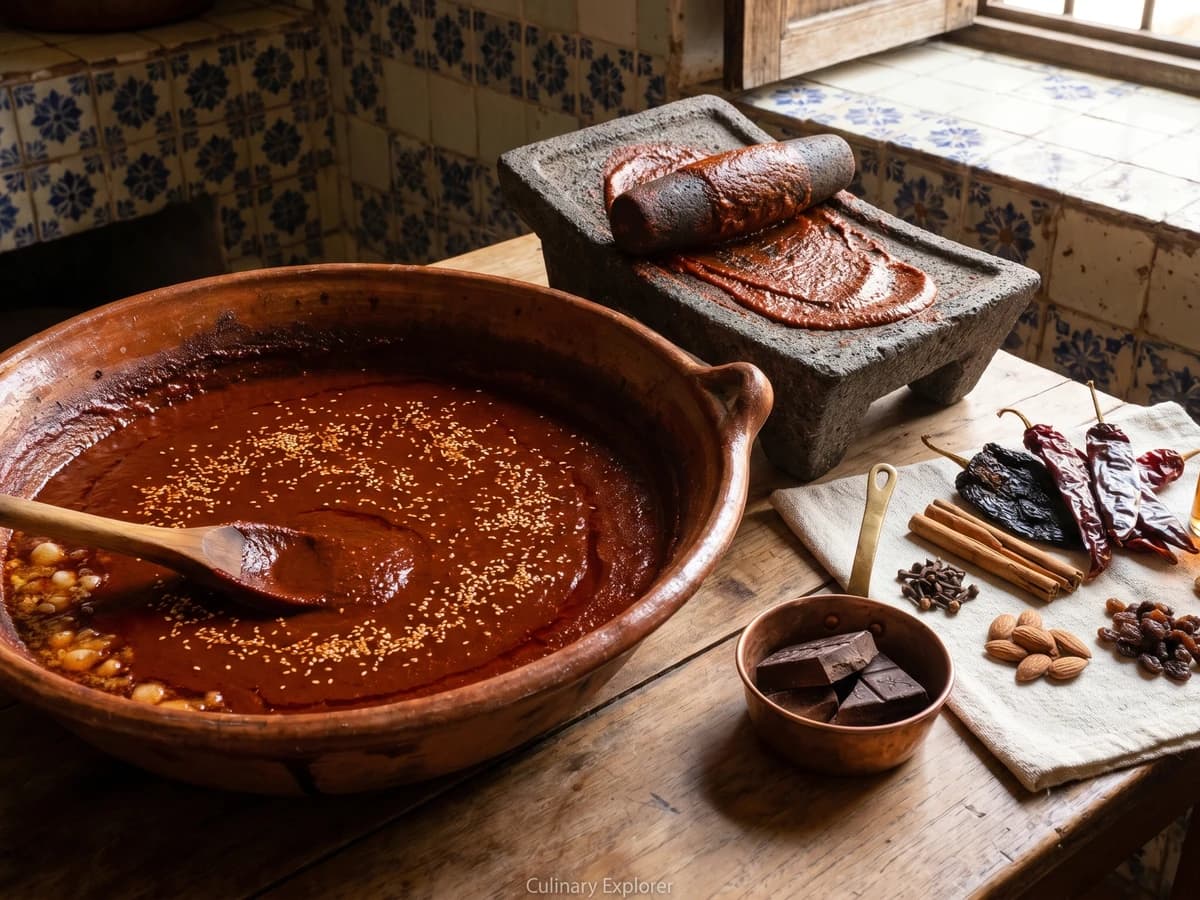
Zacatecas' wedding-table adobo, built from toasted guajillo and ancho, piloncillo, sour orange, chocolate, canela, clavo, almonds, sesame, and lard.

Chef Lupita
Puebla's convent kitchens built this adobo with ancho, guajillo, jerez, almonds, raisins, clove, and lard, a baroque marinade that stains pork loin and finishes as the sauce.