
Chef Freja
Danablu Mad med Rå Æggeblomme
Danish blue cheese layered on dark rye with a raw egg yolk nestled on top, red onion rings, and chives. The last piece at a Danish lunch, and the one that stays with you longest.
A cooking platform built around craft, culture, and the stories behind what we eat.
Created by Chef Freja
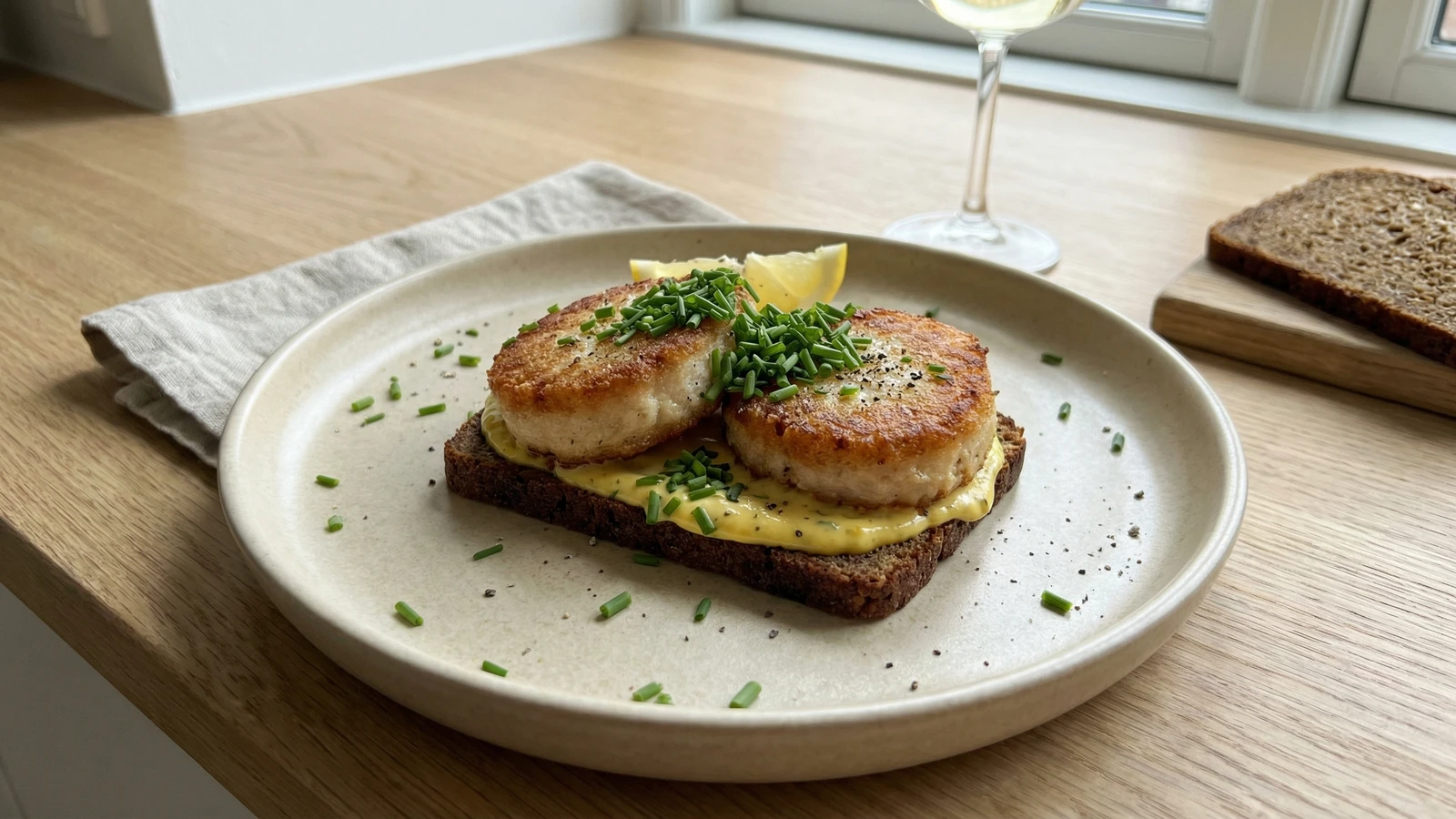
Thick slices of cold fried cod roe on dark rugbrod with Danish remoulade and chives. An old Copenhagen lunch counter classic from the deepest weeks of winter, when the fishing boats came in with roe sacks heavy as a fist.
Torskerogn belongs to the deepest weeks of Danish winter. January into February, when the cod are spawning in the cold waters around Bornholm and the fishmongers at Copenhagen's Torvehallerne lay out the heavy pink sacks on ice. You don't find cod roe in July. The season decides, and the season is now.
This is an old piece of the Danish lunch repertoire, the kind of smorrebrod you'd find at the wood-panelled frokostrestauranter along Nyhavn and down by the harbour, where clerks and dockworkers sat elbow to elbow with a glass of beer and a schnapps and ate their way through herring, roe, liver paste, and cheese in the proper order. The roe was always the quiet piece. Not the showiest, not the one people talked about, but the one the regulars ordered without looking at the menu.
Here is what you need to understand before you start. The roe is poached whole in its sack, chilled completely, sliced thick, floured, and fried in butter until the edges turn deep gold. Then, and this is the part people get wrong, it's cooled again before it goes on the bread. Hot fried roe on cold rugbrod is not this dish. Cold fried roe on cold rugbrod, with cool remoulade underneath and bright chives on top, is. The temperature is part of the flavour. You'll taste it and you'll understand.
The hardest part of the whole thing is the patience. The poaching is slow, the cooling is slow, the frying is fast and the second cooling is slow again. But none of it is difficult. If you can bring a pot of water up gently and fry a slice of something in butter, you can make this. And when you lay the first piece on the plate and see the mahogany slices against the dark rye with the yellow remoulade showing at the edges, you'll feel what the old lunch counters knew: that the simplest things are often the ones worth sitting down for.
Cod roe has been eaten along the Danish coasts for as long as there have been fishing villages, but torskerogn on smorrebrod belongs specifically to the Copenhagen lunch counter tradition that flourished between the 1880s and the 1960s. It was cheap, filling, and tied to the winter cod fishery out of Bornholm and the North Sea ports, which is why it became a staple of the working lunch. The dish nearly disappeared in the late twentieth century as fresh roe became harder to find and the old frokostrestauranter closed one by one, but it has quietly returned to Danish menus in the last decade, carried back by cooks who remember eating it at their grandparents' tables and refused to let it go.
Quantity
1 sack, about 400g
handled gently, the membrane intact
Quantity
1.5 litres
Quantity
2 tablespoons
Quantity
1 tablespoon
Quantity
2
Quantity
1 teaspoon
Quantity
1, halved, plus wedges to serve
Quantity
for dusting
Quantity
freshly ground, to taste
Quantity
40g
Quantity
1 tablespoon
Quantity
4 thick slices
Quantity
4 generous tablespoons
Quantity
small bunch
finely snipped
| Ingredient | Quantity |
|---|---|
| fresh cod roehandled gently, the membrane intact | 1 sack, about 400g |
| cold water | 1.5 litres |
| fine sea salt | 2 tablespoons |
| white wine vinegar | 1 tablespoon |
| bay leaves | 2 |
| black peppercorns | 1 teaspoon |
| lemon | 1, halved, plus wedges to serve |
| plain flour | for dusting |
| black pepper | freshly ground, to taste |
| unsalted butter | 40g |
| neutral oil | 1 tablespoon |
| dark rugbrod | 4 thick slices |
| Danish remoulade | 4 generous tablespoons |
| chivesfinely snipped | small bunch |
Rinse the cod roe very gently under cold running water. The sack is fragile. If it tears, the eggs spill into the cooking water and you'll be left with nothing to slice. Lay the roe on a double layer of muslin or a clean tea towel and wrap it into a loose parcel, tying the ends with kitchen string. The cloth holds the shape steady while it poaches and gives you something to lift it out by.
Pour the cold water into a wide pot and add the salt, vinegar, bay leaves, peppercorns, and the two lemon halves squeezed in, spent shells dropped in after. Cold water matters here. If you start the roe in hot water, the outside seizes and the inside stays raw. A slow rise from cold lets the heat reach the centre evenly.
Lower the wrapped roe into the cold liquid and set the pot over a medium heat. Bring it slowly to a bare simmer, which should take about fifteen minutes. You want the surface to tremble, not bubble. Onceit reaches that quiet simmer, cook for another twenty minutes. The roe is ready when it feels firm to the touch through the cloth, like a ripe pear with a little resistance at the centre.
Take the pot off the heat and let the roe cool completely in its poaching liquid. This is not optional. The roe firms as it cools, and the liquid keeps it moist. Once the pot is at room temperature, lift the parcel out, set it on a plate, and chill it in the fridge for at least two hours. Overnight is better. A cold roe slices cleanly. A warm one crumbles into the pan.
Unwrap the chilled roe and peel away any loose membrane on the outside. Slice it into rounds about one and a half centimetres thick with a sharp knife. Thinner and they fall apart in the pan. Thicker and the inside stays cool while the crust takes on too much colour. Lay the slices on a plate, season lightly with salt and pepper, and dust each side in plain flour. Shake off the excess. The flour is what gives you the crackle when they meet the butter.
Heat the butter and oil together in a heavy frying pan over medium heat. The oil stops the butter from burning, the butter gives the slices their nutty colour and flavour. When the butter foams and starts to smell of hazelnuts, lay the roe slices in. Cook for two to three minutes on each side without crowding the pan. You want a deep golden crust, almost mahogany at the edges. Lift them onto kitchen paper and let them cool completely. This is a cold smorrebrod. Fried hot, served cold. That's how the lunch counters did it.
Spread each slice of rugbrod with a generous layer of remoulade, going right to the edges. Lay two cold roe slices on top of each piece, overlapping slightly so they cover most of the bread but leave a dark border of rye showing. Scatter the chives across the top in a thick green line. Finish with a small grind of black pepper and tuck a lemon wedge alongside. Serve on a flat plate with a knife and fork. Smorrebrod is never picked up, and this one especially, because the layers are the whole point.
1 serving (about 200g)
Culinary guides, cultural storytelling, and the editorial depth that makes cooking meaningful.
Discover Culinary ExplorerChef Freja
Danish blue cheese layered on dark rye with a raw egg yolk nestled on top, red onion rings, and chives. The last piece at a Danish lunch, and the one that stays with you longest.

Chef Freja
Thick-sliced Danbo on properly buttered rugbrod with sweet pepper rings and a crown of garden cress. The cheese smorrebrod that lives in every Danish lunchbox, from the first day of school to the last day at the office.

Chef Freja
Copenhagen's most storied smorrebrod: leverpostej, cold salt beef, trembling aspic, onion rings, and fresh cress on dark rugbrod. Invented at Oskar Davidsen's in the 1880s for a hungry veterinarian and still one of the great pieces of the Danish lunch table.

Chef Freja
Pungent Esrom from North Zealand on dark rye with paper-thin radish and fresh chives. The cheese course that closes a proper Danish smorrebrod spread, one of the quietest, most satisfying bites in the whole tradition.