
Chef Freja
Andelår med Rødkål
Slow-roasted duck legs with crisp, deeply golden skin, served with braised red cabbage and caramelized potatoes. The weeknight Danish duck that proves the best part of the bird is the one that takes its time.
A cooking platform built around craft, culture, and the stories behind what we eat.

Created by Chef Freja
Atlantic cod baked in a buttered fad with slowly softened onions, crisp smoked bacon, cream, and golden breadcrumbs. The mormormad casserole that proves the simplest dishes carry the most warmth.
December in Denmark is dark by four o'clock. The windows go black while you're still clearing up from lunch. These are the evenings when mormormad comes back to the table, the grandmother dishes that never needed a recipe because everyone already knew how to make them.
Torsk i fad is one of those dishes. Cod fillets laid in a buttered oven dish with soft onions, crisp bacon, and cream, topped with breadcrumbs and baked until the surface goes golden and the cream bubbles up at the edges. It's the kind of food that doesn't photograph well on Instagram and tastes better than almost anything that does. You serve it from the fad it baked in, straight onto warm plates, with boiled potatoes and nothing else. That's a Wednesday evening in December, cooked with love.
The one thing I want you to pay attention to is the onions. Bløde løg means soft onions, and soft means soft. Not translucent, not slightly wilted. You cook the sliced onions slowly in the bacon fat until they collapse completely, turn sweet, and lose every trace of sharpness. This takes longer than you think, fifteen minutes at least, and you can't rush it. The onions are the foundation of the whole dish, and if they're still half-raw when they go into the fad, you'll taste it in every bite. Give them the time. You'll know when they're right.
Torsk, Atlantic cod, has been the most important food fish in Denmark for centuries, sustaining coastal communities along the North Sea and Baltic coasts and giving rise to traditions like nytaarstorsk, the boiled cod served on New Year's Eve. The practice of baking fish in a fad, a shallow oven dish layered with cream and breadcrumbs, belongs to the mormormad repertoire that defined Danish home cooking through the twentieth century. These dishes were rarely written down. They passed from kitchen to kitchen by watching, and the current revival of interest in mormormad reflects a generation realizing that what their grandmothers never thought to record is worth learning before it disappears.
Quantity
700g
skinless, pin-boned, cut into 4 large pieces
Quantity
200g
cut into small lardons
Quantity
4 medium
halved and thinly sliced
Quantity
250ml
Quantity
30g, plus extra for the dish
Quantity
60g
Quantity
2
Quantity
to taste
Quantity
freshly ground, to taste
Quantity
small bunch
fronds picked, to serve
| Ingredient | Quantity |
|---|---|
| fresh cod fillets (torsk)skinless, pin-boned, cut into 4 large pieces | 700g |
| smoked streaky baconcut into small lardons | 200g |
| onionshalved and thinly sliced | 4 medium |
| heavy cream | 250ml |
| unsalted butter | 30g, plus extra for the dish |
| coarse breadcrumbs | 60g |
| bay leaves | 2 |
| fine sea salt | to taste |
| white pepper | freshly ground, to taste |
| fresh dillfronds picked, to serve | small bunch |
Pat the cod fillets thoroughly dry with kitchen paper. Season them on both sides with fine sea salt and white pepper. Set them aside on a clean plate while you prepare the rest. Drying the fish matters: wet fish steams instead of baking, and you want the surface to firm up gently in the oven's heat, not release water into the cream.
Place the bacon lardons in a cold, dry frying pan. Set it over medium heat and let the fat render slowly. This is not a quick fry. Starting cold draws the fat out gradually, which gives you lardons that are crisp all the way through, not burnt on the outside and soft in the middle. Stir occasionally. After eight to ten minutes, when the lardons are golden and the pan holds a good puddle of clear bacon fat, lift them out with a slotted spoon and set them on kitchen paper. Keep every drop of that fat in the pan.
Add a knob of butter to the bacon fat in the pan and let it melt. Tip in all the sliced onions and a pinch of salt. Stir them through the fat, drop the heat to low, and put a lid on. Now leave them alone. Stir every few minutes. The onions need fifteen minutes at least, probably closer to twenty, until they are completely soft, sweet, and golden. They should look like they've given up any resistance. This is the step that makes or breaks the dish. Bløde løg means the onions have no bite left in them at all. They become a sweet, silky bed for the fish, and if you stop too early, that sweetness never develops. When a spoonful of onion tastes gentle and almost jammy, they're done.
Heat the oven to 200°C. Rub the inside of a shallow oven dish, your fad, generously with soft butter. Every surface, sides included. The butter serves two purposes: it prevents the fish from sticking, and it adds richness to the sauce that forms when the cream meets the onion juices and the heat of the oven. A fad about 25cm by 35cm is the right size for four pieces.
Spread the soft onions across the bottom of the buttered fad in an even layer. Tuck the bay leaves in among the onions. Lay the seasoned cod pieces on top, spacing them so they don't touch. Scatter the crisp bacon lardons over and around the fish. Pour the cream slowly over everything, letting it find its own level. The cream should come about halfway up the fish, not cover it. That exposed top is where the breadcrumbs will brown.
Scatter the coarse breadcrumbs evenly over the top of the dish, concentrating them on the fish itself. Melt the remaining butter and drizzle it over the breadcrumbs. The butter is what turns the crumbs golden and crisp in the oven. Without it, they dry out and turn pale and dusty. With it, they form a crust that shatters gently against the soft fish beneath.
Place the fad in the middle of the oven and bake for twenty-five to thirty minutes. You're watching for two things: the breadcrumbs should be deep golden, and the cream should be bubbling steadily at the edges of the dish. The fish is done when it flakes easily if you press the thickest piece gently with a fork. Cod overcooks quickly, so start checking at twenty minutes. The carry-over heat while you bring the dish to the table finishes the last degree of cooking.
Let the fad rest on a trivet for five minutes once it's out of the oven. The cream calms down from a rolling bubble to a gentle simmer and thickens slightly as it cools. Scatter the fresh dill over the top. Serve directly from the fad, spooning the onions and cream sauce from underneath alongside each piece of fish. Boiled potatoes belong next to this, nothing more. Tak for mad.
1 serving (about 360g)
Culinary guides, cultural storytelling, and the editorial depth that makes cooking meaningful.
Discover Culinary ExplorerChef Freja
Slow-roasted duck legs with crisp, deeply golden skin, served with braised red cabbage and caramelized potatoes. The weeknight Danish duck that proves the best part of the bird is the one that takes its time.

Chef Freja
The whole roasted duck of juleaften, stuffed with tart apples and dark prunes, slow-roasted for four patient hours until the skin crackles like something earned and the meat underneath gives way without resistance.
Chef Freja
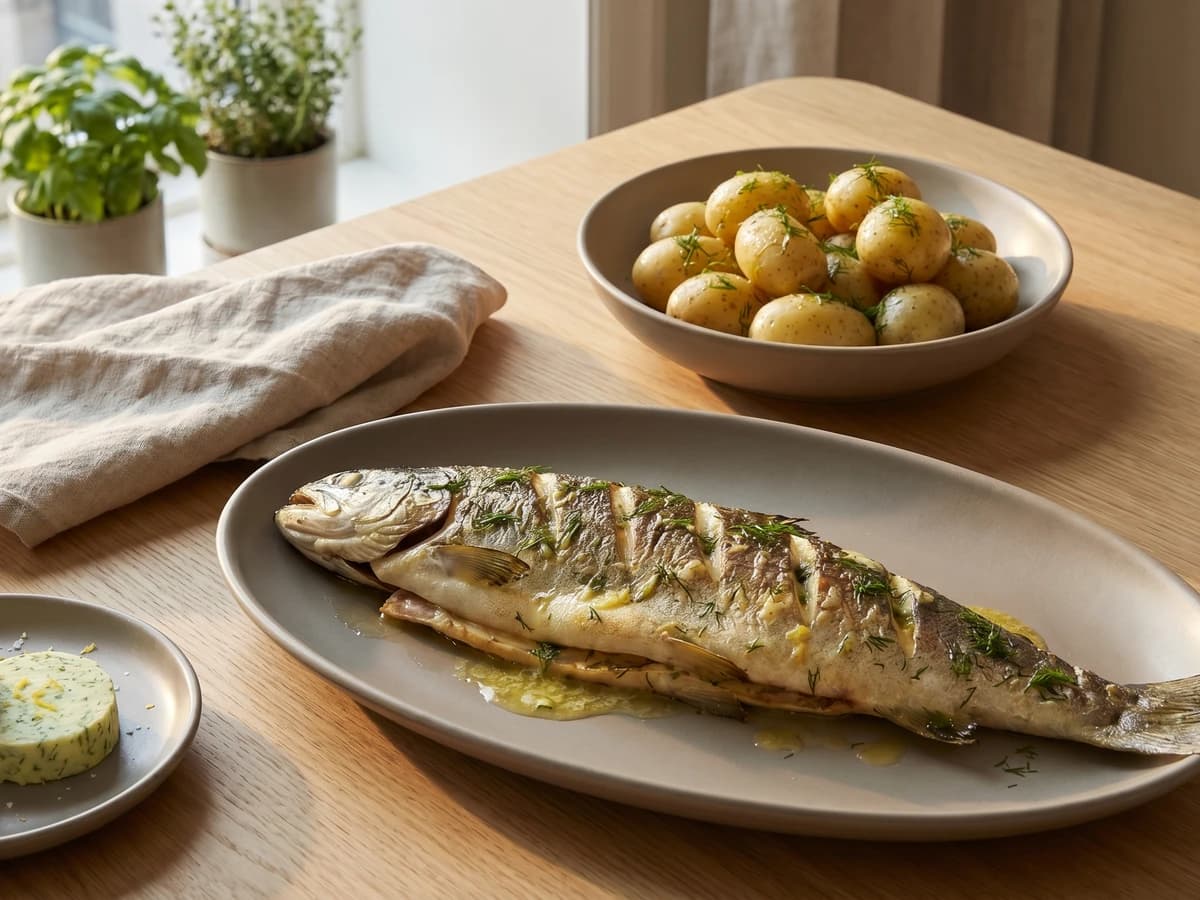
Whole sea trout baked with butter, lemon, and armfuls of dill, served beside the first nye kartofler of the season and a melting slab of dildsmor. The Danish summer table at its most generous.
Chef Freja
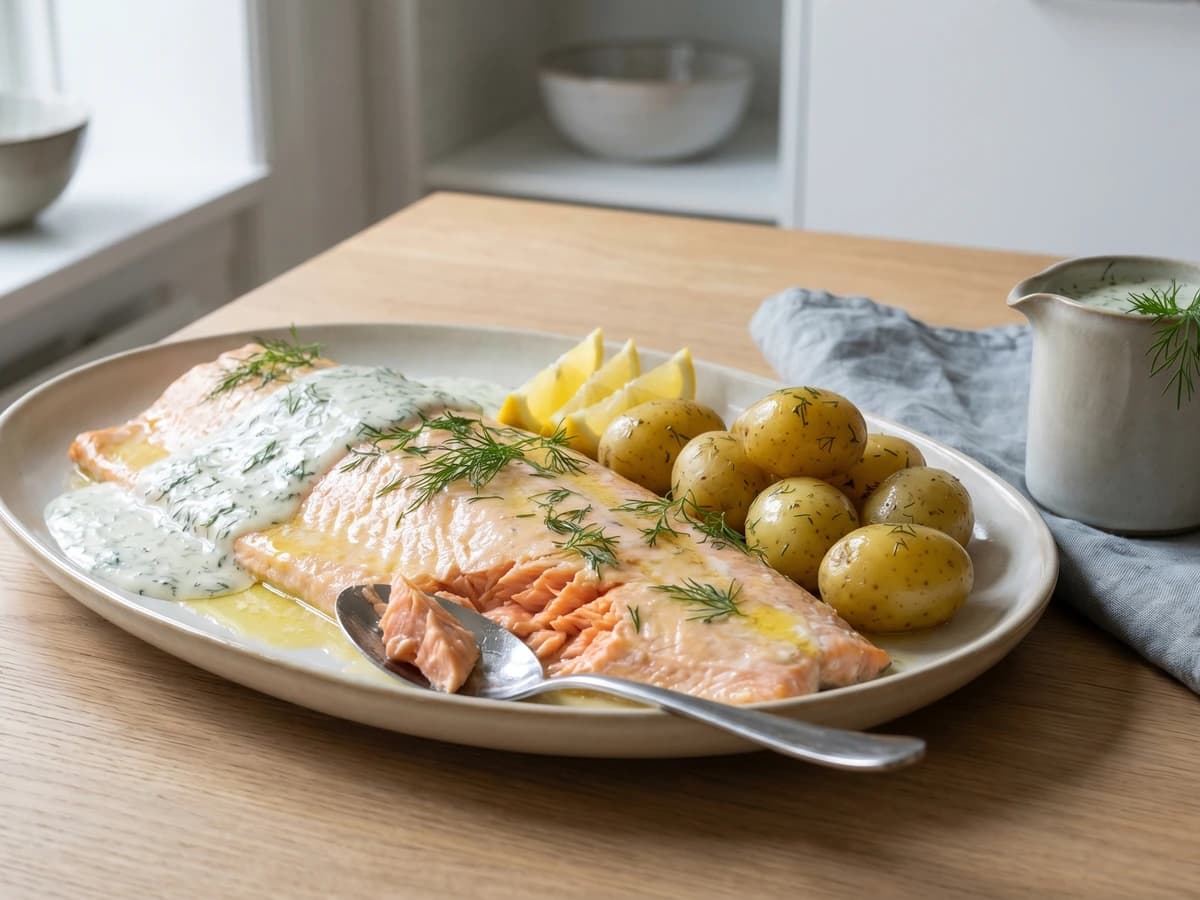
A side of salmon baked gently in butter and white wine, served warm with a bright dill cream sauce and the season's first nye kartofler. Late spring on a Danish table, cooked with love.