
Chef Lupita
Acitrón de Cidra Conventual
Puebla's convent-style acitrón, made from cidra peel instead of endangered biznaga, built through repeated syrup soakings until the cubes turn firm, translucent, and ready for rosca or chiles en nogada.
A cooking platform built around craft, culture, and the stories behind what we eat.
Created by
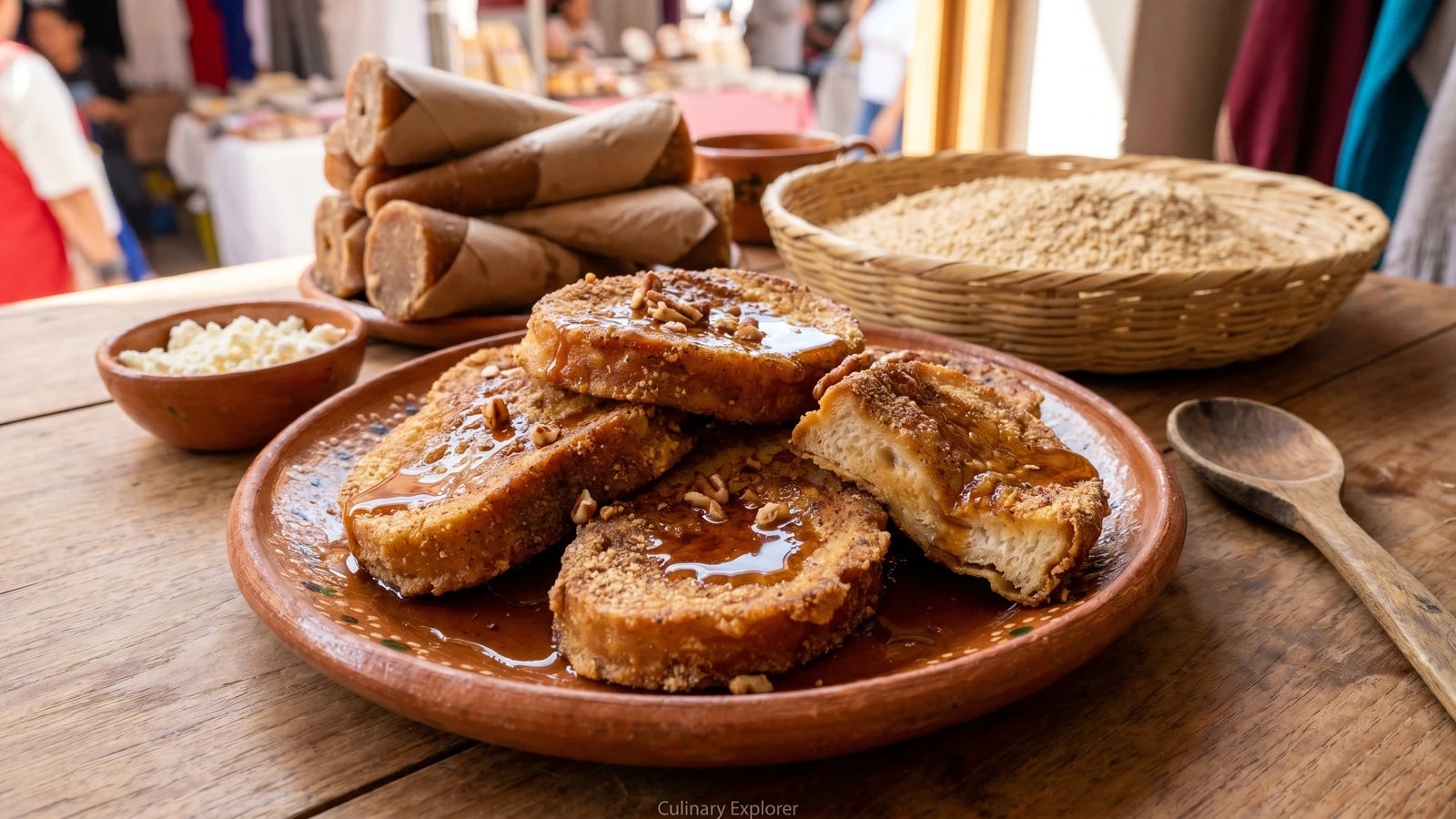
Aguascalientes's Feria de San Marcos torrejas, made with day-old pan, pinole de maiz tostado, leche de cabra, egg, and piloncillo syrup scented with canela.
Aguascalientes, in the Bajio norte, carries this dish through the Feria de San Marcos: bread from yesterday, corn from the dry valleys, piloncillo, canela, and the practical hand of women who know how to turn scarcity into dessert. This is feria food, yes, but it is also Cuaresma kitchen food, the kind served in clay platones when the family has gathered and nobody is pretending the table is delicate.
The ingredient that defines it is pinole. Not flour. Not breadcrumbs. Pinole: maiz tostado, ground fine with canela and a little piloncillo, the old travel food of working people. At Mercado Teran in Aguascalientes, the good pinole smells toasted before you even taste it. If it smells dusty, leave it there. Si no conoces el mercado, no conoces la cocina.
The technique is simple only for the cook who pays attention. The bread must be dry enough to drink the leche de cabra without falling apart. The pinole crust must brown in manteca without scorching. The piloncillo syrup must cling, not drown. No me vengas con atajos. This dish is corn, milk, egg, fat, and syrup doing their work in the right order. Asi se hace y punto.
Torrejas in Mexico descend from Spanish torrijas, a Lenten bread dish that entered convent and household cooking during the colonial period, but regional cooks changed the coating, syrup, and dairy according to local markets. In Aguascalientes, the Feria de San Marcos, formally established in 1828 as a spring livestock and trade fair, gave sweets made from corn, goat milk, guava from Calvillo, and piloncillo a public stage. Pinole itself has pre-Columbian roots as toasted ground corn carried by travelers and workers, which makes this version more than borrowed Spanish bread: it is a Bajio torreja pulled back toward maize.
Quantity
4
sliced into 8 thick rounds
Quantity
1 1/2 cups
Quantity
3
Quantity
1/4 teaspoon
Quantity
1 1/2 cups
Quantity
1/2 cup
Quantity
1 1/2 cups
for shallow frying
Quantity
8 ounces
chopped
Quantity
1 1/2 cups
Quantity
1
Quantity
2
Quantity
1 strip
with no white pith
Quantity
1/2 cup
toasted and chopped
Quantity
1/2 cup
crumbled
| Ingredient | Quantity |
|---|---|
| day-old bolillos or pan de aguasliced into 8 thick rounds | 4 |
| leche de cabra | 1 1/2 cups |
| large eggs | 3 |
| fine sea salt | 1/4 teaspoon |
| pinole de maiz tostado with canela | 1 1/2 cups |
| all-purpose flour | 1/2 cup |
| manteca de cerdofor shallow frying | 1 1/2 cups |
| piloncillochopped | 8 ounces |
| water | 1 1/2 cups |
| Mexican canela stick | 1 |
| whole cloves | 2 |
| orange peelwith no white pith | 1 strip |
| nuez pecana (optional)toasted and chopped | 1/2 cup |
| queso fresco (optional)crumbled | 1/2 cup |
Lay the sliced bolillos on a tray for 20 minutes while you prepare the syrup. They should feel firm on the outside and still have a little give inside. Fresh bread collapses when it touches milk. Day-old bread holds its shape. That is not a detail, that is the structure of the torreja.
Combine the chopped piloncillo, water, canela, cloves, and orange peel in a small saucepan. Simmer over medium heat for 15 to 18 minutes, until the piloncillo dissolves and the syrup coats a spoon in a thin amber layer. Do not boil it hard. You want a syrup that soaks the crust and clings to the pinole, not candy for charamuscas.
Whisk the eggs, leche de cabra, and salt in a shallow dish until the eggs disappear into the milk. Mix the pinole and flour in another shallow dish. The flour helps the pinole grip the soaked bread, but the flavor belongs to the toasted corn. If the pinole is coarse, rub it between your fingers first so the crust fries evenly.
Dip each bread slice into the leche de cabra mixture for 8 to 10 seconds per side. Let the excess drip back into the dish. Press both sides into the pinole mixture, coating the edges too. The bread should be damp inside and sandy outside. If it drips milk into the pinole bowl, you soaked it too long.
Heat the manteca in a wide cast iron skillet or cazuela over medium heat until a pinch of pinole sizzles immediately. Fry the torrejas in batches, 2 to 3 minutes per side, until the crust turns deep gold and smells like toasted corn and canela. Do not crowd the pan. Crowding lowers the heat and the bread drinks fat instead of frying cleanly. La manteca es el sabor.
Transfer the fried torrejas to a rack for two minutes, then set them in a clay platone. Spoon warm piloncillo syrup over each piece, enough to gloss the crust and pool lightly at the bottom. Let them sit for five minutes so the syrup enters the pinole without turning the bread heavy.
Serve warm or at room temperature with toasted nuez pecana and a little queso fresco if your table likes the salty contrast. The torreja should cut cleanly with a spoon, soft inside, crisp at the edges, with the flavor of corn first and piloncillo second. Recetas probadas y garantizadas.
1 serving (about 195g)
Culinary guides, cultural storytelling, and the editorial depth that makes cooking meaningful.
Discover Culinary ExplorerChef Lupita
Puebla's convent-style acitrón, made from cidra peel instead of endangered biznaga, built through repeated syrup soakings until the cubes turn firm, translucent, and ready for rosca or chiles en nogada.

Chef Lupita
Ciudad de México's Tulyehualco alegría is popped huautli folded into piloncillo honey, pressed with peanuts, pepitas, and raisins, then cut into the rectangular bars that built a pueblo's identity.

Chef Lupita
Oaxaca's pre-Columbian amaranth bar, popped on a hot comal and bound with piloncillo, honey, and the sacred Zapotec grain that the Spanish tried, and failed, to outlaw.

Chef Lupita
Querétaro's mercado candy of popped amaranto pressed with dark piloncillo syrup, pepitas, pecans, and cacahuate, a Bajío sweet that respects the seed before it decorates the table.