
Chef Makoa
Boil-Up (Māori Pork, Pūhā, and Doughboys)
Aotearoa's whānau pot: pork bones simmered until the broth turns deep, pūhā or watercress folded through, kūmara soft at the edges, and doughboys floating heavy and tender.
A cooking platform built around craft, culture, and the stories behind what we eat.
Created by
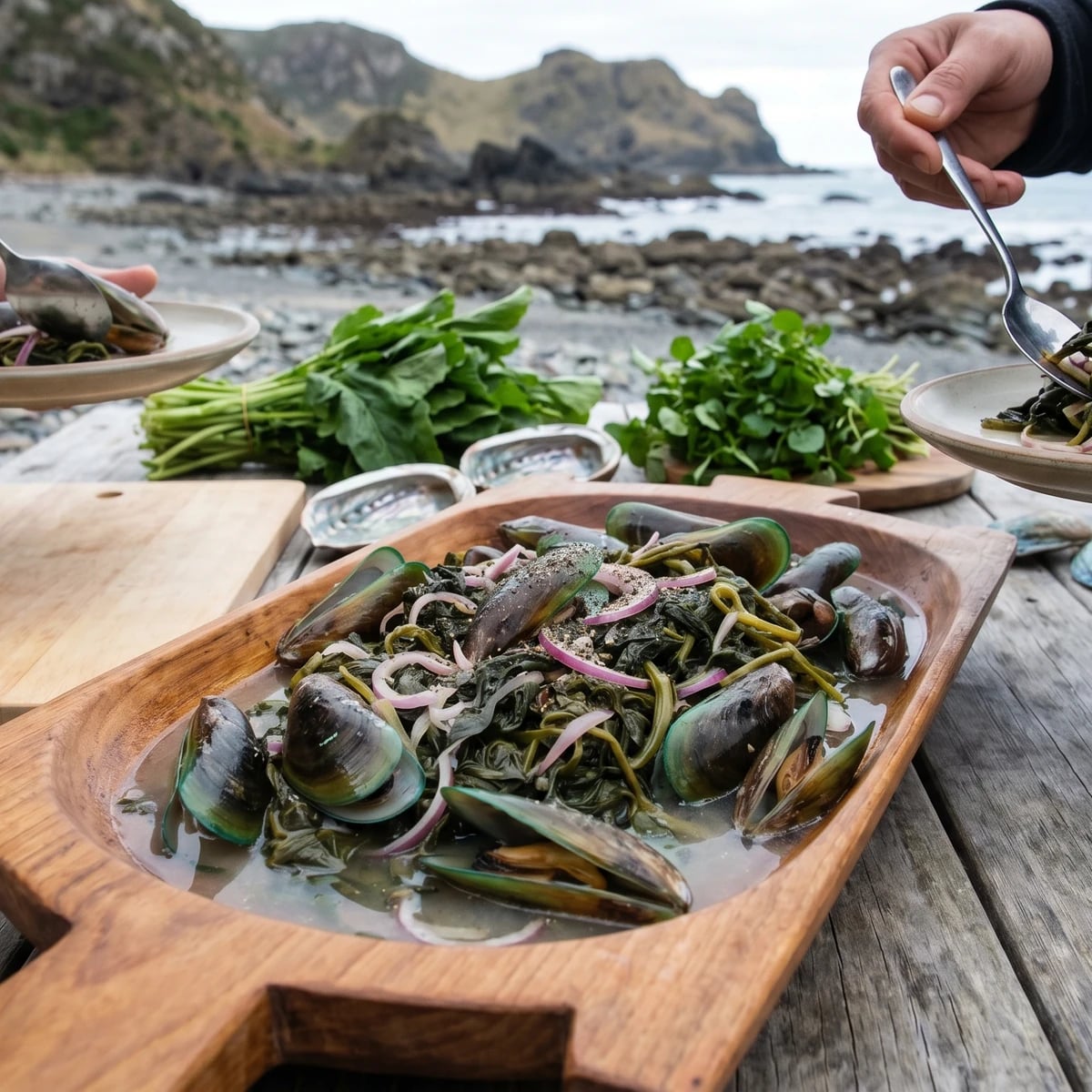
Aotearoa's toroi is old Māori kai: green-lipped mussels, bitter pūhā, and the mussels' own briny liquor steeped together until the sea and the greens speak in one bowl.
The cold coast teaches a different kind of abundance. In Aotearoa, the land is whenua and the family is whānau, and the Māori table listens hard to both: the green-lipped mussels off the rocks, the pūhā, sow thistle, gathered from the edge places, the big kōhua pot on the stove feeding everybody who walks in.
This is Māori kai, food, and I cook it open-handed because Aotearoa is my cousins' house, not mine. Back home in Hawaiʻi I know the loʻi and the kalo from the inside. Down there, kūmara, sweet potato, stands where taro stands in the tropics, and the table leans into kaimoana, seafood, river fish, watercress, pūhā, boil-up, and the food of the marae, the meeting ground. One ocean, one canoe, one root, but every island has its own hand.
Toroi is humble and sharp in the best way: mussels opened just enough, their liquor saved, the pūhā softened in that brine, then everything steeped together until the greens give their bitter edge to the shellfish. No need make it fancy. The mussel should still taste like the tide. The pūhā should still taste like the ground after rain.
For the deep tikanga, the Māori protocols and meanings around gathering, serving, and the marae table, go sit with Māori elders and cooks. They should tell their own story. What I can do here is keep the bowl honest for a contemporary kitchen: buy clean live mussels, save the liquor, use pūhā if you can and watercress if you must, then give it time. Eat what you have, but don't waste the sea.
Toroi belongs to Māori foodways in Aotearoa, where shellfish such as kuku or kūtai, mussels, were gathered from cold coastal rocks and paired with bitter greens like pūhā. Unlike the tropical canoe-crop table of Hawaiʻi, Sāmoa, Tonga, Tahiti, and the Cooks, Aotearoa's older kai adapted to a temperate place: kūmara became the major cultivated starch, breadfruit was absent, and gathered seafood, greens, birds, and roots carried much of the table. The dish sits in that practical line of Māori kai, preserved by whānau kitchens and marae tables rather than restaurant polish.
Quantity
3 pounds
scrubbed and debearded
Quantity
1 large bunch
washed well, tough stems removed
Quantity
1 cup
strained
Quantity
2 tablespoons
plus more to taste
Quantity
1 teaspoon
plus more to taste
Quantity
1 small
very thinly sliced
Quantity
to taste
| Ingredient | Quantity |
|---|---|
| live green-lipped mussels or other fresh musselsscrubbed and debearded | 3 pounds |
| pūhā (sow thistle) or watercresswashed well, tough stems removed | 1 large bunch |
| mussel cooking liquorstrained | 1 cup |
| white vinegar or lemon juiceplus more to taste | 2 tablespoons |
| sea saltplus more to taste | 1 teaspoon |
| red onion (optional)very thinly sliced | 1 small |
| freshly ground black pepper (optional) | to taste |
Rinse the mussels under cold running water, scrub the shells, and pull away the beards. Any mussel that stays open after a firm tap gets thrown out. Kaimoana, seafood, asks for respect first, because the ocean already did its part.
Put the mussels in a wide kōhua, a cooking pot, with 1/2 cup water. Cover and cook over medium-high heat for 4 to 6 minutes, shaking the pot once or twice, until the shells open and the meat looks plump and glossy. Lift the mussels out and keep every drop of the liquor in the pot.
Bring the strained mussel liquor back to a gentle simmer. Add the pūhā, or watercress if that is what you have, and turn it through just until the greens darken, soften, and lose their raw bite, about 2 to 3 minutes. They should still taste alive, bitter-green against the brine.
Pull the mussel meat from the shells. Leave small mussels whole and cut large ones in half so every bite carries meat and greens together. The texture should stay tender, not chopped to paste.
Mix the mussels, softened pūhā, 1 cup warm strained liquor, vinegar or lemon juice, salt, onion if using, and a little pepper in a glass or stainless bowl. Taste it now: briny first, then green, then a clean sour edge. Cover and chill at least 2 hours, or overnight, so the mussels and greens sit down together.
Taste again before serving and sharpen with more vinegar or lemon if it needs lifting. Spoon the toroi into a shallow wooden bowl with some of its liquor, enough to keep everything glossy. Serve cold or cool with kūmara, sweet potato, fried bread, or plain bread for the table.
1 serving (about 145g)
Culinary guides, cultural storytelling, and the editorial depth that makes cooking meaningful.
Discover Culinary Explorer
Chef Makoa
Aotearoa's whānau pot: pork bones simmered until the broth turns deep, pūhā or watercress folded through, kūmara soft at the edges, and doughboys floating heavy and tender.

Chef Makoa
Green-lipped mussels from Aotearoa, chopped through a simple batter with onion and parsley, fried crisp at the edges and eaten with lemon while the whānau is still reaching.

Chef Makoa
Aotearoa's karengo, native seaweed gathered from the cold rocks, dried for keeping, then rehydrated and pan-simmered until dark, tender, salty, and shining.

Chef Makoa
Cold-coast kaimoana from Aotearoa: kina cracked open at the table, golden roe lifted from the shell, briny and rich, eaten simply because the reef already did the seasoning.