
Chef Lupita
Acambaritas de Acámbaro
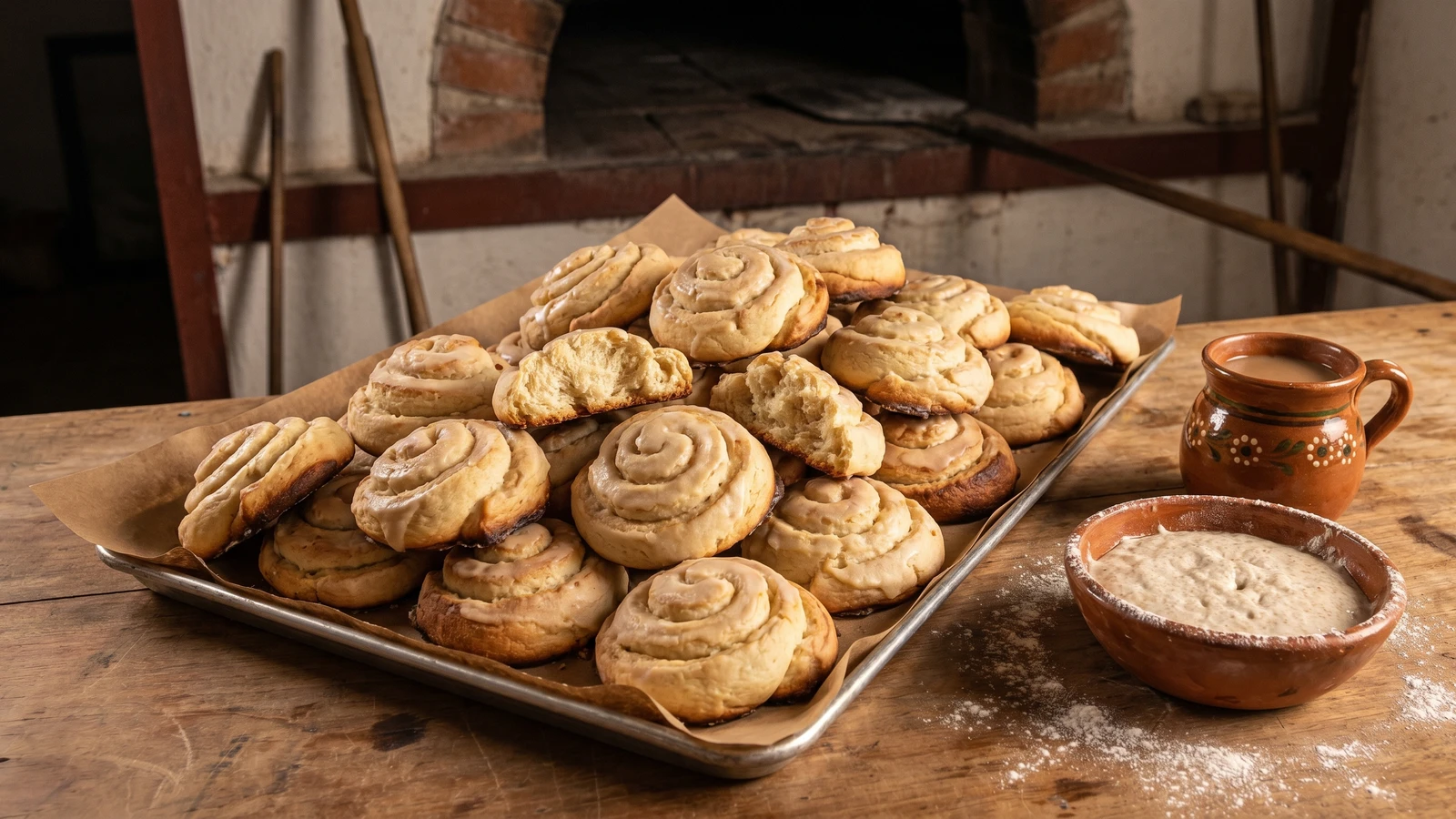
Guanajuato's daily bread from Acámbaro, a small glazed roll built on pata, enriched with manteca de cerdo, and baked until the top shines lightly for merienda.
A cooking platform built around craft, culture, and the stories behind what we eat.
Created by
Guanajuato's Acámbaro tornitos are small spiraled merienda breads, rich with manteca de cerdo, fermented with pata from the pan grande tradition, and finished with a thin sugar glaze.
Guanajuato, in the Bajío, keeps Acámbaro on the bread map. Not León, not Celaya, not the tourist postcard version of the state. Acámbaro. The town has built its name around pan grande, picon, ranchero, and small merienda pieces like these tornitos, shaped into little spirals and glazed with sugar so they shine in the panadería case by late afternoon.
The ingredient that matters is the pata. In Acámbaro, pata means the old dough, the masa madre kept from one batch to feed the next. It is not chemical leavener. It is not a packet of instant yeast doing a costume change. The pata gives the bread its quiet sourness, its chew, and that old-panadería smell you only get when flour has been allowed to ferment properly.
I learned to watch these in a bakery where the women shaped faster than anyone could talk, rolling ropes, twisting, coiling, setting them on charolas darkened by years of wood-fired ovens. The fat was manteca de cerdo. Secular Bajío bread uses it without apology. The glaze came last, thin enough to dry crisp, sweet enough for merienda with café de olla in a jarrito. Cada estado, su propia cocina.
Acámbaro's bread reputation grew around the railway era of the late 19th and early 20th centuries, when travelers carried the town's large loaves through the Bajío and made pan de Acámbaro a regional marker. The local pata system belongs to older bakery practice: a portion of fermented dough was saved from one batch to strengthen and flavor the next before commercial yeast became common. Tornitos are part of the smaller merienda register of Acámbaro panaderías, using the same fermentation logic as pan grande but shaped for the afternoon table.
Quantity
1/2 cup
100% hydration, bubbly and recently fed
Quantity
3 1/2 cups
plus more for shaping
Quantity
1/2 cup
lukewarm
Quantity
2
at room temperature
Quantity
1/2 cup
Quantity
1/2 cup
softened
Quantity
1 teaspoon
Quantity
1/2 teaspoon
ground
Quantity
1/4 teaspoon
ground
Quantity
1 tablespoon
Quantity
1 teaspoon
Quantity
1 tablespoon
for brushing
Quantity
1 cup
Quantity
2 tablespoons
Quantity
1 teaspoon
| Ingredient | Quantity |
|---|---|
| active pata de Acámbaro or mature wheat sourdough starter100% hydration, bubbly and recently fed | 1/2 cup |
| bread flourplus more for shaping | 3 1/2 cups |
| whole milklukewarm | 1/2 cup |
| large eggsat room temperature | 2 |
| granulated sugar | 1/2 cup |
| manteca de cerdosoftened | 1/2 cup |
| fine sea salt | 1 teaspoon |
| canela mexicanaground | 1/2 teaspoon |
| anise seedground | 1/4 teaspoon |
| orange zest | 1 tablespoon |
| vanilla extract | 1 teaspoon |
| milkfor brushing | 1 tablespoon |
| powdered sugar | 1 cup |
| hot water | 2 tablespoons |
| fresh lime juice | 1 teaspoon |
Feed your pata or wheat sourdough starter 6 to 8 hours before mixing. It should be bubbly, domed, and smell lightly sour, like flour, milk, and fruit left in a warm panadería. If it smells sharp and tired, feed it again. The pata is masa madre, not baking powder. No me vengas con atajos.
In a large bowl, combine the active pata, lukewarm milk, eggs, sugar, canela mexicana, anise, orange zest, and vanilla. Stir in the flour and salt until a rough dough forms. Knead by hand or with a stand mixer on low until the dough starts to pull together, about 5 minutes.
Add the softened manteca de cerdo a tablespoon at a time, kneading until each addition disappears before adding the next. At first the dough will look greasy and badly behaved. Keep working. It will become smooth, elastic, and slightly tacky. La manteca es el sabor, and in Acámbaro breads it gives the crumb its short, tender bite.
Place the dough in a lightly greased bowl, cover, and let it ferment at warm room temperature for 4 to 5 hours, until puffed by half. This is not a fast bakery yeast dough. The pata builds flavor slowly. If your kitchen is cool, give it more time. The dough should feel alive under your fingers, not inflated like a balloon.
Turn the dough onto a lightly floured table and divide it into 18 pieces. Roll each piece into a rope about 10 inches long, then coil it into a loose spiral like a small tornillo, tucking the end underneath. Do not make them machine-perfect. The hand shows in this bread. Set them on parchment-lined baking sheets, leaving space between them.
Cover the shaped tornitos with a clean cloth and let them proof 1 1/2 to 2 hours, until they look relaxed and slightly swollen. Press one gently with a floured finger. The indentation should return slowly. If it springs back hard, wait. If it collapses, you waited too long.
Heat the oven to 375F. Brush the tornitos lightly with milk. Bake 16 to 18 minutes, rotating the pans once, until the ridges are golden and the edges take on a darker caramel color. In Acámbaro the horno de bóveda gives that edge faster than a home oven, so watch the color, not only the clock.
Whisk the powdered sugar, hot water, and lime juice into a thin glaze. Brush it over the tornitos while they are still warm, not hot enough to melt the glaze away. The coating should dry into a pale, crackly sugar skin that catches on the spiral ridges. Let them cool on a rack before serving with café de olla.
1 serving (about 57g)
Culinary guides, cultural storytelling, and the editorial depth that makes cooking meaningful.
Discover Culinary ExplorerChef Lupita
Guanajuato's daily bread from Acámbaro, a small glazed roll built on pata, enriched with manteca de cerdo, and baked until the top shines lightly for merienda.

Chef Lupita
Michoacan's Tinguindin aguacatas are flat, leaf-scored sweet breads made with harina de trigo, piloncillo, anise, and manteca de cerdo, shaped by hand for the wood oven.

Chef Lupita
From Ajijic on Lake Chapala, Pan Tachihual is a lightly sweet wedding loaf built with harina de trigo, harina de maiz, piloncillo, manteca, anise, and the old Guadalajara pata.

Chef Lupita
Comitán's pan de yema shaped into little pigs, birds, and rabbits, a Chiapas bakery bread rich with egg yolks, manteca de cerdo, and anís, baked golden on hoja de plátano.