
Chef Lupita
Agua de Alfalfa
Ciudad de México's highland market agua fresca, fresh alfalfa blended with pineapple and lime until bright green, strained clean, and poured cold from the vitrolero.
A cooking platform built around craft, culture, and the stories behind what we eat.
Created by
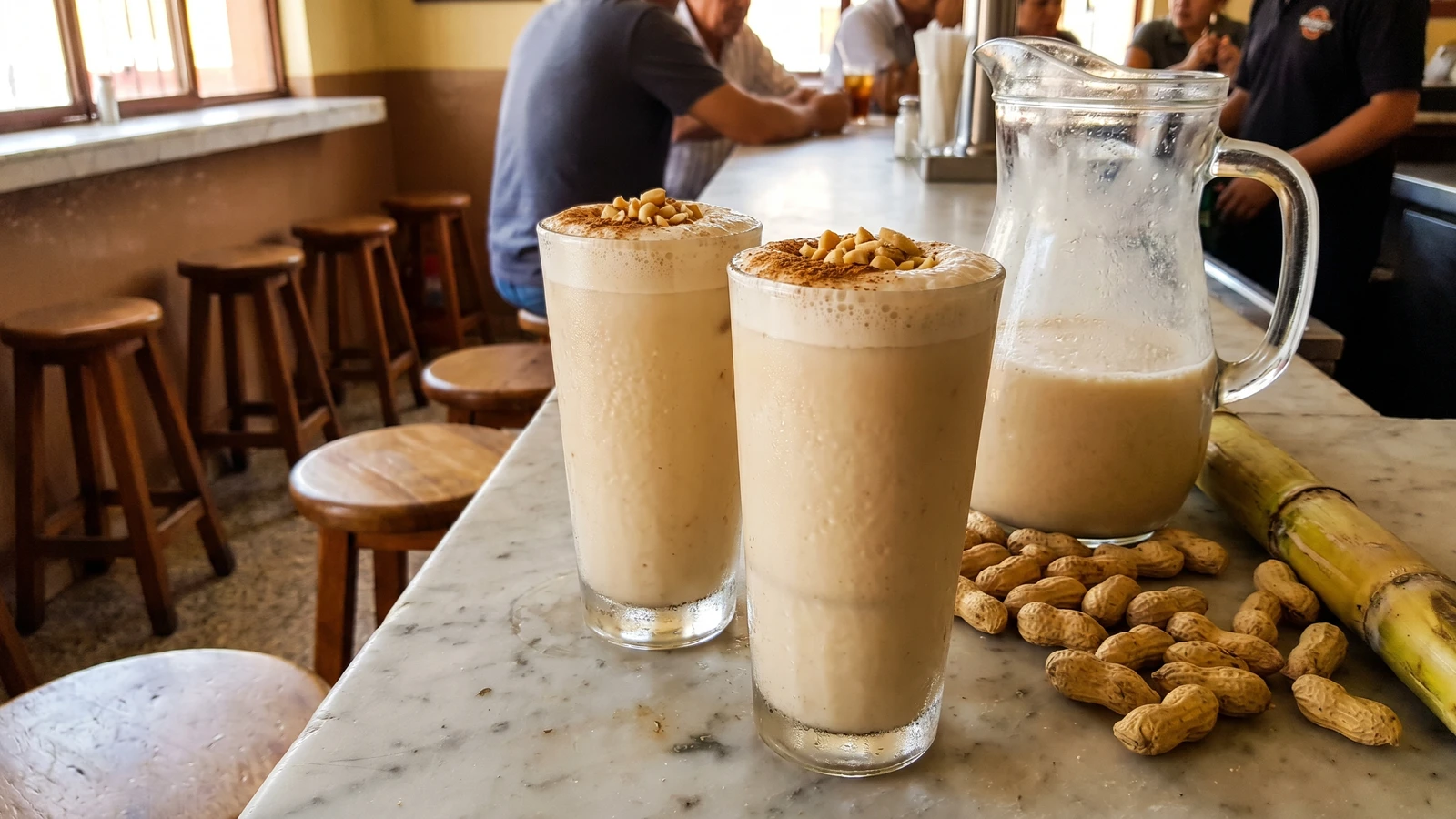
From the cantinas of Boca del Río, where the river meets the Gulf: sugarcane spirit, sweet condensed milk, and toasted ground peanut whipped ice-cold and frothy. The Sotavento's son jarocho poured into a tall frosted glass.
This is from Veracruz. Not the whole state, the Sotavento, the low coast south of the port where the river meets the Gulf and the cantinas of Boca del Río keep big glass garrafones of torito cold behind the bar. The torito is a cantina drink. It was never invented on a craft menu and it does not belong on one. Cada estado, su propia cocina, and this one belongs to the jarochos.
Understand one thing before you start. The torito is not a cream cocktail. The spine is aguardiente de caña, the sugarcane spirit that comes off the same cane fields that have covered this coast since the colony. The condensed milk and the peanut ride on top of the spirit. They do not replace it. Take out the aguardiente and you have a peanut licuado. Bury it under so much milk that you cannot taste it and you have missed the point. Boca del Río calls it torito, little bull, because it is supposed to kick.
The cacahuate does the rest. Toast raw peanuts on the comal until the skins loosen and the kitchen smells like a feria, rub the skins off, and grind them smooth. The old way is the metate. The honest modern way is the blender, and for the torito the blender is not an atajo, it is the tool. Blend the peanut with leche condensada and leche evaporada, a little ground canela de Ceilán, and the aguardiente, then chill it cold. Cold is not optional. The cold rounds the spirit and pulls the whole thing together. Serve it the way the cantinas do, in a tall frosted glass with a froth on top and a dusting of canela.
I came to toritos late, on a trip through the Sotavento collecting son jarocho and the food that goes with the fandango. A woman in Boca del Río who had poured them for thirty years told me the secret was patience: make it the night before, let it sleep in the cold, never rush the chill. She was right. Recetas probadas y garantizadas. Saber cocinar es saber vivir, and in the Sotavento, knowing how to pour a torito is part of knowing how to live.
The torito belongs to the cantina culture of Veracruz's Sotavento, where sugarcane introduced by the Spanish in the 16th century, and worked largely by enslaved Africans brought through the port of Veracruz, became the base for aguardiente de caña, the spirit at the drink's core. The same Afro-mestizo communities of the Sotavento gave Mexico son jarocho and the fandango, the musical traditions the torito has always accompanied. Mexico did not recognize its Afro-Mexican population in the Constitution until a 2019 reform to Article 2, and the 2020 census was the first to count them nationally, four centuries after their forced arrival on this coast.
Quantity
1 cup
toasted on the comal and skinned, or 3/4 cup natural unsweetened peanut butter
Quantity
1 1/2 cups (360 ml)
plus more to taste
Quantity
1 can (14 ounces)
Quantity
1 can (12 ounces)
Quantity
1/2 teaspoon
plus more for dusting
Quantity
1 to 2 cups
to thin to a pourable, creamy consistency
Quantity
for serving
roughly chopped
Quantity
for serving
| Ingredient | Quantity |
|---|---|
| raw shelled peanuts (cacahuate)toasted on the comal and skinned, or 3/4 cup natural unsweetened peanut butter | 1 cup |
| aguardiente de caña (sugarcane spirit)plus more to taste | 1 1/2 cups (360 ml) |
| leche condensada (sweetened condensed milk) | 1 can (14 ounces) |
| leche evaporada (evaporated milk) | 1 can (12 ounces) |
| ground canela de Ceilán (Ceylon cinnamon)plus more for dusting | 1/2 teaspoon |
| cold whole milk or waterto thin to a pourable, creamy consistency | 1 to 2 cups |
| toasted peanuts for garnish (optional)roughly chopped | for serving |
| pebble or crushed ice (optional) | for serving |
Heat a dry comal or heavy skillet over medium. Add the raw peanuts and toast them, shaking the pan often, for five to eight minutes. They are ready when the skins darken and split and the kitchen smells like a feria, sweet and roasted. Tip them onto a clean kitchen towel, fold it over, and rub hard. Most of the papery skins will come loose. This toasting is where the peanut flavor is born. Raw peanuts make a flat, chalky torito.
Put the skinned peanuts in the blender with the can of leche evaporada. Blend on high for a full two minutes, until the peanut breaks down into a smooth, loose paste with no gritty pieces left. The old way is the metate, stone on stone, and it is beautiful. For the torito the blender is the honest tool, not an atajo. No me vengas con atajos only counts when the shortcut changes the result. Here it does not.
Add the leche condensada, the ground canela de Ceilán, and one cup of the cold milk or water to the blender. Blend until completely smooth and uniform. Taste the base before the spirit goes in. It should be sweet, nutty, and faintly spiced, like a peanut horchata. This is your foundation.
Pour in the aguardiente de caña and blend for just a few seconds to combine. Now taste again. You should taste the peanut and the sweet milk first, and then the cane spirit rising up behind them with a clean burn. That burn is the point. The torito is not a cream cocktail. The aguardiente is the spine. If it is too thick to pour easily, blend in more cold milk or water a splash at a time.
Pour the torito into a glass jug or garrafón and refrigerate for at least four hours, overnight if you can manage it. Cold is not optional. The chill rounds the raw edge of the aguardiente and marries the cane, the milk, and the peanut into one thing. A warm torito tastes like its separate parts. A cold one tastes like Veracruz.
Frost your tallest glasses in the freezer while the torito chills. Just before serving, give the jug a hard shake or a quick blitz in the blender to raise a froth on top. Pour into the cold glasses, dust the foam with ground canela, and scatter a few chopped toasted peanuts over the top. Drink it cold and undiluted. If you want it colder, the cantinas pack the jug in ice rather than dropping cubes in the glass, because ice waters down the spine. Salud, y recetas probadas y garantizadas.
1 serving (about 250g)
Culinary guides, cultural storytelling, and the editorial depth that makes cooking meaningful.
Discover Culinary ExplorerChef Lupita
Ciudad de México's highland market agua fresca, fresh alfalfa blended with pineapple and lime until bright green, strained clean, and poured cold from the vitrolero.

Chef Lupita
Aguascalientes' Lenten agua fresca, jewel-red from cooked beet and full of apple, banana, orange, lettuce, and ground peanuts, served cold when Holy Week meets the Feria de San Marcos.

Chef Lupita
Sonora and Sinaloa's creamy malted barley water, built on toasted cebada perla, Mexican canela, vanilla from Papantla, and evaporated milk. Pink-beige, rich, and served cold over heavy ice in a heavy glass tumbler. Liquid cookie comfort the northwest way.

Chef Lupita
Yucatán's everyday tonic of boiled chaya leaves blended with lima agria, sugar, and ice. The bright green jarra that sits on every Peninsula table from Mérida to Valladolid.