Chef Graziella
Insalata di Gamberi alla Ligure
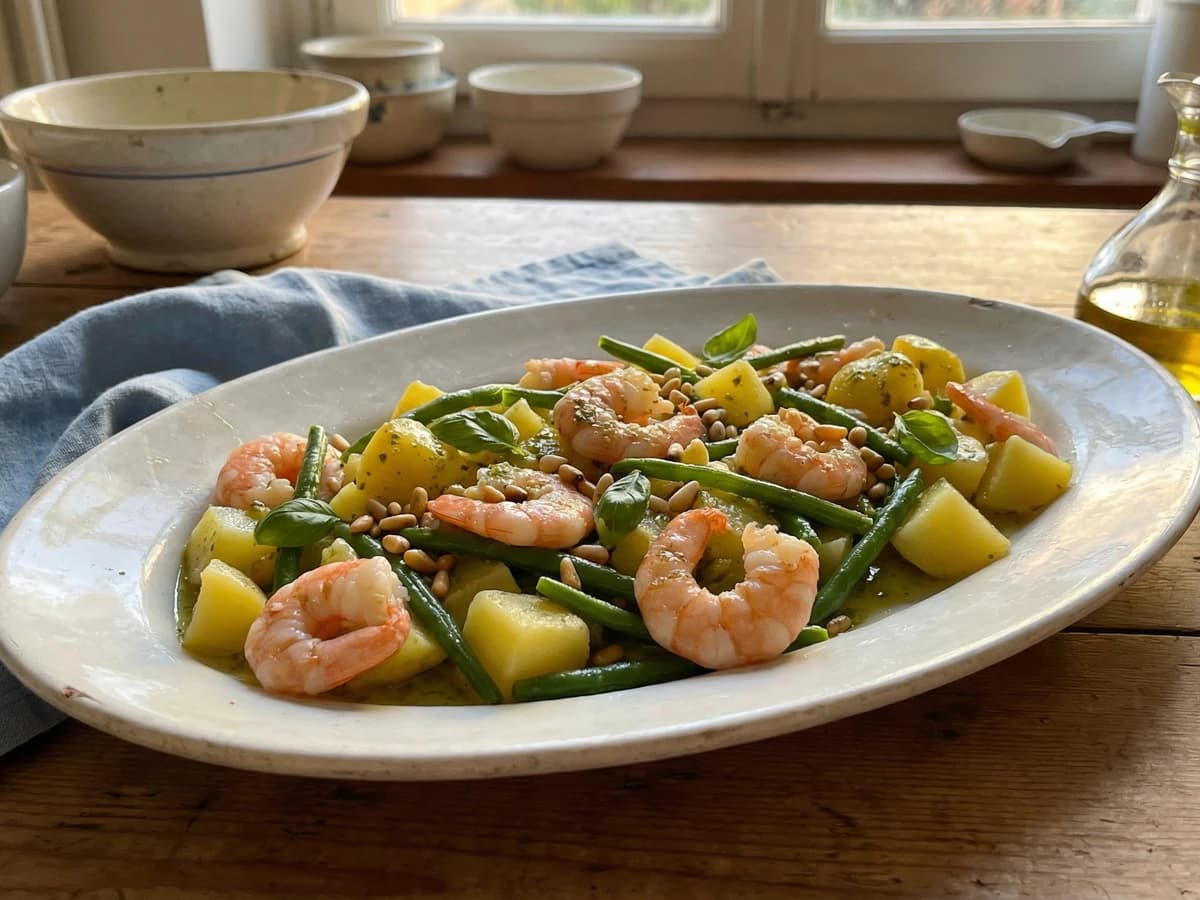
The composed salad of the Italian Riviera, where sweet shrimp meet tender potatoes, crisp green beans, and just enough pesto to remind you that Genoa invented it.
A cooking platform built around craft, culture, and the stories behind what we eat.
Created by
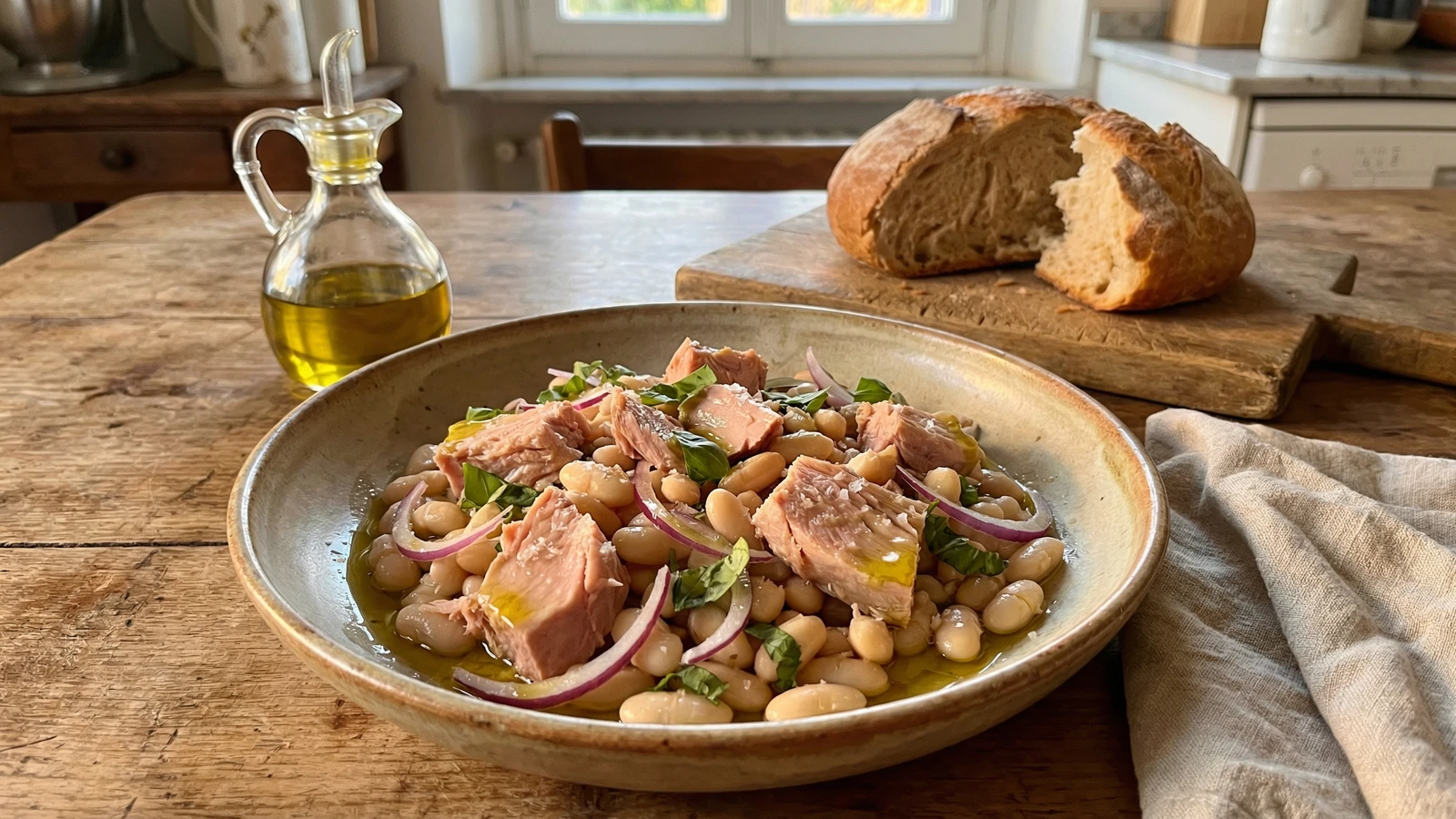
Liguria's answer to the Tuscan bean and tuna salad, where fresh basil takes the place of excessive onion and the quality of your olive oil matters more than anything else you do.
Every region of Italy claims a version of this salad, and every region insists theirs is correct. The Tuscans use more onion. The Genovese use less onion and add basil, because Genoa cannot imagine a dish without basil. Both are right. Both would argue the point until dinner grew cold.
What cannot be argued is the tuna. It must be Italian tuna packed in olive oil. Not water. Water-packed tuna is an insult to the beans. The oil carries flavor, protects the texture, and becomes part of the dressing. Those little tins of ventresca, the belly meat, are worth seeking out. The price reflects the quality.
This is not a composed salad for a restaurant menu. It is food for a hot afternoon when you cannot face the stove. It is what a Ligurian fisherman's wife might put together when the boats come in late. Simple does not mean careless. Every ingredient earns its place.
Tonno e fagioli belongs to the cucina povera tradition of Italian coastal towns, where preserved fish extended the value of dried legumes. The Genovese variation reflects Liguria's obsession with basil and its lighter hand with raw alliums, a sharp contrast to the more assertive Tuscan palate that prefers abundant raw onion.
Quantity
2 cans (5 ounces each)
Quantity
2 cans (15 ounces each)
drained and rinsed
Quantity
1/4 small
sliced paper-thin
Quantity
1 large bunch (about 1 ounce)
leaves torn
Quantity
1/4 cup, plus more for drizzling
Quantity
2 tablespoons
Quantity
to taste
Quantity
to taste
freshly ground
| Ingredient | Quantity |
|---|---|
| Italian tuna packed in olive oil | 2 cans (5 ounces each) |
| cannellini beansdrained and rinsed | 2 cans (15 ounces each) |
| red onionsliced paper-thin | 1/4 small |
| fresh basilleaves torn | 1 large bunch (about 1 ounce) |
| extra virgin olive oil | 1/4 cup, plus more for drizzling |
| red wine vinegar | 2 tablespoons |
| flaky sea salt | to taste |
| black pepperfreshly ground | to taste |
Place the paper-thin onion slices in a small bowl of cold water. Let them soak for 10 minutes. This removes the harsh bite while preserving the flavor. Drain thoroughly and pat dry with a clean towel. The Genovese use less onion than the Tuscans. This is deliberate.
Open the tuna and drain off most of the packing oil, but not all of it. Reserve about a tablespoon of the oil in each can. This oil has flavor. It has absorbed the essence of the fish during its time in the tin. Gently break the tuna into large chunks with a fork. Do not shred it into flakes. You want pieces that hold their shape.
Place the drained beans in a wide shallow bowl. Add the olive oil and vinegar. Season with salt and pepper. Toss gently with your hands or a large spoon. The beans should glisten but not swim. Let them sit for five minutes to absorb the dressing.
Add the tuna chunks, soaked onion slices, and most of the torn basil leaves to the beans. Toss gently once or twice. Overcombining will turn this into mush. Transfer to a serving plate or individual dishes. Scatter the remaining basil on top. Drizzle with more olive oil. Serve at cool room temperature, not cold from the refrigerator.
1 serving (about 210g)
Culinary guides, cultural storytelling, and the editorial depth that makes cooking meaningful.
Discover Culinary ExplorerChef Graziella
The composed salad of the Italian Riviera, where sweet shrimp meet tender potatoes, crisp green beans, and just enough pesto to remind you that Genoa invented it.
Chef Juliette
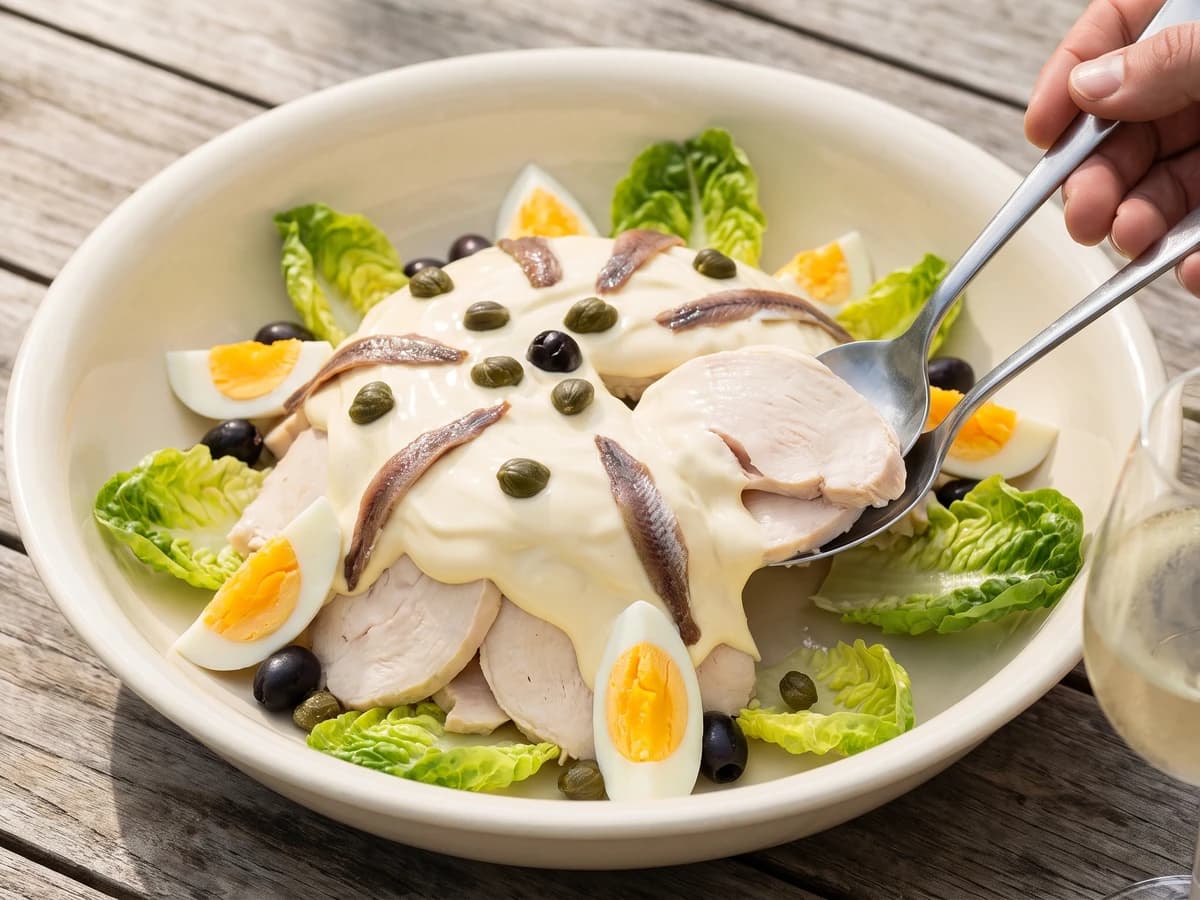
Cold roast chicken, ciseled lettuce, and a shining coat of homemade mayonnaise, arranged with capers, olives, anchovies, eggs, and lettuce hearts, then tossed at the table as the canon intends.

Chef Juliette
Cold roast or poached chicken with fine ribbons of lettuce, dressed at the final moment with oil and vinegar: a composed salad whose freshness depends entirely on timing.

Chef Juliette
Five leaves, one living rule: laitue, romaine, chicorée, mâche, or pissenlit must be washed, dried, and dressed only as they go to the table, while every leaf still carries its light vinaigrette.