
Chef Takumi
Aji Fry (アジフライ, panko-fried horse mackerel)
Aji fry is weeknight fish with no mystery: fresh horse mackerel opened cleanly, breaded lightly, and fried until the panko crackles while the flesh stays sweet.
A cooking platform built around craft, culture, and the stories behind what we eat.
Created by
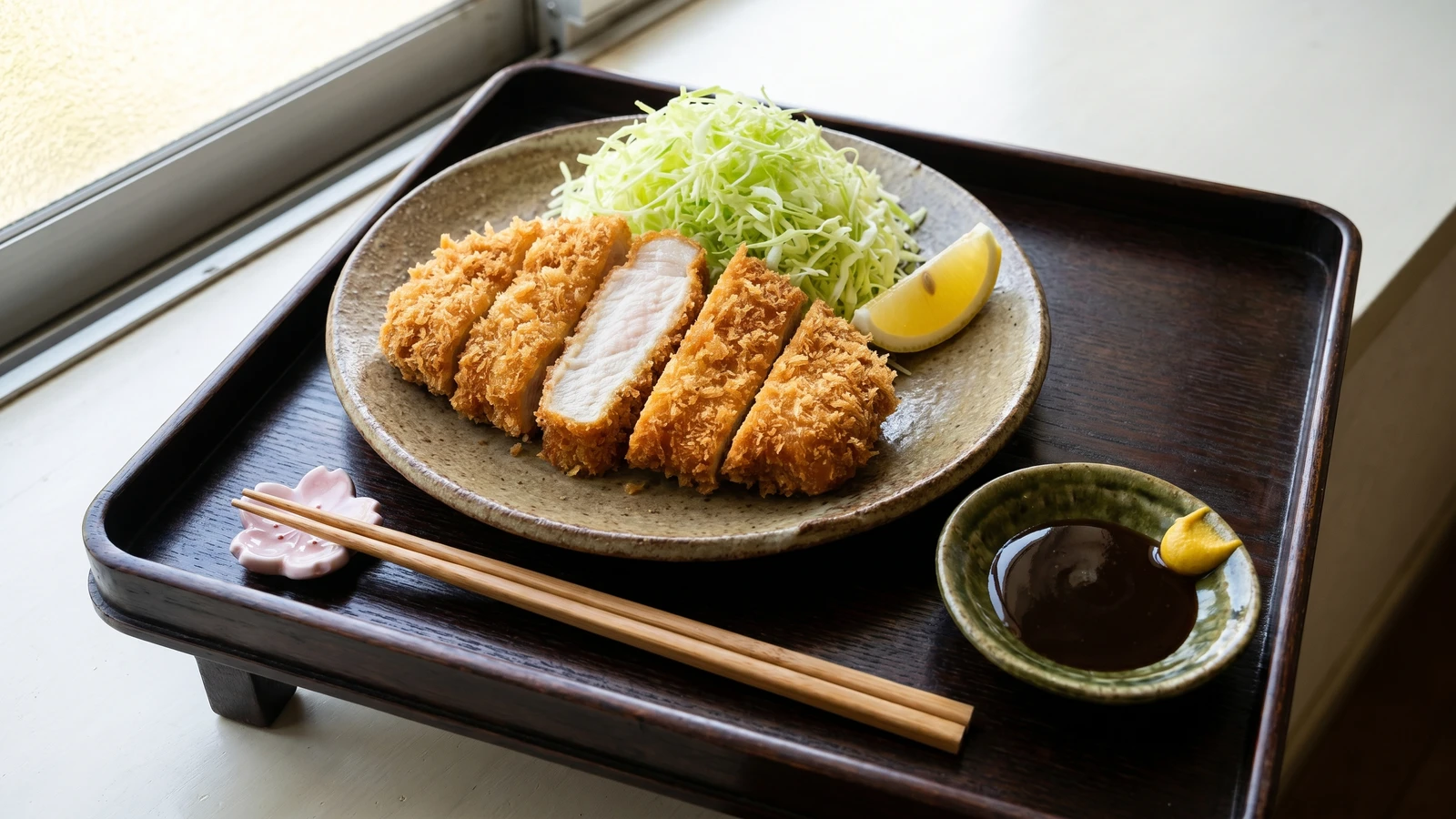
Tonkatsu is not a fry-shop trick. Good pork, dry panko, steady oil, and a short rest give you a cutlet that stays juicy under a clean, crisp coat.
Tonkatsu frightens people because of the oil. Fair enough. A pot of hot fat on a weeknight can make a sensible cook suddenly remember urgent paperwork. But this dish is not difficult, only exacting in two places: the pork must be good, and the oil must be kept steady.
The cutlet itself is plain. Pork loin gives you a clean slice and a tidy shape; pork shoulder loin gives more richness if you don't mind a little irregularity. Trim the silver skin, tap the meat to an even thickness, salt it early, and let it sit long enough for the seasoning to enter the flesh instead of sitting on the crust. Nothing hidden. The sauce is sharp and dark, but it should never be asked to rescue dry pork.
The one detail that decides tonkatsu is the two-stage fry. First, fry gently until the crust sets pale gold and the meat is almost cooked. Rest it, so the heat finishes moving inward. Then return it briefly to hotter oil, and the panko tightens into a crisp coat without driving the center past juicy. This is the method, not the menu: control the heat, and the dish becomes calm.
Serve it sliced, not whole, beside a little hill of finely shredded cabbage. The cabbage is not decoration. It cools the mouth, catches the sauce, and keeps the richness honest. Rice, miso soup, pickles, tonkatsu, cabbage: a full meal, with every part doing its work.
Tonkatsu took shape in Tokyo in the late Meiji era, when Western-style cutlets were adapted into yōshoku, Japan's own category of Western-derived cooking. Rengatei in Ginza is often credited with serving pork katsuretsu in 1899, and the later name tonkatsu joined ton, meaning pork, with katsu, shortened from katsuretsu. The now-standard pairing with shredded cabbage grew alongside the dish in the early twentieth century and became part of its form, not an afterthought.
Quantity
2 pieces (150 to 180g each)
about 1.5cm thick
Quantity
1 teaspoon
Quantity
1/4 teaspoon
Quantity
3 tablespoons
Quantity
1
Quantity
1 tablespoon
Quantity
1 1/2 cups
fresh or dry
Quantity
enough to fill a pot 3cm deep
Quantity
2 cups
very finely shredded
Quantity
for serving
Quantity
a little
Quantity
for serving
Quantity
2
| Ingredient | Quantity |
|---|---|
| boneless pork loin chopsabout 1.5cm thick | 2 pieces (150 to 180g each) |
| fine sea salt | 1 teaspoon |
| white pepper | 1/4 teaspoon |
| all-purpose flour | 3 tablespoons |
| large egg | 1 |
| water | 1 tablespoon |
| Japanese pankofresh or dry | 1 1/2 cups |
| neutral frying oil | enough to fill a pot 3cm deep |
| green cabbagevery finely shredded | 2 cups |
| tonkatsu sauce | for serving |
| Japanese karashi mustard (optional) | a little |
| cooked short-grain rice | for serving |
| lemon wedges (optional) | 2 |
Cut a few shallow slits through the fat and any silver skin along the edge of each chop. This keeps the meat from curling as it fries, so the crust touches the oil evenly. Tap the pork with the flat side of a knife or a meat mallet until it is an even 1.2 to 1.5cm thick, then press it back into its original shape.
Sprinkle both sides of the pork with the salt and white pepper, then let it stand for 15 minutes. Salt needs a little time to move inward. If you bread the meat the moment you season it, the crust tastes seasoned and the pork tastes shy, which is a strange bargain to make.
Slice the cabbage as finely as you can, then soak it in cold water for 5 minutes and drain it very well. The soaking makes the cabbage crisp and clean-tasting, but wet cabbage is the enemy of a crisp cutlet, so let it drain while you bread the pork.
Pat the pork dry. Put flour in one shallow tray, beat the egg with the water in a second, and spread the panko in a third. Dust the pork lightly with flour, shaking off the excess, dip it in egg, then press it into the panko so the crumbs cling all over. Flour gives the egg something to hold, egg gives the panko something to hold, and a heavy flour coat only turns pasty.
Heat the oil in a heavy pot to 160°C. Use a thermometer if you have one. If you don't, drop in a few panko crumbs: they should sink slightly, rise, and bubble steadily without darkening at once. Too hot and the crust browns before the center is cooked; too cool and the crumbs drink oil.
Lower one cutlet into the oil and fry for about 3 minutes, turning once, until the panko is pale gold and set. Keep the oil between 155°C and 165°C. Listen for a steady, lively bubbling rather than a violent roar. The first fry cooks the pork most of the way through while keeping the crust light.
Lift the cutlet to a wire rack and rest it for 4 minutes while you fry the second piece. Don't cut it yet. The heat is still traveling toward the center, and that quiet carryover cooking is what keeps the pork juicy instead of tight.
Raise the oil to 180°C and return each cutlet for 45 to 60 seconds, just until the crust deepens to clear golden brown and feels firm when lifted. This second fry drives surface moisture from the panko and gives the crust its clean bite without overcooking the pork.
Rest the tonkatsu for 2 minutes, then slice each cutlet crosswise into 2cm strips with a sharp knife, pressing straight down so you don't tear the crust away. Set the slices slightly fanned beside the shredded cabbage. Serve with rice, tonkatsu sauce, and a small dab of karashi if you like its sharpness.
1 serving (about 410g)
Culinary guides, cultural storytelling, and the editorial depth that makes cooking meaningful.
Discover Culinary ExplorerChef Takumi
Aji fry is weeknight fish with no mystery: fresh horse mackerel opened cleanly, breaded lightly, and fried until the panko crackles while the flesh stays sweet.
Chef Takumi
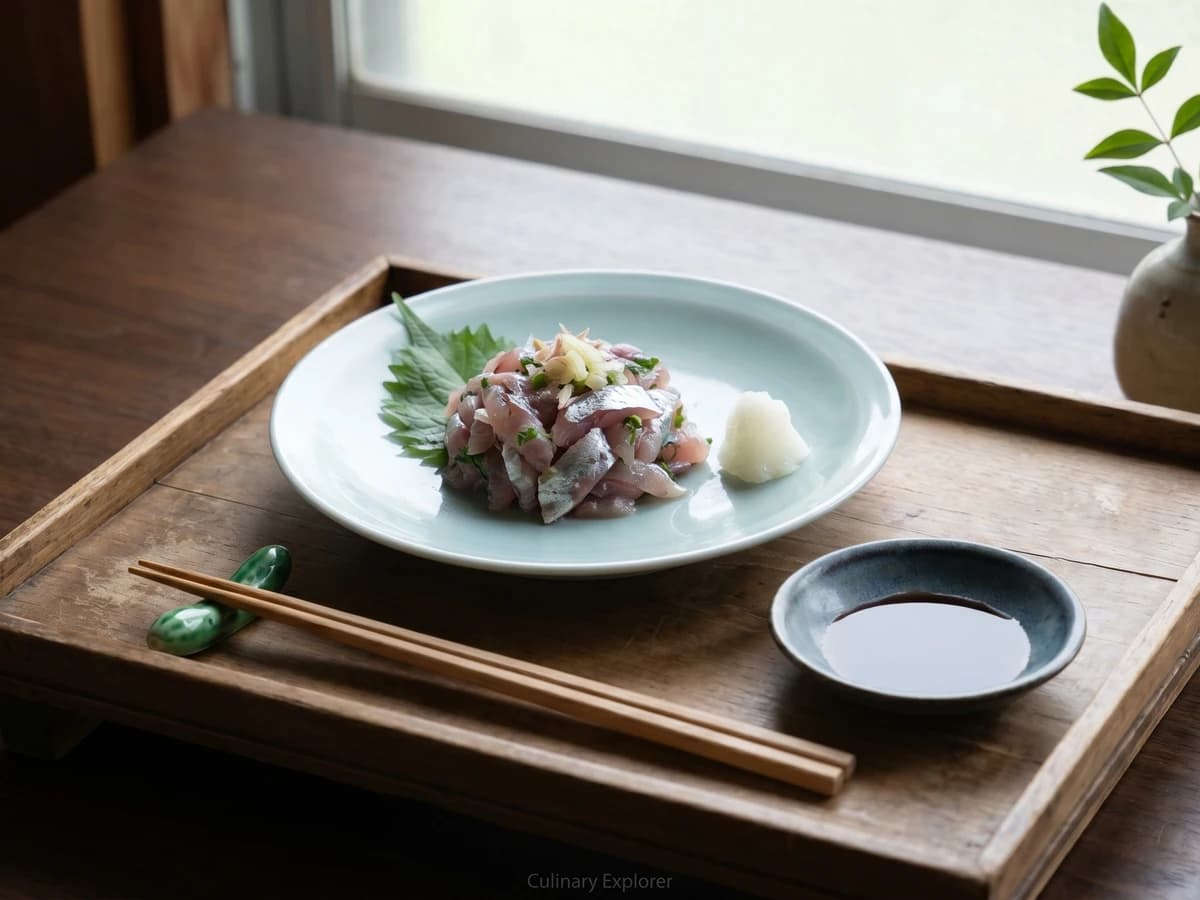
Summer horse mackerel, chopped just enough to catch ginger and scallion, becomes a cool, clean main dish with rice. The secret is fresh fish and a knife that does not bruise it.
Chef Takumi
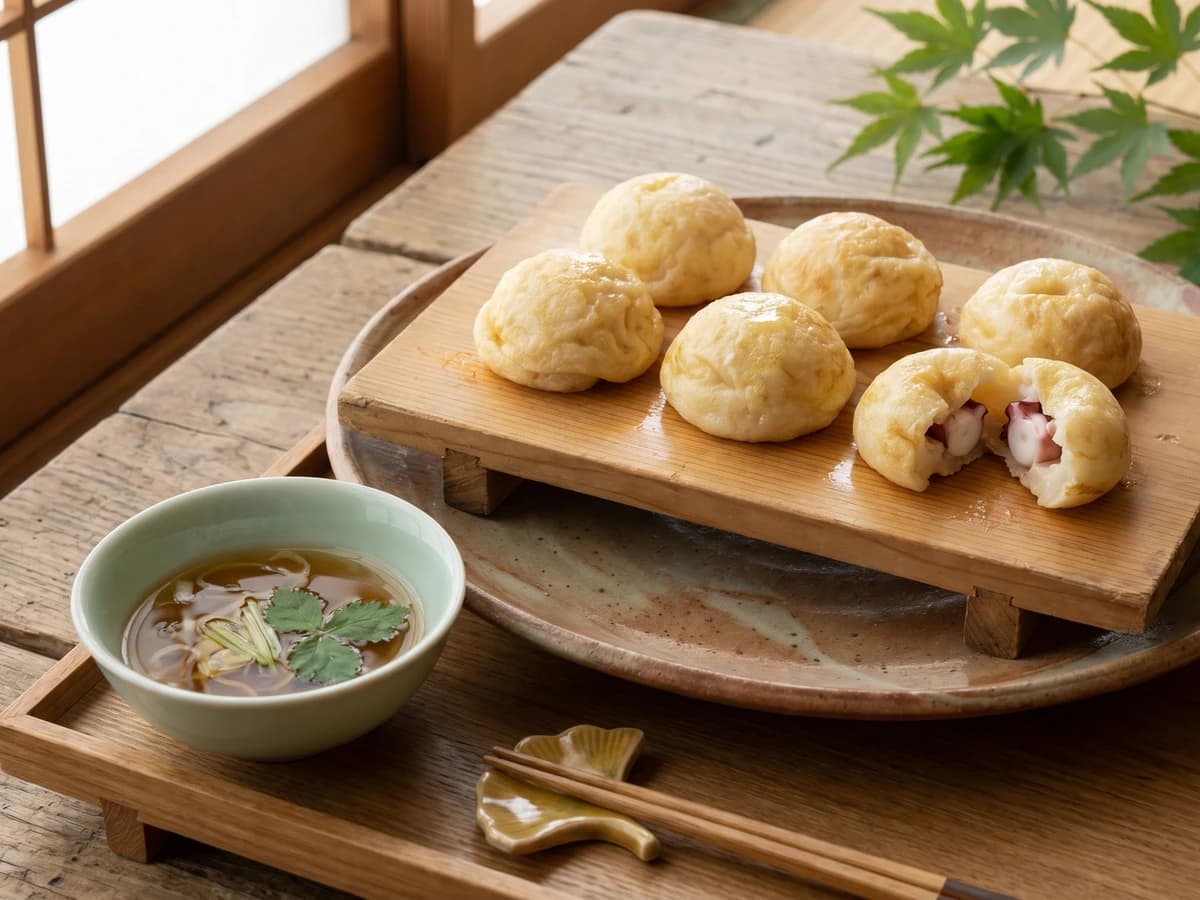
Akashi-yaki is not sauced takoyaki. It is egg-rich batter, tender octopus, and clear dashi, cooked pale and soft so each ball can be dipped like a small custard dumpling.

Chef Takumi
A whole anago looks like a test of nerve. It is mostly good sourcing, a dry skin, cold batter, and oil hot enough to leave the eel sweet under its lace.