Culinary Explorer

A cooking platform built around craft, culture, and the stories behind what we eat.
Discover Culinary Explorer
Toad in the Hole with Onion Gravy

Toad in the Hole with Onion Gravy

Created by Chef Thomas

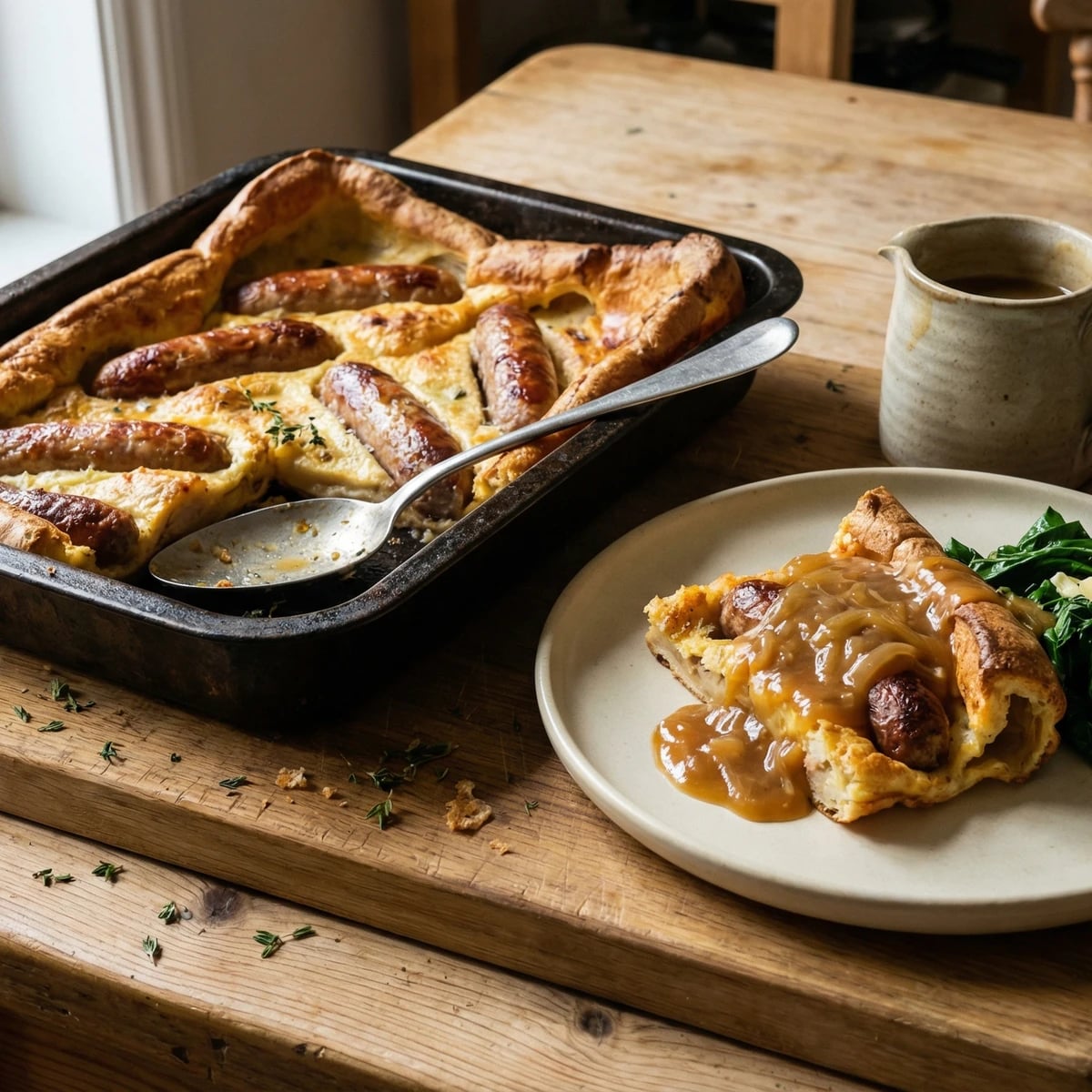
Fat sausages cradled in risen Yorkshire pudding batter, golden and billowing at the edges, with a slow onion gravy that smells of patience and butter and the kind of evening where nobody is in a hurry.

Main Dishes
British
Weeknight
Comfort Food
Budget Friendly
20 min
Active Time
45 min cook1 hr 5 min total
Yield4 servings

The kitchen window has fogged over. The oven has been on for a while now, and there's that moment, fifteen minutes in, when the batter starts to climb the sides of the tin and the whole room smells of hot dripping and browned pork. That's the smell of a Wednesday rescued.

Toad in the hole is not a difficult thing. It's sausages in batter. But the satisfaction of pulling it from the oven, puffed and golden and slightly uneven, the sausages sunk into their cradles of risen Yorkshire, is out of all proportion to the effort involved. It's the kind of dish that makes someone walk into the kitchen and say "what's that?" before they've even taken their coat off. There are few better feelings than putting a warm plate of this in front of someone on a dark evening.

The gravy is where the real work happens, and even that is mostly patience. Onions, sliced and left alone in butter until they've gone from sharp and pale to sweet and amber. Stock, a splash of something dark, and time. The gravy has to be ready when the toad comes out, because this is not a dish that waits well. It comes to the table immediately, cut into rough squares, with the gravy in a jug so people can pour their own. We're only making dinner. But some dinners matter more than others.

I wrote it down in the notebook years ago: "Toad in the hole. Rain. Tuesday. Seconds all round." The recipe hasn't changed since.

The technique, the tradition, and the story behind every dish.

Discover Culinary Explorer

Ingredients

pork sausages

Quantity

6

good quality, high meat content

plain flour (for batter)

Quantity

140g

large eggs

Quantity

3

whole milk

Quantity

200ml

dripping, lard, or vegetable oil

Quantity

2 tablespoons

fine sea salt

Quantity

to taste

black pepper

Quantity

to taste

freshly ground

onions (for gravy)

Quantity

4 large

halved and thinly sliced

unsalted butter (for gravy)

Quantity

30g

olive oil (for gravy)

Quantity

1 tablespoon

plain flour (for gravy)

Quantity

1 tablespoon

beef or chicken stock

Quantity

500ml

Worcestershire sauce

Quantity

1 tablespoon

Dijon mustard

Quantity

1 teaspoon

fresh thyme

Quantity

a few sprigs

Equipment Needed

  • 30cm x 20cm roasting tin or large cast iron skillet
  • Heavy-bottomed saucepan for the gravy
  • Whisk
  • Mixing bowl

Instructions

  1. 1

    Make the batter

    Tip the flour into a bowl with a good pinch of salt. Make a well in the centre and crack in the eggs. Pour in the milk and whisk from the centre outward, pulling the flour in gradually until you have a smooth, thin batter the consistency of single cream. No lumps. If there are lumps, keep whisking. Set it aside to rest for at least thirty minutes, longer if you can manage it. An hour is better. The resting is not optional. It's what gives you the rise.

    Room temperature ingredients make a smoother batter. Take the eggs and milk out of the fridge while you gather everything else.
  2. 2

    Start the onion gravy

    While the batter rests, start the gravy. Melt the butter with the olive oil in a heavy-bottomed pan over a medium-low heat. Add all the sliced onions and a generous pinch of salt. Stir them through the fat, then turn the heat down to low. Now leave them alone. Stir every few minutes, but mostly let them be. You're waiting for them to soften, collapse, and slowly turn from sharp and white to golden, sweet, and sticky. This takes a good twenty-five to thirty minutes. Don't rush it. Rushed onions are bitter onions. Strip the thyme leaves and stir them through the onions for the last five minutes.

    If the onions start to catch on the bottom before they've properly softened, add a splash of water and scrape up the sticky bits. That's flavour. Don't lose it.
  3. 3

    Brown the sausages

    Set the oven to 220C/200C fan. Put the sausages in a roasting tin, about 30cm by 20cm, with the dripping or oil. Slide the tin into the hot oven for ten to fifteen minutes, turning the sausages once, until they've taken on some colour all over and the fat in the tin is smoking hot. The fat must be properly hot. This is the thing that makes the batter rise. Tepid fat makes flat, sad batter. You want it spitting.

  4. 4

    Pour in the batter

    Working quickly, take the tin from the oven and pour the rested batter around the sausages. It should sizzle and start to set at the edges the moment it hits the hot fat. Don't rearrange the sausages, don't tilt the tin, just pour and get it back in the oven immediately. Close the door. Do not open it for at least twenty minutes. Not a peek. Not for any reason. The batter needs the uninterrupted heat to puff and set.

    Every time you open the oven door, the temperature drops and the batter loses its nerve. Trust the process. Trust your nose. When it smells golden, it is golden.
  5. 5

    Finish the gravy

    While the toad bakes, finish the gravy. Sprinkle the tablespoon of flour over the softened onions and stir it through for a minute or two until it disappears. Pour in the stock gradually, stirring as you go. Add the Worcestershire sauce and the mustard. Let it simmer gently for ten to fifteen minutes until it thickens into something glossy and rich that coats the back of a spoon. Season and taste. Then taste again. It should be savoury, slightly sweet from the onions, with enough depth to stand up to the batter and the sausages.

  6. 6

    Serve immediately

    After twenty-five to thirty minutes the batter should be risen, deeply golden, and crisp at the edges, with the sausages nestled in like they've always been there. Pull it from the oven and bring it straight to the table. Cut into generous portions and serve with the onion gravy in a warm jug alongside. Greens on the side if you like. Buttered cabbage or steamed broccoli. Something to cut through the richness. This doesn't wait. The batter will settle as it cools, which is natural, but the first five minutes out of the oven are the best five minutes.

Chef Tips

  • The sausages matter more than anything else in this dish. Buy the best you can find, from a butcher if possible, with a high pork content and proper casings. A cheap sausage will shrink in the oven and leave you with shrivelled things sitting in a sea of batter. A good sausage holds its shape and gives flavour to everything around it.
  • The batter is the same as Yorkshire pudding batter, and the same rules apply: rest it, get the fat screaming hot, pour it in fast, and don't open the oven. That's all there is to it. If you can make a Yorkshire, you can make this.
  • Leftover gravy keeps well in the fridge for three days and reheats beautifully. Make more than you think you need. Nobody has ever complained about too much onion gravy.
  • If you'vegot a cast iron skillet that can go from hob to oven, use it. The heat retention gives you a better rise on the batter, and it comes to the table looking like something from a painting of a country kitchen.

Advance Preparation

  • The batter can be made up to twenty-four hours ahead and kept covered in the fridge. Let it come to room temperature for thirty minutes before using.
  • The onion gravy can be made a day in advance and gently reheated. It thickens as it cools, so add a splash of stock when warming through.
  • The toad itself must be baked and served fresh. There is no reheating Yorkshire pudding batter and pretending it's the same.

Frequently Asked Questions

Nutrition Information

1 serving (about 380g)

Calories
735 calories
Total Fat
43 g
Saturated Fat
17 g
Trans Fat
0 g
Unsaturated Fat
24 g
Cholesterol
225 mg
Sodium
1100 mg
Total Carbohydrates
59 g
Dietary Fiber
5 g
Sugars
13 g
Protein
28 g

Note: Chef personas and recipes are created with AI assistance. Cook with care: follow safe food-handling practices, check doneness with a thermometer when needed, and adapt for allergies and your kitchen.

Where cooking meets culture.

Culinary guides, cultural storytelling, and the editorial depth that makes cooking meaningful.

Discover Culinary Explorer

More from Sunday Roasts & Slow Suppers

Browse the full collection