Culinary Explorer
A cooking platform built around craft, culture, and the stories behind what we eat.
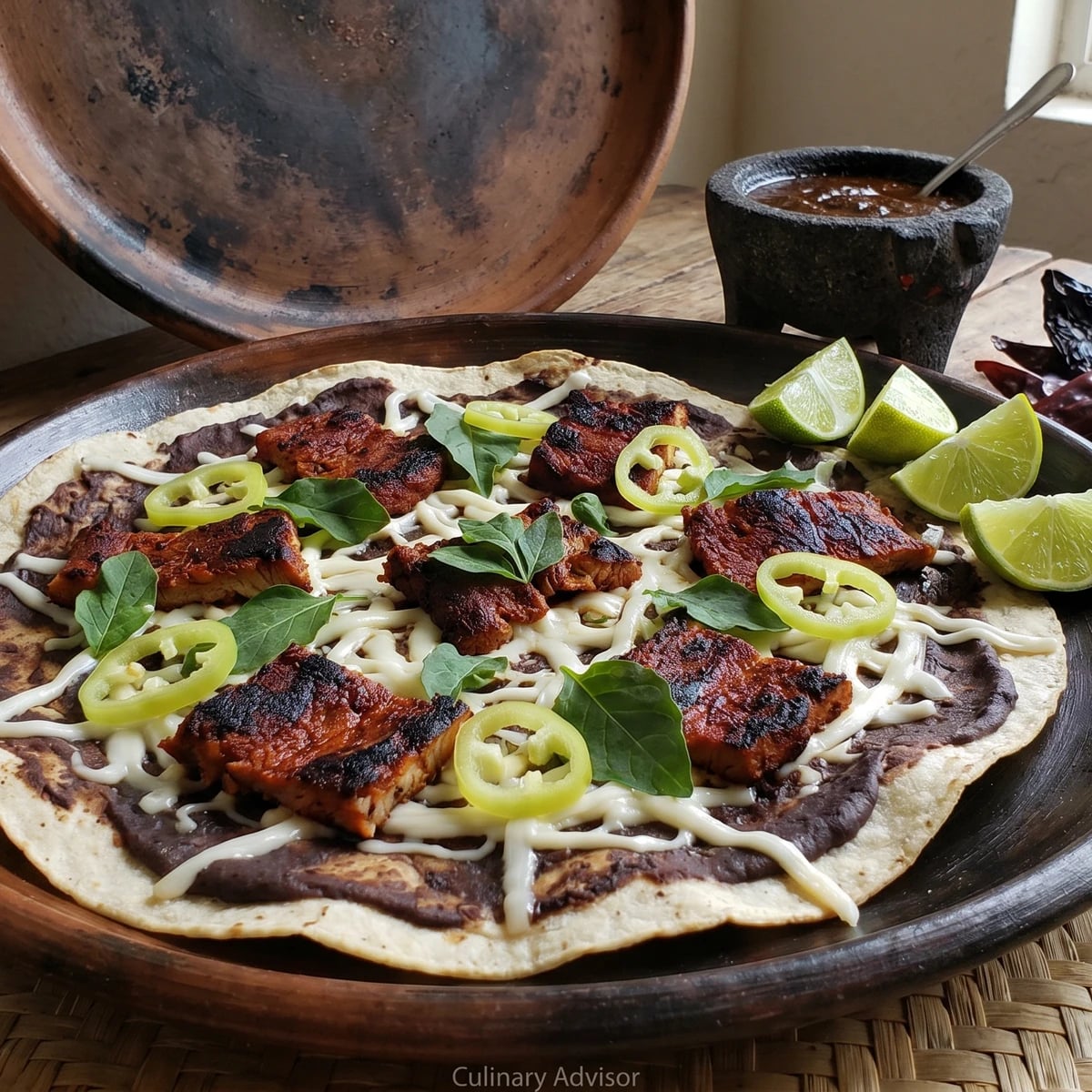
Tlayuda con Cecina Enchilada
Created by Chef Lupita
Oaxaca's oversized blistered tortilla spread with asiento and black beans, piled with cecina enchilada rubbed red with guajillo and ancho, pulled quesillo, fresh chepiche, and sliced chile de agua from the Valles Centrales.
This is Oaxacan street food at its most complete. The tlayuda, that oversized, leathery corn tortilla blistered on a comal until it cracks when you fold it, is the foundation. Everything else is architecture built on top of it: the asiento, the black beans, the quesillo, the cecina enchilada. Remove one layer and the structure falls apart.
Cecina enchilada is pork sliced thin as paper and rubbed with a paste of chile guajillo and chile ancho until the meat turns the color of Oaxacan clay. In the Mercado 20 de Noviembre, the women who grill these have been working the same passageway for decades. The smoke from their coals is the smell of the market itself. You walk into that corridor and the air decides what you're eating. There is no menu. There is cecina, tasajo, chorizo, and the senora pointing at the grill.
The ingredients that make this dish Oaxacan and not merely Mexican are the ones most people outside the state have never heard of. Asiento: the dark, toasty sediment that settles at the bottom of a vat of rendered pork lard, with a smoky depth that clean manteca cannot match. Chepiche: a pungent, resinous herb that grows in the Valles Centrales and tastes like nothing else in the Mexican herb lexicon, somewhere between cilantro and rue but belongingto neither. Chile de agua: a fresh, bright green chile grown almost exclusively in Oaxaca's central valleys, with a clean, direct heat that doesn't linger or overwhelm. Remove any one of these three and you've made a large tostada with pork. You haven't made a tlayuda.
I first ate a proper tlayuda con cecina in the passageway of the 20 de Noviembre in 2008. The senora who served it did not ask what I wanted on it. She built it the way she builds every one: asiento, frijol, quesillo, cecina, chepiche. When I asked about the chepiche, she looked at me like I'd asked what salt was. That herb is so woven into Oaxacan cooking that naming it feels like naming air. Cada estado, su propia cocina.
Ingredients
boneless pork leg
Quantity
1 1/2 pounds
sliced 1/8-inch thin
dried chile guajillo
Quantity
6
stemmed and seeded
dried chile ancho
Quantity
3
stemmed and seeded
| Ingredient | Quantity |
|---|---|
| boneless pork legsliced 1/8-inch thin | 1 1/2 pounds |
| dried chile guajillostemmed and seeded | 6 |
| dried chile anchostemmed and seeded | 3 |
Where cooking meets culture.
Culinary guides, cultural storytelling, and the editorial depth that makes cooking meaningful.
Discover Culinary Explorer