Tlaxcala's pre-Columbian masa pocket, blue corn pinched closed around fresh requesón and epazote, griddled to a charred shell and dressed with tomatillo salsa, crumbled queso añejo, and raw white onion.
Appetizers & Snacks
Mexican
Weeknight
Comfort Food
40 min
Active Time
25 min cook•1 hr 5 min total
Yield8 tlacoyos (4 servings)
The tlacoyo is from Tlaxcala and the central altiplano, the high valleys where blue corn has grown since before the Spanish arrived. The word comes from the Nahuatl 'tlahtlaoyo,' and the dish predates the conquest by centuries. This is not a taco. This is not a sope. The tlacoyo is its own thing, a pinched oval of masa with the filling sealed inside before it ever hits the comal. The filling cooks with the masa. The shell chars. The cheese inside melts into the corn. That structure is the dish.
Blue corn is what you want. Yellow or white masa will work, but the tlacoyos at the Mercado de Sonora and along the streets of Tlaxcala City are made with blue corn because that is what the altiplano grows. The masa is darker, earthier, and sweeter, and when it chars on the comal you get that purple-black crust that says immediately what this is and where it comes from. If your mercado doesn't carry blue corn masa harina, find one that does. Masienda ships nixtamalized blue corn flour and it is the closest you will get outside of grinding your own.
Requesón is the filling that signals home cooking, the cheap and brilliant choice of the women who set up their comales at five in the morning on the streets of CDMX. It's fresh, mild, and a little tart, like a Mexican ricotta. Mix it with chopped epazote, that wild anise-and-petroleum herb that grows in cracks in the sidewalk all over Mexico, and a little onion, and you have a filling that costs almost nothing and tastes like ten generations of practice. The first time I made tlacoyos was in the kitchen of a señora named Doña Aurelia in Tepetlaoxtoc. She watched my hands while I pinched the masa closed and said, 'Más apretado, mija. Si se abre en el comal, ya no es tlacoyo, es disgrace.' I have never forgotten it. Saber cocinar es saber vivir.
The tlacoyo is one of the oldest documented prepared foods in Mexican cuisine, with archaeological and codex evidence placing it firmly in the pre-Columbian altiplano diet of the Tlaxcaltecas, Nahuas, and Otomíes; the word derives from the Nahuatl 'tlahtlaoyo,' meaning something flattened or oval. Pre-conquest fillings centered on beans, chia, and amaranth, all proteins that long predated European dairy on the central plateau. Requesón as a filling is a colonial-era adaptation that took hold once Spanish cattle and cheesemaking practices spread through Tlaxcala and Puebla, and it remains a signature of the working-class breakfast culture of Ciudad de México and the central highlands, where street vendors, almost always women, have sold tlacoyos from sidewalk comales for at least a century.
The technique, the tradition, and the story behind every dish.
preferably Masienda or another nixtamalized blue corn brand
warm water
Quantity
1 1/4 cups, plus more as needed
kosher salt
Quantity
1 teaspoon
lard (manteca de cerdo)
Quantity
1 tablespoon
softened
fresh requesón
Quantity
1 cup (about 8 ounces)
fresh epazote leaves
Quantity
1/4 cup
finely chopped
white onion
Quantity
1/4 small
finely diced
kosher salt (for the filling)
Quantity
1/2 teaspoon
fresh tomatillos
Quantity
1 pound
husked and rinsed
fresh chile serrano
Quantity
3 to 4
stemmed
garlic cloves
Quantity
2
unpeeled
white onion (for the salsa)
Quantity
1/4 small
fresh cilantro leaves and tender stems
Quantity
1/3 cup
kosher salt
Quantity
to taste
lard or neutral oil
Quantity
for the comal
queso añejo (or queso cotija) (optional)
Quantity
1/2 cup
crumbled
Mexican crema (optional)
Quantity
1/4 cup
finely diced white onion (optional)
Quantity
for serving
chopped cilantro (optional)
Quantity
for serving
Ingredient
Quantity
blue corn masa harinapreferably Masienda or another nixtamalized blue corn brand
2 cups
warm water
1 1/4 cups, plus more as needed
kosher salt
1 teaspoon
lard (manteca de cerdo)softened
1 tablespoon
fresh requesón
1 cup (about 8 ounces)
fresh epazote leavesfinely chopped
1/4 cup
white onionfinely diced
1/4 small
kosher salt (for the filling)
1/2 teaspoon
fresh tomatilloshusked and rinsed
1 pound
fresh chile serranostemmed
3 to 4
garlic clovesunpeeled
2
white onion (for the salsa)
1/4 small
fresh cilantro leaves and tender stems
1/3 cup
kosher salt
to taste
lard or neutral oil
for the comal
queso añejo (or queso cotija) (optional)crumbled
1/2 cup
Mexican crema (optional)
1/4 cup
finely diced white onion (optional)
for serving
chopped cilantro (optional)
for serving
Equipment Needed
•Cast iron comal or heavy 12-inch skillet
•Volcanic stone molcajete (or a blender)
•Damp kitchen cloth for the masa
•Wide mixing bowl for kneading
Instructions
1
Mix the blue masa
In a wide bowl, combine the blue corn masa harina with the salt. Pour in the warm water and the softened lard. Knead with your hands for five to seven minutes. The masa should feel like soft clay, pliable, slightly tacky, never dry. Press a small piece between your palms. If the edges crack, the masa is thirsty. Add water a tablespoon at a time. If it sticks to your hands like glue, add a little more masa harina. Cover with a damp cloth and let it rest for fifteen minutes. The masa needs to hydrate fully before you shape it.
Blue corn masa drinks more water than white. Do not be surprised if you add an extra two or three tablespoons. Trust your hands, not the recipe.
2
Make the requesón filling
In a small bowl, mix the requesón with the chopped epazote, the finely diced onion, and the salt. Taste it. Requesón is mild and the epazote is what carries the flavor, that wild, anise-and-petroleum note that nothing else has. If you can't find epazote, this isn't the dish to make today. Cook what the mercado is selling. No me vengas con atajos.
3
Roast the salsa ingredients
Heat a dry comal or heavy skillet over medium-high. Place the tomatillos, serranos, garlic, and the chunk of white onion directly on the comal. Turn them as they char. The tomatillos will blister and soften and turn olive-green in about eight minutes. The serranos blacken in spots faster, pull them sooner. The garlic stays in its skin until the cloves feel soft when you press them. The char is the recipe. A boiled tomatillo salsa is a different sauce.
4
Blend the salsa verde
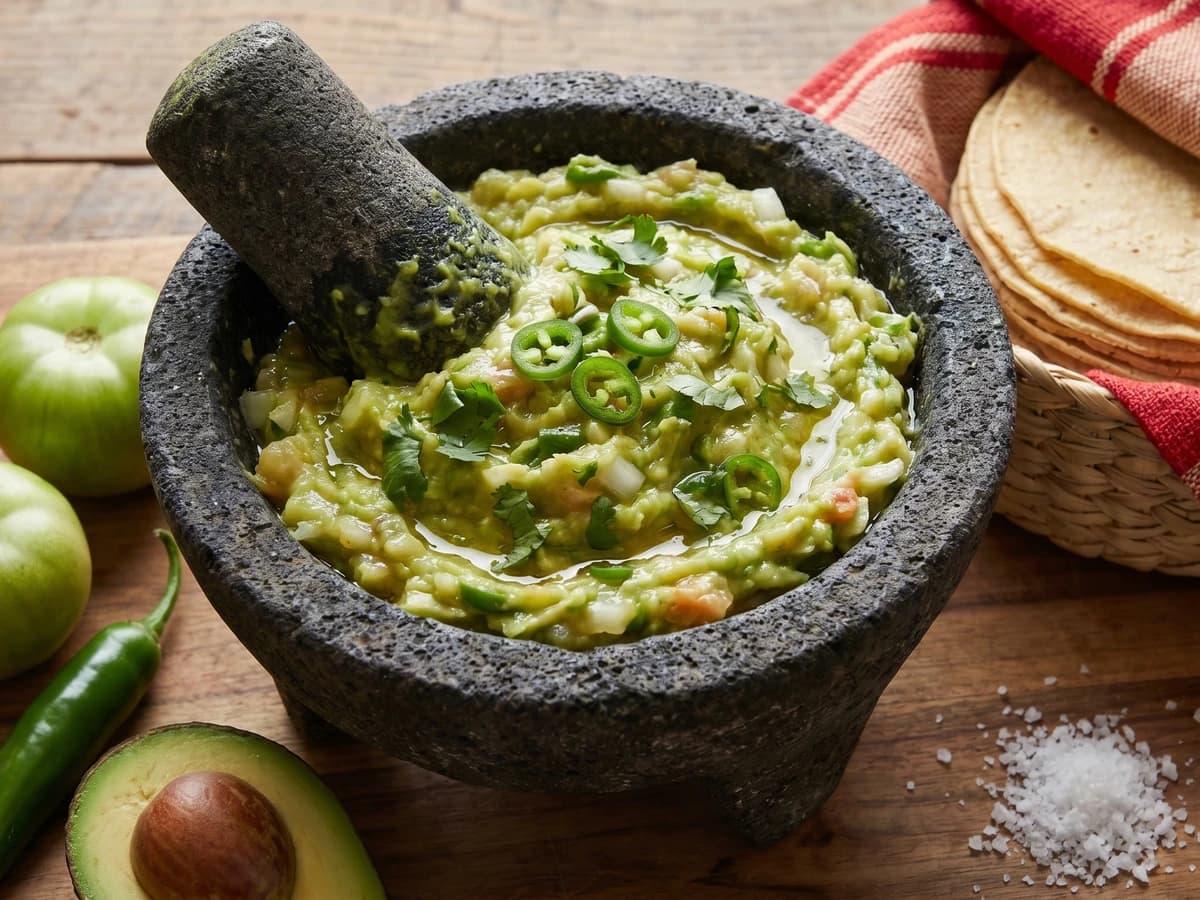
Peel the garlic. Transfer the tomatillos, serranos, garlic, and onion to a molcajete or blender. Add the cilantro and a generous pinch of salt. If using a molcajete, grind the garlic and chile first, then work in the tomatillos until you have a rough sauce with visible texture. If using a blender, pulse, do not puree. You want body, not a smoothie. Taste and adjust salt. The salsa should be tart, hot, and green. Set aside.
A molcajete salsa is not a blender salsa. The stone bruises the herbs and chile in a way the blade cannot replicate. If you own one, use it. If you don't, the blender is honest work, just don't overdo it.
5
Shape the tlacoyos
Divide the masa into eight equal balls, each about the size of a small lime. Take one ball and flatten it in your palm into a thick oval about four inches long and a quarter inch thick. Place a heaping tablespoon of the requesón filling down the center, leaving a half-inch border on all sides. Lift the long edges of the masa up and pinch them closed over the filling, sealing it inside. Roll gently between your palms to smooth the seam, then flatten the package back into an oval, plump in the middle, tapered at the ends. The classic tlacoyo shape is a pointed oval, like a small canoe. Keep the others under the damp cloth while you work.
6
Griddle on the comal
Wipe the comal clean and return it to medium heat. Brush lightly with lard. Lay the tlacoyos on the hot comal. Cook for four to five minutes on the first side. You're looking for dark charred spots, almost black in places, with the rest of the surface a deep blue-gray. Flip and cook the second side for another four minutes. The masa should sound hollow when you tap it. Charred edges, crisp shell, soft inside. That contrast is the dish.
Don't crowd the comal. Tlacoyos need room to char properly. Cook in batches and keep the finished ones warm under a clean kitchen towel.
7
Dress and serve
Arrange the hot tlacoyos on a warm plate. Spoon the salsa verde generously across the tops, letting it pool around the edges. Scatter the crumbled queso añejo over everything, drizzle with a thread of crema, and finish with the diced raw onion and a handful of chopped cilantro. Eat them with your hands, the way they are eaten at the market stalls in Tlaxcala and at the corners of Ciudad de México where the señoras set up their comales before dawn. Así se hace y punto.
Chef Tips
•Look for fresh requesón at a Mexican market or a good Latin grocery. If you can't find it, fresh ricotta drained overnight in cheesecloth is the closest substitute, but the texture is different and the flavor is milder. A substitution is a compromise, not an upgrade.
•Epazote is non-negotiable. The flavor is what makes the filling taste like a tlacoyo and not a generic cheese pocket. Fresh is best, but dried works in a pinch, just use half the quantity. If you live somewhere it doesn't grow, ask the women at the Mexican market. They almost always know a source.
•Tlacoyos also take fillings of refried beans (frijoles refritos), habas (fava beans), or chicharrón prensado. Every cook has her preferred filling and her preferred salsa, red or green. Pregúntale a las señoras del mercado. They will tell you which combination is which neighborhood's.
Advance Preparation
•The masa can be mixed up to four hours ahead and held under a damp cloth at room temperature. Beyond that, the texture starts to change.
•The requesón filling can be mixed one day ahead and refrigerated. The salsa verde is best the day it is made, but it will hold for two days refrigerated.
•Shaped raw tlacoyos can sit on a tray under a damp cloth for up to an hour before griddling. Do not refrigerate raw tlacoyos. The masa stiffens and they crack on the comal.
Frequently Asked Questions
Nutrition Information
1 serving (about 360g)
Calories
525 calories
Total Fat
25 g
Saturated Fat
10 g
Trans Fat
0 g
Unsaturated Fat
15 g
Cholesterol
45 mg
Sodium
1415 mg
Total Carbohydrates
55 g
Dietary Fiber
7 g
Sugars
6 g
Protein
18 g
Where cooking meets culture.
Culinary guides, cultural storytelling, and the editorial depth that makes cooking meaningful.