
Chef Graziella
Cannelloni Ricotta e Spinaci
Hand-rolled pasta sheets wrapped around a filling of ricotta and spinach, covered in besciamella and baked until golden. This is the Sunday cooking of Emilia-Romagna, made without shortcuts.
A cooking platform built around craft, culture, and the stories behind what we eat.
Created by
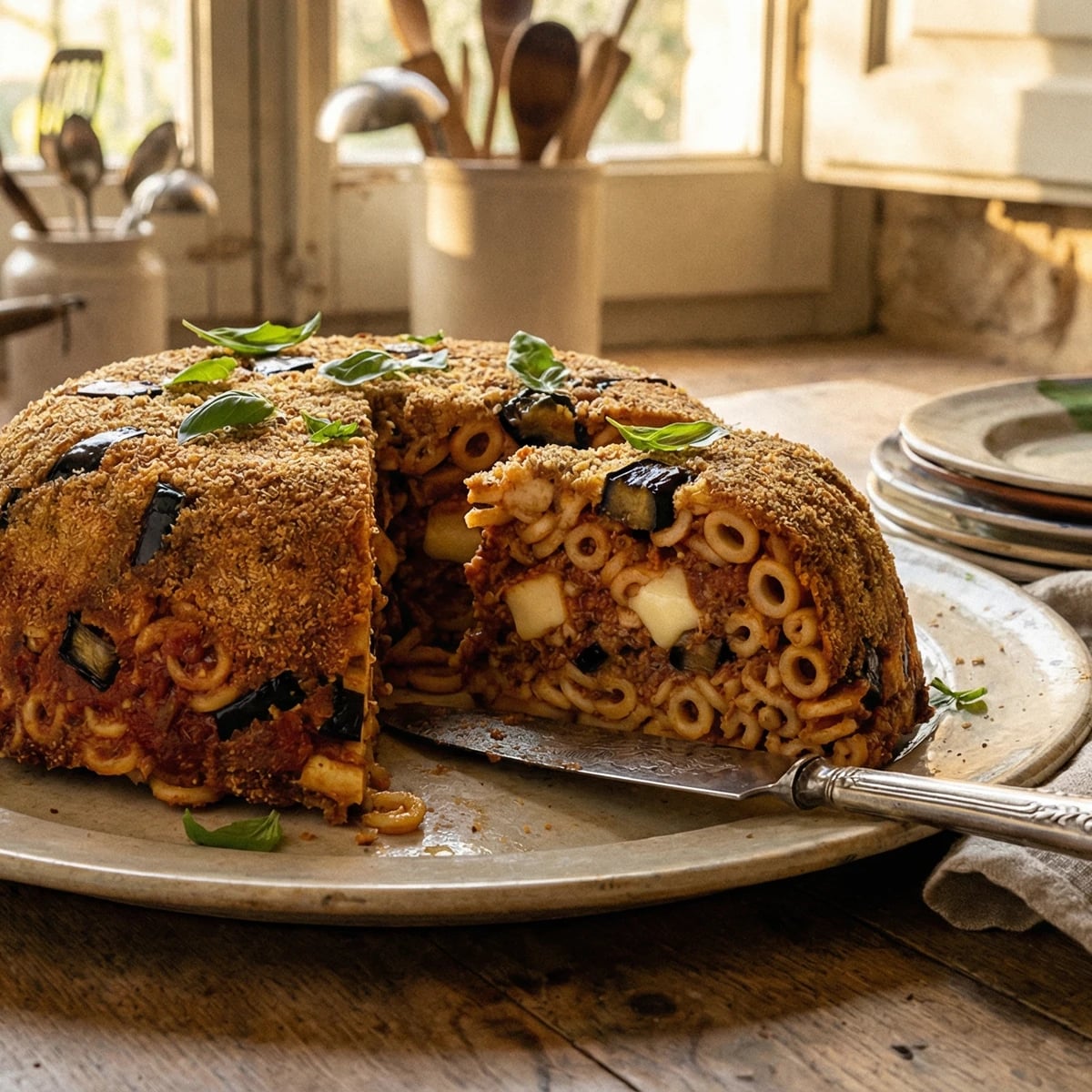
The baroque masterpiece of Palermo, where ring-shaped pasta, slow-simmered ragù, fried eggplant, and Sicilian cheese are molded into a golden drum fit for Sunday tables and feast days.
Sicilians do not make simple food. They make extravagant food with inexpensive ingredients. The timballo is proof of this: a drum of pasta, meat sauce, fried eggplant, and cheese that transforms Sunday dinner into ceremony. It arrives at the table whole, unmolded onto a platter, and the first cut reveals layers of flavor that took half a day to build.
This is not a casserole in the American sense. It is architecture. The anelletti, the small ring-shaped pasta that is nearly impossible to find outside Sicily, must be cooked short of tender because it continues cooking in the oven. The eggplant must be fried, not baked, because the frying creates texture that survives the assembly. The ragù must be thick enough to coat without making the dish wet. Every component matters.
Do not attempt this when you are rushed. The timballo rewards patience and punishes shortcuts. Make the ragù the day before if you like. Prepare your ingredients in the morning, assemble after lunch, bake before dinner. This is the rhythm of Sicilian Sunday cooking, and you will understand it only by doing it.
Timballo arrived in Sicily through the Spanish Aragonese court in the 15th century, its name derived from the Arab word for drum. The dish evolved from aristocratic extravagance, where whole pigeons and elaborate decorations filled the mold, into the pasta-based family dish of Palermo. By the 19th century, anelletti had become the defining pasta, and the timballo had become inseparable from Sicilian celebrations.
Quantity
1 pound
Quantity
3 tablespoons
Quantity
1 medium
diced fine
Quantity
1
diced fine
Quantity
1 small
peeled and diced fine
Quantity
12 ounces
Quantity
8 ounces
Quantity
1 cup
Quantity
2 cans (28 ounces each)
crushed by hand
Quantity
to taste
Quantity
to taste
freshly ground
Quantity
2 medium (about 1 1/2 pounds total)
Quantity
for frying
Quantity
1 cup
fresh or frozen
Quantity
8 ounces
cut into small cubes
Quantity
4 ounces
grated
Quantity
3 tablespoons
softened
Quantity
1/2 cup
Quantity
3
beaten
| Ingredient | Quantity |
|---|---|
| anelletti pasta | 1 pound |
| extra virgin olive oil | 3 tablespoons |
| yellow oniondiced fine | 1 medium |
| celery stalkdiced fine | 1 |
| carrotpeeled and diced fine | 1 small |
| ground pork | 12 ounces |
| ground beef chuck | 8 ounces |
| dry red wine | 1 cup |
| San Marzano tomatoescrushed by hand | 2 cans (28 ounces each) |
| kosher salt | to taste |
| black pepperfreshly ground | to taste |
| eggplants | 2 medium (about 1 1/2 pounds total) |
| vegetable oil | for frying |
| peasfresh or frozen | 1 cup |
| caciocavallo cheesecut into small cubes | 8 ounces |
| primo sale or young pecorinograted | 4 ounces |
| unsalted buttersoftened | 3 tablespoons |
| fine dry breadcrumbs | 1/2 cup |
| large eggsbeaten | 3 |
In a heavy pot, warm the olive oil over medium heat. Add the onion, celery, and carrot. Cook slowly, stirring occasionally, until the vegetables are completely soft and the onion is golden, about 15 minutes. This soffritto is the foundation. One can often trace the unsatisfying taste of would-be Italian dishes to the reluctance of cooks to execute this step thoroughly.
Add the ground pork and beef to the pot. Break it up with a wooden spoon and cook over medium-high heat until the meat loses its raw color and begins to brown, about 12 minutes. The meat should crumble into small pieces. You want browning, not gray steaming.
Pour in the red wine and stir. Let it simmer until the wine has evaporated completely. You should no longer smell alcohol. Add the crushed tomatoes, season with salt and pepper, and bring to a gentle simmer. Reduce heat to low and cook uncovered for at least one hour, stirring occasionally. The ragù should thicken and the oil should begin to separate at the edges. This is correct.
While the ragù simmers, slice the eggplants into rounds about one-third inch thick. Salt them generously on both sides and place in a colander over a bowl. Let them drain for 30 minutes. This draws out moisture and any bitterness. Pat completely dry with paper towels. Wet eggplant will splatter dangerously and absorb too much oil.
In a large skillet, heat one inch of vegetable oil to 350 degrees. Fry the eggplant slices in batches until golden brown on both sides, about 2 minutes per side. Do not crowd the pan. Transfer to a paper towel-lined tray to drain. The eggplant should be tender inside and lightly crisp outside.
If using fresh peas, blanch them in salted boiling water for 3 minutes and drain. If using frozen, simply thaw them. Add the peas to the ragù during the last 10 minutes of cooking. Taste and adjust the seasoning.
Use your hands to generously coat the inside of a 12-inch round springform pan or deep cake pan with the softened butter. Every surface must be covered. Sprinkle the breadcrumbs into the pan and rotate it, tilting and tapping, until the bottom and sides are completely coated. Shake out any excess. This creates the golden crust that is the glory of the timballo.
Bring a large pot of generously salted water to a vigorous boil. Cook the anelletti for two minutes less than the package directs. The pasta will finish cooking in the oven. Drain thoroughly and transfer to a very large bowl.
To the bowl of pasta, add three-quarters of the ragù, the cubed caciocavallo, half the grated cheese, and the beaten eggs. Toss thoroughly until every ring of pasta is coated. The eggs bind everything together during baking. The mixture should look generous and saucy, not dry.
Line the bottom and sides of the prepared pan with the fried eggplant slices, overlapping them slightly and allowing them to hang over the rim by about two inches. Spoon half the pasta mixture into the pan and press gently to eliminate air pockets. Arrange a layer of additional eggplant in the middle if you have extra. Add the remaining pasta mixture and press down firmly. Fold the overhanging eggplant over the top to enclose the filling. Spread the remaining ragù over the top and sprinkle with the remaining grated cheese.
Heat the oven to 375 degrees. Bake uncovered until the top is deeply golden and the edges are bubbling, about 45 to 50 minutes. The timballo should feel firm when you press the center gently. Let it rest in the pan for at least 20 minutes. This resting is not optional. The structure must set or it will collapse when unmolded.
Run a thin knife around the edge of the pan. Place a large serving platter over the top and invert with confidence. Remove the pan. The timballo should release cleanly, revealing its golden breadcrumb crust and the mosaic of eggplant. If a piece sticks, simply press it back into place. Cut into wedges as you would a cake. Serve warm, not hot. The flavors are clearer when the dish has settled.
1 serving (about 450g)
Culinary guides, cultural storytelling, and the editorial depth that makes cooking meaningful.
Discover Culinary Explorer
Chef Graziella
Hand-rolled pasta sheets wrapped around a filling of ricotta and spinach, covered in besciamella and baked until golden. This is the Sunday cooking of Emilia-Romagna, made without shortcuts.

Chef Graziella
Fennel transformed by nothing more than proper blanching, good cheese, honest breadcrumbs, and butter. What you leave out matters as much as what you put in.

Chef Graziella
The baroque potato cake of Naples, where silky mashed potatoes enfold a hidden treasure of cheeses and cured meats, then bake until a golden crust gives way to molten richness within.

Chef Graziella
The original parmigiana of the Amalfi Coast, made as it was before tomatoes conquered Italian cooking. Layers of fried eggplant, silky besciamella, and fresh mozzarella prove that restraint creates depth.