Chef Lupita
Acúmara Tatemada al Comal
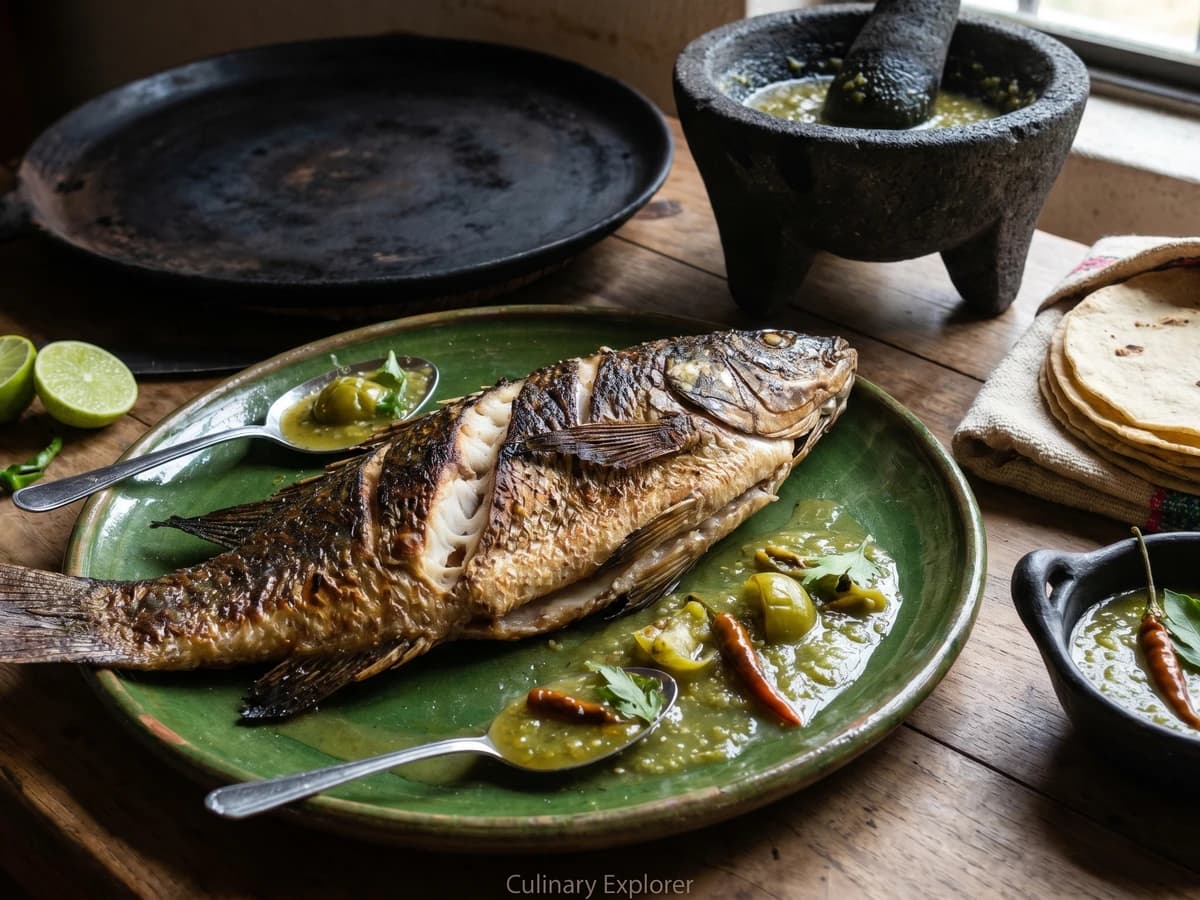
Michoacán's Lake Pátzcuaro acúmara, a whole kurucha from the lago tatemada on a comal de leña and served with chile perón atápakua, corn tortillas, and P'urhépecha discipline.
A cooking platform built around craft, culture, and the stories behind what we eat.

Created by
Michoacán's Tierra Caliente plate of plain white rice, brothy pinto beans, red chile-tomato sauce, and fried adobera cheese or costillitas, built for feeding a family well with little money.
This comes from Tierra Caliente, especially the Apatzingán valley of Michoacán, where the heat sits heavy, the rice is plain on purpose, and the beans carry the meal. You will also find cousins of it across the hot lands that touch Jalisco and Guerrero, because food does not stop at a state line just because a map says so. Still, this plate speaks michoacano first.
Morisqueta is not arroz con frijoles mixed together like someone got lazy with leftovers. The rice is cooked white and separate, the frijoles de la olla stay soupy, and the red sauce goes on top where you can see it. The sauce is not ketchup with chile. It is jitomate, chile guajillo, chile ancho, onion, garlic, and a little manteca de cerdo to wake it up. If you fry adobera cheese for the top, the edges should brown and soften without melting into a puddle. If you use pork ribs, they should cook until the sauce clings to the bone.
I learned one version from a señora in Apatzingán who served it in green-glazed clay bowls with a stack of tortillas wrapped in a faded servilleta. She told me the rice must be humble because the beans are the money. That is household economy, not poetry. Saber cocinar es saber vivir.
Cada estado, su propia cocina. This is comfort food, yes, but do not confuse comfort with carelessness. The separate layers matter. The broth from the beans matters. The chile sauce matters. Así se hace y punto.
Morisqueta is strongly associated with the Tierra Caliente region of Michoacán, especially Apatzingán, though related rice-and-bean plates appear in neighboring Guerrero, Jalisco, and Colima where rice cultivation and cattle-country cooking overlap. The dish reflects the colonial-era arrival of rice in western Mexico and its later adoption into household cooking as a cheap starch that could stretch beans, cheese, and small amounts of pork. In Michoacán, morisqueta became a practical regional identity dish: white rice, frijoles de la olla, chile-tomato sauce, and either cheese or pork, each component kept distinct instead of cooked into one pot.
Quantity
1 pound
picked over and rinsed
Quantity
10 cups, plus more as needed
Quantity
1/2 medium
Quantity
3
peeled
Quantity
2 sprigs
Quantity
2 teaspoons, plus more to taste
Quantity
2 cups
rinsed until the water runs mostly clear
Quantity
3 cups
Quantity
1 tablespoon
Quantity
1 teaspoon
Quantity
5
Quantity
4
stemmed and seeded
Quantity
1
stemmed and seeded
Quantity
1
stemmed
Quantity
1/4 medium
Quantity
2
unpeeled
Quantity
2 tablespoons
Quantity
1/2 teaspoon
Quantity
12 ounces cheese or 1 1/2 pounds ribs
cheese cut into 1/2-inch slabs, or ribs cut crosswise into small pieces
Quantity
1 tablespoon
Quantity
for serving
Quantity
for serving
Quantity
for serving
Quantity
for serving
| Ingredient | Quantity |
|---|---|
| dried pinto beanspicked over and rinsed | 1 pound |
| water | 10 cups, plus more as needed |
| white onion | 1/2 medium |
| garlic clovespeeled | 3 |
| fresh epazote | 2 sprigs |
| kosher salt | 2 teaspoons, plus more to taste |
| long-grain white ricerinsed until the water runs mostly clear | 2 cups |
| water for the rice | 3 cups |
| manteca de cerdo | 1 tablespoon |
| kosher salt for the rice | 1 teaspoon |
| ripe Roma tomatoes | 5 |
| dried chile guajillostemmed and seeded | 4 |
| dried chile anchostemmed and seeded | 1 |
| fresh chile serranostemmed | 1 |
| white onion | 1/4 medium |
| garlic clovesunpeeled | 2 |
| manteca de cerdo for the sauce | 2 tablespoons |
| dried Mexican oregano | 1/2 teaspoon |
| queso adobera or pork ribscheese cut into 1/2-inch slabs, or ribs cut crosswise into small pieces | 12 ounces cheese or 1 1/2 pounds ribs |
| manteca de cerdo for frying | 1 tablespoon |
| finely diced white onion (optional) | for serving |
| crumbled queso Cotija (optional) | for serving |
| lime halves (optional) | for serving |
| warm corn tortillas (optional) | for serving |
Put the pinto beans in a heavy pot with 10 cups water, the half onion, peeled garlic cloves, and epazote. Bring to a boil, then lower to a steady simmer. Cook until the beans are tender and the broth is brown and generous, 1 1/2 to 2 hours depending on the age of the beans. Add the salt only when the beans are nearly tender. Old beans need more time, not more drama.
While the beans cook, melt 1 tablespoon manteca de cerdo in a medium pot over medium heat. Add the rinsed rice and stir for 3 to 4 minutes, until the grains turn opaque and smell faintly nutty. Add 3 cups water and 1 teaspoon salt. Bring to a boil, cover, lower the heat, and cook 15 minutes. Turn off the heat and let it rest covered for 10 minutes. Fluff with a fork. The rice should be separate and plain. That is correct.
Heat a dry comal over medium. Toast the guajillo and ancho chiles about 20 to 30 seconds per side, just until the skins darken slightly and the smell opens. Do not blacken them. Put the toasted chiles in a bowl and cover with hot water for 15 minutes. Hot water softens the flesh. Boiling water beats up the chile and can make the sauce bitter.
On the same comal, roast the Roma tomatoes, serrano, onion, and unpeeled garlic until the tomato skins blister, the onion has dark spots, and the garlic softens inside its skin. Peel the garlic. This is where the sauce gets its cooked flavor. Raw blender tomato tastes thin, and Tierra Caliente cooks know better.
Drain the soaked chiles and put them in a blender with the roasted tomatoes, serrano, onion, peeled garlic, Mexican oregano, and 1 cup bean broth. Blend until completely smooth. If your blender leaves skins behind, strain the sauce. A morisqueta sauce should pour like a loose salsa, not chew like chile peel.
Melt 2 tablespoons manteca de cerdo in a cazuela or wide skillet over medium heat. Pour in the blended sauce carefully because it will jump. Cook 8 to 10 minutes, stirring, until the red deepens and the fat shines at the edges. Taste for salt. La manteca es el sabor, and here it also rounds the tomato's sharpness.
For adobera cheese, heat 1 tablespoon manteca de cerdo in a skillet and fry the slabs 1 to 2 minutes per side, until browned at the edges and softened but still holding their shape. For pork ribs, salt them lightly, brown them in the manteca, then add them to the fried sauce with 1 cup bean broth and simmer 35 to 45 minutes, until tender and coated. Both versions belong on the table. Choose what the market and your money allow.
Spoon a mound of white rice into each shallow clay bowl. Ladle soupy pinto beans over the rice, making sure the broth runs down through the grains. Spoon the red chile-tomato sauce over the top. Add fried adobera or sauced pork ribs. Finish with diced white onion, a little Cotija if you want salt and bite, and lime on the side. Serve with warm corn tortillas. No flour tortillas here. This is Tierra Caliente, not the north.
1 serving (about 640g)
Culinary guides, cultural storytelling, and the editorial depth that makes cooking meaningful.
Discover Culinary ExplorerChef Lupita
Michoacán's Lake Pátzcuaro acúmara, a whole kurucha from the lago tatemada on a comal de leña and served with chile perón atápakua, corn tortillas, and P'urhépecha discipline.

Chef Lupita
Puebla's weekday adobo of pork shoulder braised in a thick guajillo and ancho sauce sharpened with vinegar, cumin, and clove. The deep red of a market spice stall, the dish a poblana cooks without thinking.

Chef Lupita
Loreto's pit-roasted clams, planted hinge-up in beach sand and tatemadas under a fast fire of dried romerillo brush, the resinous Baja desert shrub that gives this dish its smoke.

Chef Lupita
Oaxaca's eighth mole, the silky, almond-and-cinnamon almendrado, served over poached chicken. Mild, sweet, restrained, and a quiet rebuttal to anyone who thinks Mexican food has to be hot to be Mexican.