
Chef Graziella
Agnello al Forno con Patate
The Sunday lamb of Puglia, roasted with potatoes until they absorb every precious drop of rendered fat. In this dish, the potatoes become the reason you came to the table.
A cooking platform built around craft, culture, and the stories behind what we eat.

Created by
The great layered bake of Puglia, where raw rice, thinly sliced potatoes, and fresh mussels transform in the oven into one unified thing. The mussels open and give their liquor to the rice. Nothing is wasted.
Americans do not know that southern Italy has rice dishes. They think risotto, they think the north, they think Lombardy and Piedmont. They do not think of Puglia, where fishermen and farmers combined what the land and sea provided into baked dishes of startling economy.
Tiella is such a dish. The name comes from the terracotta pan in which it bakes. You layer raw rice between thin slices of potato, nestle mussels among the grains, add tomatoes and onion and parsley, and let the oven do the work. As the mussels cook, they open and release their briny liquor into the rice below. The potatoes on top form a golden crust. Nothing is added that does not belong.
This is peasant cooking at its most intelligent. The raw rice absorbs the liquid from the mussels and tomatoes. The potatoes protect the rice from drying out. Each ingredient serves a purpose beyond its own flavor. When Americans heap ingredients into a pot hoping that more will mean better, they should study this dish. What you keep out is as significant as what you put in.
Tiella originated in Bari, the capital of Puglia, where the Adriatic provided mussels and the stony hillsides grew potatoes and onions. Fishing families baked it in communal ovens, each household's terracotta pan marked to identify it after baking. The dish spread along the Adriatic coast with local variations: in Taranto they add zucchini, in some villages they substitute clams.
Quantity
3 pounds
scrubbed and debearded
Quantity
1 1/2 pounds
peeled and sliced 1/8 inch thick
Quantity
1 cup
Quantity
1 medium
sliced very thin
Quantity
1 pound
halved
Quantity
3
sliced thin
Quantity
1/2 cup
chopped
Quantity
1/2 cup
freshly grated
Quantity
1/2 cup, plus more for dish
Quantity
1/2 cup
Quantity
1 cup
Quantity
to taste
Quantity
to taste
freshly ground
| Ingredient | Quantity |
|---|---|
| fresh musselsscrubbed and debearded | 3 pounds |
| waxy potatoespeeled and sliced 1/8 inch thick | 1 1/2 pounds |
| Arborio or Carnaroli rice | 1 cup |
| yellow onionsliced very thin | 1 medium |
| cherry tomatoeshalved | 1 pound |
| garlic clovessliced thin | 3 |
| flat-leaf parsleychopped | 1/2 cup |
| Pecorino Romanofreshly grated | 1/2 cup |
| extra virgin olive oil | 1/2 cup, plus more for dish |
| dry white wine | 1/2 cup |
| water | 1 cup |
| kosher salt | to taste |
| black pepperfreshly ground | to taste |
Place the mussels in cold water and scrub them thoroughly. Pull away the beards, those fibrous threads protruding from the shells. Discard any mussels with cracked shells or any that remain open when tapped sharply. A dead mussel will poison a dish. Live mussels close when disturbed. This is your test.
Slice the potatoes as thin as you can manage, about one-eighth inch. A mandoline helps, but a sharp knife and patience work equally well. Place the slices in cold water to prevent browning. Drain and pat dry before layering.
Heat the oven to 400 degrees Fahrenheit. Generously oil a 12-inch round or 9-by-13-inch baking dish, preferably terracotta or enameled cast iron. The vessel matters. Thin metal conducts heat too quickly and burns the bottom before the rice cooks through.
Arrange half the potato slices in overlapping rows across the bottom of the dish. They should cover the surface completely with slight overlap, like roof tiles. Season with salt and pepper. Scatter half the onion slices and half the garlic over the potatoes. Sprinkle half the raw rice evenly across.
Arrange the mussels in a single layer over the rice, hinged side down so they will open upward as they cook. Tuck them close together. Scatter half the tomatoes, half the parsley, and half the cheese over the mussels. Drizzle with half the olive oil.
Scatter the remaining rice around and between the mussels. Layer the remaining potato slices on top, again overlapping like tiles. This top layer will brown and crisp. Add the remaining onion, garlic, tomatoes, parsley, and cheese. Drizzle with the remaining olive oil.
Combine the wine and water. Pour this mixture slowly around the edges of the dish, allowing it to seep down through the layers. Do not pour directly on top or you will wash away the cheese. Cover tightly with aluminum foil. Bake for 45 minutes.
Remove the foil and continue baking until the top potatoes are golden brown and slightly crisp at the edges, 25 to 30 minutes more. The liquid should be absorbed and the rice tender. If the top browns too quickly, tent loosely with foil. The dish is done when a knife slides easily through the layers.
Let the tiella rest for 10 minutes before serving. This allows the layers to set. Carry the dish to the table and serve directly from the pan, scooping through all the layers to give each person potatoes, rice, and mussels together. Discard any mussels that have not opened.
1 serving (about 350g)
Culinary guides, cultural storytelling, and the editorial depth that makes cooking meaningful.
Discover Culinary ExplorerChef Graziella
The Sunday lamb of Puglia, roasted with potatoes until they absorb every precious drop of rendered fat. In this dish, the potatoes become the reason you came to the table.

Chef Graziella
The little hollowed shells of Puglia and Molise, shaped with nothing more than two fingers and a wooden board. The motion takes practice. The result catches sauce like nothing else.
Chef Graziella
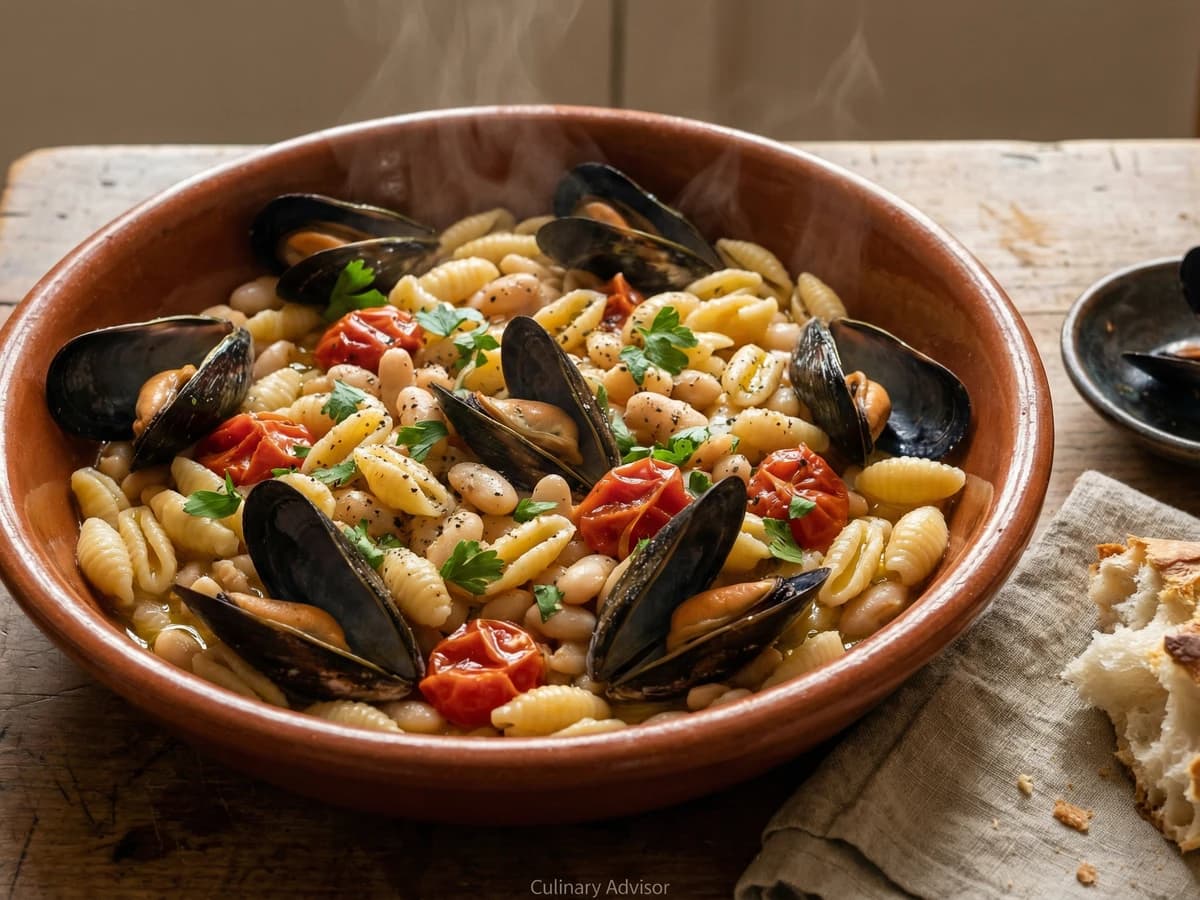
Where the Adriatic meets the wheat fields of Puglia: briny mussels, creamy cannellini, and chewy cavatelli dressed in nothing but good olive oil and the juice the shellfish surrender.

Chef Graziella
Puglia's beloved gratinated mussels, where briny shellfish meet a golden crust of breadcrumbs, pecorino, and parsley. Simple enough for a weeknight, impressive enough to close a dinner party.