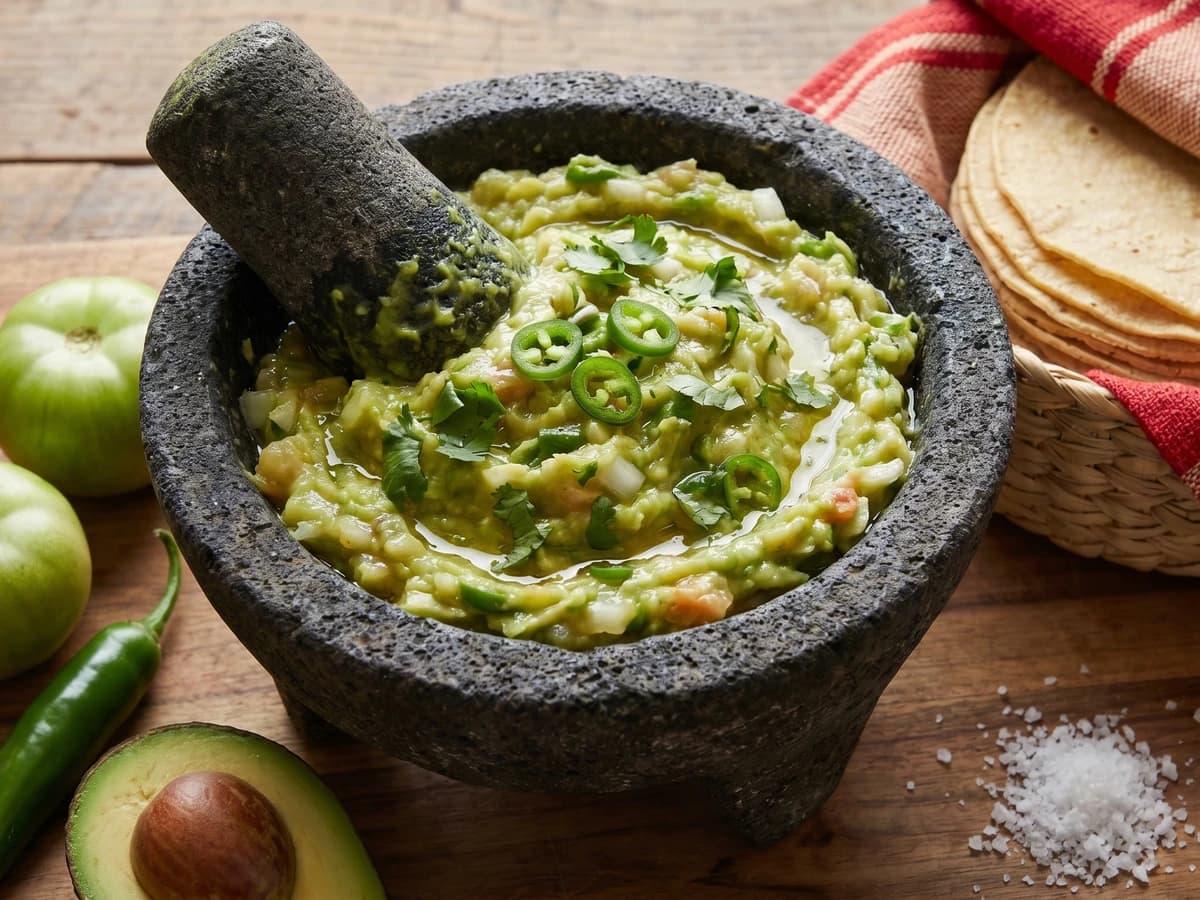
Oaxaca's Costa Chica botana of mangrove tichindas, cooked in their own briny liquor with chile costeño, epazote, garlic, and lime, eaten under a palapa with tortillas close by.
Appetizers & Snacks
Mexican
Outdoor Dining
Special Occasion
Comfort Food
35 min
Active Time
12 min cook•47 min total
Yield4 servings as a botana
Oaxaca, Costa Chica, between Pinotepa Nacional and the lagoons of Chacahua. That is where tichindas live: attached to mangrove roots, pulled from the water by hands that know the tide better than any clock. This is not a city seafood dish. This belongs to the Afro-Mexicano coast, to Cuajinicuilapa, called the Perla Negra del Pacífico, to the families who have cooked from lagoon, milpa, and market for generations.
The tichinda is a small mangrove mussel, darker, brinier, more stubborn than the mussels people buy in a supermarket bag. You clean them well, you cook them hard and briefly with garlic, chile costeño, epazote, onion, and a little manteca de cerdo if the cook uses it. The shells open, the liquor collects at the bottom of the cazuela, and that liquid is the whole argument. Do not drown it in tomato. Do not cover it with cheese. No me vengas con atajos.
I learned this preparation from a señora near Chacahua who rinsed the tichindas in three changes of lagoon water before she let them near the fire. She put chile costeño on the comal until it smelled sharp and red, then crushed it with garlic and salt in a molcajete. The dish took less than twenty minutes once the shells were clean, but the knowledge took centuries. Saber cocinar es saber vivir.
Tichindas are mangrove mussels gathered along the Costa Chica of Oaxaca and Guerrero, especially around Chacahua, Pinotepa Nacional, and Afro-Mexicano communities whose coastal foodways combine Indigenous, African, and Spanish histories. Afro-Mexican communities were formally recognized in Mexico's constitution in 2020, but their cooking traditions along the Pacific coast have been present for roughly 400 years through fishing, foraging, coconut, plantain, chile, and lagoon seafood. The debate over tichindas is not whether they are fancy, they are not; it is whether outsiders understand that this botana belongs to a living coastal economy, not to a generic seafood menu.
The technique, the tradition, and the story behind every dish.
2 thinly sliced and 1 left whole for the molcajete
ripe Roma tomato (optional)
Quantity
1 small
chopped
clean lagoon water, seawater, or lightly salted water
Quantity
1/2 cup
fresh epazote
Quantity
2 large sprigs
sea salt
Quantity
1/2 teaspoon, plus more only if needed
freshly ground black pepper
Quantity
1/4 teaspoon
limes
Quantity
3
halved
warm hand-pressed corn tortillas or tostadas (optional)
Quantity
for serving
Ingredient
Quantity
fresh tichindas or small musselsalive, scrubbed and debearded
2 pounds
kosher saltfor cleaning water
2 tablespoons
dried chile costeño rojostemmed
2
manteca de cerdo
1 tablespoon
white onionthinly sliced
1/2 medium
garlic cloves2 thinly sliced and 1 left whole for the molcajete
3
ripe Roma tomato (optional)chopped
1 small
clean lagoon water, seawater, or lightly salted water
1/2 cup
fresh epazote
2 large sprigs
sea salt
1/2 teaspoon, plus more only if needed
freshly ground black pepper
1/4 teaspoon
limeshalved
3
warm hand-pressed corn tortillas or tostadas (optional)
for serving
Equipment Needed
•Wide clay cazuela with lid or heavy 5-quart pot
•Cast iron comal for toasting chile costeño
•Volcanic stone molcajete
•Stiff shellfish brush
•Woven palm mat or heatproof trivet for the table
Instructions
1
Check the tichindas
Look through the tichindas one by one. They must smell clean and briny, not sour, not rotten. Tap any open shell against the table. If it does not close, throw it away. If the shell is cracked, throw it away. Shellfish does not forgive carelessness.
2
Clean the shells
Put the tichindas in a large bowl of cold water with the kosher salt. Swish them hard with your hands, then lift them out instead of pouring the dirty water over them. Scrub the shells with a stiff brush and pull away the beards. Repeat with clean water until the grit is gone. The women on the Costa Chica do this without drama because they know one sandy bite ruins the whole cazuela.
Do not soak mussels for hours in fresh water. You are cleaning them, not drowning them. Keep them cold and cook them the same day.
3
Toast the chile
Heat a dry comal over medium. Toast the chile costeño rojo for 10 to 15 seconds per side, just until it darkens slightly and smells sharp. This chile is small and thin. It burns fast. Burned chile turns bitter and then you will blame the tichindas like a fool.
4
Grind the seasoning
Put the toasted chile costeño, the whole garlic clove, and the sea salt in a molcajete. Grind to a rough paste. It does not need to be smooth like a blender salsa. You want small flecks of chile that cling to the shells and season the liquor at the bottom of the cazuela.
5
Start the cazuela
Set a wide clay cazuela or heavy pot over medium heat. Melt the manteca de cerdo. Add the sliced onion and sliced garlic. Cook for 2 minutes, stirring, until the onion softens but does not brown. Add the chopped tomato if using and cook 1 minute more. The tomato is a small background note here, not the sauce. The tichindas and their brine are the sauce.
6
Cook the tichindas
Add the cleaned tichindas to the cazuela. Spoon the chile-garlic paste over them, add the 1/2 cup clean lagoon water or lightly salted water, tuck in the epazote, and sprinkle in the black pepper. Cover tightly and cook over medium-high heat for 6 to 8 minutes, shaking the cazuela once or twice, until the shells open. Do not keep opening the lid to stare. The heat has work to do.
7
Finish with lime
Uncover and discard any shells that stayed closed. Taste the liquor in the bottom before adding more salt. Tichindas carry their own salinity, and an eager hand with salt will ruin them. Squeeze one lime over the cazuela and leave the rest on the table. Serve immediately with warm corn tortillas or tostadas for catching the chile-stained brine. Cada estado, su propia cocina.
Chef Tips
•If you are in Oaxaca, ask for tichindas from the Costa Chica or around Chacahua. Pregúntale a las señoras del mercado. They will know who brought them in and whether the tide was right.
•Outside Mexico, use the smallest freshest live mussels you can find. That is a compromise, not an upgrade. You will miss the mangrove brine and the mineral bite of true tichindas, but you can still respect the method.
•Chile costeño rojo matters here. It gives heat, fruit, and the dry coastal edge that belongs to Oaxaca and Guerrero. If you cannot find it, chile de árbol gives heat but not the same flavor. Say that honestly and keep looking next time.
•Epazote is not decoration. It cuts the briny heaviness and belongs with shellfish on this coast. Cilantro is not the same thing.
•This is a botana, not a plated restaurant appetizer. Put the cazuela in the center, pass lime, pass tortillas, and let people eat with their hands. Así se hace y punto.
Advance Preparation
•The tichindas can be scrubbed and debearded up to 4 hours ahead. Keep them in a bowl set over ice in the refrigerator, covered with a damp towel, not submerged in water.
•The chile costeño and garlic paste can be ground 2 hours ahead and kept covered at room temperature.
•Do not cook the tichindas ahead. Once the shells open, they tighten as they sit. This dish goes from cazuela to table.
Frequently Asked Questions
Nutrition Information
1 serving (about 130g)
Calories
160 calories
Total Fat
8 g
Saturated Fat
3 g
Trans Fat
0 g
Unsaturated Fat
5 g
Cholesterol
45 mg
Sodium
980 mg
Total Carbohydrates
7 g
Dietary Fiber
1 g
Sugars
2 g
Protein
14 g
Where cooking meets culture.
Culinary guides, cultural storytelling, and the editorial depth that makes cooking meaningful.