
Chef Takumi
Aji Fry (アジフライ, panko-fried horse mackerel)
Aji fry is weeknight fish with no mystery: fresh horse mackerel opened cleanly, breaded lightly, and fried until the panko crackles while the flesh stays sweet.
A cooking platform built around craft, culture, and the stories behind what we eat.
Created by
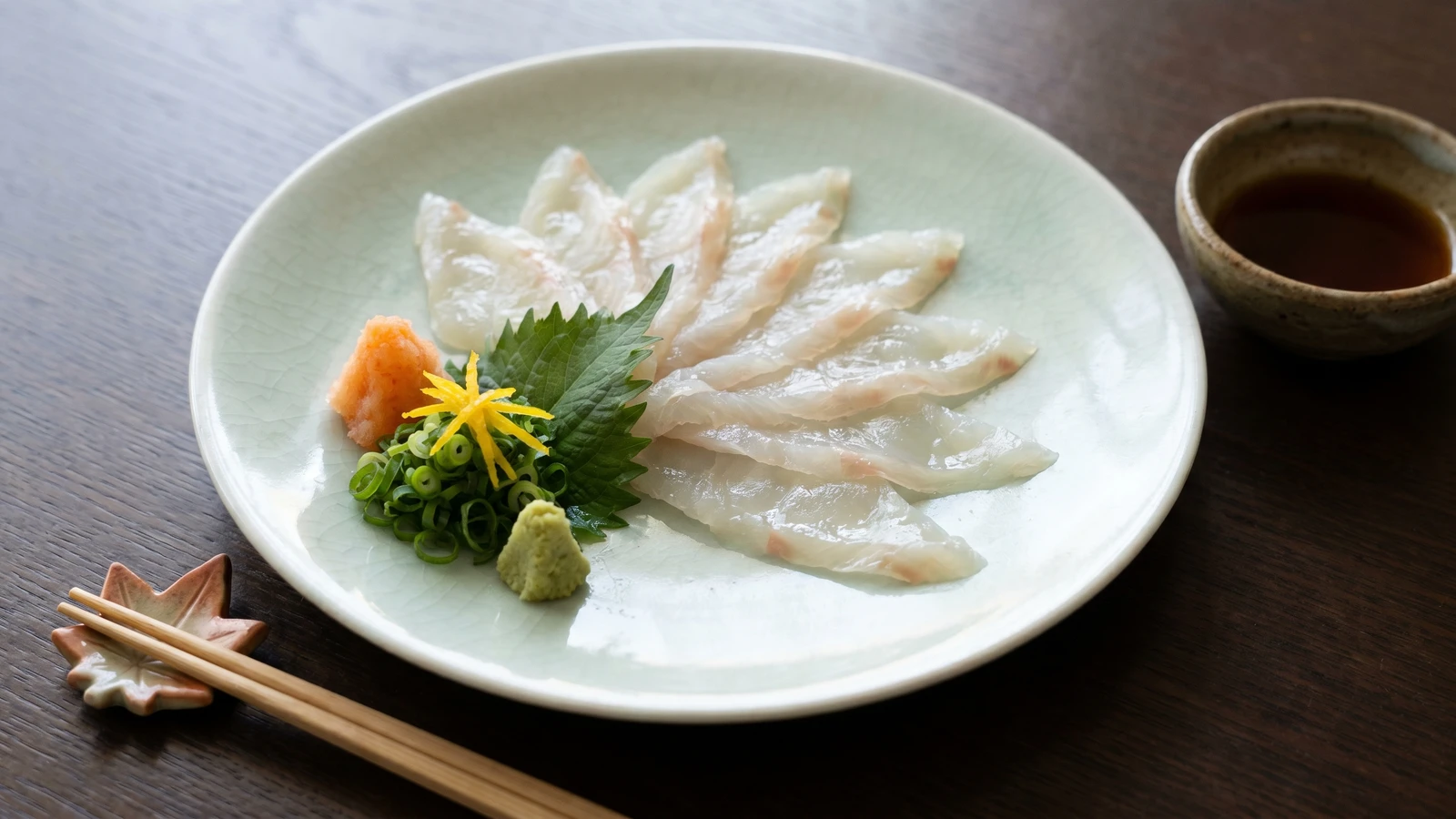
Usuzukuri looks severe until you understand it. Buy glistening fresh winter fluke, chill everything well, and let one low knife angle make the flesh thin, sweet, and clean.
Hirame is winter fish. At its prime, the flesh is firm, pale, and faintly sweet, with a quiet chew that disappears if you cut it too thick. This dish asks for very little sauce because the fish is the point. Nothing hidden, nothing repaired at the end.
Usuzukuri means thin slicing, and it frightens people because the slices look almost transparent. Good. That is the whole idea. You are not showing off for the plate, though the plate will look pleased with itself. A low knife angle lengthens each slice and thins it at the same time, so the fish carries ponzu lightly and keeps its clean texture.
The one detail that decides it is the pull of the knife. Use one smooth draw, heel to tip, without sawing. Sawing bruises the flesh and leaves a dull face where the cut should shine. Keep the fish cold, keep the blade clean, and lay each slice down as you cut it. Let the knife do the seasoning.
In a Japanese meal, this sits where sashimi often sits: early, before heavier simmered or grilled dishes, when the palate is still awake enough to notice restraint. Fan the slices over a chilled pale plate so the pattern shows through. Leave it room. Ma, the empty space, is not decoration here. It keeps the eye calm and the fish cold.
Usuzukuri is closely associated with white-fleshed fish, especially hirame and fugu, because the thin cut makes firm flesh tender without hiding its structure. Hirame has long been prized in winter, when the flesh tightens and sweetens before spawning, and Edomae sushi shops also value the engawa, the fin muscle, for its richer chew. The ponzu and grated daikon often served with usuzukuri reflect a preference for bright acidity and clean heat rather than heavy seasoning.
Quantity
300g
skin removed, pin bones removed
Quantity
1 cup
Quantity
1 teaspoon
for rinsing the fish
Quantity
1 small (about 200g)
grated and lightly squeezed
Quantity
1 small
seeds removed, for momiji-oroshi
Quantity
4 tablespoons
Quantity
1 teaspoon
grated
Quantity
2 tablespoons
very thinly sliced
Quantity
4
Quantity
1 small strip
cut into fine threads
| Ingredient | Quantity |
|---|---|
| sashimi-quality hirame (fluke or olive flounder) filletskin removed, pin bones removed | 300g |
| cold water | 1 cup |
| sea saltfor rinsing the fish | 1 teaspoon |
| daikongrated and lightly squeezed | 1 small (about 200g) |
| fresh red chili (optional)seeds removed, for momiji-oroshi | 1 small |
| ponzu | 4 tablespoons |
| fresh wasabi (optional)grated | 1 teaspoon |
| asatsuki or scallionvery thinly sliced | 2 tablespoons |
| shiso leaves (optional) | 4 |
| yuzu peel (optional)cut into fine threads | 1 small strip |
Buy hirame from a fishmonger who will say plainly that it is suitable for raw eating today. It should smell clean, not fishy, and the flesh should look moist, translucent, and firm. Sourcing first, always. No knife can rescue a tired fish, and this dish gives the fish nowhere to hide.
Put the serving plate in the refrigerator, and chill the fish until you are ready to cut. Set a clean damp cloth beside the board for wiping the knife. Cold fish slices cleanly and holds its shape, while warm fish drags under the blade and turns soft at the edge.
Stir the sea salt into the cold water, dip the hirame quickly, then pat it completely dry with paper towels. This is not a soak. The brief rinse freshens the surface, and careful drying keeps the knife from slipping and the finished slices from weeping on the plate.
Grate the daikon and squeeze it lightly so it is moist but not watery. For momiji-oroshi, press the seeded chili into the daikon before grating, or mince the chili very fine and mix it into a spoonful of grated daikon. Slice the scallion as thinly as you can. These are bright accents, not a sauce to bury the fish.
Lay the fillet on the board with the tail end to your left if you are right-handed. Hold a yanagiba, the long sashimi knife, at a very low angle, almost as if shaving the surface. The low angle makes each slice longer and thinner, which is why usuzukuri feels tender even when the fish itself is firm.
Draw the knife through the fish in one smooth pull from heel to tip, making slices about 1 to 2 millimeters thick. Do not saw. Wipe the blade after every few cuts, because a clean blade leaves a clean face on the fish, and the wet sheen of that cut is part of the taste.
Lay each slice onto the chilled plate as soon as it is cut, overlapping them lightly in a fan or loose circle. The slices should be thin enough for the pale plate pattern to show through. Leave at least a third of the plate empty, because crowded sashimi warms quickly and looks less generous, not more.
Set the grated daikon or momiji-oroshi, wasabi, scallion, shiso, and yuzu peel to one side. Pour ponzu into small dipping dishes and serve immediately. Dip lightly. The ponzu should sharpen the hirame, not take command of it.
1 serving (about 150g)
Culinary guides, cultural storytelling, and the editorial depth that makes cooking meaningful.
Discover Culinary ExplorerChef Takumi
Aji fry is weeknight fish with no mystery: fresh horse mackerel opened cleanly, breaded lightly, and fried until the panko crackles while the flesh stays sweet.
Chef Takumi
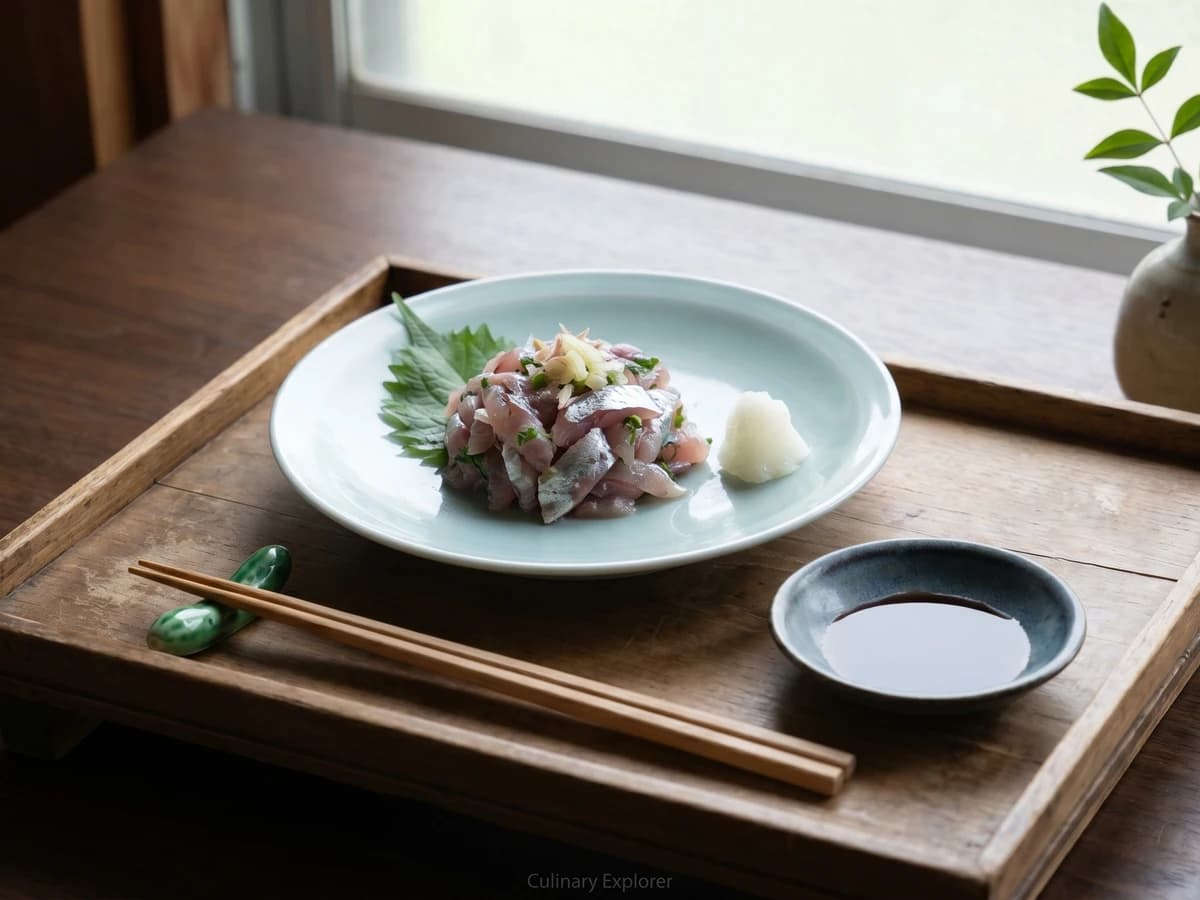
Summer horse mackerel, chopped just enough to catch ginger and scallion, becomes a cool, clean main dish with rice. The secret is fresh fish and a knife that does not bruise it.
Chef Takumi
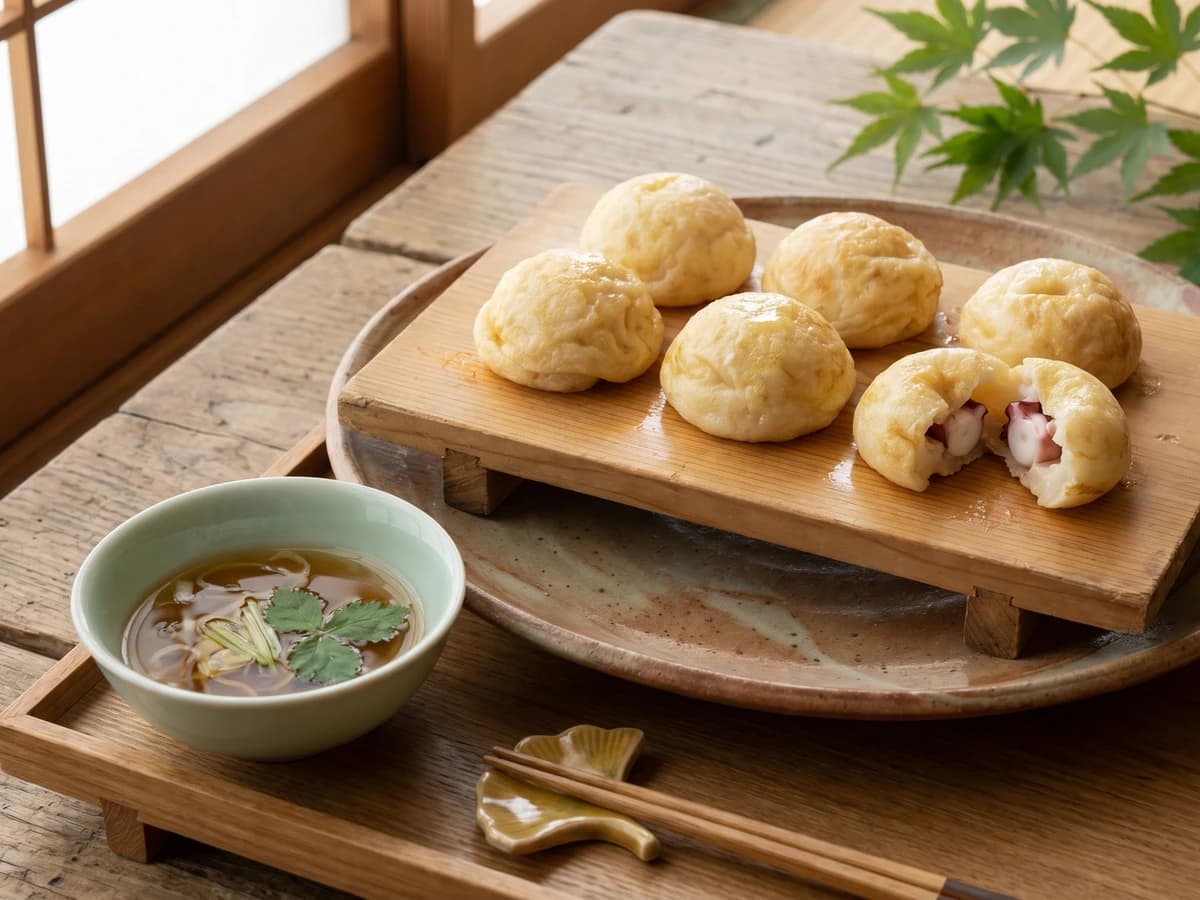
Akashi-yaki is not sauced takoyaki. It is egg-rich batter, tender octopus, and clear dashi, cooked pale and soft so each ball can be dipped like a small custard dumpling.

Chef Takumi
A whole anago looks like a test of nerve. It is mostly good sourcing, a dry skin, cold batter, and oil hot enough to leave the eel sweet under its lace.