
Chef Dimitra
Chios Nerantzi Glyko Koutaliou (Νεράντζι Γλυκό Κουταλιού)
Chios bitter orange peel rolled into tight coils, blanched through clean waters, then preserved in a clear fragrant syrup for the spoon-sweet tray.
A cooking platform built around craft, culture, and the stories behind what we eat.
Created by
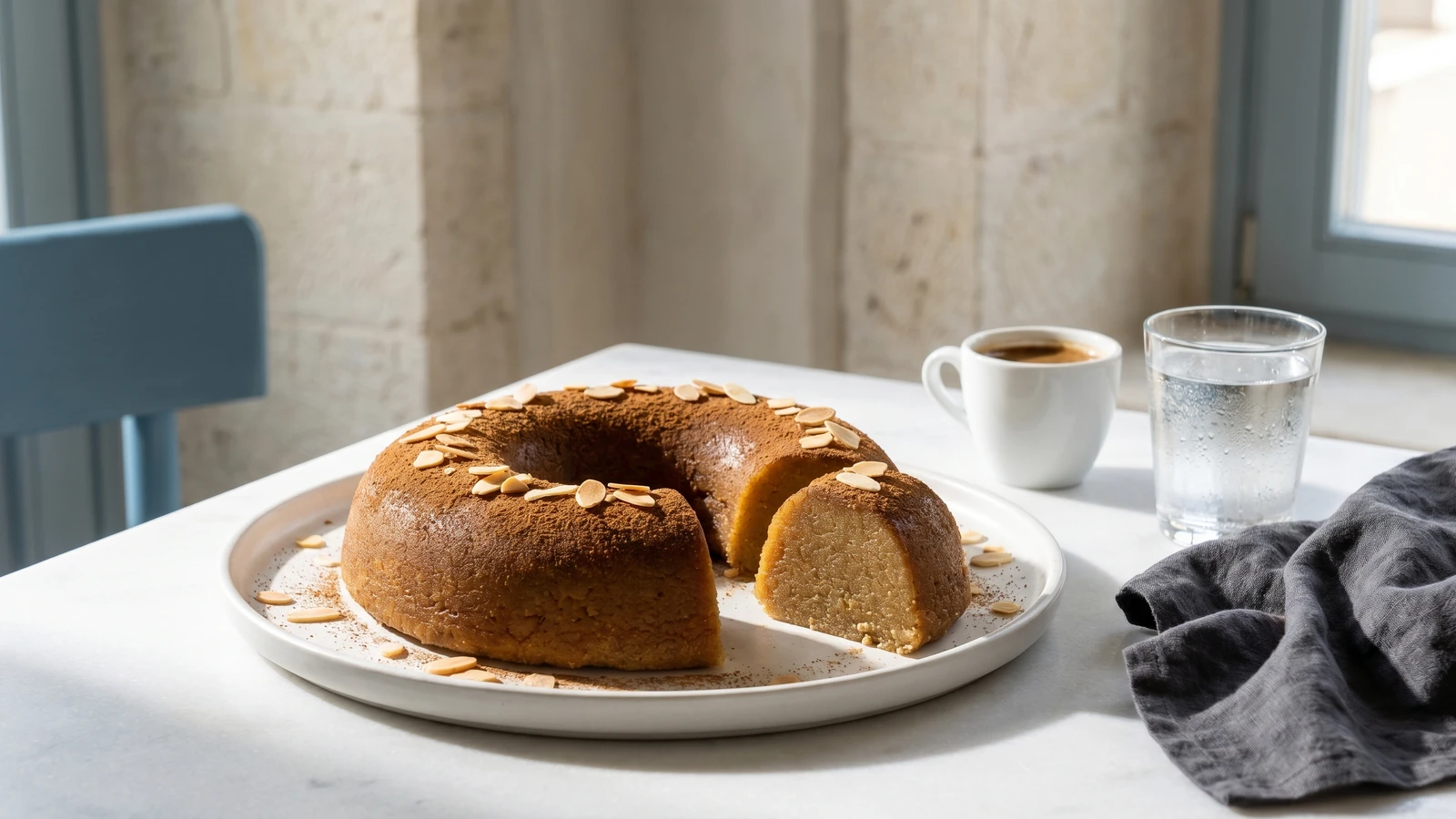
Macedonian home halvas built on the old 1:2:3:4 measure: oil, semolina, sugar, water, with deep toasting doing the work and cinnamon marking the fasting table.
In Thessaloniki and Greek Macedonia, halvas simigdalenios is the Lenten pot sweet: coarse semolina toasted in oil, soaked with cinnamon syrup, pressed into a mould, and dusted dark on top. It isn't the tahini halva from the grocer's counter. This one is made at home, from pantry things, when Lent has taken butter and eggs off the table and still everyone wants something sweet after beans or lentils.
The method that decides it is the toasting. Keep the semolina moving in the oil until it passes from sand-colored to deep gold and smells of nuts. Stop pale and the halvas tastes raw. Push it too far and it goes bitter. Deep gold is the middle road, and that is the whole secret.
The old measure is easy to remember: one oil, two semolina, three sugar, four water. I give you the milliliters and weights because your first pot should not depend on the mood of your teacup. My grandmother Despina kept this for the fasting weeks in Thessaloniki, and she did not decorate it like a cake. Cinnamon, almonds if there were almonds, and finished.
Halvas simigdalenios entered Greek household cooking through the Ottoman sweet vocabulary, but in Greek homes it became the fasting halva of semolina, oil, sugar, and water rather than the tahini confection sold in blocks. The 1:2:3:4 measure appears in twentieth-century Greek household notebooks because it could be remembered without a scale and adjusted to any pan. In Thessaloniki and Macedonia, Constantinopolitan and Asia Minor refugee families helped keep the cinnamon, clove, raisin, and almond versions alive.
Quantity
960ml
Quantity
600g
Quantity
1
Quantity
4
Quantity
2 wide strips
Quantity
240ml
Quantity
340g
Quantity
80g
roughly chopped or slivered
Quantity
60g
Quantity
1 tsp
for dusting
| Ingredient | Quantity |
|---|---|
| water | 960ml |
| granulated sugar | 600g |
| cinnamon stick | 1 |
| whole cloves | 4 |
| lemon peel | 2 wide strips |
| mild Greek olive oil | 240ml |
| coarse semolina (simigdali hondro) | 340g |
| blanched almonds (optional)roughly chopped or slivered | 80g |
| Corinthian raisins (optional) | 60g |
| ground cinnamonfor dusting | 1 tsp |
Set a heavy 4-liter pot, a saucepan, a long wooden spoon, and a 22 to 24cm ring mould near the stove. Measure everything before you turn on the heat. Once the syrup meets the semolina, the halvas moves quickly.
Combine the water, sugar, cinnamon stick, cloves, and lemon peel in the saucepan. Bring to a boil, stir until the sugar dissolves, then simmer for 5 minutes. If using raisins, drop them into the hot syrup off the heat so they plump. Keep the syrup hot.
Warm the olive oil in the heavy pot over medium heat. Add the almonds, if using, and stir for 1 to 2 minutes, just until they take the faintest color. Lift out a spoonful for the top if you want a little finish, and leave the rest in the oil.
Add the coarse semolina to the oil and lower the heat to medium-low. Stir constantly, scraping the bottom and corners, for 12 to 16 minutes, until it turns deep gold and smells nutty. This is the step that decides the dish. Pale semolina tastes raw, and burnt semolina turns bitter. Deep gold is the road home.
Take the pot off the heat. Remove the cinnamon stick, cloves, and lemon peel from the syrup, then add the syrup to the semolina a ladle at a time, stirring with the long spoon and keeping your hands back. The mixture bubbles hard at first. Return the pot to low heat once all the syrup is in.
Stir over low heat for 4 to 6 minutes, until the semolina swells, the mixture holds soft mounds, and the spoon leaves a clear track along the bottom of the pot. It should pull away from the sides without looking dry.
Rinse the mould with cold water and shake it out. Spoon in the halvas while warm, press it gently into the ridges, and smooth the top. Let it settle for 30 to 45 minutes, until it firms enough to unmould cleanly.
Invert onto a plate, dust with ground cinnamon, and scatter over the reserved almonds if you kept some back. Serve warm or at room temperature, cut in thick wedges with Greek coffee. Covered at room temperature, it keeps well for 2 days.
1 serving (about 205g)
Culinary guides, cultural storytelling, and the editorial depth that makes cooking meaningful.
Discover Culinary ExplorerChef Dimitra
Chios bitter orange peel rolled into tight coils, blanched through clean waters, then preserved in a clear fragrant syrup for the spoon-sweet tray.

Chef Dimitra
Chios gives vanilla submarine its mastic breath: a pearly spoon sweet stirred stiff, served cold in water, and offered as the simplest kerasma.
Chef Dimitra
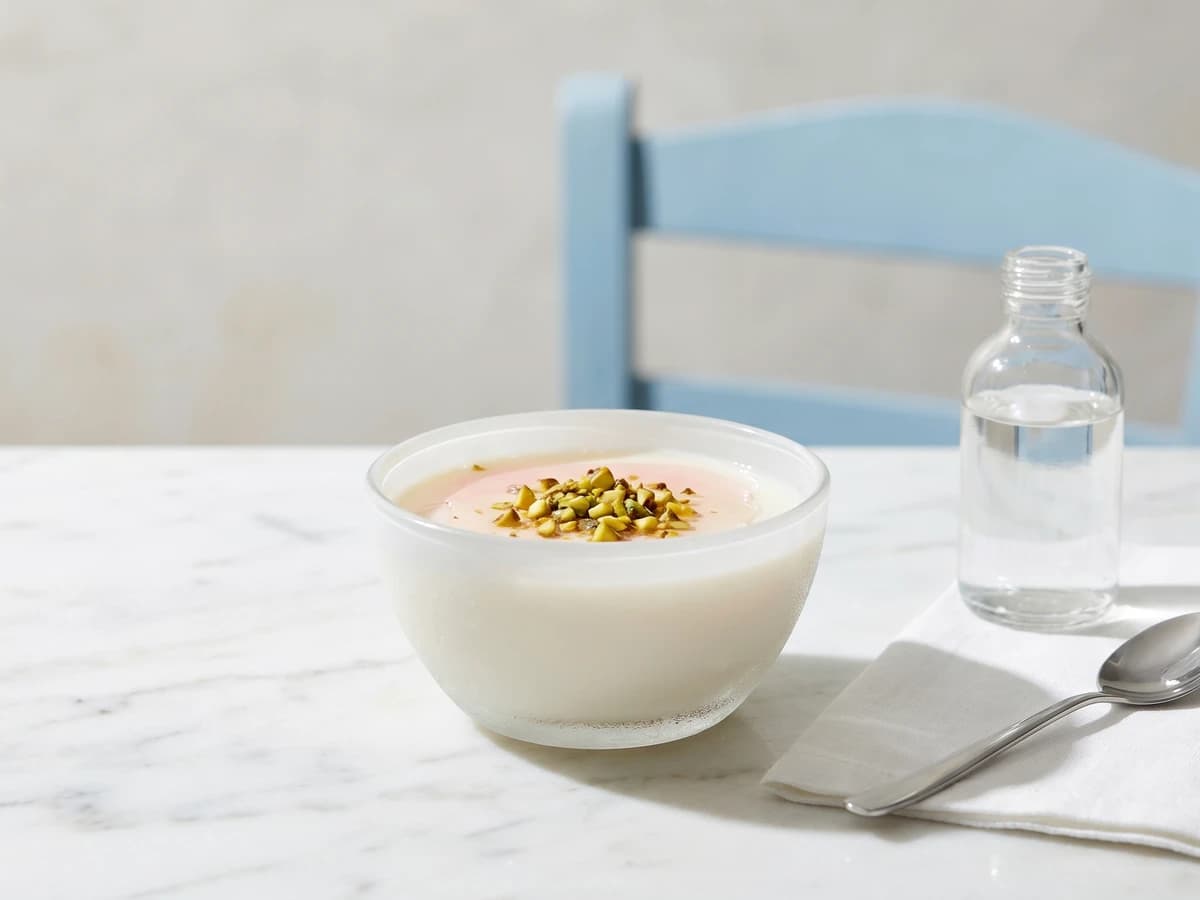
Mahalepi is the cooling milk pudding of Cyprus and the Politiki table: pale, trembling, and loosened at the spoon with cold rosewater syrup.
Chef Dimitra
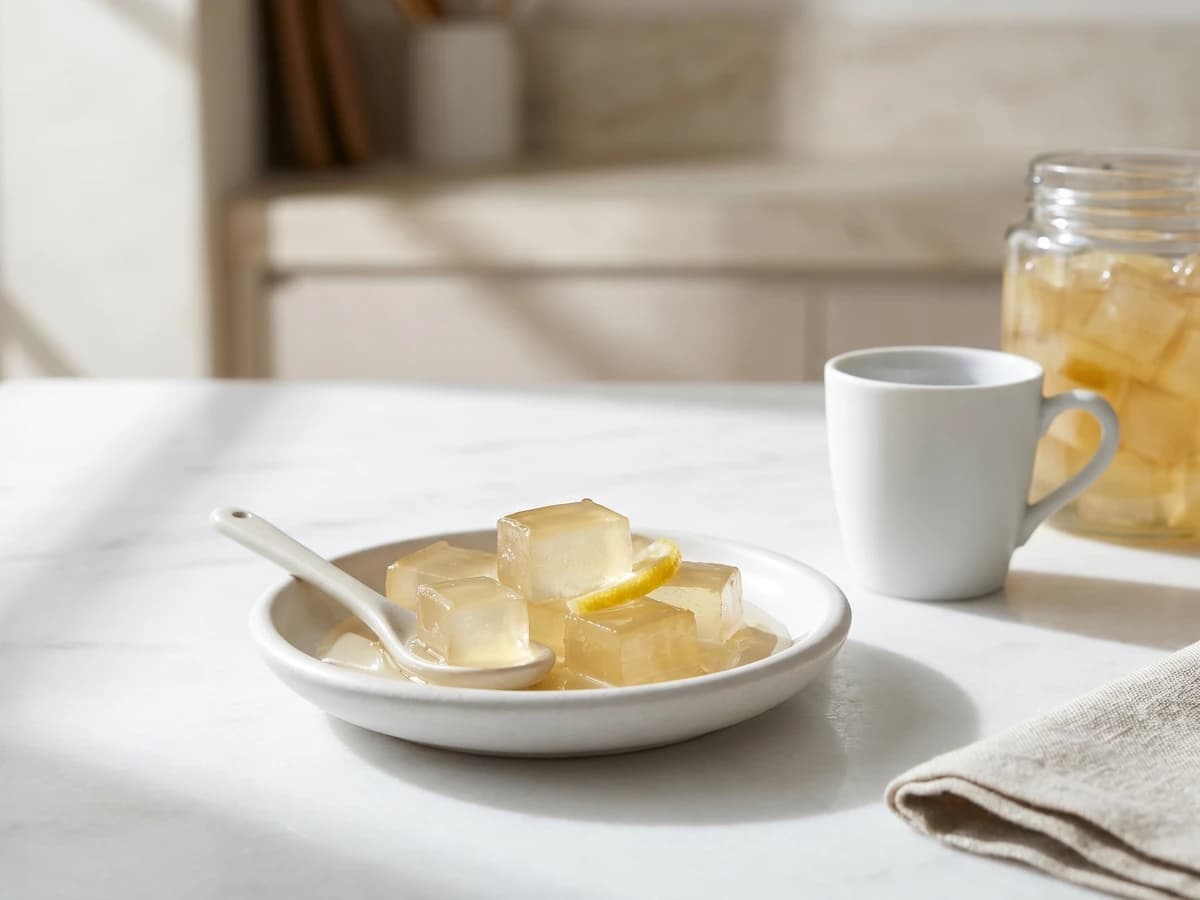
Cyprus keeps the watermelon after the red flesh is gone: firm white rind, lime-soaked for snap, simmered slowly in lemon syrup until each piece shines on the spoon.