Culinary Explorer
A cooking platform built around craft, culture, and the stories behind what we eat.
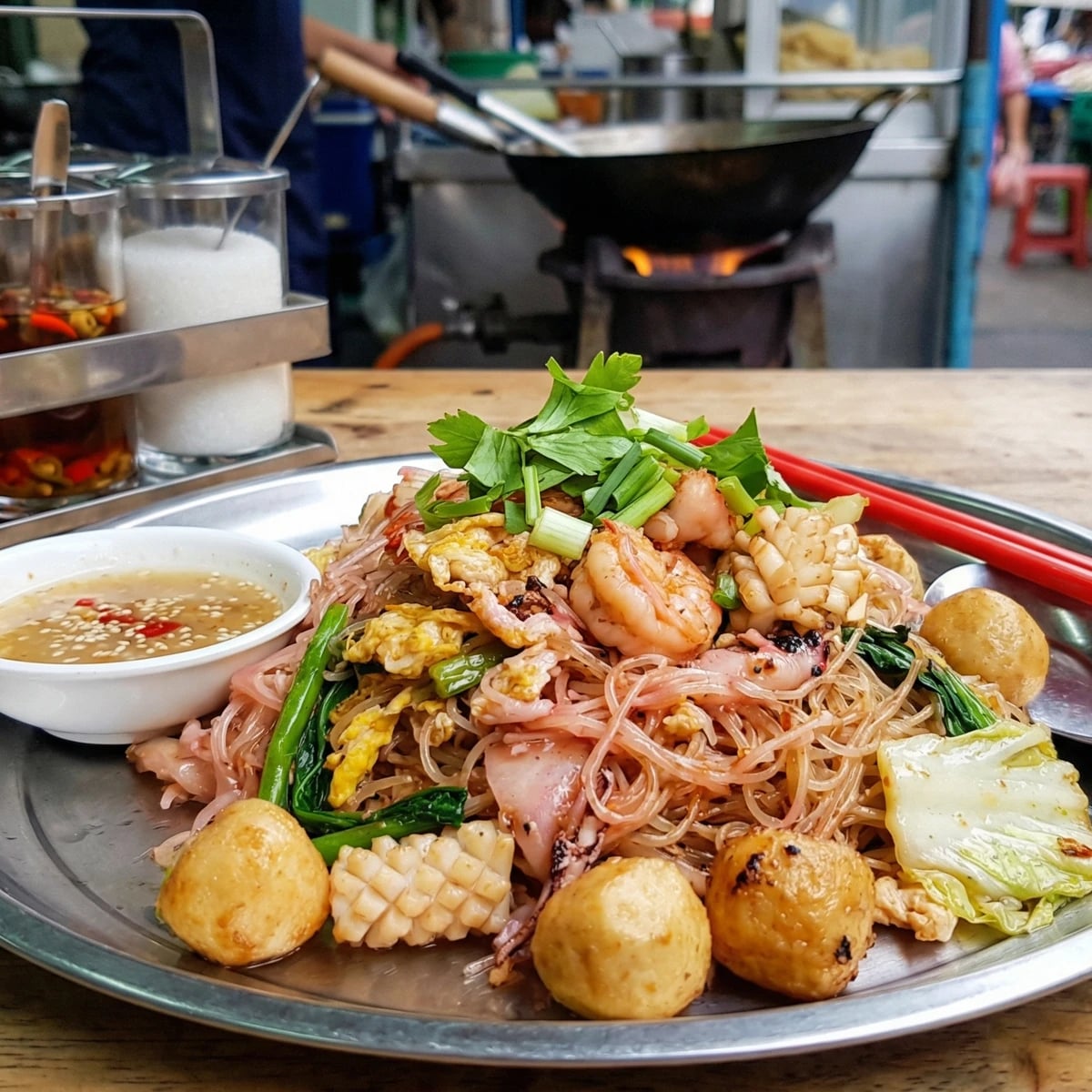
Thai Street Sukiyaki (Suki Haeng)
Created by Chef Fai
A Japanese name, Chinese wok technique, and a Thai soul living in the nam jim suki alongside it. Fermented tofu for salt, lime for sour, chili for heat. The system absorbs and transforms.
Suki is a stolen dish. I say that with respect, because stealing dishes and making them better is what Thai food has always done.
Japanese sukiyaki came to Bangkok sometime in the mid-twentieth century. Chinese-Thai cooks looked at the delicate tabletop hot pot, stripped out the ceremony, threw glass noodles and seafood into a screaming wok, and doused it in fermented tofu sauce. That's the Thai move: take the concept, apply the technique, add the condiment. Now it's ours. Every suki cart on Yaowarat is proof that Thai cuisine isn't a museum. It's a living system that eats other cuisines for breakfast and spits out something better.
The stir-fry itself is a Chinese-Thai technique play. Hot wok, fast hands, glass noodles (wun sen) that go from perfect to mush in ten seconds if you lose focus. But what makes suki Thai isn't the wok work. It's the nam jim suki, the dipping sauce, sitting right there in a little cup next to your plate. Fermented tofu (tao hoo yee) for salty, funky depth. Lime for sour. Chili for heat. Sugar to round the edges. The four pillars, showing up exactly where they always do: in the condiment. The stir-fry is the vehicle. The nam jim is the soul.
Ajarn always said Thai cuisine doesn't reject foreign influence. It absorbs it, applies the principles, and makes it something distinctly Thai. Suki is that principle in action. At a Fai Thai workshop, this is the dish I use to teach adaptation within the system. The rules don't change just because the dish crossed a border. Fish sauce shows up in the dipping sauce. Lime juice shows up. Chilies show up. The system holds, no matter where the original idea came from.
Ingredients
glass noodles (wun sen)
Quantity
100g
soaked in room-temperature water for 10 minutes, drained
shrimp (goong)
Quantity
150g
peeled
squid (pla muek)
Quantity
100g
cleaned and scored
| Ingredient | Quantity |
|---|---|
| glass noodles (wun sen)soaked in room-temperature water for 10 minutes, drained | 100g |
| shrimp (goong)peeled | 150g |
| squid (pla muek)cleaned and scored | 100g |
Where cooking meets culture.
Culinary guides, cultural storytelling, and the editorial depth that makes cooking meaningful.
Discover Culinary Explorer