
Chef Takumi
Aji Fry (アジフライ, panko-fried horse mackerel)
Aji fry is weeknight fish with no mystery: fresh horse mackerel opened cleanly, breaded lightly, and fried until the panko crackles while the flesh stays sweet.
A cooking platform built around craft, culture, and the stories behind what we eat.

Created by
Tendon asks for one piece of nerve: cold batter into hot oil, then sauce at the last moment. Do that, and the shrimp and vegetables sit crisp over rice that drinks the tare.
Tendon looks like two hard dishes stacked on each other: tempura, then rice. It isn't. What decides it is not the number of pieces in the bowl, but the condition of the crust when it meets the sauce. Crisp first, glazed last. The rice will do the rest.
The sauce is tare, a dark sweet-savory glaze built from dashi, soy sauce, mirin, and a little sugar. It should taste too strong to drink, because it has two jobs: season the tempura quickly and sink into the rice below. If you drown the bowl, the crust gives up. If you brush or dip each piece lightly, you get the pleasure we want here, lacy edges above and seasoned rice underneath.
Use glistening fresh shrimp and vegetables in their 旬 (shun), at their prime. Kabocha in autumn, lotus root in winter, asparagus in spring, eggplant or shishito in summer. The batter is only there to protect what is good already, not to disguise it. Nothing hidden.
This is a donburi, a bowl meal, and it belongs to the plain good sense of Japanese cooking: rice, a little sauce, one careful method on top. Keep the batter cold, the oil steady, and the sauce restrained. Leave it room in the bowl. A crowded tendon is just impatience with chopsticks.
Tendon belongs to Edo, present-day Tokyo, where tempura grew from street-stall frying into a city food built around seafood, sesame oil, and quick service. By the late Edo period and early Meiji era, tempura shops were setting fried shrimp and fish on donburi rice and glazing them with a tentsuyu-derived sauce, turning a snack into a full meal. The darker, sweeter tare is especially tied to the Edo and Tokyo style, where strong soy sauce and urban tempura culture developed side by side.
Quantity
2 1/2 cups
Quantity
1 piece (about 5g)
Quantity
12g
Quantity
1 1/2 rice-cooker cups
rinsed and cooked to yield about 3 cups
Quantity
3/4 cup
Quantity
1/4 cup
Quantity
1/4 cup
Quantity
2 tablespoons
Quantity
4
peeled with tails left on and deveined
Quantity
8 small pieces
thinly sliced or trimmed for quick frying
Quantity
3/4 cup
kept cold
Quantity
1/4 cup
Quantity
1 large
Quantity
3/4 cup
Quantity
6 cups, or enough for 2 inches in the pot
Quantity
1 tablespoon
for Edo-style fragrance
| Ingredient | Quantity |
|---|---|
| cold water | 2 1/2 cups |
| konbu (dried kelp) | 1 piece (about 5g) |
| katsuobushi (bonito flakes) | 12g |
| Japanese short-grain ricerinsed and cooked to yield about 3 cups | 1 1/2 rice-cooker cups |
| dashi | 3/4 cup |
| koikuchi shoyu (dark soy sauce) | 1/4 cup |
| mirin | 1/4 cup |
| sugar | 2 tablespoons |
| large shrimppeeled with tails left on and deveined | 4 |
| seasonal vegetable piecesthinly sliced or trimmed for quick frying | 8 small pieces |
| cake flour or low-protein flourkept cold | 3/4 cup |
| cake flour or low-protein flour, for dusting | 1/4 cup |
| egg yolk | 1 large |
| ice-cold water | 3/4 cup |
| neutral frying oil | 6 cups, or enough for 2 inches in the pot |
| toasted sesame oil (optional)for Edo-style fragrance | 1 tablespoon |
Wipe the konbu with a damp cloth, but don't wash it. Put it in the cold water and bring it up slowly over low heat. Pull the konbu just before the water boils, when small bubbles climb the sides of the pot. Add the katsuobushi all at once, take the pot off the heat, and leave it alone for two or three minutes. Strain through a cloth or fine sieve and let it drip naturally.
Rinse the short-grain rice until the water runs almost clear, then cook it so it finishes before you fry. Hot rice catches the tare and stays tender under the tempura. Cold rice makes the bowl feel divided, as if the top and bottom were introduced too late.
Combine 3/4 cup dashi, shoyu, mirin, and sugar in a small pan. Bring to a gentle simmer and cook for 5 to 7 minutes, until glossy and lightly thickened. It should taste a little too salty and sweet on its own. That is correct. Rice and crust will soften it.
Pat the shrimp and vegetables very dry. Make two or three shallow cuts across the underside of each shrimp, then press it gently straight with your fingers. This keeps the shrimp from curling hard in the oil and helps it cook evenly. Slice dense vegetables thin, about 1/4 inch for kabocha or lotus root, so the crust and center finish together.
Pour the oil into a tempura nabe or heavy pot, adding the toasted sesame oil if using. Heat to 170 to 180 C, or 340 to 355 F. A drop of batter should sink slightly, then rise with small lively bubbles. If it browns at once, the oil is too hot. If it lies there sulking, wait.
Stir the egg yolk into the ice-cold water, then add the cold flour and mix with chopsticks only a few strokes. Leave lumps. Smooth batter is not a virtue here. The cold water slows gluten, and the loose mixing keeps the coating light instead of breadlike.
Dust each piece lightly with flour, shake off the excess, dip into the batter, and lower it into the oil away from you. Fry vegetables first, then shrimp, working in small batches so the oil stays lively. Turn once, and lift each piece when the crust is pale gold and crisp, usually 1 to 2 minutes for shrimp and shishito, 2 to 3 minutes for kabocha, eggplant, shiitake, or lotus root. Drain on a rack, not on paper pressed tight against the crust.
Divide the hot rice between two warm donburi bowls and spoon a little tare over the rice first. Quickly dip the top side of each tempura piece in the tare, or brush it lightly, then arrange two shrimp and several vegetables over each bowl with a little height. Serve at once, while the edges are still crisp and the bottom rice has begun to drink.
1 serving (about 540g)
Culinary guides, cultural storytelling, and the editorial depth that makes cooking meaningful.
Discover Culinary ExplorerChef Takumi
Aji fry is weeknight fish with no mystery: fresh horse mackerel opened cleanly, breaded lightly, and fried until the panko crackles while the flesh stays sweet.
Chef Takumi
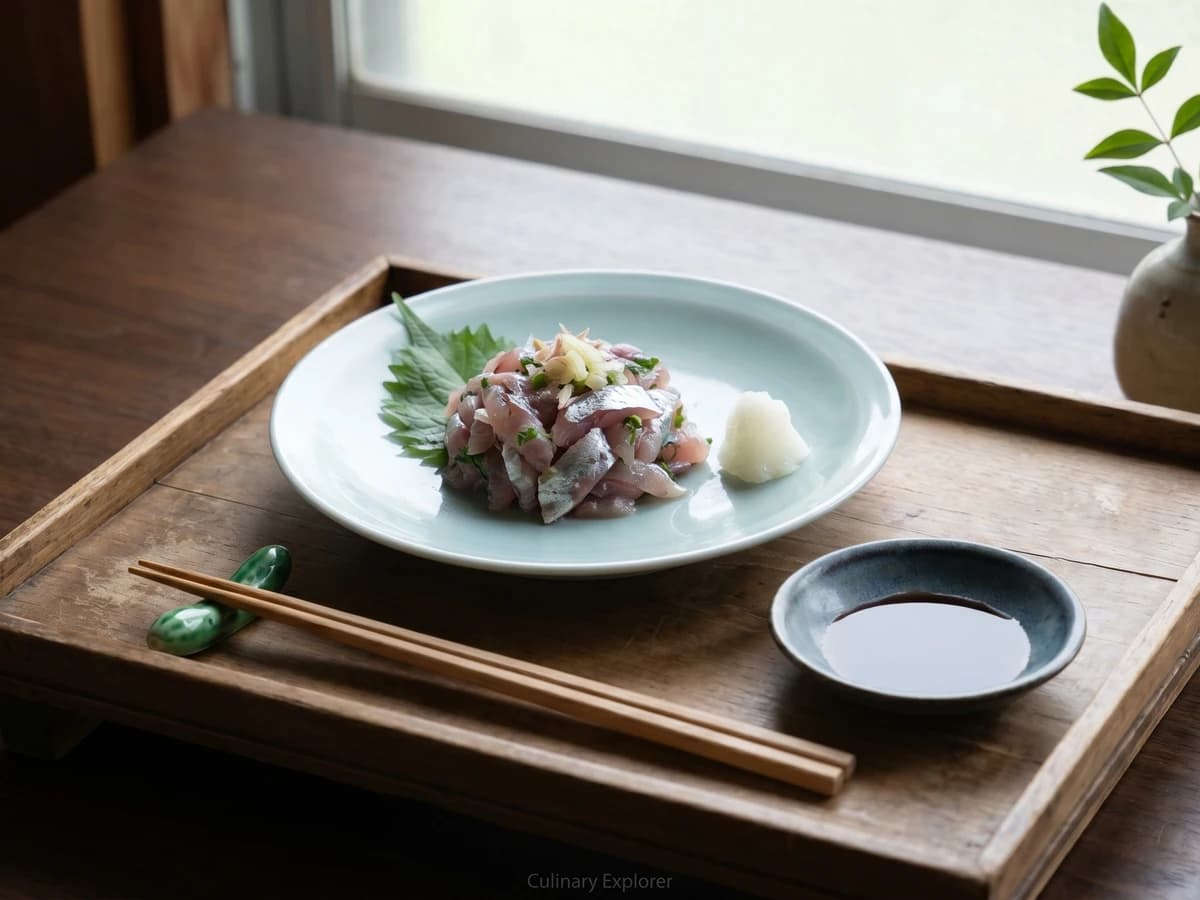
Summer horse mackerel, chopped just enough to catch ginger and scallion, becomes a cool, clean main dish with rice. The secret is fresh fish and a knife that does not bruise it.
Chef Takumi
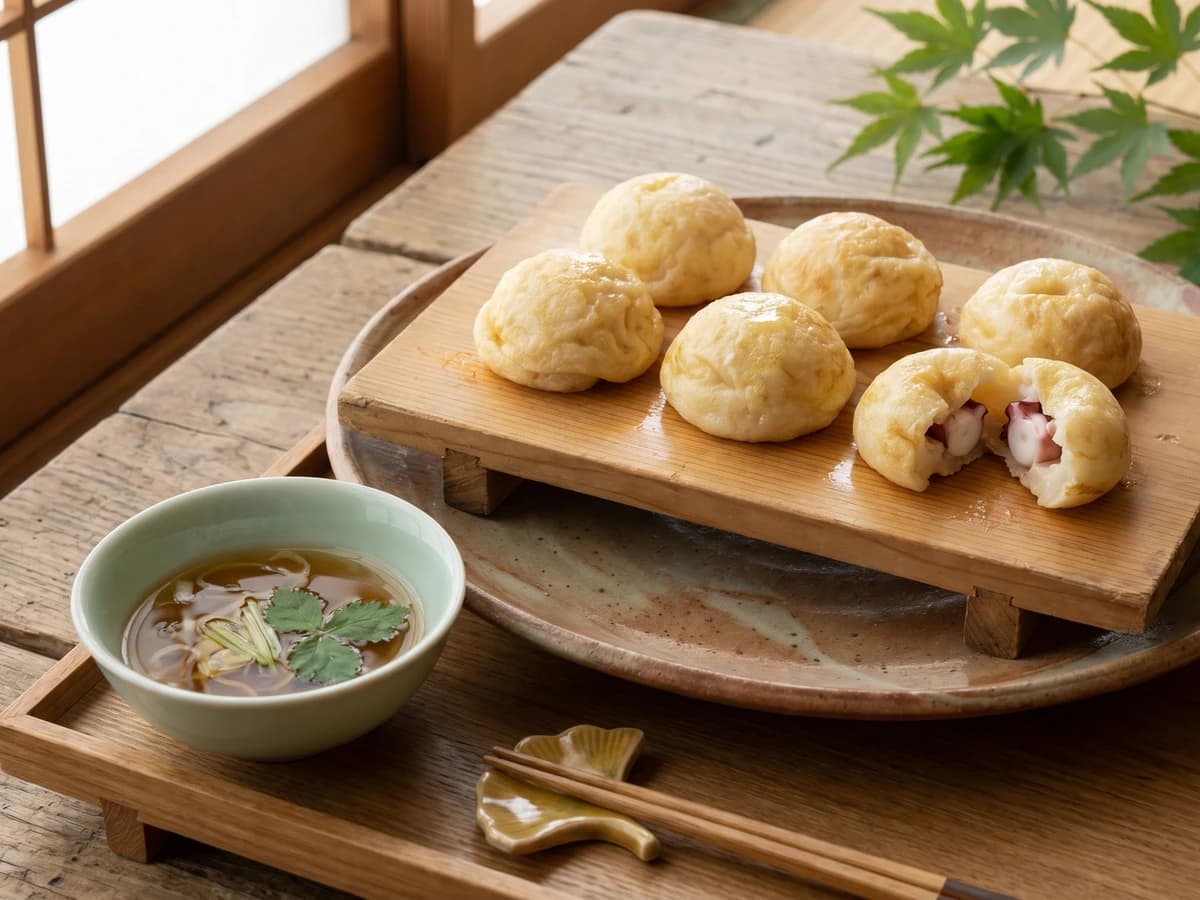
Akashi-yaki is not sauced takoyaki. It is egg-rich batter, tender octopus, and clear dashi, cooked pale and soft so each ball can be dipped like a small custard dumpling.

Chef Takumi
A whole anago looks like a test of nerve. It is mostly good sourcing, a dry skin, cold batter, and oil hot enough to leave the eel sweet under its lace.