
Chef Juliana
Açaí com Camarão do Pará
You think açaí belongs with banana and granola because that's the version that traveled. In Pará, thick unsweetened açaí sits beside shrimp, rice, and farinha. Anota aí: same fruit, different meal.
A cooking platform built around craft, culture, and the stories behind what we eat.
Created by
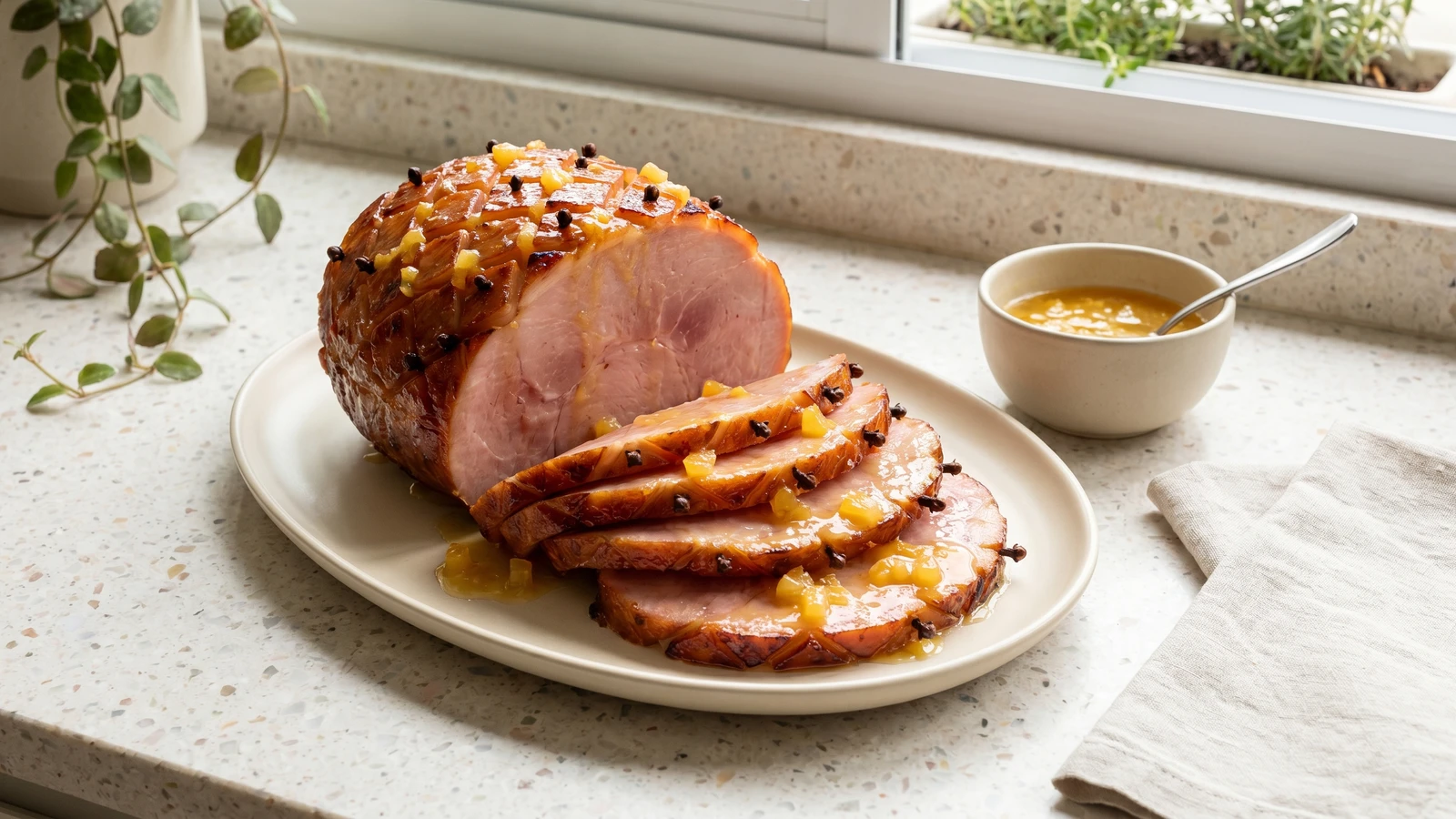
You don't need Christmas courage for this. Score the tender, cook real pineapple into a glossy calda, and let the oven do the patient, sticky work.
You look at a Christmas table and think, isso não é pra mim. Too shiny, too ceremonial, too full of people pretending they were born knowing where to put the cloves. Anota aí: nobody was born knowing that. Cozinhar não é dom, é um aprendizado, even when the ham is wearing a party outfit.
Tender is already cooked, which means your job is not to rescue raw meat from danger. Your job is flavor, color, and moisture. You score the surface so the glaze has little roads to run into. You stud it with cloves because a little perfume goes a long way. You baste because sugar needs repetition to become that glossy, caramelized crust instead of a sticky puddle at the bottom of the pan.
And the molho de abacaxi matters. Not a packet, not a powder, not a pineapple-scented shortcut pretending to be dinner. Real fruit, cooked down with a little sugar, vinegar, mustard, and the pan juices, until it turns bright, sweet, sharp, and thick enough to coat a spoon. That's comida de verdade, even on a holiday table.
Serve it with arroz soltinho, feijão if your family is that kind of sensible, farofa, and something green, maybe couve or a crisp salad. There it is again, the pê-efe wearing Christmas clothes: rice, beans, meat, greens. A country knows itself in that plate.
The Brazilian Christmas tender became common in the mid-twentieth century, when industrially cured, ready-to-roast hams entered urban holiday tables as a practical alternative to larger pork roasts. Pineapple, cloves, and sweet glazes reflect the Brazilian habit of pairing pork with fruit and acidity, especially in festive cooking where richness needs a bright counterpoint. The dish is not old rural tradition so much as city Christmas food, adapted by home cooks until it became familiar enough to feel inherited.
Quantity
1, about 1.5 to 2 kg
Quantity
2 tablespoons
softened
Quantity
20 to 30
Quantity
3 cups
chopped
Quantity
1/2 cup
Quantity
1/3 cup
Quantity
2 tablespoons
Quantity
1 tablespoon
Quantity
1 tablespoon
Quantity
1/2 teaspoon
Quantity
1/4 teaspoon
Quantity
1 tablespoon cornstarch plus 2 tablespoons water
Quantity
as needed
for the roasting pan
| Ingredient | Quantity |
|---|---|
| cooked smoked tender ham | 1, about 1.5 to 2 kg |
| buttersoftened | 2 tablespoons |
| whole cloves | 20 to 30 |
| fresh pineapplechopped | 3 cups |
| pineapple juice or water | 1/2 cup |
| brown sugar | 1/3 cup |
| apple cider vinegar or white wine vinegar | 2 tablespoons |
| Dijon or yellow mustard | 1 tablespoon |
| lime juice | 1 tablespoon |
| salt | 1/2 teaspoon |
| black pepper | 1/4 teaspoon |
| cornstarch mixed with water (optional) | 1 tablespoon cornstarch plus 2 tablespoons water |
| pineapple slices (optional)for the roasting pan | as needed |
Heat the oven to 180°C (350°F). Take the tender out of the fridge 30 minutes before roasting, if you remembered. Meat that goes in icy cold warms unevenly, and then the outside dries before the center is properly warm. If you forgot, we keep going. Christmas has enough drama.
Pat the tender dry with paper towel, then use a small sharp knife to cut shallow diagonal lines across the surface, about 1 cm apart. Turn it and cut the other direction to make diamonds. Don't cut deep. You want little channels for the calda to cling to, not trenches that make the meat fall apart.
Press one clove into some of the diamond corners, spacing them out so the perfume is gentle. Rub the softened butter over the scored surface. The butter helps the first layer of glaze spread instead of sliding off, and it gives the salty smoked meat a rounder flavor.
Put the chopped pineapple, pineapple juice or water, brown sugar, vinegar, mustard, lime juice, salt, and black pepper in a saucepan. Bring to a lively simmer over medium heat, then cook for 15 to 20 minutes, stirring now and then, until the pineapple softens and the liquid looks shiny and a little syrupy. This is where real fruit becomes molho, not candy. The vinegar and lime keep the sweetness awake.
Mash the pineapple with a fork for a chunky sauce, or blend half of it and stir it back in if you want it smoother. Stop when it coats the back of a spoon but still tastes like pineapple. If it's thin, simmer a few more minutes. If you need it thicker right now, stir in the cornstarch slurry and cook for 1 minute, until glossy. That's the honest shortcut. It thickens fast, but slow reduction gives better flavor.
Set the tender in a roasting pan, with pineapple slices around it if using. Spoon about one third of the pineapple calda over the top, pushing a little into the scored lines. Roast for 25 minutes. The first roast warms the meat and starts the glaze; it should look moist and shiny, not browned yet.
Spoon more calda over the tender every 15 minutes and keep roasting for 45 to 55 minutes more, until the outside is deep golden, sticky, and glossy. Basting matters because sugar caramelizes in layers. Dump it all on at once and most of it burns in the pan while the ham sits there looking innocent.
Move the tender to a board and let it rest for 10 minutes before slicing. Resting keeps the juices from running all over the board the second you cut. Warm the remaining pineapple sauce with a few spoonfuls of pan juices, taste for salt and lime, then spoon it over the slices at the table.
1 serving (about 250g)
Culinary guides, cultural storytelling, and the editorial depth that makes cooking meaningful.
Discover Culinary ExplorerChef Juliana
You think açaí belongs with banana and granola because that's the version that traveled. In Pará, thick unsweetened açaí sits beside shrimp, rice, and farinha. Anota aí: same fruit, different meal.

Chef Juliana
You think savory açaí is not for you. I understand. Then you taste the cold, dark bowl beside hot fried fish, rice, greens, and farinha, and dinner gets very quiet.

Chef Juliana
You think salted beef and rice sound like trouble. Anota aí: soak the charque, brown it properly, build the refogado, and this one pot resolves dinner.

Chef Juliana
You think a Maranhão green rice belongs to somebody else's clever hands. It doesn't. Wilt the vinagreira, build the refogado, fold it through arroz soltinho, and dinner gets bright, coastal, and yours.