
Chef Takumi
Aji Fry (アジフライ, panko-fried horse mackerel)
Aji fry is weeknight fish with no mystery: fresh horse mackerel opened cleanly, breaded lightly, and fried until the panko crackles while the flesh stays sweet.
A cooking platform built around craft, culture, and the stories behind what we eat.
Created by
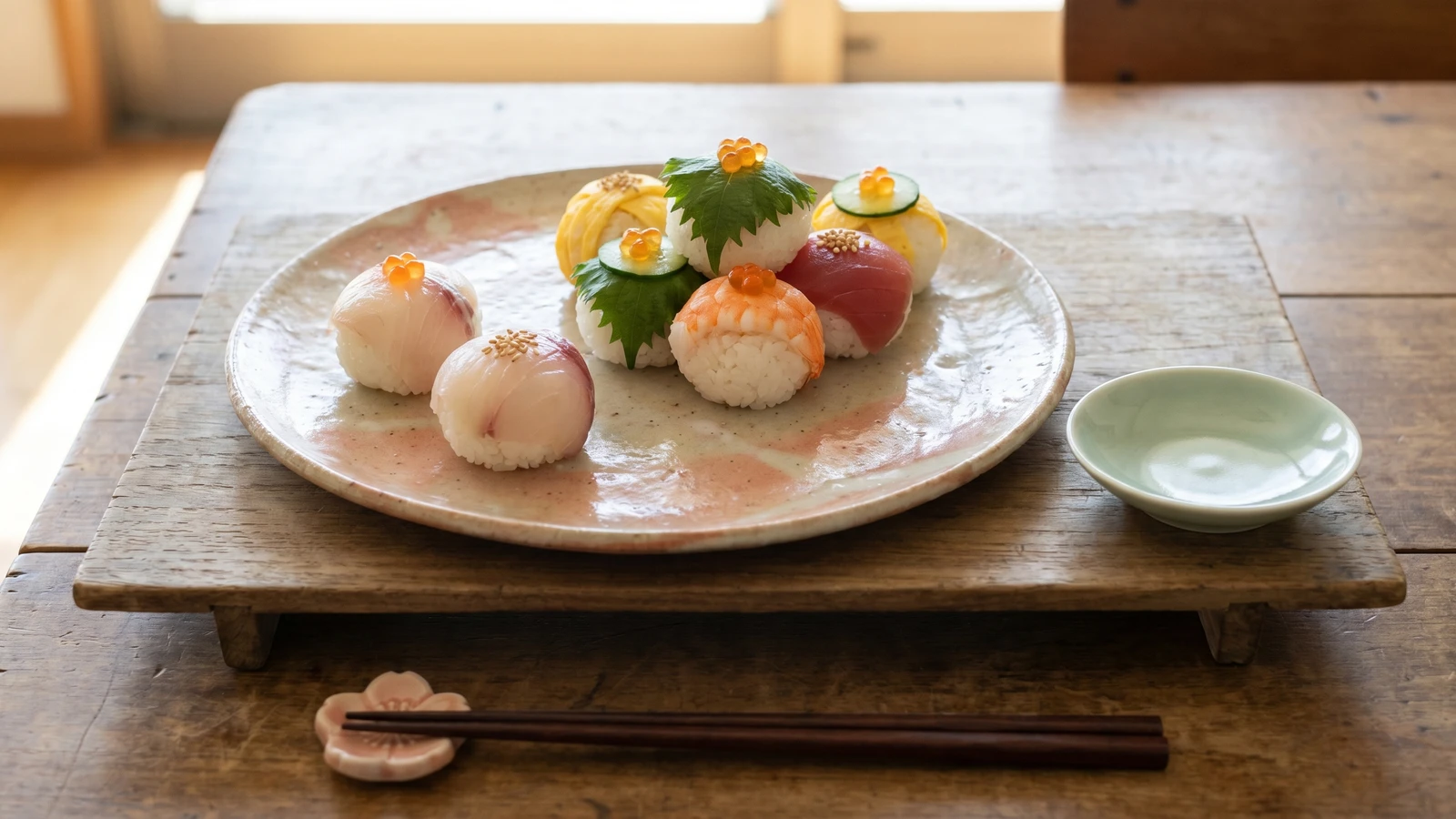
Temarizushi gives you sushi without the nigiri nerves: seasoned rice gathered in cloth, fresh toppings laid cleanly over it, each ball small enough to make with steady hands.
Temarizushi looks like the sushi that should make a home cook nervous: small round pieces, each wearing a different topping, all very pleased with themselves. Let them be pleased. This is the kind of sushi that forgives you, because the cloth does the shaping that nigiri asks from trained fingers.
The one detail that decides it is the rice. Sushi rice, or shari, should be glossy, separate, and just warm when you shape it, not hot enough to wilt fish and not cold enough to crack. Season it with vinegar while it is fresh from the pot, cut through it with the paddle instead of stirring, and the grains keep their body. Press hard and you make paste. Rice remembers rough hands.
Then choose toppings with honesty. Spring tai is lovely here; in another season, ask what is at its prime. If the fish is glistening fresh and bought from someone who will look you in the eye, use it. If not, use shrimp, thin omelet, cucumber, and shiso, and the table loses nothing. Temarizushi belongs naturally to celebration, especially Hinamatsuri, where smallness, color, and restraint matter. The method, not the menu: fresh rice, clean cuts, gentle shaping, and enough empty space on the plate for these round forms to breathe.
Temari were handballs made from scraps of silk thread, and by the Edo period finely embroidered temari had become gifts for girls at New Year and around Hinamatsuri. Temarizushi takes its name from those balls and is especially associated with Kyoto and Kansai celebration tables, where small round sushi can carry seasonal colors without the hand skill of nigiri. It belongs to the later vinegared-rice sushi tradition, not to the older fermented narezushi line, which is why its freshness and appearance are part of the dish's meaning.
Quantity
2 rice-cooker cups (360ml, about 300g)
rinsed and drained
Quantity
360ml
or to the 2-cup sushi rice line
Quantity
1 piece (about 5cm square)
gently wiped
Quantity
4 tablespoons plus 1 teaspoon
Quantity
2 tablespoons plus 1/2 teaspoon
Quantity
1 teaspoon plus a pinch
Quantity
2 tablespoons
mixed with 1 teaspoon rice vinegar for tezu
Quantity
1
Quantity
1/2 teaspoon
Quantity
120g
cut into 8 thin slices
Quantity
4
peeled and butterflied
Quantity
1 small
sliced paper-thin
Quantity
6
some halved for shaping
Quantity
2 teaspoons
Quantity
1 teaspoon
Quantity
for serving
Quantity
for serving
Quantity
for serving
| Ingredient | Quantity |
|---|---|
| Japanese short-grain ricerinsed and drained | 2 rice-cooker cups (360ml, about 300g) |
| cold wateror to the 2-cup sushi rice line | 360ml |
| konbu (optional)gently wiped | 1 piece (about 5cm square) |
| rice vinegar | 4 tablespoons plus 1 teaspoon |
| sugar | 2 tablespoons plus 1/2 teaspoon |
| fine sea salt | 1 teaspoon plus a pinch |
| watermixed with 1 teaspoon rice vinegar for tezu | 2 tablespoons |
| large egg | 1 |
| neutral oil | 1/2 teaspoon |
| sashimi-quality tai, tuna, or salmoncut into 8 thin slices | 120g |
| small cooked shrimppeeled and butterflied | 4 |
| Japanese or Persian cucumbersliced paper-thin | 1 small |
| shiso leavessome halved for shaping | 6 |
| ikura (salmon roe) (optional) | 2 teaspoons |
| toasted sesame seeds (optional) | 1 teaspoon |
| grated wasabi (optional) | for serving |
| soy sauce | for serving |
| pickled ginger (optional) | for serving |
Put the rice in a bowl, cover it with cold water, swish gently with your fingertips, and pour off the cloudy water. Repeat four or five times, until the water is almost clear. Don't grind the grains against each other. Drain the rice in a sieve for 20 minutes so the surface dries a little and the water can enter the grain evenly when it cooks.
Put the drained rice and 360ml water in a rice cooker, or use the sushi-rice line if your cooker has one. Lay the small piece of konbu on top and cook. For a pot, bring the rice and water to a boil, cover tightly, lower the heat, cook 12 minutes, then rest off the heat 10 minutes without lifting the lid. Discard the konbu before seasoning. The rice should be a little firmer than plain table rice, because vinegar will loosen it later.
Warm the 4 tablespoons rice vinegar, 2 tablespoons sugar, and 1 teaspoon salt over low heat just until the sugar and salt dissolve. Do not boil it. You are making sushi-zu, the seasoning vinegar, and boiling would dull the clean edge you want in the rice. Mix the tezu in a small bowl: 2 tablespoons water with 1 teaspoon rice vinegar.
Beat the egg with 1/2 teaspoon sugar and a pinch of salt. Wipe a small pan with the oil, pour in the egg, and cook it over low heat as a thin sheet. Let it cool, then cut it into narrow ribbons. Low heat keeps the color clear and yellow; browning tastes pleasant enough, but here it makes the temari look heavy.
Turn the hot rice into a hangiri, the wooden sushi tub, or a wide shallow nonreactive bowl. Sprinkle the sushi-zu over the rice, then cut and fold with a shamoji, a rice paddle, while fanning for several minutes. Cut, lift, turn. Don't stir in circles. Stirring crushes the grains, while cutting coats them and leaves them separate. Stop when the rice is glossy and just warm, then cover it with a damp cloth.
Keep the fish cold until you slice it. With a long sharp knife, cut across the grain in one clean pull, making 8 thin slices large enough to drape over a small rice ball. Pat the shrimp, cucumber, shiso, and fish dry. A wet topping slides around inside the cloth; a dry surface holds its place and gives you a cleaner shape.
Dampen your hands with tezu and divide the rice into 20 loose mounds, about 22 to 25g each. Keep them covered with the damp cloth. The size matters: too much rice swallows the topping, too little collapses when you lift it. Small and steady is the whole charm.
Lay a square of plastic wrap, or a damp square of sarashi cotton, in your palm. Place one topping presentation-side down: a fish slice with a tiny touch of wasabi beneath it, a butterflied shrimp, three overlapping cucumber rounds on shiso, or a few omelet ribbons crossed neatly. Set one mound of rice on top, gather the wrap, and twist gently until the topping hugs the rice. Hold for a breath, then unwrap. The cloth gives even pressure; your job is only to round the rice, not squeeze it into obedience.
Set a few grains of ikura on the fish pieces and a little sesame on the cucumber if you like. Arrange the temarizushi in odd-number groupings on a plate, with at least a third of the vessel empty. Serve with soy sauce, wasabi, and pickled ginger. Dip the topping side, not the rice side, so the rice doesn't drink too much soy and fall apart. With raw fish, serve within an hour of assembly.
1 serving (about 270g)
Culinary guides, cultural storytelling, and the editorial depth that makes cooking meaningful.
Discover Culinary ExplorerChef Takumi
Aji fry is weeknight fish with no mystery: fresh horse mackerel opened cleanly, breaded lightly, and fried until the panko crackles while the flesh stays sweet.
Chef Takumi
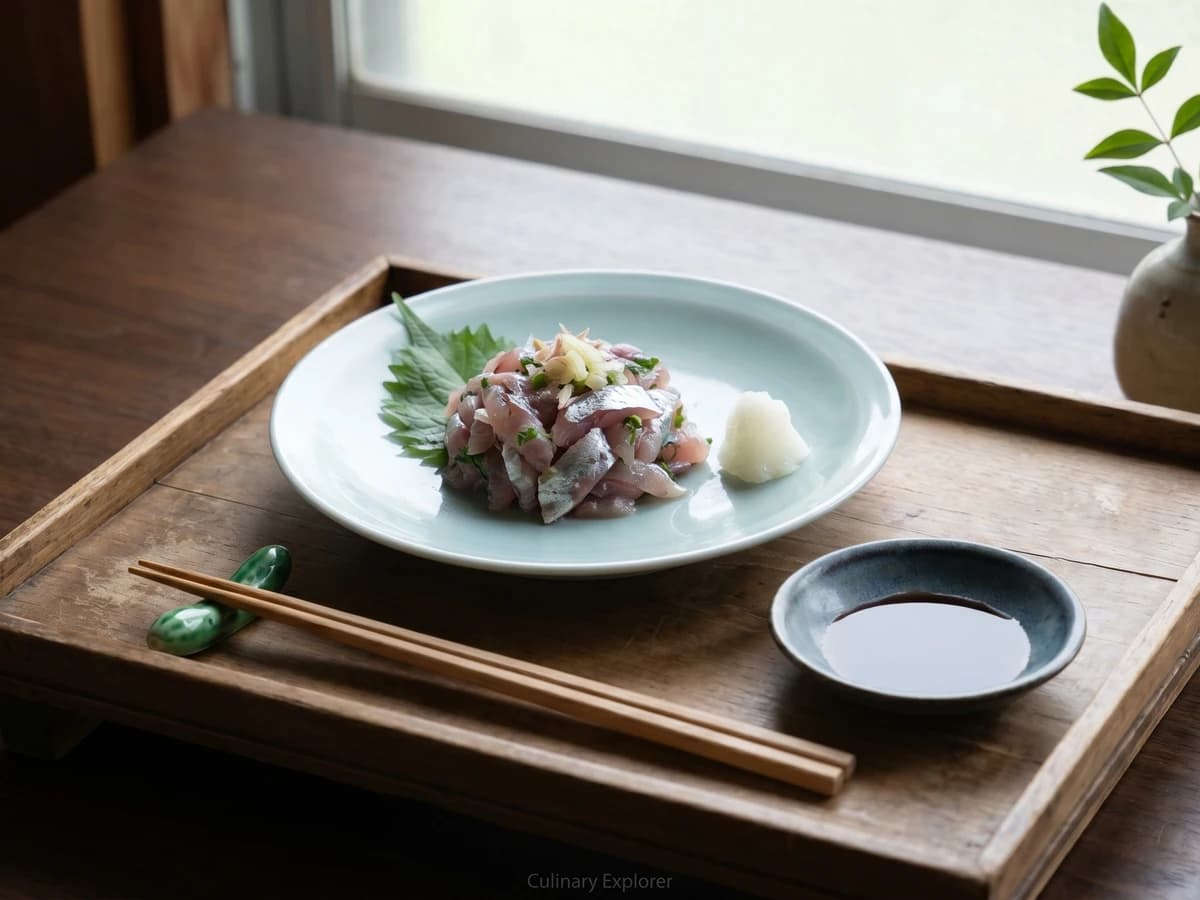
Summer horse mackerel, chopped just enough to catch ginger and scallion, becomes a cool, clean main dish with rice. The secret is fresh fish and a knife that does not bruise it.
Chef Takumi
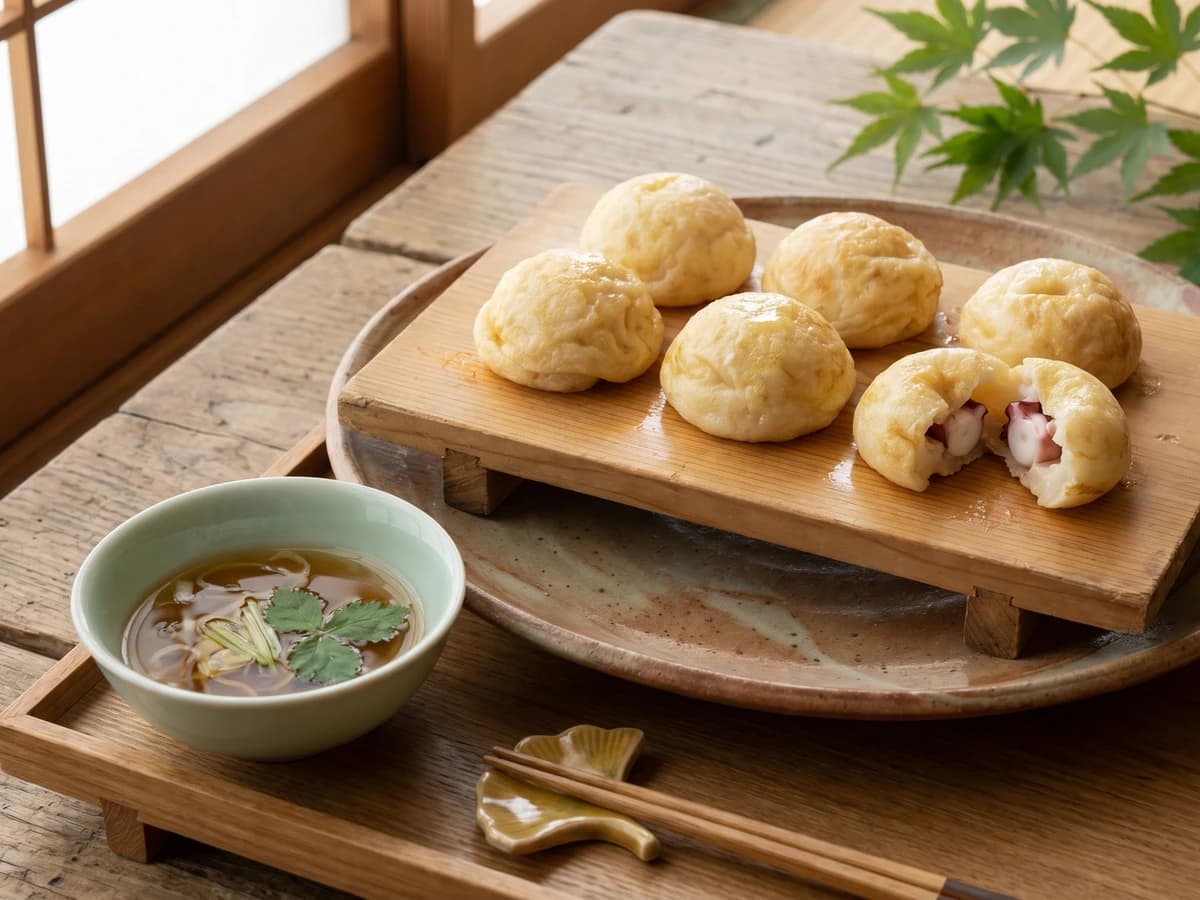
Akashi-yaki is not sauced takoyaki. It is egg-rich batter, tender octopus, and clear dashi, cooked pale and soft so each ball can be dipped like a small custard dumpling.

Chef Takumi
A whole anago looks like a test of nerve. It is mostly good sourcing, a dry skin, cold batter, and oil hot enough to leave the eel sweet under its lace.