
Chef Takumi
Aji Fry (アジフライ, panko-fried horse mackerel)
Aji fry is weeknight fish with no mystery: fresh horse mackerel opened cleanly, breaded lightly, and fried until the panko crackles while the flesh stays sweet.
A cooking platform built around craft, culture, and the stories behind what we eat.

Created by
Tekone-zushi is hand-mixed sushi without ceremony: glistening fresh fish briefly seasoned in soy, folded into vinegared rice, and finished with shiso, ginger, and sesame for supper.
Tekone-zushi begins with fish that was never meant to be fussed over: katsuo or tuna, glistening fresh, sliced thin enough to take seasoning and thick enough to keep its sweetness. If sushi makes you stiffen a little, this is the kind that loosens the shoulders. No rolling mat. No little rectangles. A bowl of vinegared rice, a short soy marinade, clean hands.
That hand-mixing is not rustic theater. The rice must be warm enough to take the vinegar but cool enough that it doesn't tighten the fish, and the slices need only a brief soak in shōyu, mirin, and sake. Leave them too long and the soy steals the clean taste you bought the fish for. Ten minutes is plenty. The marinade seasons the surface, not the soul, if a fish may be said to have one.
In Mie, especially around Ise-Shima, we know this as working food that became a proper table dish without losing its directness. It belongs to the rice-and-main part of a meal, generous enough for supper and calm enough to make ahead in pieces. The one detail that decides it is restraint: fresh fish, lightly marinated, folded rather than mashed. Tekone means hand-mixed. It does not mean hand-defeated.
Tekone-zushi is identified with the Ise-Shima coast of Mie Prefecture, especially the fishing communities of old Shima Province that worked the seasonal katsuo runs. The common account says boat crews sliced freshly caught bonito, seasoned it with soy sauce, and mixed it by hand into rice on deck, which explains tekone, meaning hand-mixed. By the twentieth century it had become a local specialty served in homes and inns around Ise and Shima, often with tuna when bonito was not the best fish at hand.
Quantity
2 rice-cooker cups (300g)
rinsed and soaked
Quantity
360ml
or to the sushi-rice line of a rice cooker
Quantity
1 piece (about 5cm square)
wiped with a damp cloth
Quantity
4 tablespoons
Quantity
2 tablespoons
for the sushi vinegar
Quantity
1 teaspoon
Quantity
450g
skinless, boneless, kept chilled
Quantity
4 tablespoons
Quantity
2 tablespoons
Quantity
1 tablespoon
Quantity
1 teaspoon
for the marinade
Quantity
6
thinly shredded
Quantity
2 tablespoons
Quantity
1 sheet
cut into thin strips
Quantity
2 tablespoons, plus more for serving
finely chopped
Quantity
1 tablespoon
finely sliced
| Ingredient | Quantity |
|---|---|
| Japanese short-grain ricerinsed and soaked | 2 rice-cooker cups (300g) |
| cold wateror to the sushi-rice line of a rice cooker | 360ml |
| konbuwiped with a damp cloth | 1 piece (about 5cm square) |
| rice vinegar | 4 tablespoons |
| sugarfor the sushi vinegar | 2 tablespoons |
| fine sea salt | 1 teaspoon |
| sashimi-quality katsuo (bonito) or maguro (tuna)skinless, boneless, kept chilled | 450g |
| shōyu (Japanese soy sauce) | 4 tablespoons |
| mirin | 2 tablespoons |
| sake | 1 tablespoon |
| sugarfor the marinade | 1 teaspoon |
| shiso leavesthinly shredded | 6 |
| toasted white sesame seeds | 2 tablespoons |
| noricut into thin strips | 1 sheet |
| pickled ginger (gari)finely chopped | 2 tablespoons, plus more for serving |
| myōga (optional)finely sliced | 1 tablespoon |
Rinse the rice in several changes of cold water, rubbing the grains gently with your fingers, until the water runs almost clear. Soak it for 20 minutes, then drain well. Washing removes loose surface starch so the finished sushi rice tastes clean rather than pasty, and soaking lets the center of each grain cook at the same pace as the outside.
Put the drained rice, water, and wiped konbu in a rice cooker, or in a heavy pot with a tight lid. Cook as you would plain rice, then let it rest covered for 10 minutes before removing the konbu. The kelp gives the rice a quiet sea fragrance; it should support the fish, not announce itself like a temple bell.
Warm the rice vinegar, 2 tablespoons sugar, and salt just until dissolved, then take it off the heat. Turn the hot rice into a hangiri, a wooden sushi rice tub, or a wide nonreactive bowl. Sprinkle the vinegar mixture over the rice and fold with a shamoji, cutting through the grains and turning them over without pressing. Fan as you fold until the rice is glossy and just warm. Hot rice would mark the fish; cold rice won't take the seasoning properly.
Put the mirin, sake, and 1 teaspoon sugar in a small pan and bring it to a brief simmer for 1 minute. Cool completely, then stir in the shōyu. Reserve 1 tablespoon of this clean marinade for final adjustment. Simmering softens the raw edge of the alcohol, and cooling matters because warm marinade would tighten the surface of the fish before it ever meets the rice.
Keep the fish chilled until your board is ready. Pat it dry, then slice it across the grain about 5mm thick, using one clean pull of a sharp knife. A smooth cut leaves a wet, glossy face and lets the marinade cling evenly. Saw at the fish and you bruise it. Let the knife do the seasoning.
Lay the fish slices in a shallow dish and spoon over the cooled marinade. Turn once and leave for 8 to 10 minutes, no longer. The soy should season the surface and deepen the color, while the fish still tastes like itself. Leave it too long and the texture firms, the sweetness dulls, and the dish loses the very freshness it depends on.
Dampen clean hands with cold water, or use a rice paddle if you prefer. Scatter half the sesame, half the shiso, and the chopped pickled ginger over the vinegared rice. Lift the fish from the marinade, letting the excess drip back into the dish, and fold the slices through the rice with open fingers. Use only the marinade clinging to the fish, plus the reserved clean spoonful if the rice needs it. This keeps the grains glossy, not wet.
Mound the rice gently in shallow bowls, keeping a little height instead of spreading it flat. Finish with the remaining shiso, sesame, nori strips, pickled ginger, and myōga if using. Serve at room temperature, not refrigerator-cold. The rice should be soft, the fish cool and clean, and the bowl should have room to breathe.
1 serving (about 345g)
Culinary guides, cultural storytelling, and the editorial depth that makes cooking meaningful.
Discover Culinary ExplorerChef Takumi
Aji fry is weeknight fish with no mystery: fresh horse mackerel opened cleanly, breaded lightly, and fried until the panko crackles while the flesh stays sweet.
Chef Takumi
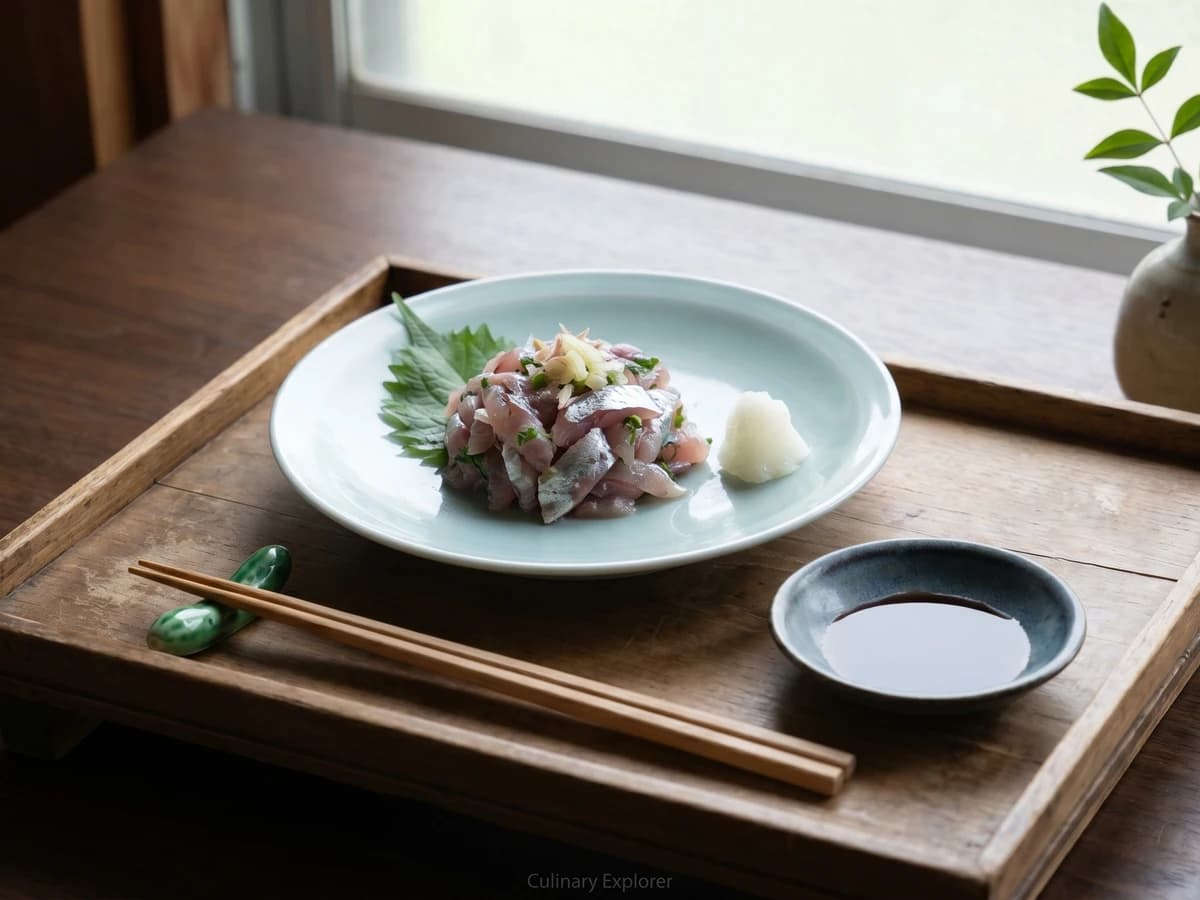
Summer horse mackerel, chopped just enough to catch ginger and scallion, becomes a cool, clean main dish with rice. The secret is fresh fish and a knife that does not bruise it.
Chef Takumi
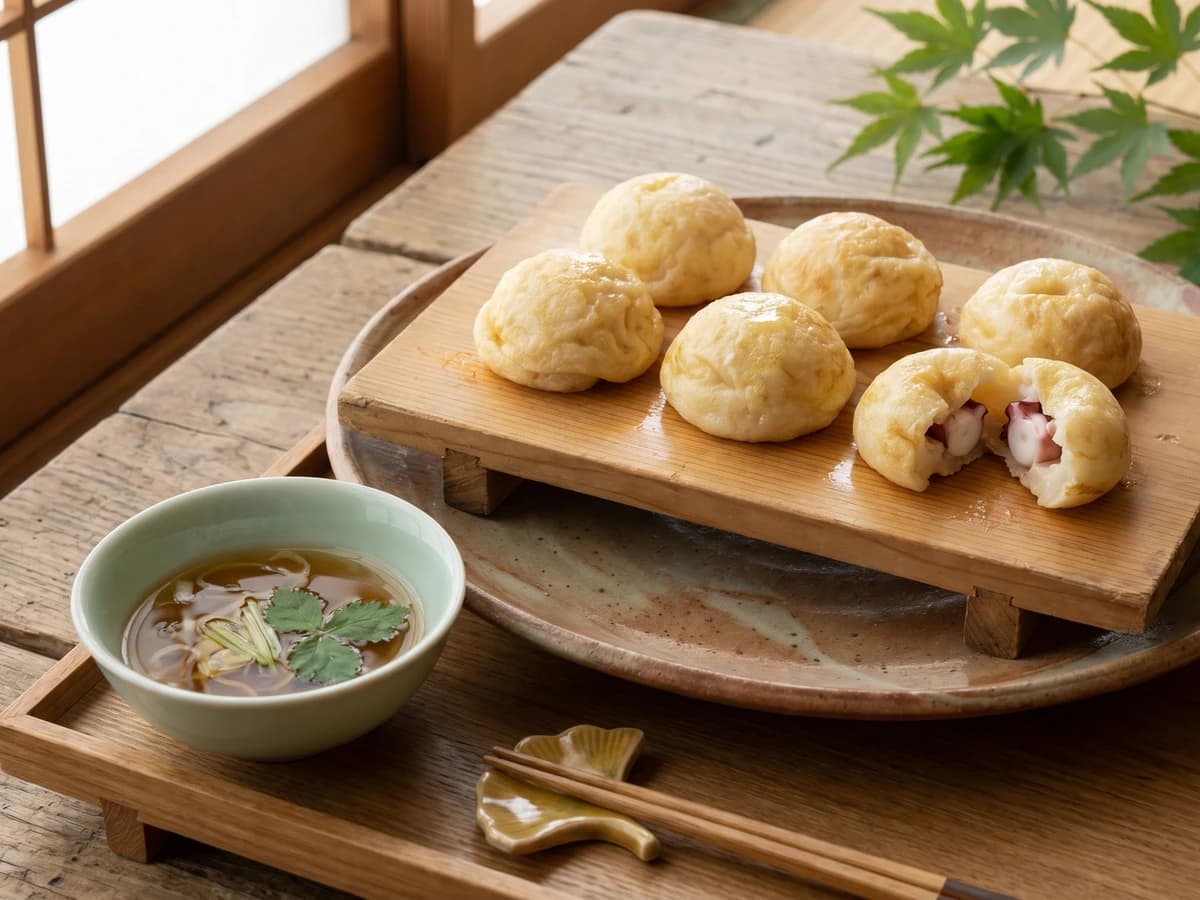
Akashi-yaki is not sauced takoyaki. It is egg-rich batter, tender octopus, and clear dashi, cooked pale and soft so each ball can be dipped like a small custard dumpling.

Chef Takumi
A whole anago looks like a test of nerve. It is mostly good sourcing, a dry skin, cold batter, and oil hot enough to leave the eel sweet under its lace.