
Chef Lupita
Agua de Alfalfa
Ciudad de México's highland market agua fresca, fresh alfalfa blended with pineapple and lime until bright green, strained clean, and poured cold from the vitrolero.
A cooking platform built around craft, culture, and the stories behind what we eat.
Created by
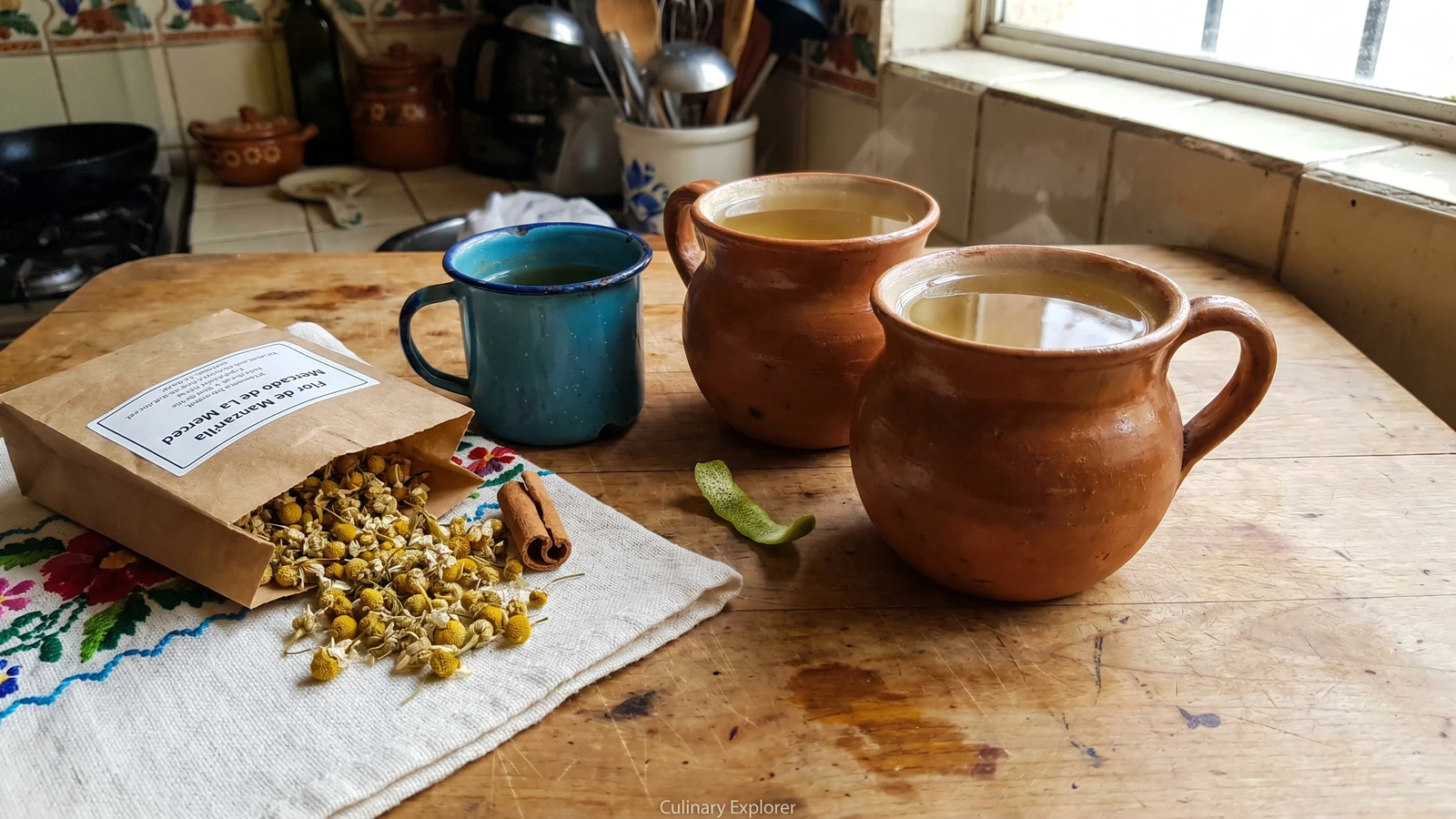
Valle de México manzanilla tea is the small pot every abuela knows: dried chamomile, a piece of canela, hot water, and patience. No chile. No drama. Just the kitchen remedy.
Ciudad de México and the Valle de México keep this tea in the kitchen, not in the pharmacy. A jar of flor de manzanilla sits near the stove, usually beside canela, hierbabuena, and the salt. This is the central household remedy for a nervous stomach, a child who can't sleep, or an adult who has been pretending stress doesn't live in the body.
The ingredient is the flower. Not powder. Not a perfumed tea bag that smells like a candle. Flor de manzanilla seca, whole little yellow centers with pale petals, bought loose from the yerbera at Mercado de Jamaica, La Merced, or the herb stall closest to your house. Pregúntale a las señoras del mercado. They know which sack is fresh and which one has been sitting there since last Lent.
The technique is restraint. You steep manzanilla, you don't boil it to death. Boiling makes the infusion harsh and bitter, and then people blame the herb instead of their own impatience. Add a small piece of canela if your house does it that way, honey only after steeping, and lime only if the stomach is not angry. Not all Mexican food carries chile. Some of it carries you to bed. Saber cocinar es saber vivir.
Manzanilla, the common chamomile used in Mexican kitchens, is an Old World medicinal herb that entered Mexico through Spanish colonial boticas, convent gardens, and household herb practice after the 16th century. Its adoption into Mexican domestic medicine happened alongside older Indigenous herbal traditions, especially in the central highlands where market yerberas still sell European and native plants from the same stall. In modern Mexico, té de manzanilla is less a regional specialty than a national home remedy, but the loose-flower market culture of Ciudad de México gives this version its character.
Quantity
2 cups
Quantity
2 tablespoons
Quantity
1 small 1-inch piece
Quantity
1 to 2 teaspoons
to taste
Quantity
1 thin strip
| Ingredient | Quantity |
|---|---|
| water | 2 cups |
| dried whole chamomile flowers (flor de manzanilla seca) | 2 tablespoons |
| Mexican cinnamon (canela) | 1 small 1-inch piece |
| honeyto taste | 1 to 2 teaspoons |
| lime peel (optional) | 1 thin strip |
Pour the water into a small clay or enamel pot and bring it just to a lively simmer. You want the water hot enough to pull flavor from the flowers, not a violent boil. This is tea, not laundry.
Turn off the heat. Add the dried manzanilla flowers and the piece of canela. Stir once, cover the pot, and leave it alone for 6 to 8 minutes. Covering keeps the aroma in the pot where it belongs. No me vengas con atajos.
Strain the tea through a fine-mesh strainer into two clay jarritos or thick kitchen cups. The color should be pale gold, with a soft floral smell and a light cinnamon edge. If it is dark brown, you boiled it too hard or steeped it too long.
Stir in honey after straining, while the tea is still hot. Add the strip of lime peel only if you like that clean citrus edge. Serve it plain, warm, and quiet. Así se hace y punto.
1 serving (about 240g)
Culinary guides, cultural storytelling, and the editorial depth that makes cooking meaningful.
Discover Culinary ExplorerChef Lupita
Ciudad de México's highland market agua fresca, fresh alfalfa blended with pineapple and lime until bright green, strained clean, and poured cold from the vitrolero.

Chef Lupita
Aguascalientes' Lenten agua fresca, jewel-red from cooked beet and full of apple, banana, orange, lettuce, and ground peanuts, served cold when Holy Week meets the Feria de San Marcos.

Chef Lupita
Sonora and Sinaloa's creamy malted barley water, built on toasted cebada perla, Mexican canela, vanilla from Papantla, and evaporated milk. Pink-beige, rich, and served cold over heavy ice in a heavy glass tumbler. Liquid cookie comfort the northwest way.

Chef Lupita
Yucatán's everyday tonic of boiled chaya leaves blended with lima agria, sugar, and ice. The bright green jarra that sits on every Peninsula table from Mérida to Valladolid.