
Chef Remy
Cajun All-Purpose Seasoning
A brick-red Louisiana spice blend with layered heat, earthy herbs, and aromatic depth that transforms anything it touches into something worth fighting over at the dinner table.
A cooking platform built around craft, culture, and the stories behind what we eat.
Created by Chef Remy
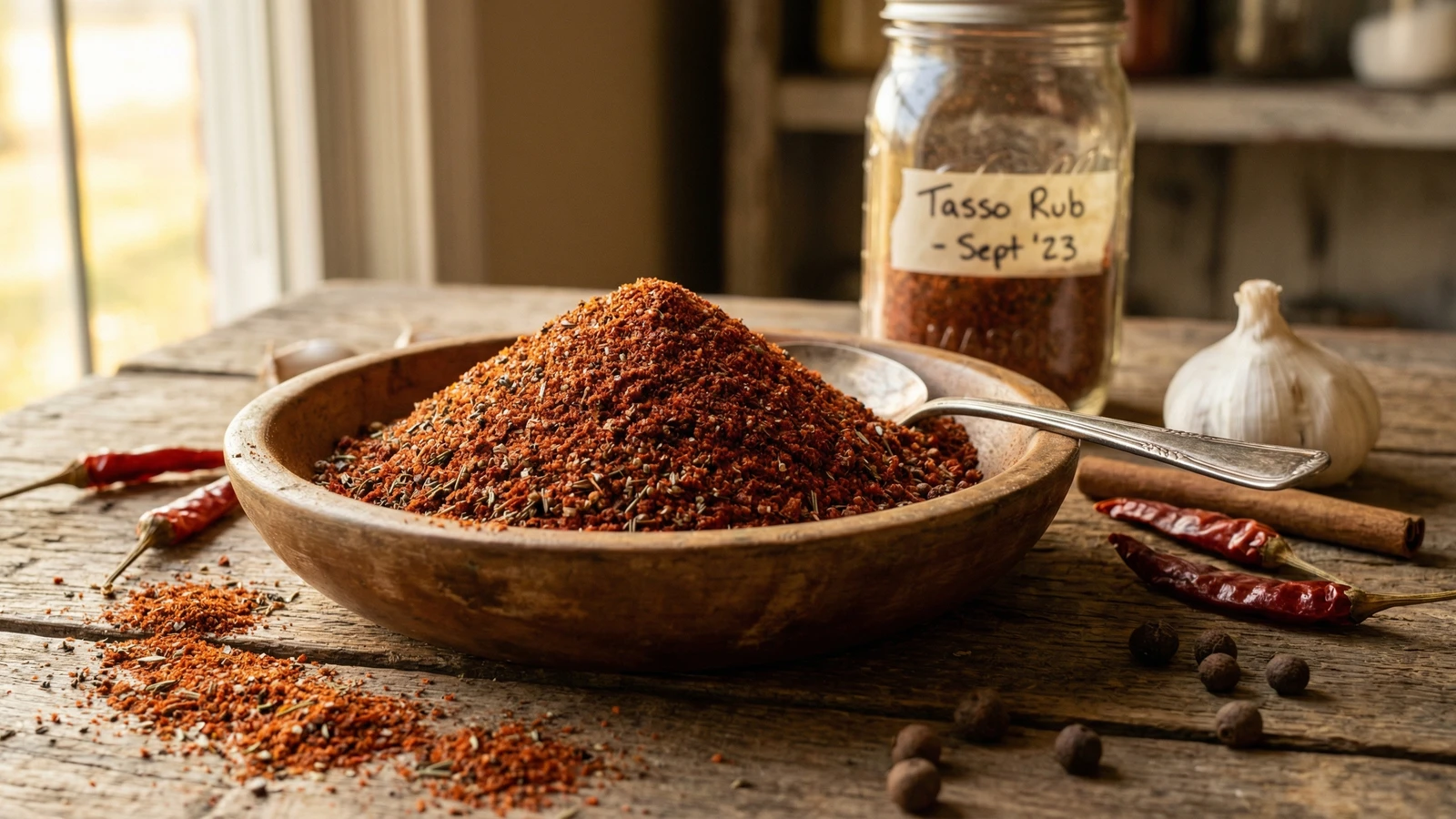
A fiery, fragrant cure of cayenne, garlic, and warm spices that penetrates deep into pork shoulder, transforming humble meat into the smoky, intensely flavored tasso that defines Cajun cooking.
Tasso is the secret weapon in a Cajun kitchen. That heavily spiced, smoke-kissed pork finds its way into gumbos, jambalayas, red beans, and anywhere you need deep, complex flavor in a hurry. But the magic starts here, with the cure.
This rub does three things at once. The salt draws moisture from the meat while the spices penetrate inward. The cayenne and black pepper bring the heat that tasso is famous for. And the warm spices (cinnamon, allspice, clove) give it that mysterious depth you can't quite put your finger on but would miss terribly if it weren't there. My grandmother Evangeline kept her tasso recipe in her head, adjusting the cayenne depending on who was coming to dinner. I've written mine down so you can make it your own.
At Lagniappe, we go through pounds of tasso every week. It's the backbone of half our menu. Once you have this rub in your pantry, you're three days and some smoke away from the real thing.
Quantity
3 tablespoons
Quantity
2 tablespoons
Quantity
2 tablespoons
Quantity
1 tablespoon
freshly ground
Quantity
1 tablespoon
Quantity
1 tablespoon
Quantity
2 teaspoons
Quantity
1 teaspoon
Quantity
1/2 teaspoon
Quantity
1/2 teaspoon
Quantity
1/4 teaspoon
Quantity
1/4 teaspoon
| Ingredient | Quantity |
|---|---|
| kosher salt | 3 tablespoons |
| cayenne pepper | 2 tablespoons |
| paprika | 2 tablespoons |
| black pepperfreshly ground | 1 tablespoon |
| garlic powder | 1 tablespoon |
| onion powder | 1 tablespoon |
| dried thyme | 2 teaspoons |
| brown sugar | 1 teaspoon |
| ground allspice | 1/2 teaspoon |
| ground cinnamon | 1/2 teaspoon |
| ground cloves | 1/4 teaspoon |
| ground white pepper | 1/4 teaspoon |
Set a small dry skillet over medium heat. Add the dried thyme and shake the pan gently for about 30 seconds until you smell it wake up. The color will darken just slightly and the aroma will bloom. This small step releases oils that have gone dormant in the jar. Transfer to a bowl immediately so it doesn't scorch.
Add the kosher salt, cayenne pepper, and paprika to the bowl with the thyme. The salt is your curing agent. It needs to be the right proportion to the cayenne, or you'll end up with meat that's either underseasoned or so salty you can't taste anything else. Two tablespoons of cayenne makes proper Louisiana-hot tasso. This is not a timid blend.
Mix in the black pepper, garlic powder, and onion powder. These three form the savory backbone. The garlic especially will perfume the pork as it cures, working its way deep into the meat over the next few days. Stir everything together until the color is uniform, a deep brick red with flecks of black.
Now add the brown sugar, allspice, cinnamon, cloves, and white pepper. These are the quiet players, the ones that make people ask what's in your tasso that makes it taste like that. The sugar isn't for sweetness. It balances the salt and helps form that tacky pellicle on the meat that smoke clings to.
Whisk or stir the blend for a full minute, breaking up any clumps of brown sugar. Run it through your fingers. You want every pinch to contain the full spectrum of flavors. The cure should feel slightly gritty from the salt but flow freely without clumping. Smell it. That's what your tasso will taste like, amplified by smoke and time.
Transfer to a clean jar with a tight lid. The rub is ready to use right now, or it will keep for months in your pantry. To cure pork for tasso, coat the meat heavily on all sides (about 1/4 cup rub per pound), wrap tightly, and refrigerate for 2 to 3 days before smoking.
1 serving (about 7g)
Culinary guides, cultural storytelling, and the editorial depth that makes cooking meaningful.
Discover Culinary ExplorerChef Remy
A brick-red Louisiana spice blend with layered heat, earthy herbs, and aromatic depth that transforms anything it touches into something worth fighting over at the dinner table.

Chef Remy
A fiery blend of paprika, cayenne, three peppers, and dried herbs that transformed American cooking in the 1980s, designed to bloom in screaming hot butter and form an unforgettable crust on fish, chicken, or anything brave enough to hit your cast iron.

Chef Remy
A dark, glossy gravy built on a patient chocolate roux, enriched with the holy trinity and Cajun spices, the kind of honest sauce that turns plain rice into a meal worth remembering.

Chef Remy
The golden foundation of Louisiana cooking, built from humble chicken bones, the holy trinity, and four patient hours of gentle simmering that transforms simple ingredients into something that makes every dish it touches sing.