Chef Lupita
Acúmara Tatemada al Comal
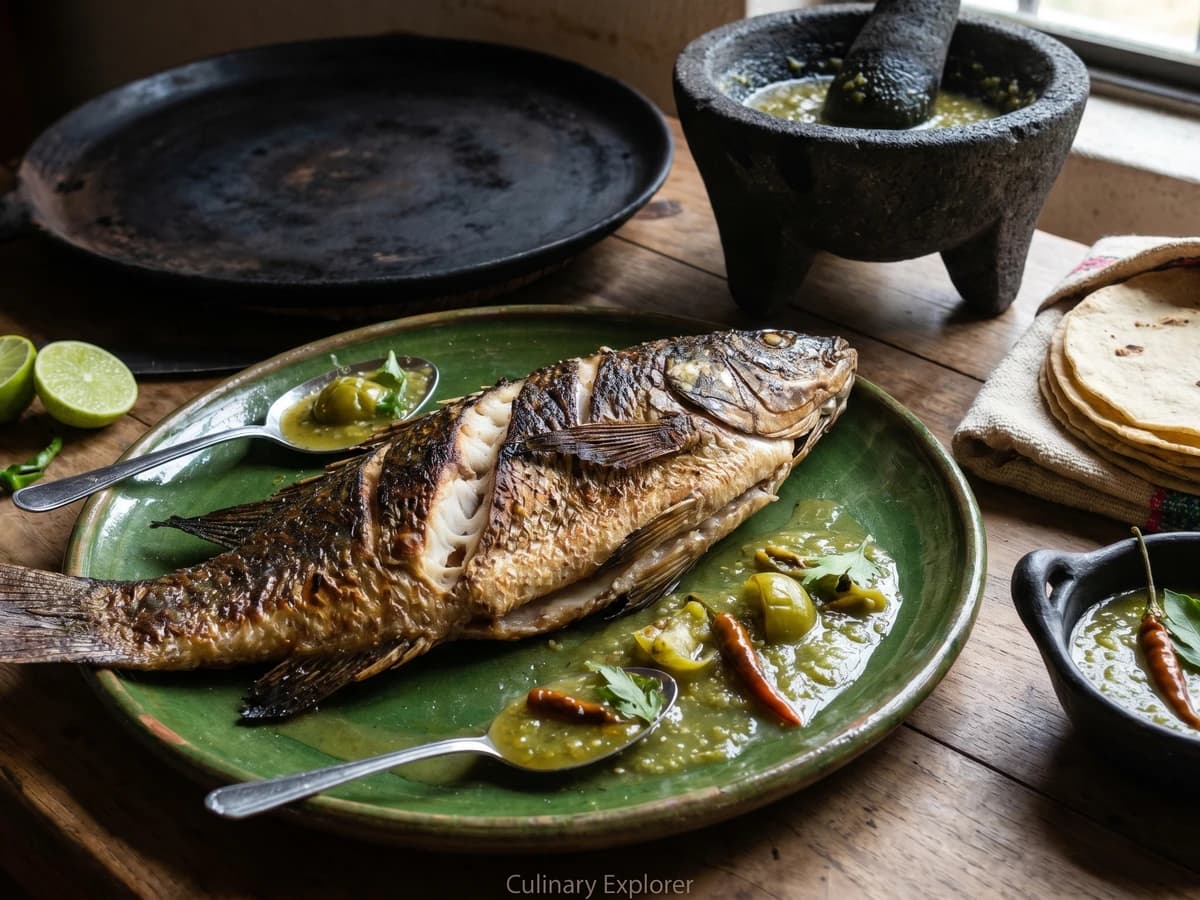
Michoacán's Lake Pátzcuaro acúmara, a whole kurucha from the lago tatemada on a comal de leña and served with chile perón atápakua, corn tortillas, and P'urhépecha discipline.
A cooking platform built around craft, culture, and the stories behind what we eat.
Created by
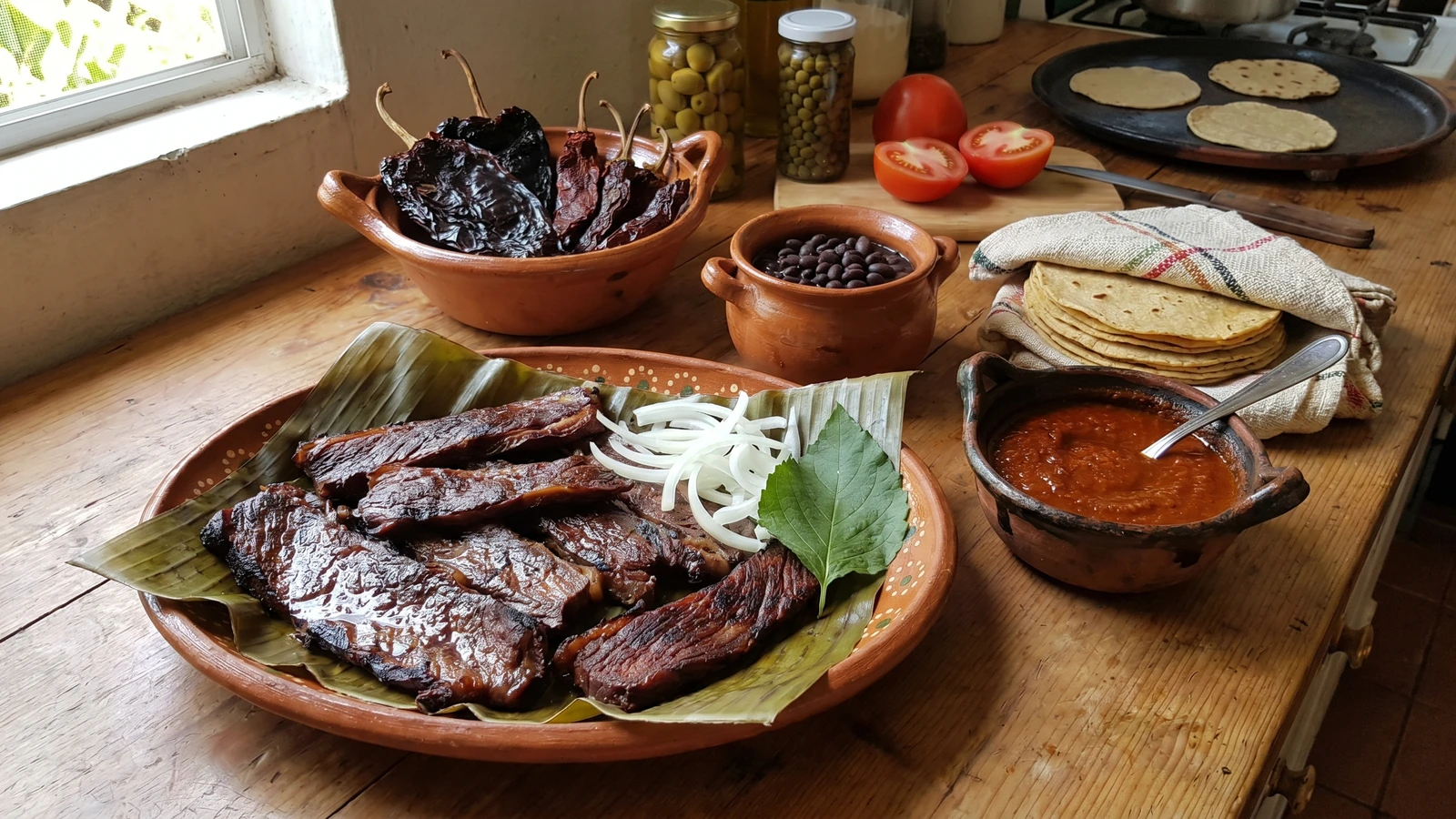
Veracruz's mountain tasajo from Tlapacoyan, salted hard, dried until the beef darkens, then grilled over wood and eaten with frijoles negros, acuyo salsa, and corn tortillas off the comal.
Veracruz, north-central Veracruz around Tlapacoyan, is where this tasajo belongs. The town sits between river humidity and mountain air, with citrus trees, coffee slopes, banana leaves, black beans, and acuyo in the kitchens. I learned to read this beef in the mercado there, not from a restaurant menu: long salted strips hanging dark, firmer than cecina, ready for wood coals and tortillas off the comal.
The defining ingredient is not a chile. It is salt, sal de grano, handled with judgment. The women who perfected this knew the weather before they touched the knife: too much humedad and the meat turns sour, too little salt and it spoils, too much sun and it hardens like leather. At home you will use the refrigerator for the long dry and a short sun finish only if the day is clean and dry. No me vengas con atajos. This is preservation, not decoration.
The salsa carries Veracruz: chile ancho for dark fruit, chile chipotle seco for smoke, jitomate de bola, and one hoja santa, acuyo, torn into the blender at the end so it perfumes instead of bullying. On the table: frijoles negros with epazote, corn tortillas, lime, raw onion, maybe a banana leaf under the meat. Black beans, not pinto. Flour tortillas belong to the north. Cada estado, su propia cocina.
The name Tlapacoyan comes from Nahuatl and is commonly translated as a place where things are washed, a reference tied to the streams that run toward the Nautla and Filobobos river country in north-central Veracruz. Salt-cured beef became practical in Veracruz after Spanish cattle and coastal salt networks met mountain market towns in the 16th and 17th centuries; thin strips could be dried, carried, and grilled without needing a cold room. The local distinction from cecina is texture and intensity: Tlapacoyan tasajo is darker, saltier, and more concentrated, made to sit beside black beans and corn tortillas, not to disappear under cheese or cream.
Quantity
2 1/2 pounds
partially frozen and sliced with the grain into long 1/4-inch-thick strips
Quantity
35 grams
Quantity
4
pounded to a paste
Quantity
1 teaspoon
toasted and cracked
Quantity
1 teaspoon
Quantity
1 naranja agria, juiced, or 1/4 cup orange juice mixed with 2 tablespoons lime juice
Quantity
2 tablespoons
melted, for brushing
Quantity
1 pound
picked over and rinsed
Quantity
1/2
Quantity
3
Quantity
1 large sprig
Quantity
1 tablespoon, plus more to taste
Quantity
2 tablespoons
for the beans
Quantity
3
stemmed and seeded
Quantity
2
stemmed
Quantity
4
halved
Quantity
1/4
Quantity
2
unpeeled
Quantity
1 small leaf
center rib removed and leaf torn
Quantity
1 tablespoon
for frying the salsa
Quantity
1 teaspoon, plus more to taste
Quantity
for serving
warmed on a comal
Quantity
for serving
Quantity
for serving
Quantity
for lining the platter
rinsed and passed over the flame to soften
| Ingredient | Quantity |
|---|---|
| beef top round or sirloin tippartially frozen and sliced with the grain into long 1/4-inch-thick strips | 2 1/2 pounds |
| sal de grano or kosher salt | 35 grams |
| garlic clovespounded to a paste | 4 |
| black peppercornstoasted and cracked | 1 teaspoon |
| dried Mexican oregano | 1 teaspoon |
| naranja agria juice | 1 naranja agria, juiced, or 1/4 cup orange juice mixed with 2 tablespoons lime juice |
| manteca de cerdomelted, for brushing | 2 tablespoons |
| dried black beanspicked over and rinsed | 1 pound |
| white onion | 1/2 |
| garlic cloves | 3 |
| fresh epazote | 1 large sprig |
| sal de grano | 1 tablespoon, plus more to taste |
| manteca de cerdofor the beans | 2 tablespoons |
| dried chile anchostemmed and seeded | 3 |
| dried chile chipotle secostemmed | 2 |
| ripe jitomates de bolahalved | 4 |
| white onion | 1/4 |
| garlic clovesunpeeled | 2 |
| hoja santa leaf, also called acuyocenter rib removed and leaf torn | 1 small leaf |
| manteca de cerdofor frying the salsa | 1 tablespoon |
| sal de grano | 1 teaspoon, plus more to taste |
| hand-pressed corn tortillas (optional)warmed on a comal | for serving |
| thinly sliced raw white onion (optional) | for serving |
| lime halves (optional) | for serving |
| banana leaves (optional)rinsed and passed over the flame to soften | for lining the platter |
Partially freeze the beef for 30 minutes so the knife behaves. Slice with the grain into long strips about 1/4 inch thick. Pound gently with the flat side of a meat mallet until the strips are even, not torn. Tasajo needs surface area for the salt and drying air. Thick pieces cure unevenly and grill like steak. That is not this dish.
Mix the sal de grano, garlic paste, cracked pepper, and dried Mexican oregano. Rub this mixture into both sides of every beef strip, working it into the edges. Stack the meat in a glass or ceramic dish, cover, and refrigerate 10 to 12 hours. This is a short cure, not shelf-stable preservation. Respect the cold.
Wipe off excess surface moisture without washing away the cure. Lay the strips on wire racks set over sheet pans and refrigerate uncovered for 16 to 18 hours, turning once. The surface should darken and feel tacky-dry, not wet. If you have clean, dry midday sun, set the racks outside under a mesh cover for 1 hour before grilling, then cook immediately. If the day is humid, skip the patio. Veracruz cooks know the weather. You should too.
Place the black beans in a heavy pot with the half onion, 3 garlic cloves, and enough water to cover by 3 inches. Simmer gently until tender, 1 1/2 to 2 hours depending on the age of the beans. Add the epazote and salt during the last 20 minutes. When the beans are tender, melt 2 tablespoons manteca de cerdo in a clay cazuela or heavy skillet, add two cups of beans with some broth, and simmer until glossy and thick. Frijoles negros, not pinto. This is Veracruz.
Heat a dry comal over medium. Toast the chile ancho and chile chipotle seco separately, pressing them flat for a few seconds per side until fragrant and slightly pliable. Do not blacken them. Ancho gives dark fruit and body. Chipotle seco gives smoke and heat. Burn either one and your salsa will punish you.
On the same comal, roast the jitomates de bola, onion, and unpeeled garlic until the tomatoes slump and the garlic softens. Soak the toasted chiles in hot water for 15 minutes, then drain. Peel the garlic. Blend the chiles, roasted tomatoes, onion, garlic, torn hoja santa, and 1 teaspoon sal de grano until thick and mostly smooth. The acuyo should perfume the salsa, not turn it medicinal.
Melt 1 tablespoon manteca de cerdo in a small cazuela over medium heat. Add the blended salsa carefully. It will sputter. Cook 8 to 10 minutes, stirring often, until the color deepens to brick red and the fat glistens at the edge. La manteca es el sabor. Raw blender salsa on cured beef tastes unfinished.
Prepare a wood or charcoal fire and let it burn down to steady coals. Guava, citrus, or encino wood is good if you have it. Brush the dried beef lightly with melted manteca and a few drops of naranja agria juice. Grill 2 to 3 minutes per side, just until the edges darken, the surface blisters in spots, and the meat stays flexible. Do not cook it into leather. Tasajo should chew, not fight back.
Pass the banana leaves over the flame until glossy and flexible, then line a wide platter with them. Slice the grilled tasajo across the grain into strips and pile it generously on the leaves. Set the black beans, ancho-chipotle acuyo salsa, warm corn tortillas, raw white onion, and lime halves on the table. Eat with your hands if the tortilla is doing its job. Recetas probadas y garantizadas.
1 serving (about 500g)
Culinary guides, cultural storytelling, and the editorial depth that makes cooking meaningful.
Discover Culinary ExplorerChef Lupita
Michoacán's Lake Pátzcuaro acúmara, a whole kurucha from the lago tatemada on a comal de leña and served with chile perón atápakua, corn tortillas, and P'urhépecha discipline.

Chef Lupita
Puebla's weekday adobo of pork shoulder braised in a thick guajillo and ancho sauce sharpened with vinegar, cumin, and clove. The deep red of a market spice stall, the dish a poblana cooks without thinking.

Chef Lupita
Loreto's pit-roasted clams, planted hinge-up in beach sand and tatemadas under a fast fire of dried romerillo brush, the resinous Baja desert shrub that gives this dish its smoke.

Chef Lupita
Oaxaca's eighth mole, the silky, almond-and-cinnamon almendrado, served over poached chicken. Mild, sweet, restrained, and a quiet rebuttal to anyone who thinks Mexican food has to be hot to be Mexican.