
Chef Lupita
Aporreadillo Michoacano con Huevo
Michoacán's Tierra Caliente almuerzo, where salted beef is softened, pounded, fried in lard, folded with egg and chile perón salsa, then served beside morisqueta like a proper working table.
A cooking platform built around craft, culture, and the stories behind what we eat.
Created by
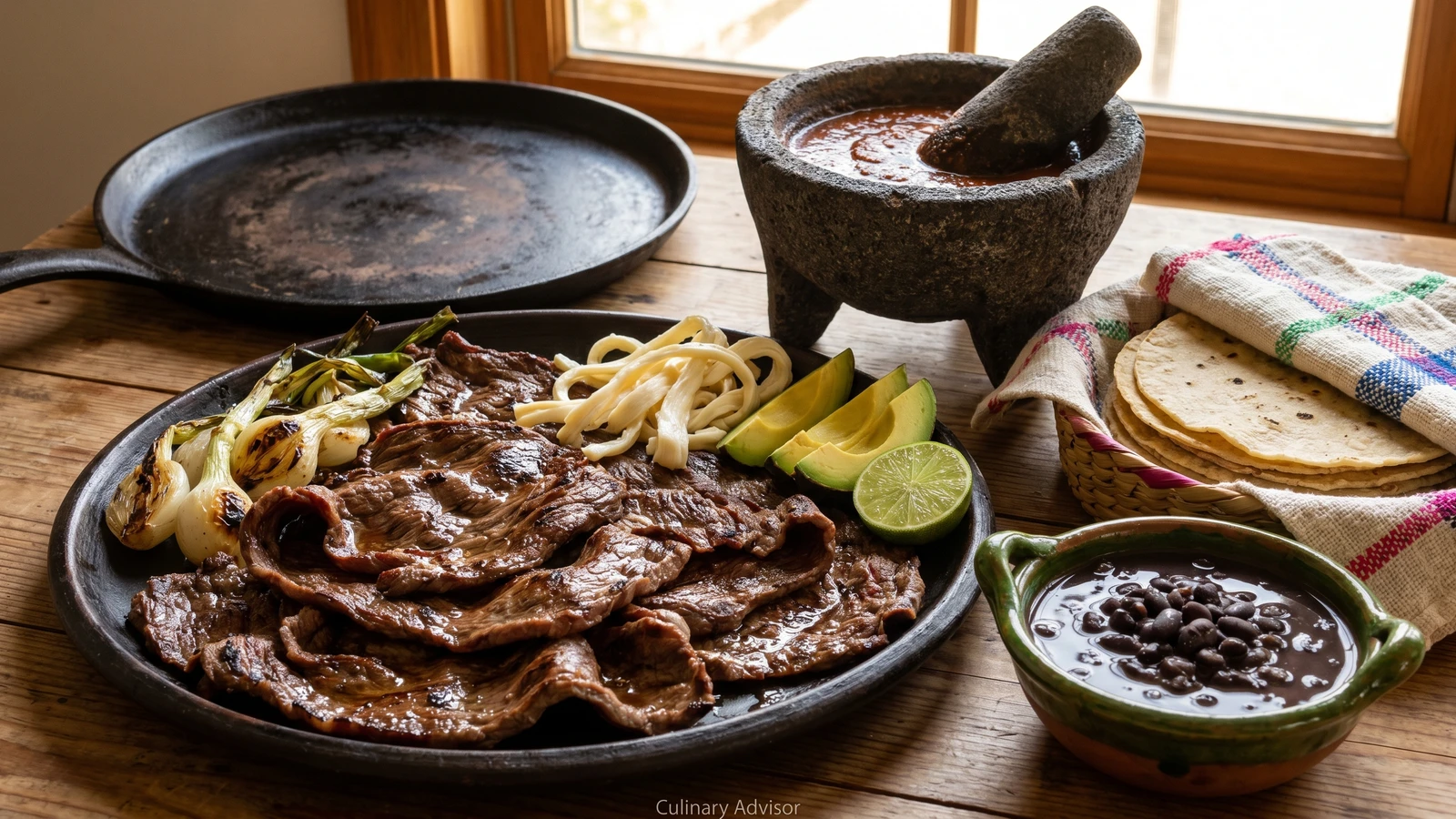
Oaxaca's signature breakfast cut, salted overnight and seared on a scorching comal until the edges char and the thin meat curls, served alongside a molcajete salsa built on smoky chile pasilla oaxaqueño and fire-roasted tomato.
This is Oaxaca's breakfast. Not the city. The state. From the Valles Centrales to the Istmo de Tehuantepec, tasajo is the cut that defines the morning table, sold by the kilo in the pasillos de carnes at the Central de Abastos and grilled over coals at the Mercado 20 de Noviembre, where the smoke from a hundred comales hangs in the air before the sun is fully up.
Tasajo is beef from the leg, butterflied open in long, thin sheets by carniceros who have been making the same cut since they were teenagers. The meat is salted and left to cure overnight, sometimes hung on lines in the open air, sometimes laid flat on wooden boards in the back of the stall. The salt draws out moisture, concentrates the beef flavor, and gives the surface that particular dry grip that lets it char on a screaming-hot comal in under two minutes. You do not marinate tasajo. You do not season it with anything beyond salt. The cure is the preparation. The comal does the rest.
The salsa that belongs next to this meat is ground in a molcajete, not blended. Chile pasilla oaxaqueño, the smoky dried chile that grows nowhere else in Mexico with quite the same character, roasted alongside tomatoes and garlic on the same comal that will cook the meat. You pound it by hand until the texture is rough, uneven, alive with bits of charred skin and seeds. A blender salsa is smooth. A molcajete salsa has texture and a deeper flavor because the stone crushes the oils out of the chile and the garlic in a way that blades cannot. This is one of the times I will not tell you the blender works fine. It doesn't. Use the molcajete.
My mother's notebook has a page labeled 'Oaxaca, mercado' with a sketch of how the carnicero butterflied the tasajo, a single spiral cut that unrolls the muscle into a sheet the size of a newspaper page. She wrote underneath: 'La sal hace todo el trabajo.' The salt does all the work. She was right.
Tasajo's preservation method, salting and partial air-drying of beef, arrived in Oaxaca through colonial-era Spanish ranching traditions but was adapted to local conditions in the Valles Centrales, where the semi-arid climate and altitude created ideal drying environments. The word 'tasajo' derives from the Spanish 'tasajar,' meaning to cut into strips or slices, and the technique shares lineage with Spanish cecina and South American charqui, though Oaxaca's version is distinguished by its extreme thinness and short cure time of roughly twelve to twenty-four hours. The Mercado 20 de Noviembre's pasillo de carnes, where tasajo, cecina enchilada, and chorizo are grilled side by side over charcoal, became a culinary landmark in the mid-20th century and remains the reference point against which every Oaxacan cook measures their own comal work.
Quantity
1 1/2 pounds
butterflied into thin sheets about 1/4-inch thick
Quantity
2 tablespoons
Quantity
1 tablespoon
softened
Quantity
6
Quantity
3
stemmed
Quantity
3
unpeeled
Quantity
1/2 teaspoon, plus more to taste
Quantity
1 tablespoon
Quantity
1 cup
warmed, with their broth
Quantity
12
warmed
Quantity
1
sliced
Quantity
2
halved
Quantity
as needed
pulled into strips
Quantity
4
whole
| Ingredient | Quantity |
|---|---|
| beef top round or eye of roundbutterflied into thin sheets about 1/4-inch thick | 1 1/2 pounds |
| coarse sea salt or kosher salt | 2 tablespoons |
| asiento (Oaxacan pork lard sediment) or manteca de cerdosoftened | 1 tablespoon |
| ripe Roma tomatoes | 6 |
| dried chile pasilla oaxaqueñostemmed | 3 |
| garlic clovesunpeeled | 3 |
| kosher salt (for salsa) | 1/2 teaspoon, plus more to taste |
| water (for salsa, if needed) (optional) | 1 tablespoon |
| frijoles negros de ollawarmed, with their broth | 1 cup |
| hand-pressed corn tortillaswarmed | 12 |
| ripe avocado (optional)sliced | 1 |
| limes (optional)halved | 2 |
| quesillo (Oaxacan string cheese) (optional)pulled into strips | as needed |
| green onions (cebollitas)whole | 4 |
If your carnicero has not already butterflied the meat, lay the piece of round on a cutting board and slice horizontally through the center, stopping a half-inch from the edge, then unfold it like a book. Continue making parallel cuts and unfolding until you have a single thin sheet, roughly 1/4-inch thick. The goal is one continuous piece the size of a large placemat. Salt both sides generously with the coarse salt, pressing it into the surface with your palms. You want full, even coverage. The salt is doing two things: curing the meat and pulling moisture to the surface so it chars instead of steams on the comal.
Lay the salted sheets flat on a wire rack set over a sheet pan. Do not stack them. Refrigerate uncovered for at least eight hours, overnight is best. The surface should look dry and tacky when you pull them out, not wet. In Oaxaca, the carniceros hang the sheets in the open air. Your refrigerator does the same thing with less drama. La sal hace todo el trabajo.
Heat a dry comal or cast iron skillet over medium-high until it is properly hot. Place the whole tomatoes, unpeeled garlic cloves, and the stemmed chile pasilla oaxaqueño directly on the surface. The tomatoes need about eight minutes, turning them with tongs as each side blackens and blisters. They should collapse and release juice onto the comal. The garlic takes about six minutes, the skin will char and the clove inside will soften. The pasilla oaxaqueño needs only forty-five seconds to a minute per side. Watch it. It is already smoked and dried, so it goes from toasted to burned faster than you expect. The smell will fill your kitchen: smoky, fruity, deep. That is the pasilla oaxaqueño telling you it is ready.
Peel the charred garlic cloves and drop them into the molcajete with the salt. Grind to a paste. Tear the toasted pasilla oaxaqueño into pieces and add them to the mortar. Crush and grind until the chile is broken down but still has visible texture, rough flakes, not powder. Now add the roasted tomatoes one at a time, crushing each into the chile and garlic base. Work it until the salsa is combined but uneven. You want chunks of charred tomato skin, streaks of chile, pockets of garlic. That texture is the point. If the salsa is too thick to move, add a tablespoon of water. Taste for salt. The salsa should be smoky first, then acidic from the tomato, with a slow, moderate heat that builds.
Wipe the comal clean and set it over high heat. You want it scorching. Rub a thin layer of asiento or manteca de cerdo across the surface. When the fat shimmers and just begins to smoke, lay the cured beef sheets flat on the comal. Do not crowd them. One sheet at a time if your comal is small. The meat will hiss and curl at the edges within thirty seconds. Let the first side char for about sixty to ninety seconds. You want dark spots and crisp edges, not a gray boil. Flip once. Cook the second side for another forty-five seconds. The total time on the comal is under three minutes. If you cook it longer, the thin meat dries out and turns to leather. Pull it off the comal onto a cutting board.
While the comal is still hot, lay the whole green onions directly on the surface. Let them char and soften, turning once, about two minutes total. They should be wilted, blackened at the tips, and sweet inside. Pull them off and set them alongside the meat.
Slice the tasajo across the grain into strips about two inches wide. Arrange on a warm plate alongside the charred cebollitas, a bowl of frijoles negros with their broth, the molcajete of salsa, sliced avocado, pulled quesillo, and a stack of warm tortillas. Put the lime halves on the table. Each person builds their own taco: a strip of tasajo, a spoonful of salsa, a thread of quesillo, a squeeze of lime. Recetas probadas y garantizadas.
1 serving (about 450g)
Culinary guides, cultural storytelling, and the editorial depth that makes cooking meaningful.
Discover Culinary ExplorerChef Lupita
Michoacán's Tierra Caliente almuerzo, where salted beef is softened, pounded, fried in lard, folded with egg and chile perón salsa, then served beside morisqueta like a proper working table.

Chef Lupita
Guerrero's Costa Grande aporreado is salted cecina pounded soft, scrambled with egg, and finished in a red guajillo and chile de árbol salsa loud with garlic and cilantro.

Chef Lupita
Los Altos de Chiapas turns two-night fermented white corn into a tart-sweet atole, cooked with canela and piloncillo, then poured hot into jícaras for desayuno.

Chef Lupita
Oaxaca's Mixteca region ferments nixtamalized masa for days until it turns tart and alive, then simmers it with piloncillo and canela into a thick, warm atole served at first light in clay.