
Chef Freja
Butterdejs-Tarteletskaller
Danish puff pastry tartelet shells folded and chilled in patient layers, baked tall and golden until they shatter at the first bite. The architecture that holds a hundred different fillings.
A cooking platform built around craft, culture, and the stories behind what we eat.
Created by Chef Freja
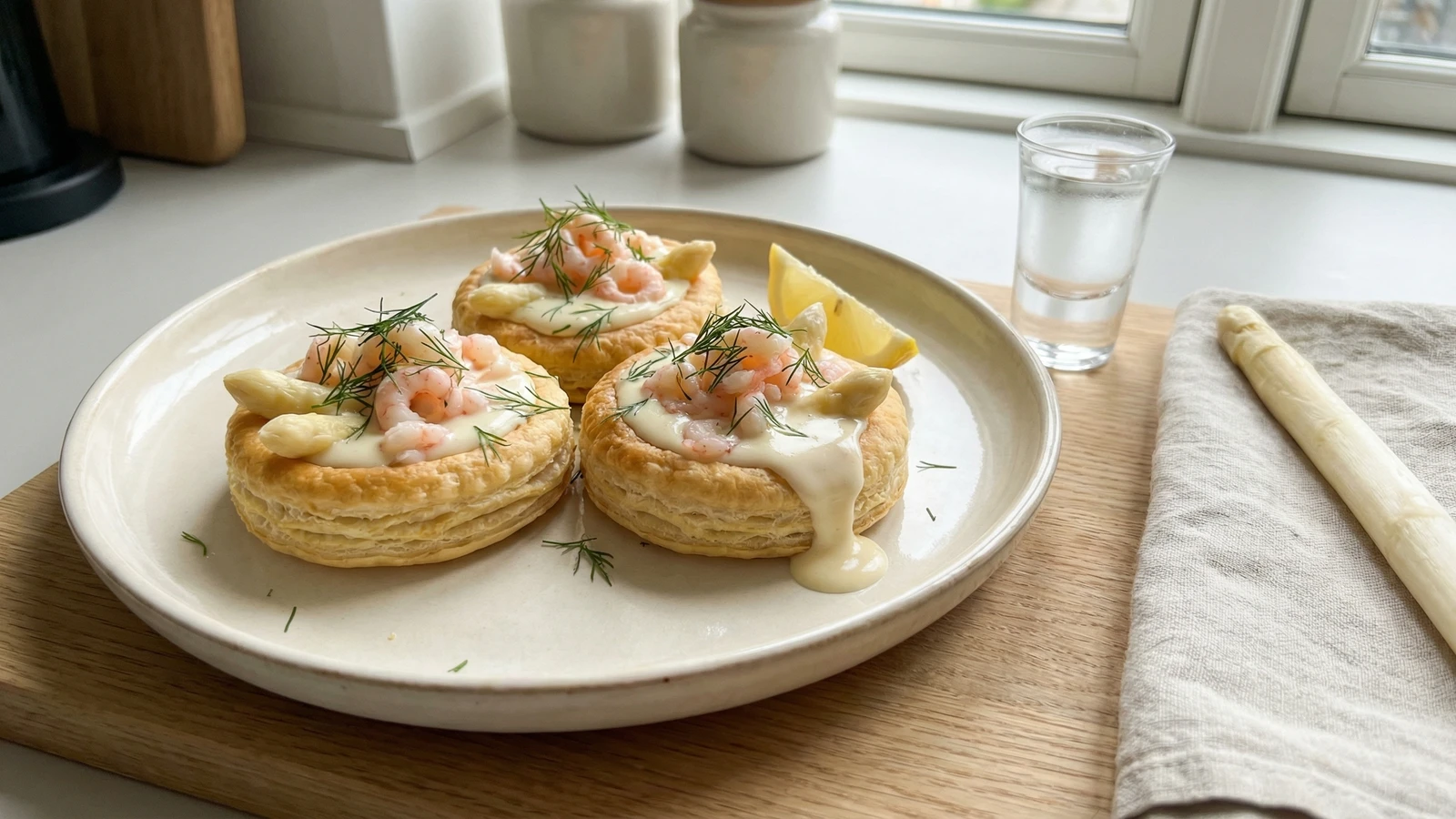
Crisp pastry shells filled with fjord shrimp, white asparagus, and dill in a silky cream sauce. The coastal answer to the chicken-and-asparagus classic, and the dish that announces a Danish May lunch.
There's a moment in early May when the white asparagus arrives at the market in Copenhagen, and the whole spring kitchen reorients around it. The spears are pale and heavy, almost ivory, bundled with their tips upright like candles. The season is short, six weeks if you're lucky, and Danish cooks have been waiting for it since February. This is the joy of waiting, and white asparagus is one of the gifts that makes the wait worth it.
Tarteletter are the dish that holds the season. Crisp puff pastry shells, traditionally filled with chicken and asparagus in a cream sauce, served at confirmations and Easter lunches and any spring gathering that wants to feel like an occasion. The version I'm giving you here uses fjord shrimp, the small, sweet, cold-water rejer that come from the Limfjord and the inland waters of Jutland, in place of chicken. It's the coastal cousin of the classic, and in a country surrounded by water, it has just as much claim to the table.
Two things matter most. First, peel the asparagus properly and save the peelings for the cooking water, because that water becomes the sauce, and the sauce is the dish. Second, the shrimp go in at the very end and are warmed, not cooked. Fjord shrimp arrive already cooked, and any heat beyond a gentle warming turns them tough. Watch for these two things and the rest will follow. And one honest note: nobody in Denmark makes their own tartelet shells. Even the grandmothers buy them. Don't feel any guilt about this. It is the tradition.
Tarteletter came to Denmark in the 19th century by way of French haute cuisine, arriving first in royal and bourgeois kitchens before democratizing through the early 20th century into the festive lunch dish almost every Dane now associates with confirmations, Easter, and silver weddings. The classic filling was hons i asparges, chicken in white asparagus sauce, a recipe published in Frk. Jensens Kogebog in 1901 and copied into Danish home kitchens for generations. The shrimp version emerged from coastal Jutland and the fjord communities around Limfjorden, where the tiny sweet rejer were a daily catch and stood in naturally for the more expensive chicken. By the 1960s, ready-made tartelet shells from Danish bakeries had become a household pantry staple, and the dish settled into its current form: bought shells, homemade filling, no apologies on either side.
Quantity
12
Quantity
500g
peeled, woody ends trimmed
Quantity
1 teaspoon
Quantity
1 teaspoon, plus more to taste
Quantity
300g
cooked and peeled
Quantity
50g
Quantity
40g
Quantity
300ml
strained
Quantity
200ml
Quantity
100ml
Quantity
1 teaspoon, plus extra to taste
Quantity
a small grating
Quantity
to taste
Quantity
small bunch
fronds picked, roughly chopped
Quantity
to serve
| Ingredient | Quantity |
|---|---|
| ready-made tartelet shells | 12 |
| fresh white asparaguspeeled, woody ends trimmed | 500g |
| caster sugar | 1 teaspoon |
| fine sea salt | 1 teaspoon, plus more to taste |
| cold-water fjord shrimpcooked and peeled | 300g |
| unsalted butter | 50g |
| plain flour | 40g |
| asparagus cooking liquidstrained | 300ml |
| whole milk | 200ml |
| double cream | 100ml |
| fresh lemon juice | 1 teaspoon, plus extra to taste |
| nutmeg | a small grating |
| white pepper | to taste |
| fresh dillfronds picked, roughly chopped | small bunch |
| lemon wedges (optional) | to serve |
Lay each white asparagus spear flat on a board and peel from just below the tip down to the base. White asparagus has a tough outer skin, and if you don't peel it, the spears stay fibrous no matter how long you cook them. Snap off the woody ends or cut them away. Save the peelings and the trimmings. They go into the cooking water and give the sauce its flavor.
Bring a wide pot of water to a gentle simmer. Add the sugar, the salt, and the saved peelings and trimmings. The sugar takes the edge off the bitterness that white asparagus carries; the peelings turn the cooking water into a quiet asparagus broth that becomes the backbone of the sauce. Lower the spears in carefully and cook for eight to ten minutes, until a knife slides through the thickest part with no resistance. Lift them out with tongs and set them aside on a plate. Strain the cooking liquid through a fine sieve and keep 300ml. This is half your sauce.
Once the spears are cool enough to handle, cut them on the diagonal into pieces about the length of your thumbnail. Keep the tips intact. They're the prettiest part and you'll want them visible in the finished filling. Set everything aside while you make the sauce.
Melt the butter in a heavy saucepan over medium heat. When it's foaming but not browning, add the flour all at once and whisk it into the butter until you have a smooth, pale paste. Cook this roux for two minutes, whisking the whole time. You're not trying to color it. You're cooking out the raw taste of the flour, which would otherwise sit in the back of the sauce and ruin it.
Pour in the strained asparagus cooking liquid in a slow, steady stream, whisking constantly. The sauce will thicken almost immediately. Keep whisking until it's completely smooth, then add the milk in the same way. Let it come to a gentle simmer and cook for five minutes, stirring often, until the sauce has the consistency of thick cream and coats the back of a spoon. Stir in the double cream and warm it through. Don't let it boil hard once the cream is in. Hard boiling makes cream-based sauces split.
Take the sauce off the heat. Season with salt, white pepper, the lemon juice, and a small grating of nutmeg. Taste it. The sauce should be rich but bright, with the asparagus running through it like a quiet thread. If it tastes flat, it needs more salt or another drop of lemon. Adjust until it's right. You'll know when it's right because every spoonful will make you want another.
Heat the oven to 180C. Place the tartelet shells on a baking sheet and warm them for five to seven minutes. They go in to crisp, not to brown. A warm shell holds the filling without going soggy on contact, and a cold shell collapses the moment the sauce touches it. This is a small step, and it changes everything.
Return the sauce to a low heat. Fold in the asparagus pieces and most of the chopped dill. Let everything warm through for a minute. Then add the fjord shrimp and stir gently, just enough to coat them in the sauce. The shrimp are already cooked. They only need to feel the warmth of the sauce, no more. If you cook them again they go rubbery and dull, and the whole point of fjord shrimp is their sweetness and their snap.
Set the warm tartelet shells on plates, three to a serving. Spoon the filling generously into each one, letting a little spill over the edge. That spill is part of the look and part of the pleasure. Scatter the remaining dill across the top and add a lemon wedge to the side of the plate. Serve immediately while the shells are still crisp and the filling is still warm. Tak for mad.
1 serving (about 380g)
Culinary guides, cultural storytelling, and the editorial depth that makes cooking meaningful.
Discover Culinary ExplorerChef Freja
Danish puff pastry tartelet shells folded and chilled in patient layers, baked tall and golden until they shatter at the first bite. The architecture that holds a hundred different fillings.

Chef Freja
Danish pork crackling, simmered tender, dried until parchment, then fried until it puffs and shatters. The beer snack of every Danish kro, salty and golden and made for cold pilsner and good company.

Chef Freja
Hard-boiled egg halves heaped with cold-water fjord shrimp, dill mayonnaise, and a single frond of dill standing upright. The piece that disappears first from any Danish julefrokost table.

Chef Freja
Egg halves crowned with creme fraiche and the season's first stenbiderrogn, Danish lumpfish roe. A late-winter ritual along the Danish coasts when the fish come in and the kitchen reorients around them.