
Chef Freja
Butterdejs-Tarteletskaller
Danish puff pastry tartelet shells folded and chilled in patient layers, baked tall and golden until they shatter at the first bite. The architecture that holds a hundred different fillings.
A cooking platform built around craft, culture, and the stories behind what we eat.
Created by Chef Freja
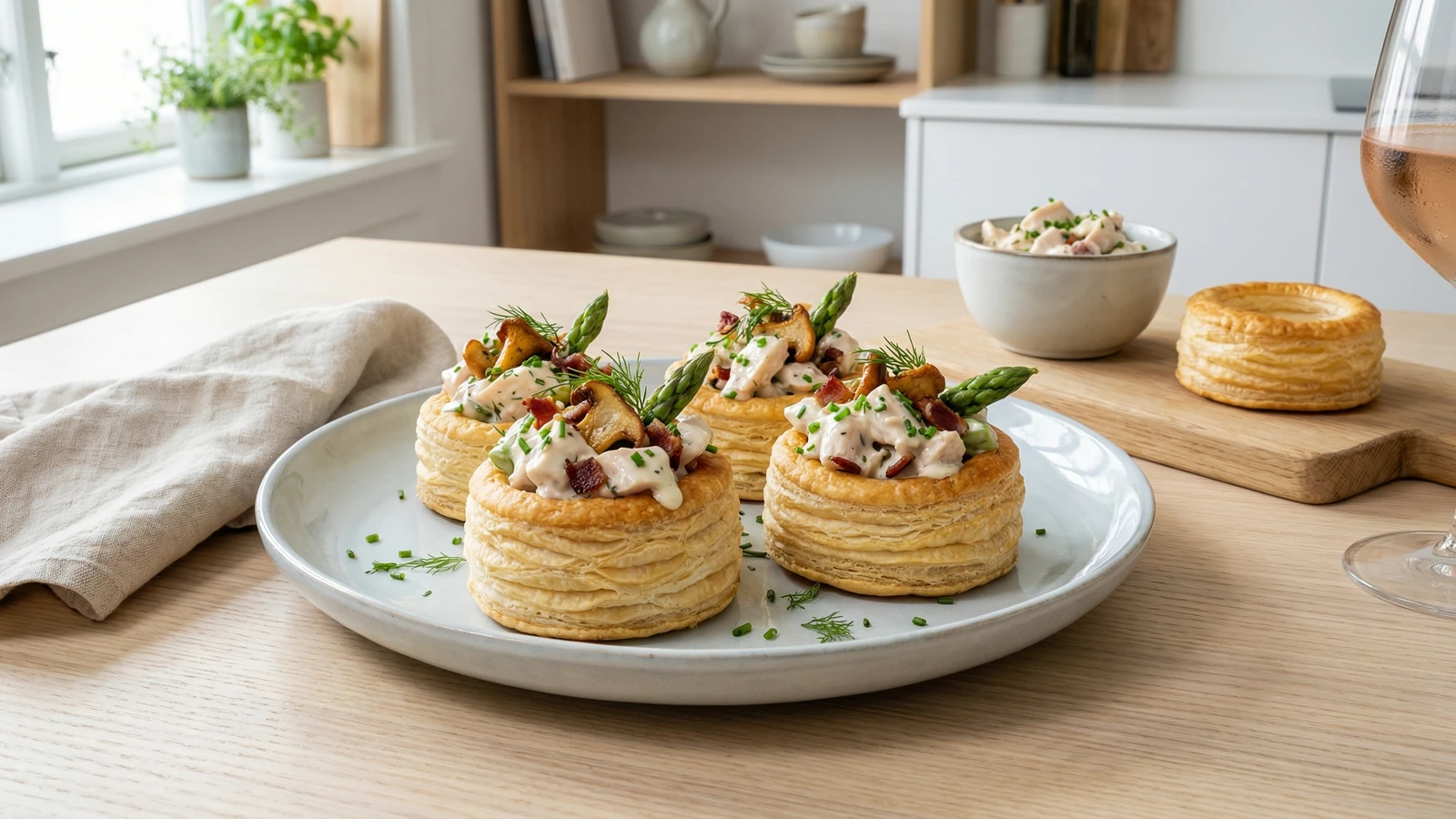
Cold Danish chicken salad with bacon, butter-fried mushrooms, and green asparagus, spooned into crisp puff pastry shells. The summer picnic answer to a Danish classic.
There's a stretch of Danish summer, late June into July, when the asparagus is still good and the days have grown long enough that nobody wants to eat indoors. This is when tarteletter come out of the cupboard. Not the hot version with the cream sauce that belongs to confirmation lunches and grey Sundays, but the cold one. The picnic one. The one you carry to the beach or the garden or the allotment in two separate containers and assemble at the table.
Tarteletter med honsesalat is the same dish in summer clothes. The flavors are familiar to any Dane: poached chicken, asparagus, mushrooms, the smoky note of bacon. But here they're bound in a light dressing of mayonnaise and creme fraiche instead of a hot bechamel, and they sit in a cold pastry shell instead of a steaming one. It's a dish built for hot weather and outdoor tables, and it has the relaxed grace of food that knows it doesn't need to perform.
The whole thing is straightforward, but two things matter more than the rest. First, poach the chicken slowly. A bare simmer, never a boil. Tender chicken is half the dish. Second, never assemble until the moment you eat. The shells go soft within fifteen minutes of meeting the wet salad, and a soft tartlet shell is a small tragedy. Keep them apart until the last second. The season decides the rest, and in July, the season is generous.
Tarteletter arrived in Denmark in the mid-1800s through French culinary influence, descended directly from the vol-au-vent that Antonin Careme had popularised in Paris a generation earlier. The Danes took to them with unusual enthusiasm and eventually loved them more than the French did, turning the puff pastry shell into a near-national vessel for the iconic hot filling of chicken in white asparagus sauce. The cold honsesalat version is the summer cousin, emerging in the early twentieth century as Danish home cooks adapted the dish for picnics, garden lunches, and the long faellesspisning gatherings, the shared meals, that mark the Danish summer.
Quantity
8
Quantity
2, around 400g total
skin off
Quantity
1 small
halved
Quantity
1 small
halved
Quantity
1
Quantity
5
Quantity
150g
cut into small lardons
Quantity
250g
cleaned and quartered
Quantity
30g
Quantity
200g
woody ends snapped off
Quantity
100g
Quantity
100g
Quantity
1 teaspoon
Quantity
1 teaspoon
Quantity
to taste
Quantity
freshly ground, to taste
Quantity
small bunch
finely snipped
Quantity
a few sprigs
fronds picked
| Ingredient | Quantity |
|---|---|
| tarteletter (ready-made puff pastry shells) | 8 |
| chicken breastsskin off | 2, around 400g total |
| carrothalved | 1 small |
| onionhalved | 1 small |
| bay leaf | 1 |
| black peppercorns | 5 |
| smoked streaky baconcut into small lardons | 150g |
| chestnut mushroomscleaned and quartered | 250g |
| unsalted butter | 30g |
| green asparaguswoody ends snapped off | 200g |
| good mayonnaise | 100g |
| creme fraiche | 100g |
| Dijon mustard | 1 teaspoon |
| lemon juice | 1 teaspoon |
| fine sea salt | to taste |
| white pepper | freshly ground, to taste |
| chivesfinely snipped | small bunch |
| fresh dillfronds picked | a few sprigs |
Place the chicken breasts in a small saucepan with the carrot, onion, bay leaf, peppercorns, and a generous pinch of salt. Cover with cold water by about two centimetres. Bring it slowly to the gentlest simmer, then turn the heat down so the surface barely moves. Poach for twelve to fourteen minutes, until the chicken is just cooked through. Slow heat is the whole point. A hard boil tightens the muscle fibres and gives you dry, stringy chicken. A bare simmer keeps it tender and juicy.
While the chicken cools, fry the bacon lardons in a dry pan over medium heat. No oil, no butter. The bacon renders its own fat as it cooks. Stir occasionally and let them go properly crisp and golden, about eight minutes. Lift them out with a slotted spoon onto kitchen paper and leave the rendered fat in the pan. You're going to use it.
Add the butter to the pan with the bacon fat and turn the heat up to medium-high. When the butter foams, tip in the mushrooms in a single layer. Don't crowd them and don't stir for the first two minutes. Mushrooms release water the moment they hit the pan, and if they sit in that water they boil instead of frying. Let them colour first, then stir, then let them colour again. You want them deep golden at the edges and firm to the bite. Season with salt at the end, never the beginning. Salt pulls water out and stops them browning. Tip them onto a plate to cool.
Bring a wide pan of well-salted water to the boil and prepare a bowl of iced water beside it. Drop the asparagus in and cook for ninety seconds, no longer. Lift them out immediately and plunge them into the ice water. The cold stops the cooking dead and locks the green in. Drainthem on a tea towel and cut into pieces about three centimetres long, keeping the tips whole.
In a large bowl, whisk together the mayonnaise, creme fraiche, mustard, and lemon juice. Mayonnaise alone is too rich and too heavy for a summer salad. Creme fraiche brings a clean tang and a lighter body, and the mustard ties everything together. Season with salt and white pepper. White pepper is the Danish habit here. It blends in without specks and has a softer warmth than black.
Lift the cooled chicken from its poaching liquid and pat dry. Tear it into bite-sized pieces with your fingers, following the grain. Tearing rather than cutting gives you irregular surfaces that hold the dressing better. Add the chicken, the cooled mushrooms, the bacon, and the asparagus to the bowl with the dressing. Fold everything together gently. Taste. Adjust the salt, the lemon, the pepper. You'll know when it's right.
Cover the bowl and refrigerate for at least an hour. The salad needs this time. The flavors round out, the dressing settles into the chicken, and the salt finds every corner. A chicken salad eaten straight from the bowl and a chicken salad rested for an hour are not the same dish.
Just before you assemble, warm the tarteletter in a 180C oven for four minutes. This is non-negotiable. Tarteletter from the box are slightly soft, and a quick pass through a hot oven brings back the shatter that defines them. Let them cool completely on a rack. A warm shell will wilt the cold salad, and a wilted shell defeats the whole point of the dish.
Spoon the chilled chicken salad into the cooled tarteletter, mounding it generously so it rises above the rim. Scatter chives and dill fronds across the top. Serve at once. If you're carrying these to a picnic, pack the salad in one container, the empty tarteletter in another, and assemble at the table. Filled tarteletter sit for fifteen minutes before the bottoms surrender. Tak for mad.
1 serving (about 320g)
Culinary guides, cultural storytelling, and the editorial depth that makes cooking meaningful.
Discover Culinary ExplorerChef Freja
Danish puff pastry tartelet shells folded and chilled in patient layers, baked tall and golden until they shatter at the first bite. The architecture that holds a hundred different fillings.

Chef Freja
Danish pork crackling, simmered tender, dried until parchment, then fried until it puffs and shatters. The beer snack of every Danish kro, salty and golden and made for cold pilsner and good company.

Chef Freja
Hard-boiled egg halves heaped with cold-water fjord shrimp, dill mayonnaise, and a single frond of dill standing upright. The piece that disappears first from any Danish julefrokost table.

Chef Freja
Egg halves crowned with creme fraiche and the season's first stenbiderrogn, Danish lumpfish roe. A late-winter ritual along the Danish coasts when the fish come in and the kitchen reorients around them.