
Chef Lupita
Acitrón de Cidra Conventual
Puebla's convent-style acitrón, made from cidra peel instead of endangered biznaga, built through repeated syrup soakings until the cubes turn firm, translucent, and ready for rosca or chiles en nogada.
A cooking platform built around craft, culture, and the stories behind what we eat.
Created by
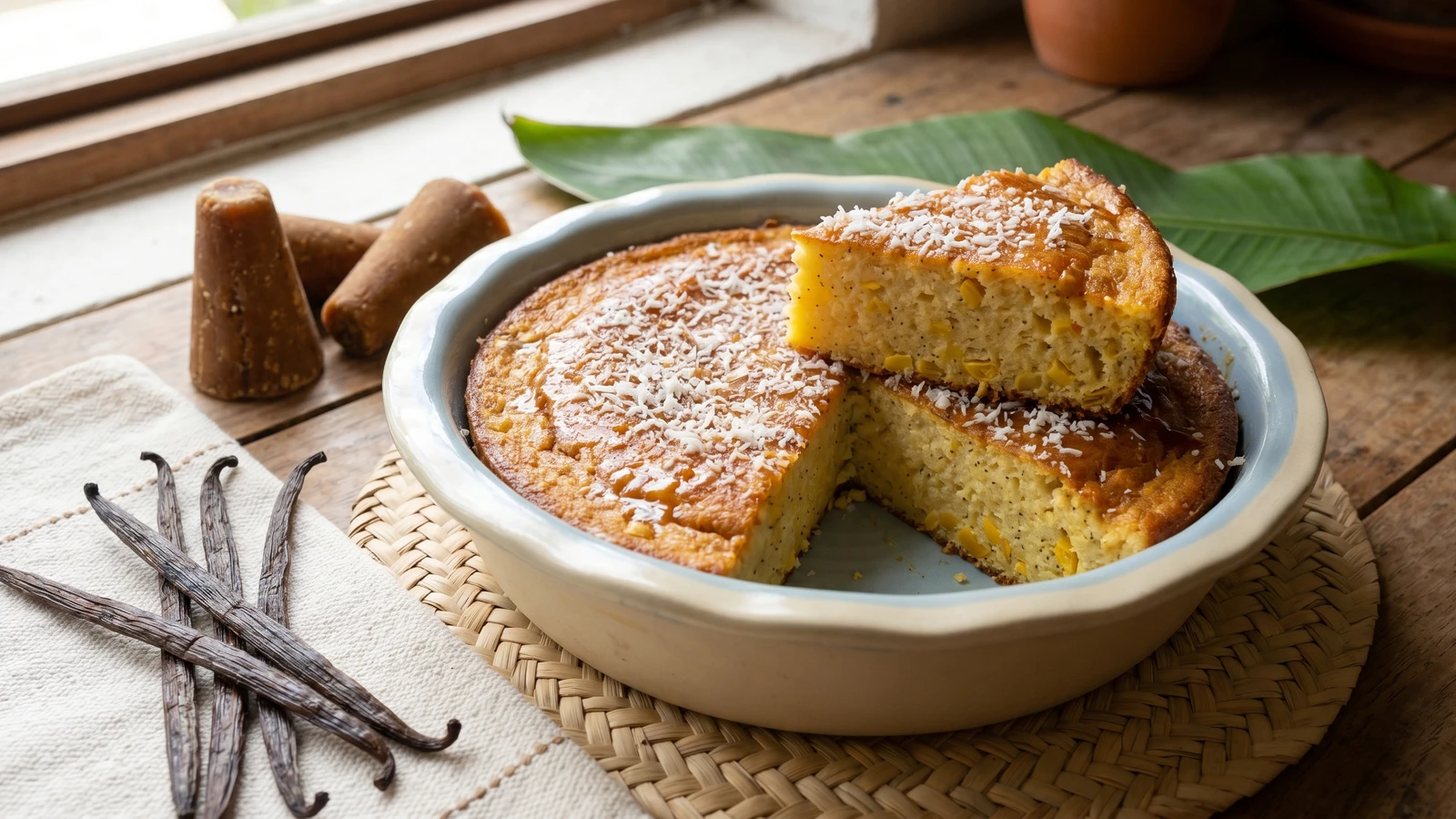
Veracruz's tender corn cake from the humid Gulf coast, where fresh elote, milk, eggs, and vainilla de Papantla bake into a custardy tarta for coffee and afternoon hunger.
Veracruz, especially the Sotavento and the road north toward Papantla, knows what to do with corn, milk, cane, and vanilla. This tarta de elote is not a birthday cake. It is the sweet pan you cut in squares for afternoon coffee, the kind that sits on the kitchen table while the Gulf air comes through the window and everyone takes one more slice than they planned.
The defining ingredient is fresh elote, tender enough to give milk when you scrape the cob. The second is vainilla de Papantla, real vanilla from Totonacapan, not extract from a supermarket bottle. Veracruz did not become one of the great vanilla regions so you could pour brown perfume into the batter and call it the same thing. Split the pod. Scrape it. Let the seeds work.
I learned a version like this from a señora near Tlacotalpan who baked hers in a pale blue glazed cazuela and brushed it with piloncillo syrup while it was still warm. No frosting. No towers. Just corn, eggs, milk, butter, and patience. Cada estado, su propia cocina, and Veracruz tastes here like humid afternoons, cane fields, vanilla pods drying on cloth, and corn used with respect.
Vanilla is native to Mexico's Gulf region, and the Totonac people of northern Veracruz cultivated and cured vainilla long before Europeans learned its name in the 16th century. Corn cakes in Veracruz reflect a meeting of older maize-based sweets with colonial dairy, eggs, wheat-style baking methods, and cane sugar from the Gulf lowlands. Papantla became so closely tied to vanilla that its name still signals the standard Mexican cooks look for when a dessert depends on the bean itself, not extract.
Quantity
5 cups
cut from 6 to 7 tender ears of elote
Quantity
1 cup
Quantity
4
Quantity
1
split and scraped
Quantity
3/4 cup
Quantity
1/2 cup
melted and cooled, plus more for the pan
Quantity
1/2 cup
Quantity
1/2 cup
Quantity
1 tablespoon
Quantity
1/2 teaspoon
Quantity
1/2 cup
optional, freshly grated, not dried bag coconut
Quantity
1 cup
Quantity
4 ounces
broken into pieces, for the syrup
Quantity
1 small strip
Quantity
1 tablespoon
| Ingredient | Quantity |
|---|---|
| fresh white corn kernelscut from 6 to 7 tender ears of elote | 5 cups |
| whole milk | 1 cup |
| large eggs | 4 |
| vainilla de Papantla podsplit and scraped | 1 |
| grated piloncillo | 3/4 cup |
| unsalted buttermelted and cooled, plus more for the pan | 1/2 cup |
| crema de rancho or Mexican crema | 1/2 cup |
| masa harina | 1/2 cup |
| baking powder | 1 tablespoon |
| fine sea salt | 1/2 teaspoon |
| fresh grated coconut (optional)optional, freshly grated, not dried bag coconut | 1/2 cup |
| water | 1 cup |
| piloncillobroken into pieces, for the syrup | 4 ounces |
| Mexican cinnamon | 1 small strip |
| lime juice | 1 tablespoon |
Heat the oven to 350F. Butter a 9-inch round clay baking dish, ceramic cazuela, or metal cake pan. Line the bottom with parchment if using metal. Veracruz home cooks bake this kind of tarta in whatever pan has served the family for years. The pan matters less than the corn.
Stand each ear of elote upright and cut off the kernels with a sharp knife. Scrape the cobs with the back of the knife to catch the milky pulp. That corn milk is flavor. Do not throw it away because a clean cutting board makes you feel organized. La cocina no es decoración, es trabajo.
Put the corn kernels and their milk into a blender with the whole milk, eggs, scraped vainilla de Papantla seeds, grated piloncillo, melted butter, and crema. Blend until thick and mostly smooth, with a little corn texture left. This is a tarta de elote, not a boxed cake. You should still know the corn is there.
In a bowl, whisk the masa harina, baking powder, and salt. Pour in the blended corn mixture and stir until no dry streaks remain. Fold in the fresh grated coconut if using. Coco fresco rallado belongs on the Gulf coast. Dry bag coconut tastes like a drawer. Use the fresh one or leave it out.
Pour the batter into the prepared pan and smooth the top. Bake for 45 to 50 minutes, until the edges are golden, the center is set but still tender, and a toothpick comes out with moist crumbs. Do not bake it dry. The beauty of this cake is the custardy corn center.
While the tarta bakes, combine the water, piloncillo pieces, and Mexican cinnamon in a small saucepan. Simmer over medium heat until the piloncillo dissolves and the syrup lightly coats a spoon, about 10 minutes. Stir in the lime juice and remove the cinnamon. Piloncillo gives depth. Refined sugar gives sweetness and nothing else.
Let the tarta cool in the pan for 15 minutes. Brush the warm top with piloncillo syrup, letting it settle into the corn crumb. Serve warm or at room temperature. It cuts cleaner after resting, and the vainilla de Papantla speaks more clearly the next day. Recetas probadas y garantizadas.
1 serving (about 225g)
Culinary guides, cultural storytelling, and the editorial depth that makes cooking meaningful.
Discover Culinary ExplorerChef Lupita
Puebla's convent-style acitrón, made from cidra peel instead of endangered biznaga, built through repeated syrup soakings until the cubes turn firm, translucent, and ready for rosca or chiles en nogada.

Chef Lupita
Ciudad de México's Tulyehualco alegría is popped huautli folded into piloncillo honey, pressed with peanuts, pepitas, and raisins, then cut into the rectangular bars that built a pueblo's identity.

Chef Lupita
Oaxaca's pre-Columbian amaranth bar, popped on a hot comal and bound with piloncillo, honey, and the sacred Zapotec grain that the Spanish tried, and failed, to outlaw.

Chef Lupita
Querétaro's mercado candy of popped amaranto pressed with dark piloncillo syrup, pepitas, pecans, and cacahuate, a Bajío sweet that respects the seed before it decorates the table.