Culinary Explorer
A cooking platform built around craft, culture, and the stories behind what we eat.
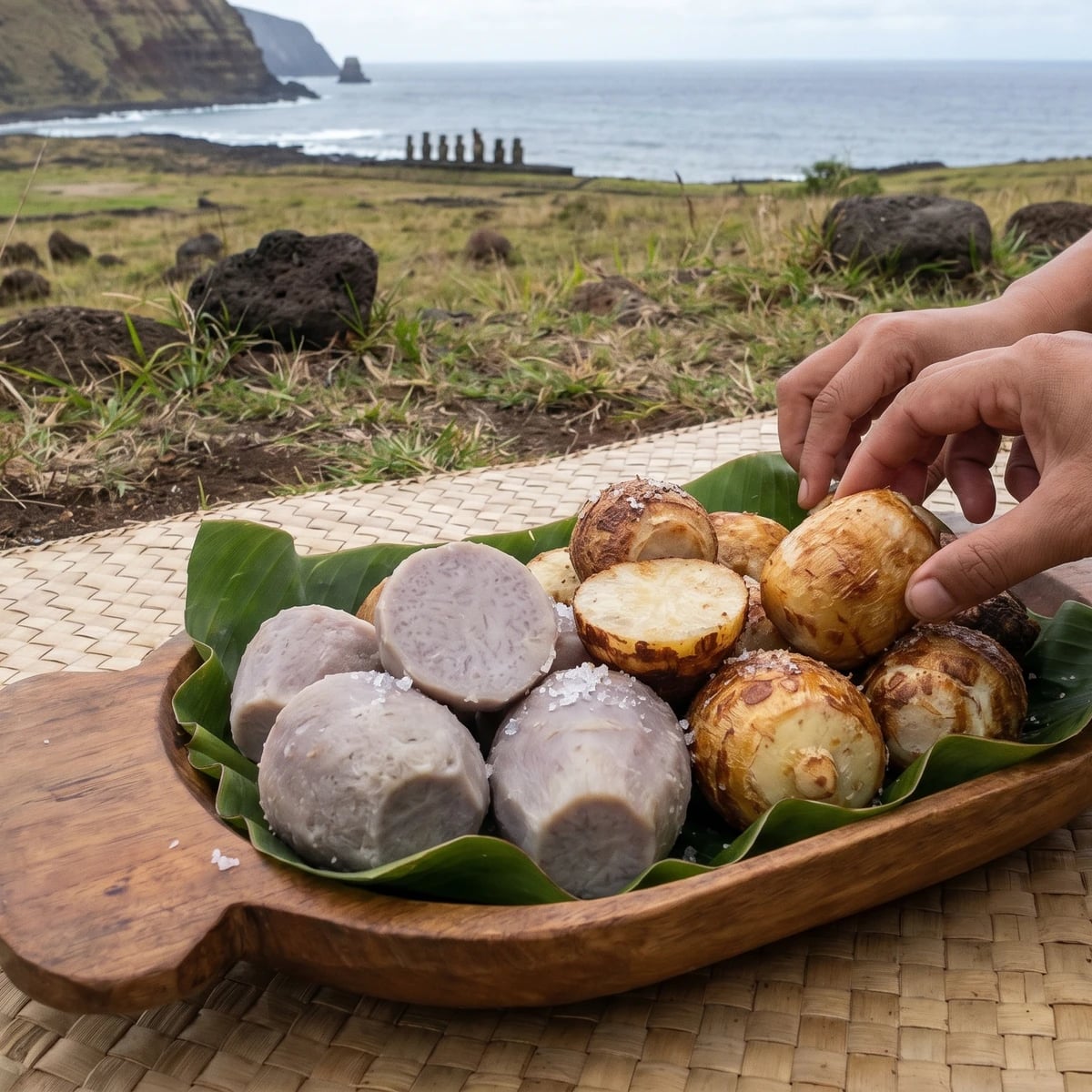
Taro Rapa Nui (Rapa Nui Boiled and Roasted Taro)
Created by Chef Makoa
Rapa Nui's quiet taro, boiled whole or roasted after boiling until the edges crisp, served as the old canoe-crop starch beside fish, greens, or the food of the week.
At the far corner of the Triangle, Rapa Nui keeps the root in hard wind and volcanic ground. That island is not a garnish on somebody else's story. It has its own hand, its own old people, its own table, and this taro sits there quiet, the starch beside fish, greens, chicken, or whatever the day gives.
Back home in Hawaiʻi I was taught to meet kalo as Hāloa, our elder brother. On Rapa Nui the taro came by canoe too, one ocean, one canoe, one root, carried with kumara, banana, and the other foods that helped a people live on a small island far from any continent. The cousins know this same root in Sāmoa and Tonga as talo, in Tahiti and the Cooks as taro, in Aotearoa alongside kūmara and aruhe. Same family, different ground.
This preparation is plain on purpose. Boil the corms until the hard heart gives up, peel them warm, then eat them salted, or roast them after boiling so the outside takes a crisp edge. No need make it precious. Deep food is not fancy. It's land, people, food, and enough on the table for one more.
For the ceremonial parts of Rapa Nui food, the umu pae, the stone earth oven, and the gatherings that carry meaning deeper than a weeknight pot, I send you to Rapa Nui elders and cooks. They should tell their own story. I cook this open-handed, as a cousin at the edge of the table.
Ingredients
small taro corms
Quantity
2 pounds
scrubbed well
sea salt
Quantity
1 tablespoon
plus more for finishing
coconut oil or neutral oil
Quantity
2 tablespoons
for the roasted version
| Ingredient | Quantity |
|---|---|
| small taro cormsscrubbed well | 2 pounds |
| sea saltplus more for finishing | 1 tablespoon |
| coconut oil or neutral oilfor the roasted version | 2 tablespoons |
Where cooking meets culture.
Culinary guides, cultural storytelling, and the editorial depth that makes cooking meaningful.
Discover Culinary Explorer