
Chef Makoa
Popoi Mā (Marquesan Fermented Breadfruit Paste)
Marquesan popoi starts as mā, breadfruit kept sour in the old pit tradition, then pounded smooth with coconut cream until it sits soft, tangy, and ready for the whole table.
A cooking platform built around craft, culture, and the stories behind what we eat.
Created by
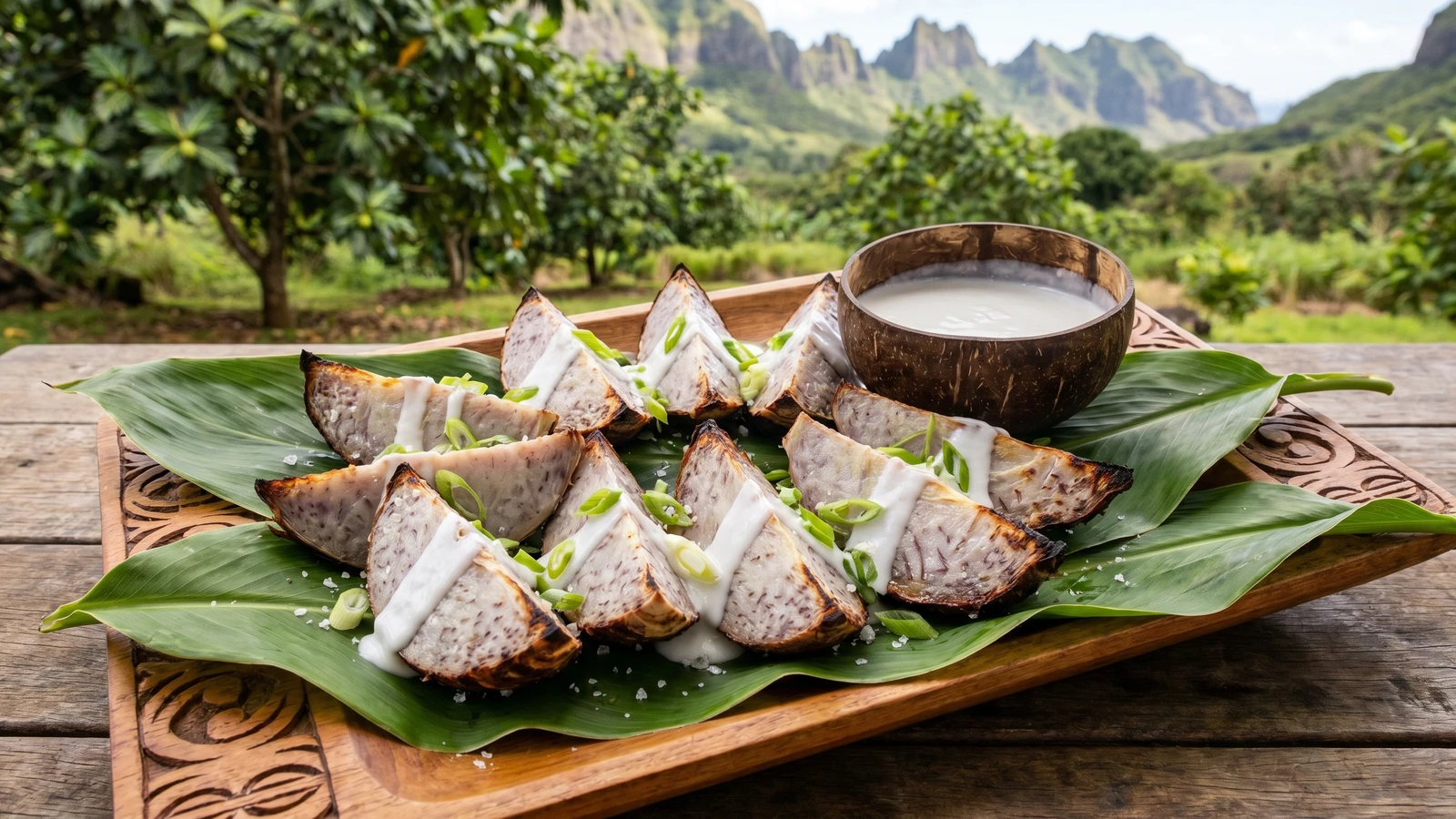
Whole taro roasted firm the Marquesan way, peeled warm, salted simply, and served beside fish with fresh miti haari, the coconut sauce that keeps the table generous.
The first thing I learned in Henua ʻEnana, the Marquesas, is that the valleys speak before the cook does. High ridges, dark-rock bays, breadfruit trees heavy over the houses, and under all that, taro still feeding the hand that knows when to pull it. This is Marquesan food, not Tahitian, not a blur called Polynesian. Taro ʻEnana belongs to the people of those rugged eastern islands, where mei, breadfruit, is the great starch heart, and taro stands beside it like the steady cousin who never needs to make noise.
Back home in Hawaiʻi I sit with kalo as Hāloa, our elder brother, and I don't pretend the Marquesan deep parts are mine to teach. I cook this open-handed. The old people of Henua ʻEnana should tell you the ceremony, the feast, the Festival des Marquises, and the umu kai, the Marquesan earth oven, in their own voices. What I can tell you is the kinship: one ocean, one canoe, one root. The same canoe crops that fed Hawaiʻi, Sāmoa, Tonga, the Cooks, Tahiti, Aotearoa, and Rapa Nui fed these valleys too, each island keeping its own hand.
This taro is not mashed fancy, not dressed up past recognition. It is roasted in embers when you have the fire, or boiled whole when you have the pot, then peeled and served firm beside grilled or roasted fish, wild pig, goat, or whatever your table actually has. Eat what you have. Salt it while warm, spoon over fresh miti haari, coconut sauce, and let the taro taste like itself. No blame the taro. If it is dry, give it sauce. If it is young and sweet, leave it mostly alone.
Henua ʻEnana, the Marquesas, sits in the far eastern reach of the Polynesian Triangle, settled by voyagers who carried canoe crops such as taro, breadfruit, coconut, banana, and sweet potato across open ocean. Unlike many Polynesian islands where taro sits at the center, the Marquesas are famous as a breadfruit heartland, with mei feeding whole valleys and taro serving as a firm everyday starch beside fish and meat. The umu kai, the Marquesan earth oven, belongs to the same deep oven family as the Hawaiian imu, Sāmoan and Tongan umu, Tahitian ahimaʻa, Cook Islands umukai, Māori hāngī, and Rapa Nui umu pae, but its ceremonial knowledge belongs to Marquesan elders.
Quantity
2 pounds
scrubbed well
Quantity
1 tablespoon
plus more to finish
Quantity
as needed
for boiling if using the pot method
Quantity
2 tablespoons
for the oven-roast method
Quantity
1 cup
for miti haari
Quantity
2 tablespoons
finely grated
Quantity
2 tablespoons
Quantity
1 small
finely grated
Quantity
1 small
seeded and finely chopped
Quantity
2 tablespoons
sliced
Quantity
to taste
| Ingredient | Quantity |
|---|---|
| small to medium taro cormsscrubbed well | 2 pounds |
| coarse sea saltplus more to finish | 1 tablespoon |
| waterfor boiling if using the pot method | as needed |
| neutral oil or coconut oilfor the oven-roast method | 2 tablespoons |
| fresh coconut cream or thick coconut milkfor miti haari | 1 cup |
| fresh coconut (optional)finely grated | 2 tablespoons |
| lime juice | 2 tablespoons |
| garlic clovefinely grated | 1 small |
| fresh chile (optional)seeded and finely chopped | 1 small |
| green onionsliced | 2 tablespoons |
| sea salt | to taste |
Scrub the taro corms well under running water, keeping the skin on. Trim only any dry or bruised ends. Taro can irritate the skin when raw, so use gloves if your hands are sensitive, and don't taste it raw. The cook is what makes it kind.
For the old fire feeling without an umu kai, heat the oven to 400F. Rub the whole taro with oil and salt, set it on a leaf-lined or parchment-lined pan, and roast until a skewer slides in with a little resistance, 55 to 70 minutes. You want firm and done, not collapsed. In Henua ʻEnana this starch stands beside the fish, so let it keep its body.
For the pot method, put the whole scrubbed taro in a large pot, cover with water by an inch, and add the tablespoon of coarse salt. Simmer gently, not hard, 35 to 50 minutes depending on size, until a knife enters cleanly but the corm still feels firm. Drain well and let the surface dry a few minutes.
While the taro cooks, stir together the fresh coconut cream, grated coconut if using, lime juice, garlic, chile if you want heat, green onion, and salt. Miti haari, coconut sauce, should taste bright, rich, and a little salty, enough to wake the plain taro without covering it. Squeeze the coconut fresh if you can. A can will do on a weeknight, no shame, but fresh has the fuller breath.
When the taro is cool enough to handle, pull or scrape away the skin. Cut the corms into thick wedges or rounds. The flesh should be pale, dense, and clean-smelling, with a quiet earthy sweetness. If one piece is still chalky in the center, put it back to cook. No blame the taro. It needed more time.
Lay the warm taro on banana or ti leaf, sprinkle with a little sea salt, and spoon some miti haari over the top. Serve the rest of the sauce in a coconut shell or wooden bowl. This belongs beside fish, roasted pork, wild goat, or a simple pot of greens. Deep food is not fancy. It is enough.
1 serving (about 240g)
Culinary guides, cultural storytelling, and the editorial depth that makes cooking meaningful.
Discover Culinary ExplorerChef Makoa
Marquesan popoi starts as mā, breadfruit kept sour in the old pit tradition, then pounded smooth with coconut cream until it sits soft, tangy, and ready for the whole table.
Chef Makoa
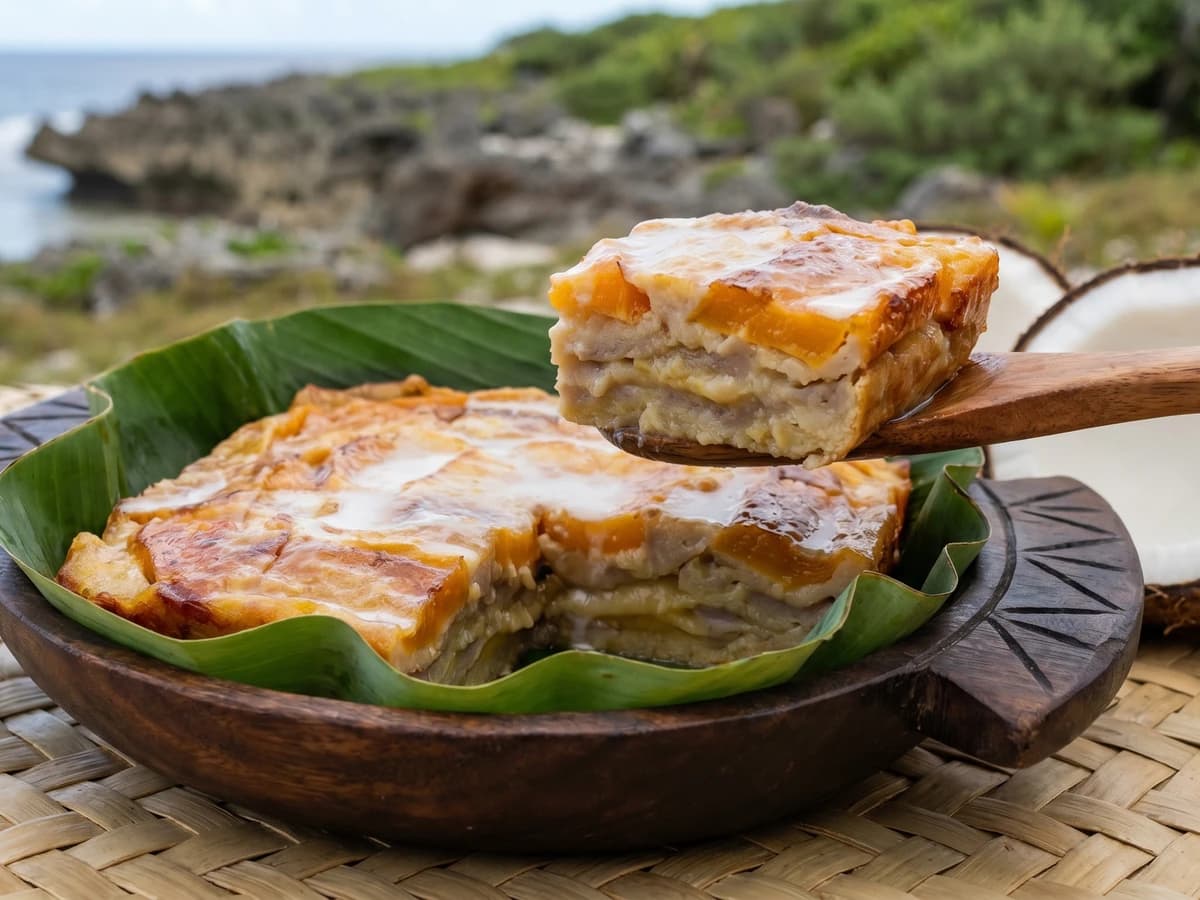
Niue's takihi layers the elder taro with ripe pawpaw and coconut cream, then bakes it slow until the starch softens, the fruit melts, and the whole pan turns glossy and gentle.
Chef Makoa
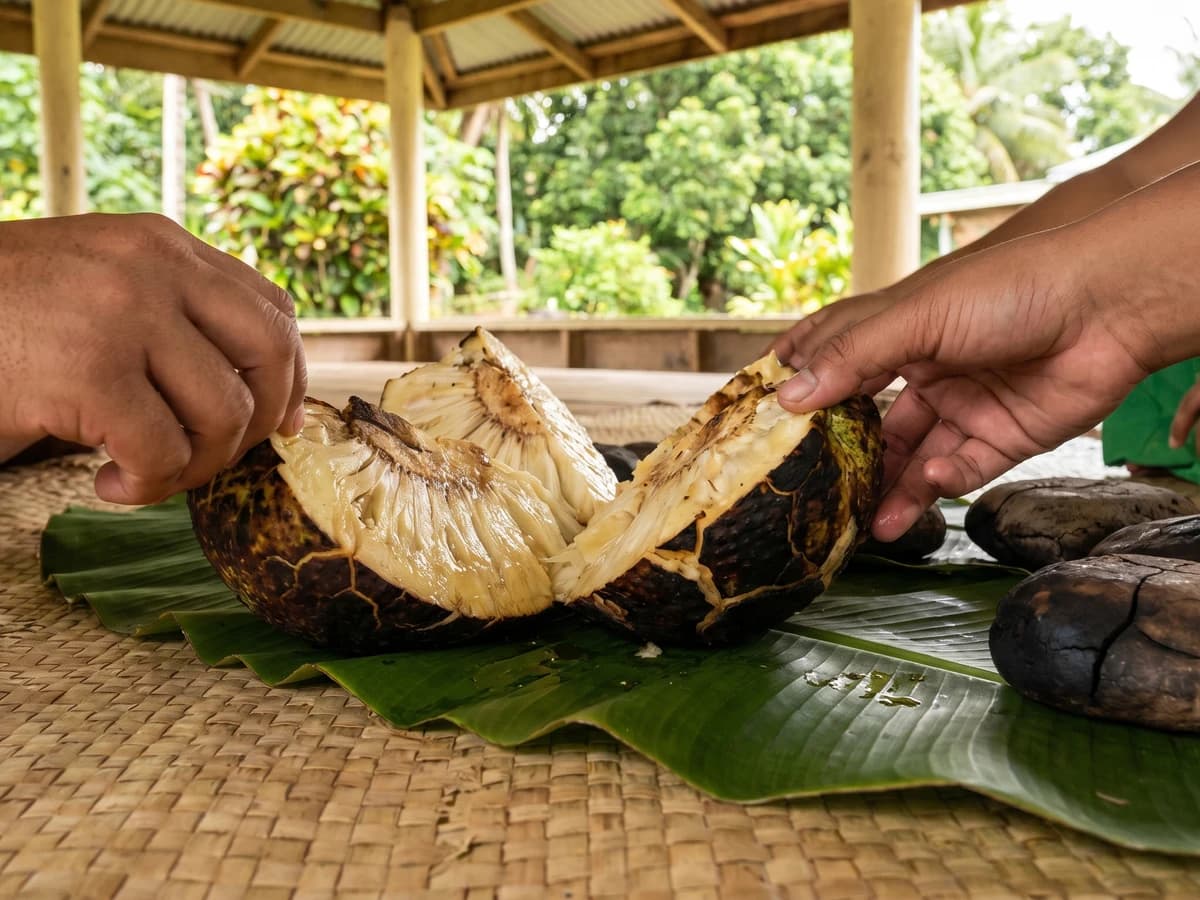
Whole Sāmoan ʻulu cooked in the umu until the skin chars black and the flesh goes golden and soft. One ocean, one canoe, one root, brought home to the table.
Chef Juliette
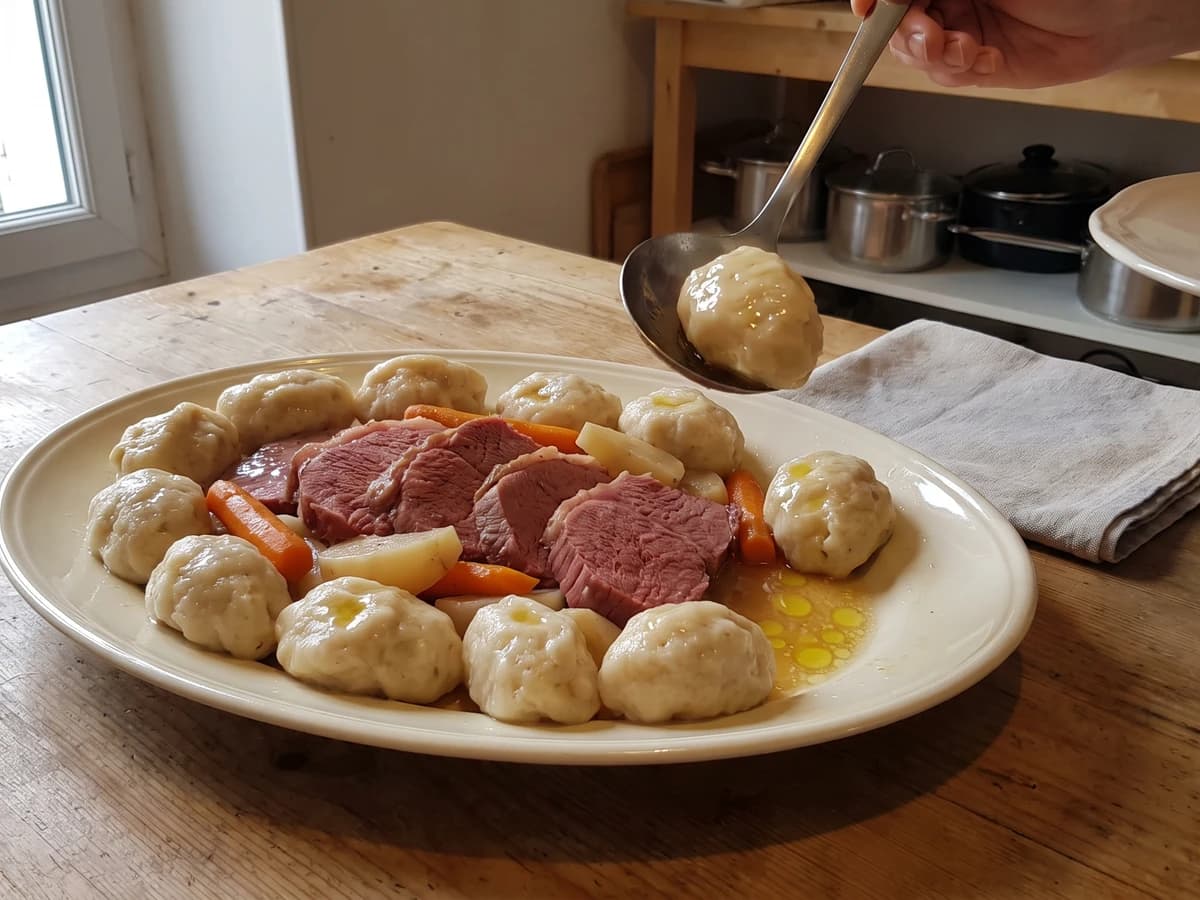
Boulettes au suif, poached beside salt beef, turn equal weights of flour and finely chopped suet into tender, rich dumplings. Keep the beef liquor at a bare tremble and the old garnish works beautifully at home.