Chef Jeong-sun
Amjuk (Dried-Grain Weaning Porridge)
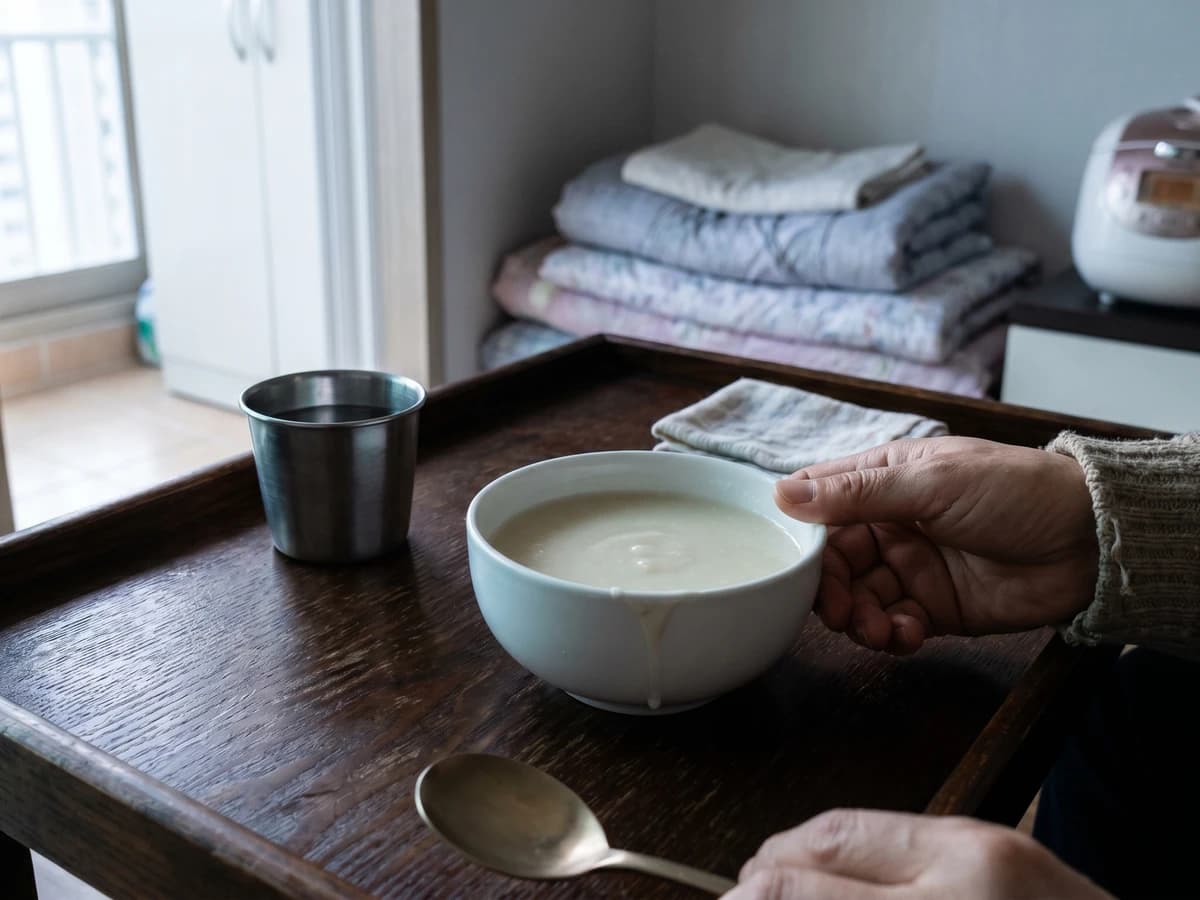
Powdered rice or dried baekseolgi cooked thin in cloudy rice water, an old Korean first-spoon porridge that asks for patience at the sieve and gentleness at the stove.
A cooking platform built around craft, culture, and the stories behind what we eat.
Created by
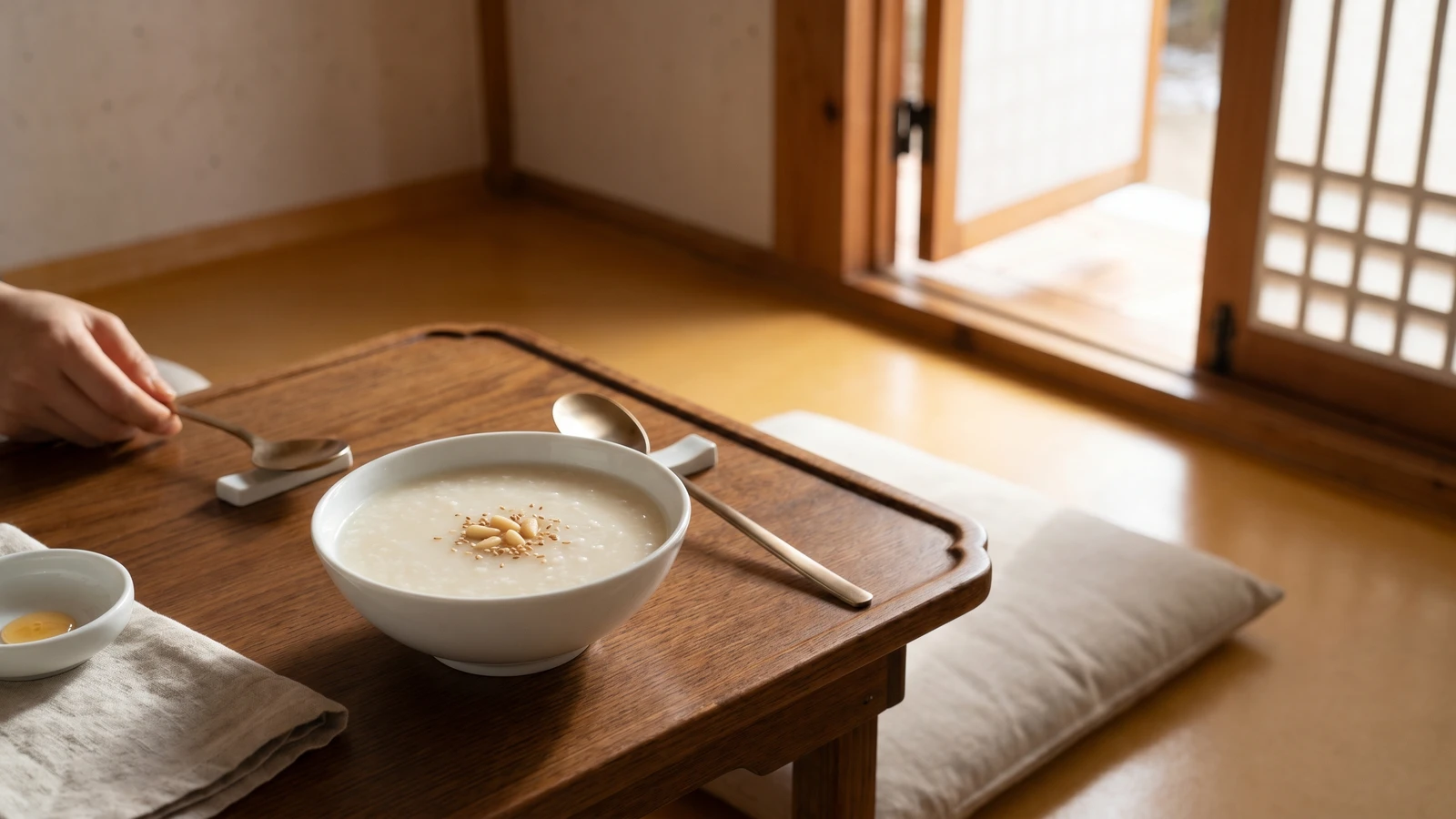
A quiet palace morning porridge of coarsely ground rice and milk, cooked slowly until satin-smooth, then seasoned with restraint so the grain and milk still taste like themselves.
Tarak-juk lives or dies at the moment the milk goes in. Add it too fast, over hard heat, and the pot punishes you with a grainy surface. Add it off the heat, in two or three pours, and the rice accepts it gently. That is the whole lesson.
This is not the porridge most Korean homes ate every week. Milk was once too precious for that. Tarak-juk belonged to the court and to the sickbed, a soft morning food for a body that needed care. Still, the technique belongs in any home kitchen now: soak the rice, grind it coarse, stir patiently, and keep the seasoning small. Sugar should not turn this into dessert. Salt should not announce itself. Let the rice and milk speak clearly.
Notebook 41 says 90 grams of rice to 3 cups liquid makes the texture I want: spoonable, not drinkable, with small grains still felt under the tongue. 손맛 is real. I still measure it, so it can be handed on. Tonight this dish asks for patience, a heavy pot, and a spoon that keeps moving before the bottom catches.
Tarak-juk is part of Joseon royal court cuisine, where milk was scarce and treated as a nourishing ingredient rather than an everyday staple. The word tarak is tied to dairy culture that entered Korea strongly through contact with the Mongol Yuan world in the Goryeo period, but in Joseon, cattle were work animals, so milk dishes stayed mostly in court and medicinal settings. Korean royal cuisine records preserve tarak-juk as a soft porridge served especially for morning meals or for weakened digestion.
Quantity
1/2 cup (about 90g)
rinsed and soaked
Quantity
2 cups
divided
Quantity
1 cup
room temperature
Quantity
1/4 teaspoon
Quantity
1 to 2 teaspoons
Quantity
1 teaspoon
lightly crushed
Quantity
1/4 teaspoon
| Ingredient | Quantity |
|---|---|
| short-grain white ricerinsed and soaked | 1/2 cup (about 90g) |
| waterdivided | 2 cups |
| whole milkroom temperature | 1 cup |
| fine sea salt | 1/4 teaspoon |
| honey or sugar (optional) | 1 to 2 teaspoons |
| pine nuts (optional)lightly crushed | 1 teaspoon |
| toasted sesame seeds (optional) | 1/4 teaspoon |
Rinse the rice in several changes of water until the water runs mostly clear, then cover it with fresh water and soak 2 hours. Soaking is not decoration here. It lets the rice grind evenly and cook into a smooth porridge without needing harsh heat.
Drain the rice well. Put it in a blender with 1/2 cup of the measured water and pulse until the grains are broken into coarse sand, not a fine paste. If you grind it too smooth, the porridge turns gluey. Tarak-juk should be soft, but it should still remember it was rice.
Scrape the ground rice into a small heavy pot and add the remaining 1 1/2 cups water. Set it over medium-low heat and stir constantly with a wooden spoon until the mixture loosens, thickens, and turns opaque, about 8 to 10 minutes. Keep scraping the bottom. Rice starch catches quietly before it burns loudly.
Lower the heat and cook another 5 to 7 minutes, stirring often, until the grains are tender and the porridge looks glossy rather than chalky. Taste a little grain. If it is still hard in the center, add 2 tablespoons water and cook 2 minutes more. Do not add the milk until the rice is already cooked, because milk tightens and scorches faster than water.
Turn off the heat. Stir in the room-temperature milk in three pours, about 1/3 cup at a time, mixing fully after each addition. This is the step the dish depends on. Milk added all at once to a hot, thick pot can split at the edges; staged stirring keeps the porridge smooth.
Return the pot to the lowest heat and warm it for 3 to 4 minutes, stirring slowly. Do not boil it. Season with 1/4 teaspoon salt and taste. Add 1 teaspoon honey or sugar only if you want a gentle sweetness, and stop at 2 teaspoons. The finish should be mild and clean, not a sweet pudding.
Ladle the porridge into warm bowls. Scatter a few crushed pine nuts or sesame seeds only if you are using them. Serve at once, while the texture is soft and flowing. If it thickens as it sits, loosen each bowl with 1 tablespoon warm milk and stir before serving.
1 serving (about 325g)
Culinary guides, cultural storytelling, and the editorial depth that makes cooking meaningful.
Discover Culinary ExplorerChef Jeong-sun
Powdered rice or dried baekseolgi cooked thin in cloudy rice water, an old Korean first-spoon porridge that asks for patience at the sieve and gentleness at the stove.

Chef Jeong-sun
A soft summer rice porridge of kneaded mallow greens, dried shrimp, and careful doenjang broth, plain enough for breakfast and exact enough to keep the grit and bitterness out.
Chef Jeong-sun
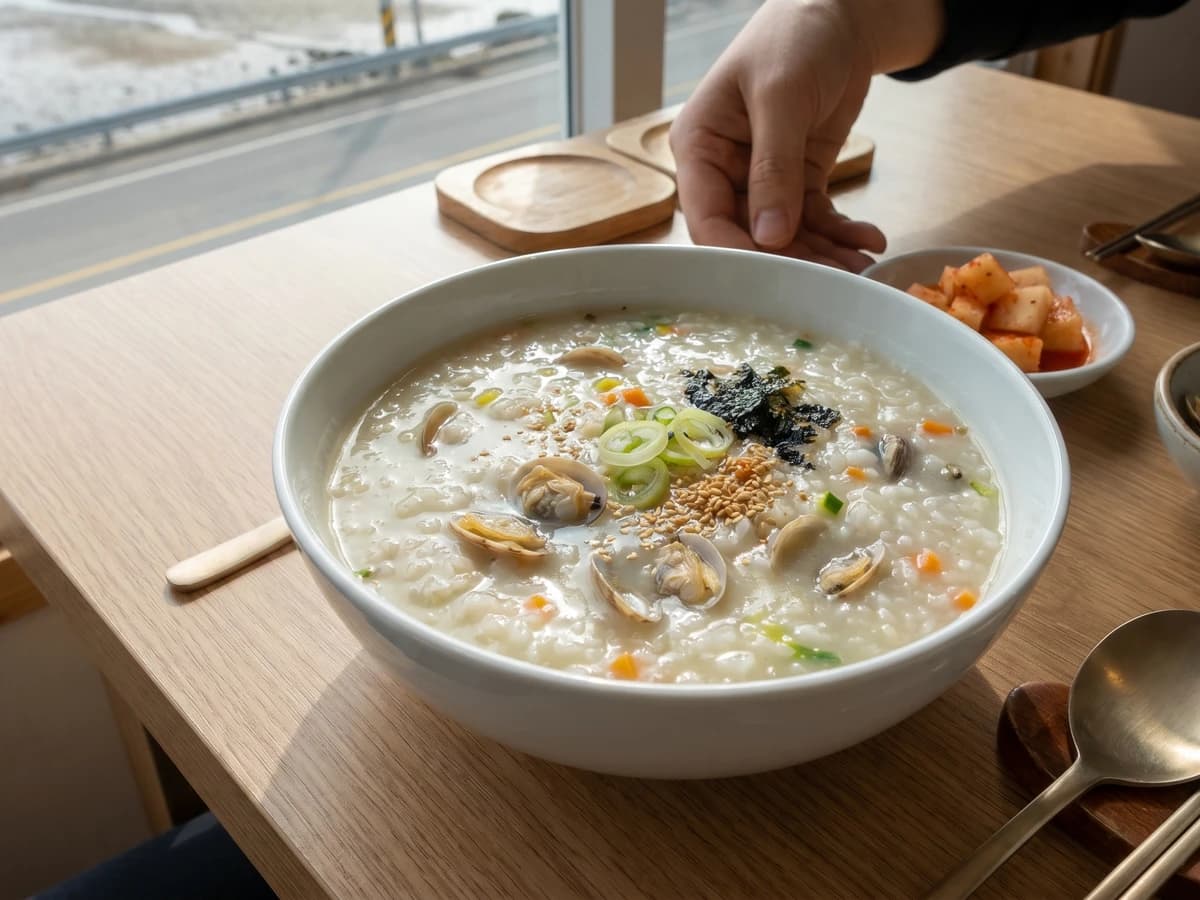
A west-coast clam porridge from Buan's tidal flats: live bajirak opened for their liquor, sesame-slicked rice toasted in the pot, and vegetables cut small enough to comfort without hiding the clams.

Chef Jeong-sun
An autumn juk of boiled chestnuts and soaked short-grain rice, simmered low until smooth and softly sweet, the kind of bowl you set before an elder, a child, or yourself.