
Chef Juliana
Açaí com Camarão do Pará
You think açaí belongs with banana and granola because that's the version that traveled. In Pará, thick unsweetened açaí sits beside shrimp, rice, and farinha. Anota aí: same fruit, different meal.
A cooking platform built around craft, culture, and the stories behind what we eat.
Created by
Your pan does the work here: damp cassava starch turns into a flexible crepe, tucumã brings the orange oil, and queijo coalho gives salt and chew. Breakfast, snack, dinner solved.
You think this is market-stall magic, one of those Manaus mornings that belongs to people who grew up with tucumã under their nose. Your quiet 'isso não é pra mim' is already talking. Let it talk, then ignore it. Cozinhar não é dom, é um aprendizado, and this one is mostly learning what the right bag feels like in your hand.
I didn't grow up in the Amazon, and I won't pretend this fruit is mine to explain from a throne. The people who carry tucumã, cassava, açaí, farinha, and that deep northern kitchen fluency are the teachers here. My job is to get you through the stove part without drama: buy hydrated goma de tapioca, not pearls, heat a dry pan, let the damp starch fuse, and fold it while it still bends.
This isn't the whole pê-efe, rice and beans and meat or egg and something green, but it belongs to the same fight. Comida de verdade doesn't have to be a long pot. A real starch, a real filling, a hot pan, five honest minutes. The tucumã gives sunset-orange oil and fruitiness, the queijo coalho gives salt and chew, and a gente resolves breakfast or dinner without a packet pretending to be flavor.
Anota aí: dry pan, medium heat, no stirring. If the tapioca cracks, the pan was too hot or the layer too thin. If it tastes sandy, the goma was wrong or old. Fix the method, don't accuse yourself. That's how receitas que funcionam are built.
Tapioca, in the beiju family of cassava preparations, comes from Indigenous manioc knowledge that long predates Brazil; the dry-skillet crepe is one everyday form of that starch literacy. In Manaus, tucumã, the sunset-orange pulp of an Amazonian palm, became a breakfast signature in market stalls and in the X-Caboquinho, the famous bread with tucumã, queijo coalho, and often banana pacovã. This tapioca version keeps the same Manaus pairing in a cassava wrapper, a city habit sitting on older Amazonian food knowledge carried by Indigenous and ribeirinho communities.
Quantity
1/2 cup
sifted if lumpy
Quantity
1 pinch
Quantity
1/2 cup, about 60g
thinly sliced
Quantity
1/3 cup, about 50g
fresh scraped or thawed frozen, cut into thin strips
Quantity
1 teaspoon
| Ingredient | Quantity |
|---|---|
| hydrated tapioca starch (goma de tapioca pronta)sifted if lumpy | 1/2 cup |
| fine salt (optional) | 1 pinch |
| queijo coalhothinly sliced | 1/2 cup, about 60g |
| tucumã pulpfresh scraped or thawed frozen, cut into thin strips | 1/3 cup, about 50g |
| water (optional) | 1 teaspoon |
Put the goma in a bowl and rub it between your fingers. It should feel like damp beach sand: loose, cool, and able to clump when squeezed, then crumble again. Sift out hard lumps. If it falls like dry flour, sprinkle in 1 teaspoon water and rub again. This matters because the crepe is not held together by egg or wheat flour; the moisture in the cassava starch is what fuses the grains in the pan.
Set a 20 cm nonstick skillet over medium heat. Lay the queijo coalho slices in the dry pan and cook until golden freckles appear and the edges soften, 1 to 2 minutes per side. Pull the cheese to a plate. You want color because color gives flavor; if the pan is too fierce, the outside scorches before the middle warms.
Add the tucumã to the same pan for 20 to 30 seconds, stirring just until it turns glossy and smells fruity and nutty. It should look orange and oily, not dry. You're waking the fruit, not frying it; too much heat makes the pulp tough and the oil sit heavy.
Wipe out any cheese bits and keep the pan at medium-low. Sprinkle the goma evenly through a sieve into the dry pan, filling holes with little pinches until you have a round about 20 cm wide. Do not add oil. Cook until the surface changes from loose grains to one matte sheet and the edges lift, 45 to 60 seconds. The dry pan lets the damp starch bind; oil makes it slide around and cook in patches.
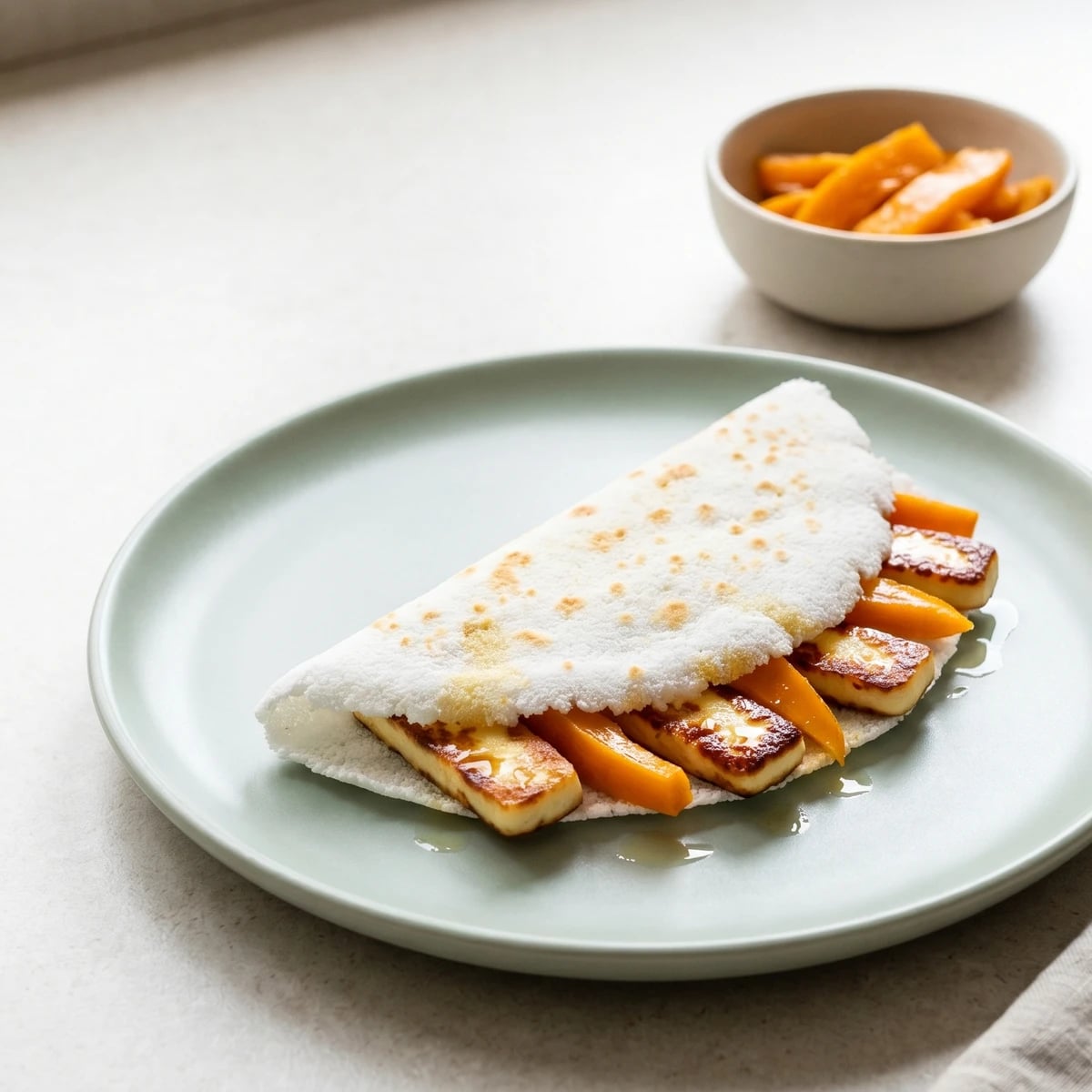
Loosen the tapioca with a thin spatula. If the top still looks dusty, turn it for 10 seconds, then turn it back. Lay the browned queijo coalho and glossy tucumã over one half, fold the other half over, and press gently for 10 seconds. The fold should bend without cracking and the filling should peek out shiny; leave it too long and tapioca turns stiff because cassava starch firms as it cools.
Slide it onto a plate and eat right away. Tapioca is a now food: flexible for a few minutes, then leathery if you abandon it. For a fuller night plate, put something green beside it and a bowl of feijão if you have one. Rice and beans, a real filling, something green, that's Brazilian arithmetic, not a slogan.
1 serving (about 160g)
Culinary guides, cultural storytelling, and the editorial depth that makes cooking meaningful.
Discover Culinary Explorer
Chef Juliana
You think açaí belongs with banana and granola because that's the version that traveled. In Pará, thick unsweetened açaí sits beside shrimp, rice, and farinha. Anota aí: same fruit, different meal.

Chef Juliana
You don't need a blender trick or a sweet shop bowl. Thick unsweetened açaí, crunchy farinha de tapioca, and the discipline to read the label solve this Belém spoon plate.

Chef Juliana
You think savory açaí is not for you. I understand. Then you taste the cold, dark bowl beside hot fried fish, rice, greens, and farinha, and dinner gets very quiet.

Chef Juliana
You don't need a shop to make a thick açaí bowl. You need real frozen pulp, a ripe banana, and the discipline to stop blending before it becomes juice.