
Chef Takumi
Aji Fry (アジフライ, panko-fried horse mackerel)
Aji fry is weeknight fish with no mystery: fresh horse mackerel opened cleanly, breaded lightly, and fried until the panko crackles while the flesh stays sweet.
A cooking platform built around craft, culture, and the stories behind what we eat.

Created by
Tanindon is the quiet cousin of oyakodon: thin beef, sweet onion, clear dashi, and egg poured in two stages so the bowl finishes tender, glossy, and never heavy.
Tanindon begins with a joke in plain sight. Oyakodon is parent and child, chicken and egg. Replace the chicken with beef and the bowl becomes tanin, strangers, though they behave very well once dashi has introduced them. This is weeknight washoku at its plainest: rice, a little broth, sliced beef, onion, and egg.
The one detail that decides it is the egg. Don't beat it smooth. Leave streaks of yolk and white, then pour it in twice: the first pour binds the beef and onion, the second stays soft on top. Hard boiling makes the beef tighten and the egg curdle into a dry mat, which sounds like punishment and eats like it too. Keep the simmer gentle.
Use thin beef with a little fat, sliced across the grain, and let the onion soften before the beef goes in. The onion sweetens the broth, the beef cooks quickly, and the dashi keeps the bowl clean instead of heavy. If spring new onions are at their shun, use them; otherwise a good yellow onion is no apology. Honmono is often like this, less ceremony than attention.
Tanindon belongs to the donburi dishes that spread after the Meiji era made beef eating newly acceptable, especially after Emperor Meiji ate meat in 1872 as part of the government's turn toward Western habits. Its name answers oyakodon, the parent-and-child chicken-and-egg bowl: beef or pork with egg are tanin, unrelated people, so the bowl is stranger donburi. In Kansai, especially Osaka, tanindon usually means beef and egg, while some eastern shops use the older Meiji-period name kaikadon for a similar beef, onion, and egg bowl.
Quantity
2 cups
for dashi
Quantity
1 piece (about 5g)
Quantity
12g
Quantity
2 cups
Quantity
180g
sukiyaki or shabu-shabu cut
Quantity
1/2 medium or 1 small
sliced with the grain
Quantity
3
Quantity
2 tablespoons
Quantity
2 tablespoons
Quantity
1 tablespoon
Quantity
1 to 2 teaspoons
Quantity
small handful or 1 scallion
cut into 1-inch lengths or thinly sliced
Quantity
to serve
| Ingredient | Quantity |
|---|---|
| cold waterfor dashi | 2 cups |
| konbu (dried kelp) | 1 piece (about 5g) |
| katsuobushi (bonito flakes) | 12g |
| hot cooked short-grain Japanese rice | 2 cups |
| thinly sliced beefsukiyaki or shabu-shabu cut | 180g |
| yellow onion or new onionsliced with the grain | 1/2 medium or 1 small |
| large eggs | 3 |
| soy sauce | 2 tablespoons |
| mirin | 2 tablespoons |
| sake | 1 tablespoon |
| sugar | 1 to 2 teaspoons |
| mitsuba or scallion (optional)cut into 1-inch lengths or thinly sliced | small handful or 1 scallion |
| shichimi tōgarashi (optional) | to serve |
Wipe the konbu with a damp cloth, but don't wash it. Put it in the cold water and warm it slowly over low heat, about 10 minutes, until the water trembles and small bubbles climb the sides of the pot. Lift the konbu out before the water boils. That pale bloom on the kelp is flavor, not dirt, and boiling pulls bitterness and a slick texture into a stock that should stay clean.
Bring the water to a gentle boil, add the katsuobushi all at once, then take the pot off the heat. Leave it alone for 2 to 3 minutes, until the flakes sink. Strain through a fine-mesh strainer lined with cloth and let it drip naturally. Don't squeeze, because squeezing presses strong, oily flavors into the clear stock you just made.
Have the rice cooked and hot before you start the topping, because the egg waits for no one. Cut the beef into bite-size lengths if the slices are long. If you're slicing your own beef, chill it until firm and cut across the grain as thinly as you can. Thin slices cook before the egg tightens; thick ones stay chewy and make the bowl work harder than it should.
Beat the eggs lightly with chopsticks, only 6 or 8 strokes, leaving clear streaks of white and gold. In a measuring cup, combine 3/4 cup of the fresh dashi with the soy sauce, mirin, sake, and sugar. Taste it. It should be a little stronger than you'd want to sip, because the rice and egg will soften it.
Put the sliced onion and seasoned dashi in a small donburi pan or an 8-inch skillet. Bring it to a gentle simmer and cook for 3 to 4 minutes, until the onion turns translucent at the edges but still holds its shape. The onion needs a head start. Beef cooks quickly, egg faster still.
Spread the beef over the onion in a loose single layer, separating any folded pieces with chopsticks. Simmer gently for 1 to 2 minutes, turning once, until the surface loses its raw red; it will finish under the egg. Skim any gray foam if it gathers. A hard boil toughens the beef and muddies the broth, and this bowl has no reason to shout.
Pour about two-thirds of the beaten egg around the pan in a thin stream, covering the beef and onion rather than dumping it in the center. Cover and cook for 30 to 45 seconds, until the edge is set but the middle is still wet. Pour in the remaining egg, scatter the mitsuba or scallion over the top, cover again for 10 to 20 seconds, then take the pan off the heat while the surface still looks glossy. Residual heat finishes the egg. If your table needs fully set egg, cook it a little longer and say so plainly.
Divide the hot rice between two warmed donburi bowls. Slide the beef, onion, and egg over the rice with enough broth to season the grains, not drown them. Finish with shichimi tōgarashi if you like. Serve at once, while the egg is soft and the rice is still carrying the broth down into itself.
1 serving (about 520g)
Culinary guides, cultural storytelling, and the editorial depth that makes cooking meaningful.
Discover Culinary ExplorerChef Takumi
Aji fry is weeknight fish with no mystery: fresh horse mackerel opened cleanly, breaded lightly, and fried until the panko crackles while the flesh stays sweet.
Chef Takumi
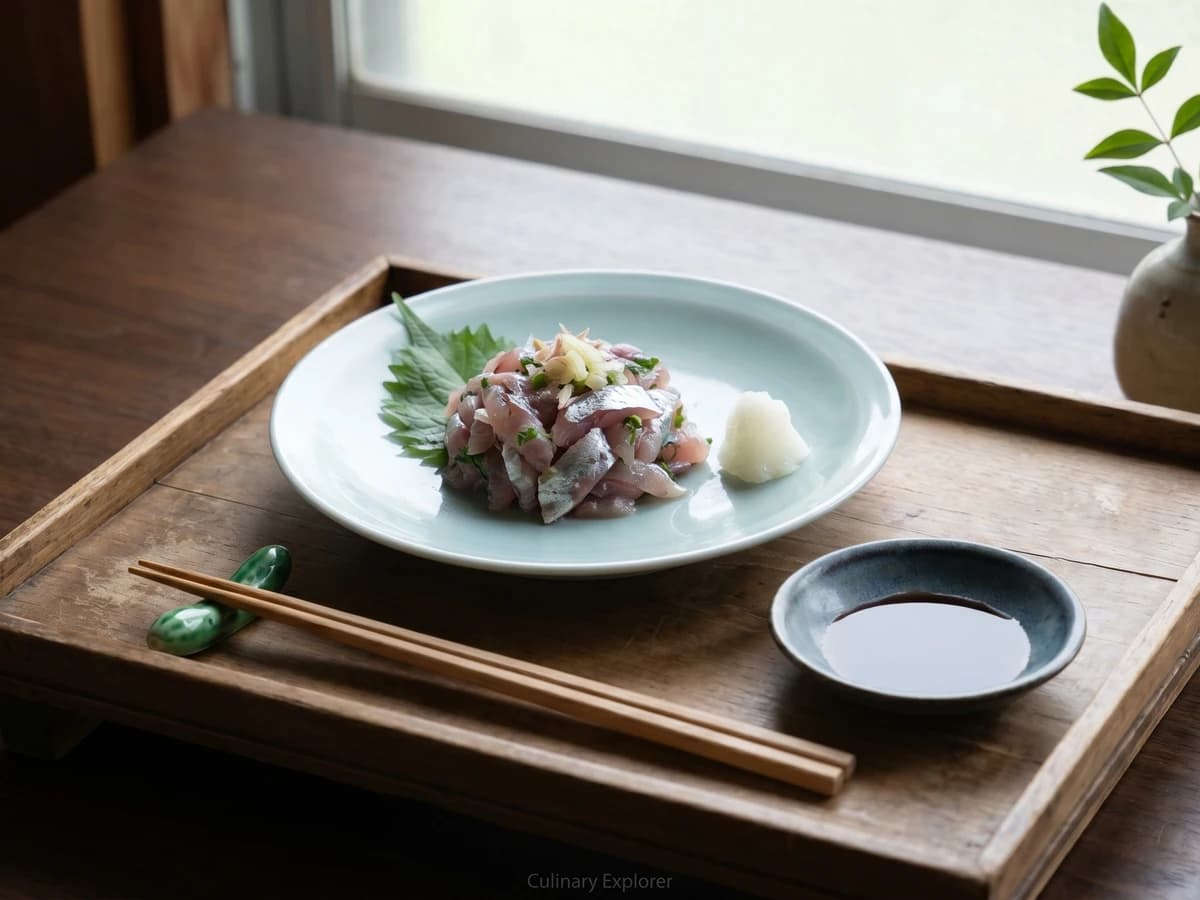
Summer horse mackerel, chopped just enough to catch ginger and scallion, becomes a cool, clean main dish with rice. The secret is fresh fish and a knife that does not bruise it.
Chef Takumi
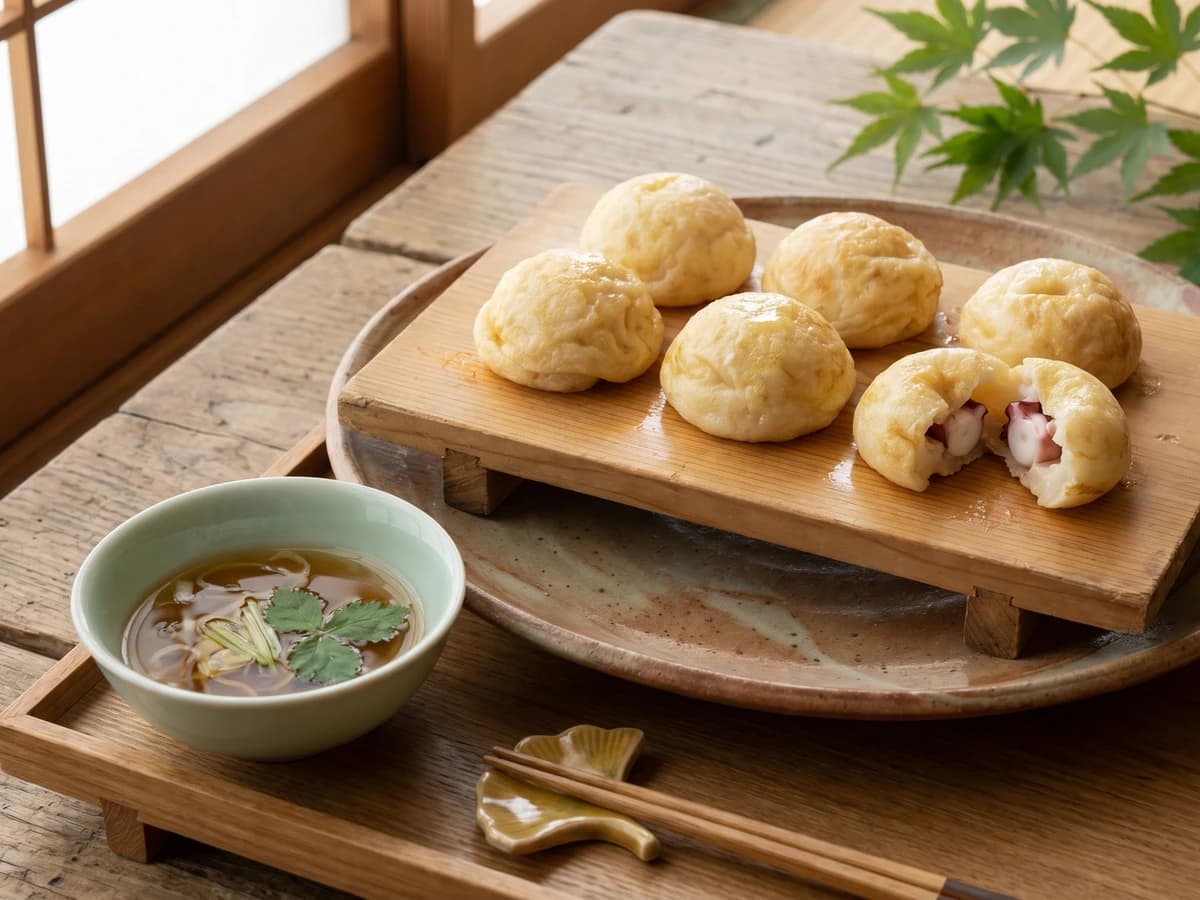
Akashi-yaki is not sauced takoyaki. It is egg-rich batter, tender octopus, and clear dashi, cooked pale and soft so each ball can be dipped like a small custard dumpling.

Chef Takumi
A whole anago looks like a test of nerve. It is mostly good sourcing, a dry skin, cold batter, and oil hot enough to leave the eel sweet under its lace.