
Chef Jeong-sun
Baechu-geotjeori (Fresh Napa Cabbage Salad)
Fresh napa cabbage tossed with chili and fermented anchovy sauce, made for the hour when winter kimchi has gone too sour and the table needs something bright.
A cooking platform built around craft, culture, and the stories behind what we eat.
Created by
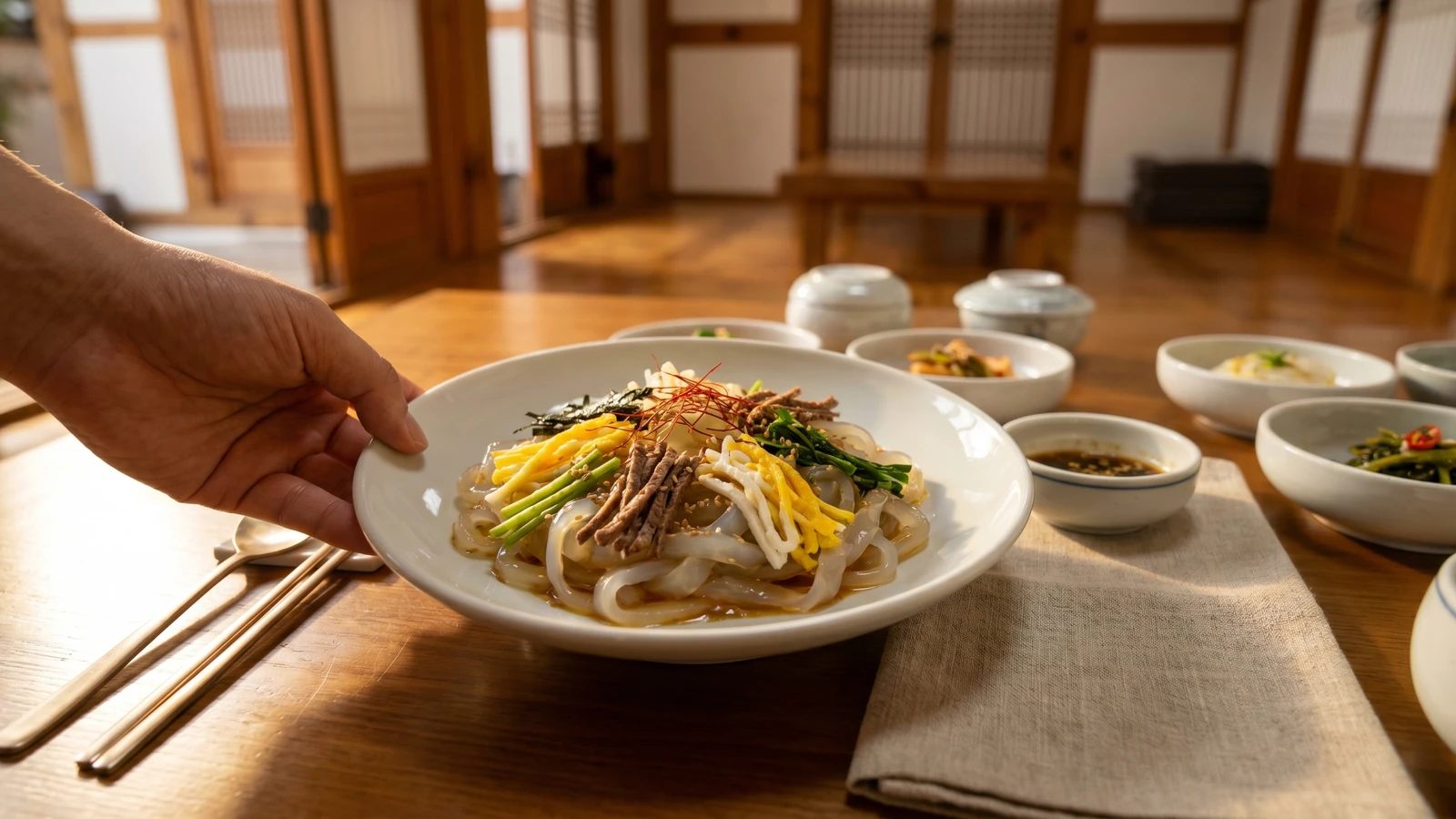
A composed salad of clear mung bean jelly, seasoned beef, dropwort, egg threads, and gim, named for political harmony and built on clean knife work.
Tangpyeongchae lives or dies by the cut. The mung bean jelly must be long and even, the beef thin, the egg jidan fine, the dropwort bright and not tired. If you make the strips carelessly, the bowl loses its quiet order before anyone tastes it.
This is a special-occasion dish, but not a loud one. Cheongpomuk (mung bean jelly) is almost transparent after blanching, slippery under the chopsticks, and it asks the stronger ingredients to behave themselves. Beef gives savor, minari (Korean dropwort) gives a green edge, gim (roasted seaweed) gives the sea, and the egg brings the yellow and white that make the plate feel complete. Season each part before it meets the others. Crowd everything under one dressing and you get confusion, which is funny for a dish named for harmony, but still wrong.
Notebook 31 says to blanch the jelly 30 seconds, no more. That small step matters because chilled muk turns cloudy and stiff; hot water wakes it back to clarity and softness. 손맛 is real; I measure it anyway. Taste the dressing before tossing, then taste again after the jelly has taken some of it in. This dish asks for patience tonight, mostly with your knife and your restraint.
Tangpyeongchae is associated with King Yeongjo of Joseon, who ruled from 1724 to 1776 and promoted tangpyeongchaek, a policy meant to balance political factions in court appointments. The dish's mixed colors are commonly explained as a culinary image of that harmony, with pale cheongpomuk, green dropwort, dark beef and gim, and yellow-white egg sharing one plate. It belongs to the court and banquet side of Korean cooking, but its ingredients are ordinary enough that careful home cooks have long carried it onto celebration tables.
Quantity
400g
cut into 1/4-inch wide strips
Quantity
80g
cut into very thin matchsticks
Quantity
1 teaspoon
Quantity
1/2 teaspoon
Quantity
1/2 teaspoon
Quantity
1 small clove
minced
Quantity
1 pinch
freshly ground
Quantity
60g
trimmed and cut into 2-inch lengths
Quantity
1/4 teaspoon
for blanching and seasoning minari
Quantity
2
separated
Quantity
1 pinch
Quantity
1 teaspoon
for cooking egg and beef
Quantity
1 sheet
cut or torn into thin strips
Quantity
1 tablespoon
Quantity
2 tablespoons
Quantity
1 tablespoon
Quantity
1 tablespoon
Quantity
1 teaspoon
Quantity
1 teaspoon maesil-cheong or 1/2 teaspoon honey
Quantity
1 tablespoon
Quantity
1/2 teaspoon
finely minced
Quantity
1 teaspoon
finely chopped
Quantity
1/2
seeded and cut into fine threads
| Ingredient | Quantity |
|---|---|
| cheongpomuk (mung bean jelly)cut into 1/4-inch wide strips | 400g |
| lean beef, preferably sirloincut into very thin matchsticks | 80g |
| soy sauce, for beef | 1 teaspoon |
| toasted sesame oil, for beef | 1/2 teaspoon |
| sugar, for beef | 1/2 teaspoon |
| garlic, for beefminced | 1 small clove |
| black pepperfreshly ground | 1 pinch |
| minari (Korean dropwort)trimmed and cut into 2-inch lengths | 60g |
| saltfor blanching and seasoning minari | 1/4 teaspoon |
| large eggsseparated | 2 |
| salt, for eggs | 1 pinch |
| neutral oilfor cooking egg and beef | 1 teaspoon |
| roasted gim (seaweed)cut or torn into thin strips | 1 sheet |
| toasted sesame seeds | 1 tablespoon |
| soy sauce | 2 tablespoons |
| rice vinegar | 1 tablespoon |
| toasted sesame oil | 1 tablespoon |
| sugar | 1 teaspoon |
| maesil-cheong (Korean green plum syrup) or honey (optional) | 1 teaspoon maesil-cheong or 1/2 teaspoon honey |
| water | 1 tablespoon |
| garlicfinely minced | 1/2 teaspoon |
| scallionfinely chopped | 1 teaspoon |
| red chili (optional)seeded and cut into fine threads | 1/2 |
Cut the cheongpomuk into strips about 1/4 inch wide and 2 1/2 to 3 inches long. Keep them as even as you can. This jelly is slippery, so use a sharp knife and a steady board; rough pieces break when tossed and make the salad look tired before it reaches the table.
Mix the beef with 1 teaspoon soy sauce, 1/2 teaspoon sesame oil, 1/2 teaspoon sugar, the minced garlic, and black pepper. Let it sit 10 minutes while you prepare the rest. The amount is small because the beef is not the main dish; it is one voice in the bowl.
Bring a pot of water to a gentle boil. Add the mung bean jelly strips and blanch 30 seconds, just until they turn clearer and more supple. Lift them out carefully with a spider or wide slotted spoon and drain well. Do not boil them hard, or the edges fray and the strips start to break.
In the same water, add a pinch of salt and blanch the minari for 10 to 15 seconds, only until the stems turn bright and bend. Rinse briefly in cold water, squeeze gently, and season in its own bowl with a tiny pinch of salt and a few drops of sesame oil if you like. Minari should stay clean and green, not taste like the dressing before the salad is even mixed.
Beat the yolks with a pinch of salt in one bowl and the whites with a pinch of salt in another. Lightly oil a nonstick skillet, wipe it almost dry, and cook each into a thin sheet over low heat. Do not brown them. Cool, then slice into fine threads. Yellow and white are separate colors here, so give them their own pans if you can, or cook the white first.
Heat the same skillet over medium-high heat with a few drops of oil. Stir-fry the seasoned beef for 1 to 2 minutes, just until cooked through and no longer wet. Spread it on a plate to cool. If it goes into the salad hot, it wilts the minari and softens the jelly.
Stir together 2 tablespoons soy sauce, rice vinegar, 1 tablespoon sesame oil, sugar, maesil-cheong if using, water, minced garlic, and chopped scallion. Taste it. It should be savory first, lightly tart, and only faintly sweet. Tangpyeongchae is not a sugar salad.
Put the drained jelly in a wide bowl and toss gently with about two-thirds of the dressing. Add the beef, minari, egg threads, gim, sesame seeds, and red chili if using. Toss with your fingers or wide chopsticks, lifting rather than stirring, so the strips do not break. Taste and add the remaining dressing only if the jelly still tastes flat. Serve soon, before the gim softens completely.
1 serving (about 180g)
Culinary guides, cultural storytelling, and the editorial depth that makes cooking meaningful.
Discover Culinary ExplorerChef Jeong-sun
Fresh napa cabbage tossed with chili and fermented anchovy sauce, made for the hour when winter kimchi has gone too sour and the table needs something bright.

Chef Jeong-sun
The first flat cabbage of spring, torn by hand and tossed at the last minute with chili, fish sauce, garlic, and sesame so each leaf stays sweet and alive.

Chef Jeong-sun
A fresh garlic chive muchim tossed at the last minute, sharp with soy and vinegar, lightly red with gochugaru, and made to stand beside bossam or grilled pork.

Chef Jeong-sun
A mountain-root salad with snap and bite: deodeok gently pounded, never shredded, then dressed in chili vinegar so its resinous sweetness still speaks clearly.