
Chef Takumi
Aji Fry (アジフライ, panko-fried horse mackerel)
Aji fry is weeknight fish with no mystery: fresh horse mackerel opened cleanly, breaded lightly, and fried until the panko crackles while the flesh stays sweet.
A cooking platform built around craft, culture, and the stories behind what we eat.
Created by
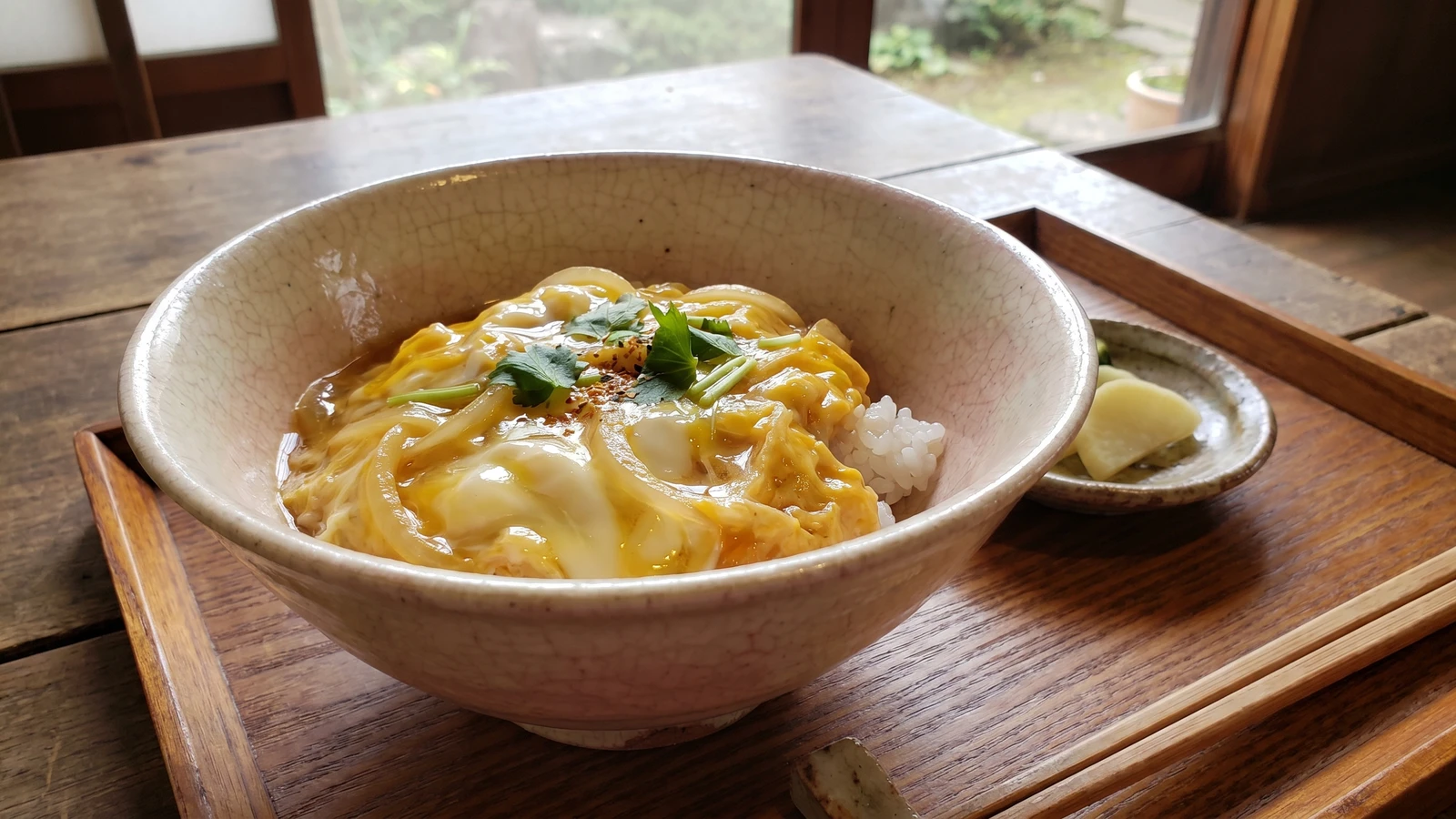
The first egg-bound bowl is only dashi, onion, egg, and rice. Keep the egg soft and slide it over hot rice before it sets too firmly.
Tamagodon is the plainest donburi, and that is why it teaches so well. No meat, no trick, no grand gesture. Just onion simmered in seasoned dashi, egg barely set, and rice waiting underneath to catch it all.
The one detail that decides the dish is the egg. Beat it lightly, pour it in unevenly, and stop cooking while the surface still looks soft. The egg will finish in the covered pan and on the hot rice. Cook it until it looks done in the pan and it will arrive at the bowl tired, which is a sad fate for something so inexpensive.
This is weeknight washoku by method, not menu: simmering, seasoning, rice, restraint. Use a clear dashi if you can. Konbu and katsuobushi give the bowl its quiet depth, and the soy and sugar only shape it. Nothing hidden. If you're cooking meatless, make the dashi from konbu and dried shiitake, the way temple kitchens do. That is honmono too.
Serve it in a deep donburi bowl, not piled high but settled gently over the rice. A little mitsuba or scallion on top gives green fragrance and a clean edge. Leave it room. Even a humble bowl deserves its breathing space.
Donburi rice bowls became especially common as urban quick meals in the late Edo and Meiji periods, when cooked rice could carry a simmered topping as a complete meal in one vessel. Egg-bound bowls such as oyakodon, katsudon, and tamagodon rely on the same method: a small pan of seasoned dashi, a topping, and beaten egg poured in at the end. Tamagodon is the most stripped-down member of that family, often treated as the starting point for learning the technique.
Quantity
2 donburi bowls (about 3 cups cooked)
Quantity
3/4 cup
Quantity
1 1/2 tablespoons
Quantity
1 tablespoon
Quantity
1 teaspoon
Quantity
1/2
thinly sliced
Quantity
4
lightly beaten
Quantity
2 tablespoons
chopped or thinly sliced
Quantity
a pinch
| Ingredient | Quantity |
|---|---|
| hot cooked Japanese short-grain rice | 2 donburi bowls (about 3 cups cooked) |
| dashi | 3/4 cup |
| soy sauce | 1 1/2 tablespoons |
| mirin | 1 tablespoon |
| sugar | 1 teaspoon |
| small onionthinly sliced | 1/2 |
| large eggslightly beaten | 4 |
| mitsuba or scallionchopped or thinly sliced | 2 tablespoons |
| shichimi tōgarashi (optional) | a pinch |
Have the rice hot and already in two donburi bowls before you cook the eggs. The topping takes only a few minutes, and hot rice finishes the soft egg gently from below. A cold bowl would steal that heat and flatten the whole dish.
In a small skillet or oyakodon pan, combine the dashi, soy sauce, mirin, and sugar. Stir just until the sugar dissolves, then taste. It should be a little stronger than soup, because the rice will soften the salt and sweetness.
Add the sliced onion and bring the liquid to a gentle simmer. Cook for 3 to 4 minutes, until the onion turns translucent at the edges but still has a little bite. This gives sweetness to the broth without letting the onion collapse into softness.
Beat the eggs lightly with chopsticks, leaving streaks of yolk and white. Pour half the egg around the pan in a thin stream, then cover and cook for about 30 seconds. Add the rest and cover again for another 20 to 40 seconds, stopping while the surface is still glossy and softly set.
Loosen the edge with a spatula and slide half the egg and onion over each bowl of rice, broth and all. Scatter mitsuba or scallion on top and add shichimi tōgarashi if you like. Eat it at once, while the egg is still soft and the rice is drinking the seasoned dashi.
1 serving (about 490g)
Culinary guides, cultural storytelling, and the editorial depth that makes cooking meaningful.
Discover Culinary ExplorerChef Takumi
Aji fry is weeknight fish with no mystery: fresh horse mackerel opened cleanly, breaded lightly, and fried until the panko crackles while the flesh stays sweet.
Chef Takumi
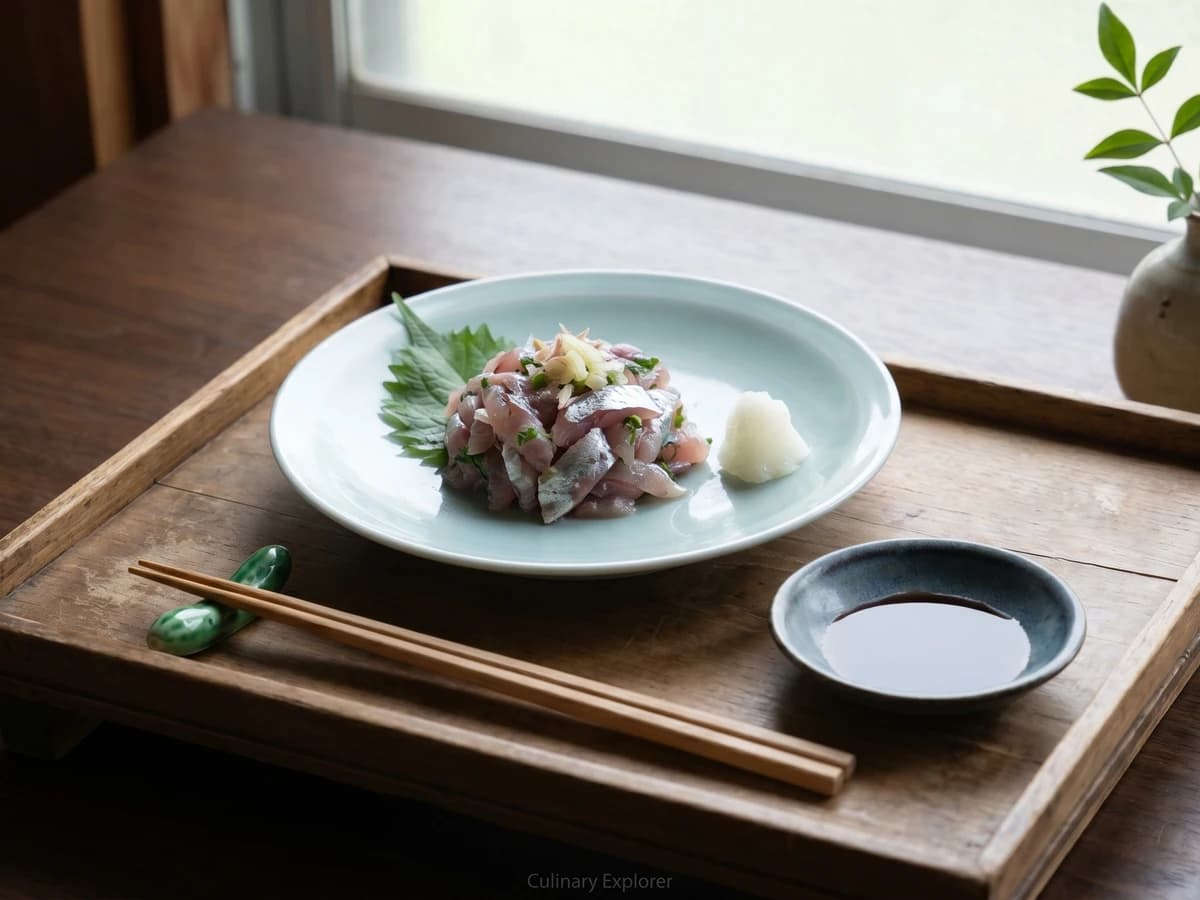
Summer horse mackerel, chopped just enough to catch ginger and scallion, becomes a cool, clean main dish with rice. The secret is fresh fish and a knife that does not bruise it.
Chef Takumi
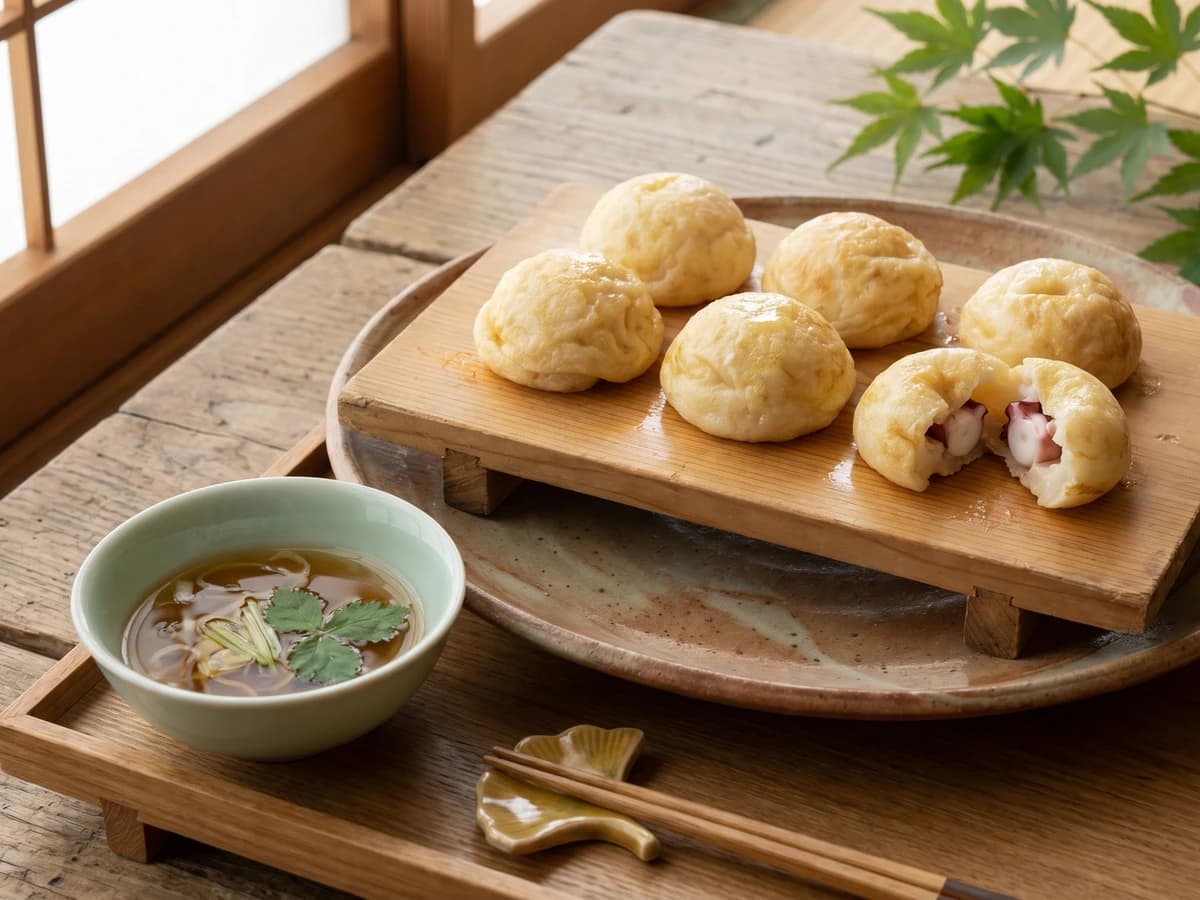
Akashi-yaki is not sauced takoyaki. It is egg-rich batter, tender octopus, and clear dashi, cooked pale and soft so each ball can be dipped like a small custard dumpling.

Chef Takumi
A whole anago looks like a test of nerve. It is mostly good sourcing, a dry skin, cold batter, and oil hot enough to leave the eel sweet under its lace.