
Chef Takumi
Ago Dashi (あごだし, grilled flying fish stock)
Ago dashi is quiet luxury: roasted flying fish, konbu, and patient water. Steep it slowly and you get a clear stock that tastes sweet, clean, and full without heaviness.
A cooking platform built around craft, culture, and the stories behind what we eat.
Created by
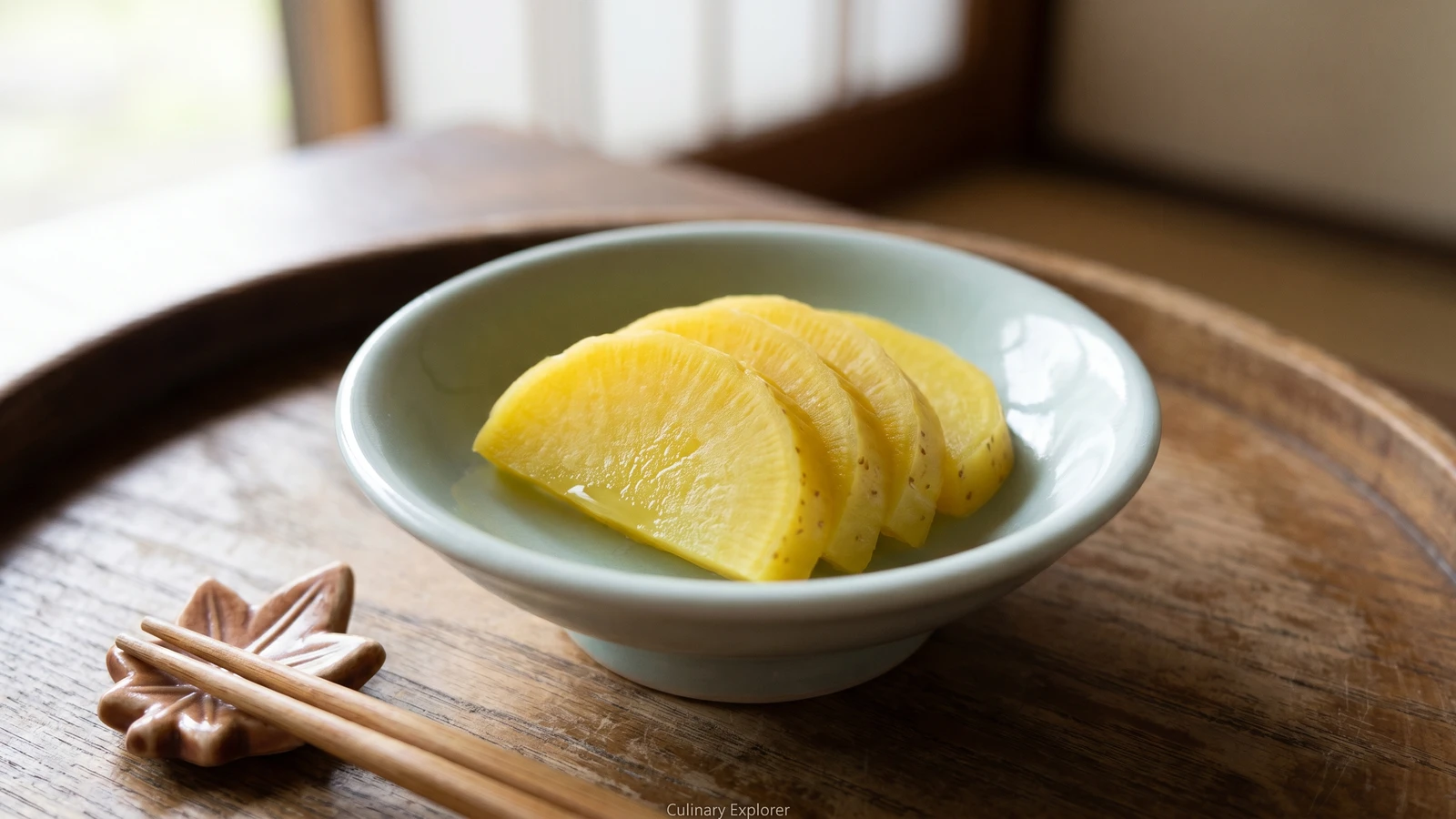
Takuan is winter daikon made patient: dried until it bends, buried in rice bran and salt, then sliced bright yellow beside rice, where one crisp bite clears the mouth.
Awhole daikon hanging in cold wind can make a cook think the recipe has wandered out of the kitchen and into farming. It hasn't. Takuan asks for patience, not cleverness: dry the root until it bends, pack it in rice bran and salt, then let time do its plain work.
The one detail that decides it is water. Fresh daikon is too wet to bury as it is; it would soften before it concentrated. Drying pulls out enough moisture that the salt can draw a clean brine from the root itself, and that brine protects the pickle while the rice bran gives it its nutty depth. This is honmono, the real thing, but it is not difficult. It is mostly a matter of waiting with your eyes open.
Make it when daikon is in shun, late autumn into winter, when the roots are heavy, sweet, and firm. The yellow should come from kuchinashi no mi, dried gardenia fruit, or from the quiet straw color of aging itself, not from a bottle's impatience. Slice it thin, serve only a few pieces beside rice or tea, and leave it room. Takuan is small on the plate because its work is sharp and complete.
Takuan-zuke is commonly linked in Edo-period lore to Takuan Sōhō (1573-1645), the Rinzai Zen monk whose name is written with the same characters, though dried daikon pickles were already part of winter preservation. A popular story says Tokugawa Iemitsu tasted the monk's rice-bran pickled daikon and gave it the name, a tidy tale treated as tradition rather than proven invention. Regional versions still differ: Akita's iburigakko smokes the daikon before pickling, while standard takuan relies on sun, cold wind, rice bran, salt, and sometimes gardenia fruit for color.
Quantity
2 medium (about 2kg fresh)
scrubbed, root hairs trimmed, greens cut to short handles
Quantity
500g, plus more if needed
Quantity
6% of dried daikon weight (about 90g for 1.5kg dried daikon)
Quantity
5% of dried daikon weight (about 75g for 1.5kg dried daikon)
Quantity
3
cracked
Quantity
10g
cut into narrow strips
Quantity
2
Quantity
20g
Quantity
as needed
| Ingredient | Quantity |
|---|---|
| winter daikon with greens if possiblescrubbed, root hairs trimmed, greens cut to short handles | 2 medium (about 2kg fresh) |
| irinuka (toasted rice bran) | 500g, plus more if needed |
| sea salt | 6% of dried daikon weight (about 90g for 1.5kg dried daikon) |
| zarame or light brown sugar | 5% of dried daikon weight (about 75g for 1.5kg dried daikon) |
| kuchinashi no mi (dried gardenia pods)cracked | 3 |
| dried kombucut into narrow strips | 10g |
| dried red chiles | 2 |
| dried persimmon peel (optional) | 20g |
| 6% salt brine (optional) | as needed |
Choose winter daikon that feel heavy, straight, and firm, with tight green tops if you can get them. Scrub them clean, trim the fine root hairs, and leave the skin on. The skin helps the root keep its snap through drying and pickling, which is why peeling here is kindness in the wrong direction.
Tie the daikon by their greens and hang them outside under cover in cold, dry weather, or lay them on a rack in a cool airy room with a fan. Keep them out of rain and bring them in during a hard freeze. Turn them daily. After 7 to 14 days, the skins should wrinkle and each root should bend into a U without snapping. Drying removes enough water that the pickle becomes crisp and concentrated instead of soft and watery.
Weigh the daikon after drying. Use 6% salt and 5% sugar by that dried weight. If your dried daikon weigh 1.5kg, use 90g salt and 75g sugar. This calculation is not fussiness. Daikon lose water differently, and measuring from the fresh weight gives either weak brine or a pickle that tastes only of salt.
In a clean basin, mix the rice bran, measured salt, sugar, cracked gardenia pods, kombu strips, chiles, and persimmon peel if using. Rub the mixture between your hands until the salt is evenly distributed. The salt must touch every side through the bran so the daikon releases water evenly; the gardenia stains slowly, and the kombu gives a quiet depth without making a sauce of it.
Scatter a thick layer of the nuka mixture in the bottom of a tsukemono-daru, a pickle crock, or a tall food-grade container. Lay the dried daikon in tightly, alternating thick ends and thin ends so they nest. Bend them gently if you need to. Pack nuka between every root and over the top until no daikon shows. Air pockets are where spoilage begins, so press the bran in with a steady hand.
Set an oshibuta, a pressing lid, directly on the packed bran, or use a clean plate that fits inside the container. Add weights equal to about twice the dried daikon weight. Cover the container with a clean cloth and a loose lid, then keep it cool, ideally 5 to 15 C. Within 2 to 3 days, liquid should rise to the level of the pressing lid or above the daikon. That brine is the safety line: salt has drawn the root's own water out, and the pickle is now protected from air.
Once the brine has risen, reduce the weight to about the same weight as the dried daikon. Age the takuan in a cool, dark place for 4 to 8 weeks, checking every few days. Wipe the container walls clean and keep the pressing lid under brine. The smell should be nutty, salty, faintly sour, and plainly daikon. If you see black, pink, or fuzzy colored mold, or if the pickle smells rotten or turns slimy, discard it. Nothing is improved by bravery at the wrong moment.
Lift out one daikon with clean hands or tongs. Scrape off the rice bran, rinse quickly if you like, and pat it dry. Slice into thin rounds or half-moons, just a few pieces per person. Thin slices let the crispness speak without taking over the rice. If it tastes too salty, soak the slices in cold water for 5 minutes, then dry them; don't soak the whole root and wash away the character you waited weeks to make.
1 serving (about 40g)
Culinary guides, cultural storytelling, and the editorial depth that makes cooking meaningful.
Discover Culinary ExplorerChef Takumi
Ago dashi is quiet luxury: roasted flying fish, konbu, and patient water. Steep it slowly and you get a clear stock that tastes sweet, clean, and full without heaviness.
Chef Takumi
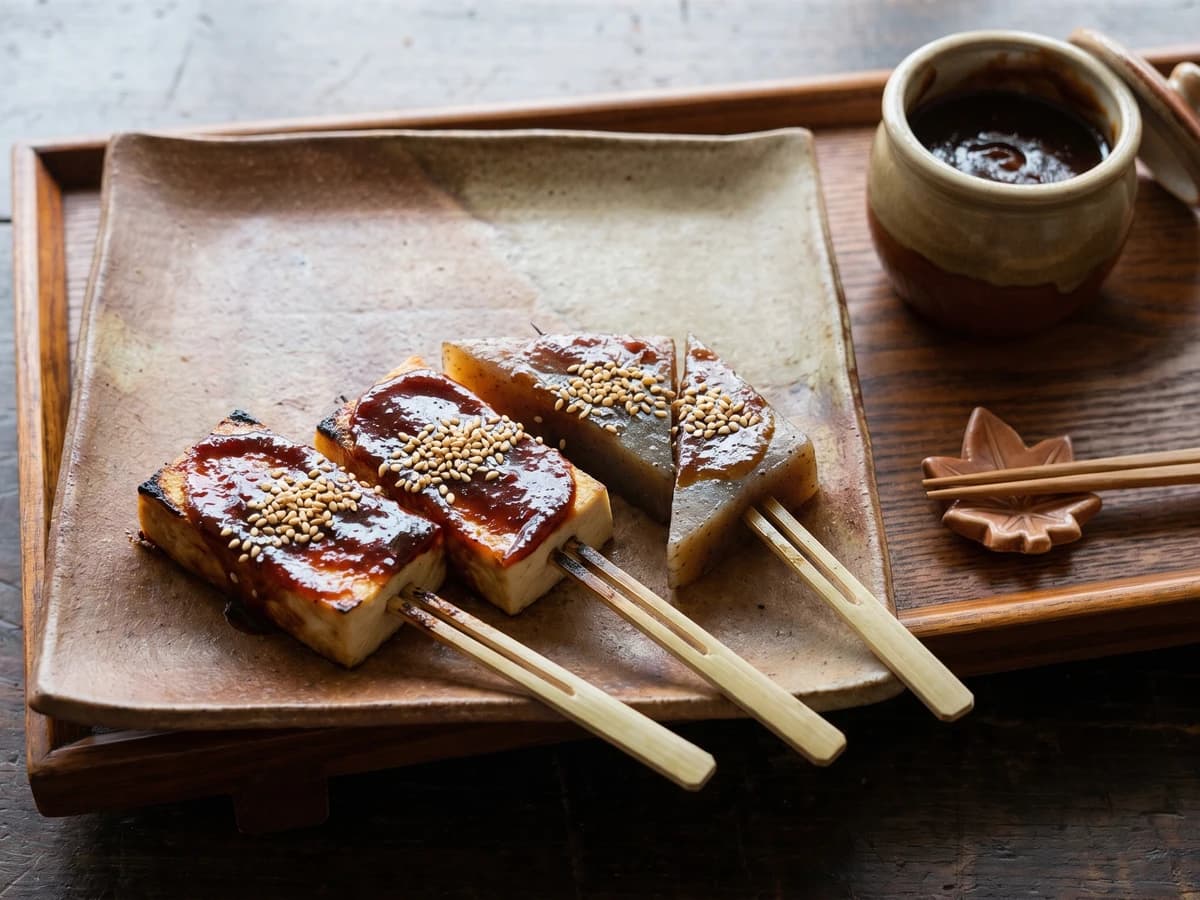
Akamiso dengaku-miso is plain work: bean miso, sweetness, sake, and patient stirring until the glaze turns dark, glossy, and thick enough to cling to the grill.
Chef Takumi
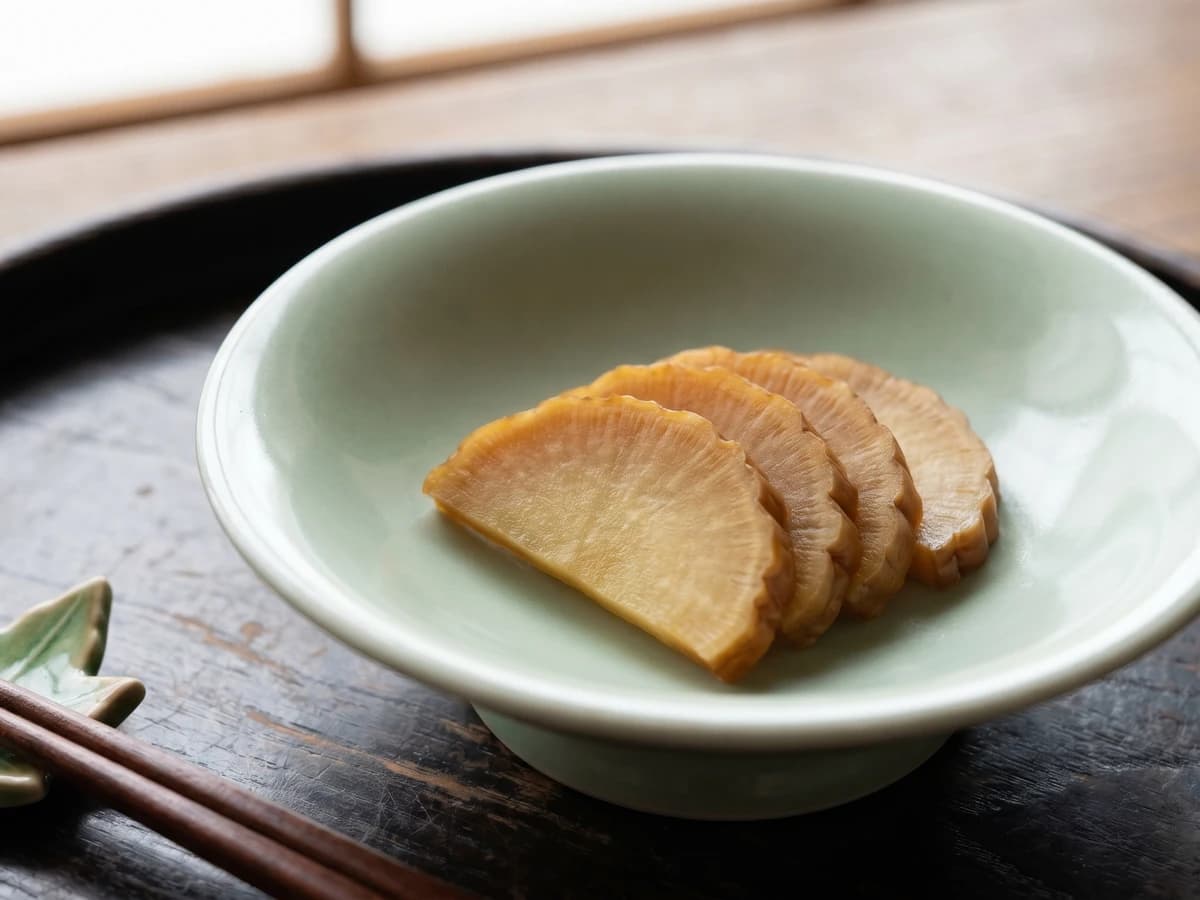
Snow-country takuan begins with smoke. Hang the daikon, dry it gently, then let rice bran, salt, and time turn it into Akita's amber pickle.

Chef Takumi
Aso takanazuke is spring caught in salt: sharp mustard greens pressed until they soften, fermented until their edge turns round, then fried briefly with sesame for rice.